A 70s living room can be relaxed, colorful, and comfortable without feeling like a time capsule. Warm wood, low seating, rounded lighting, and textured fabrics offer a flexible starting point. These 70s living room decor ideas focus on useful combinations rather than a room full of themed accessories. Begin with the main seating group, decide which earthy colors suit your light, and add texture where the room feels flat. Leave enough open floor and clear surfaces for the way you use the space.
Key Takeaways
- Build the room around seating and walking routes before adding retro accents.
- Use texture and rounded forms to connect different furniture pieces.
- Balance darker wood and earthy color with lighter surfaces.
1. Anchor the Room with a Low Brown Sofa
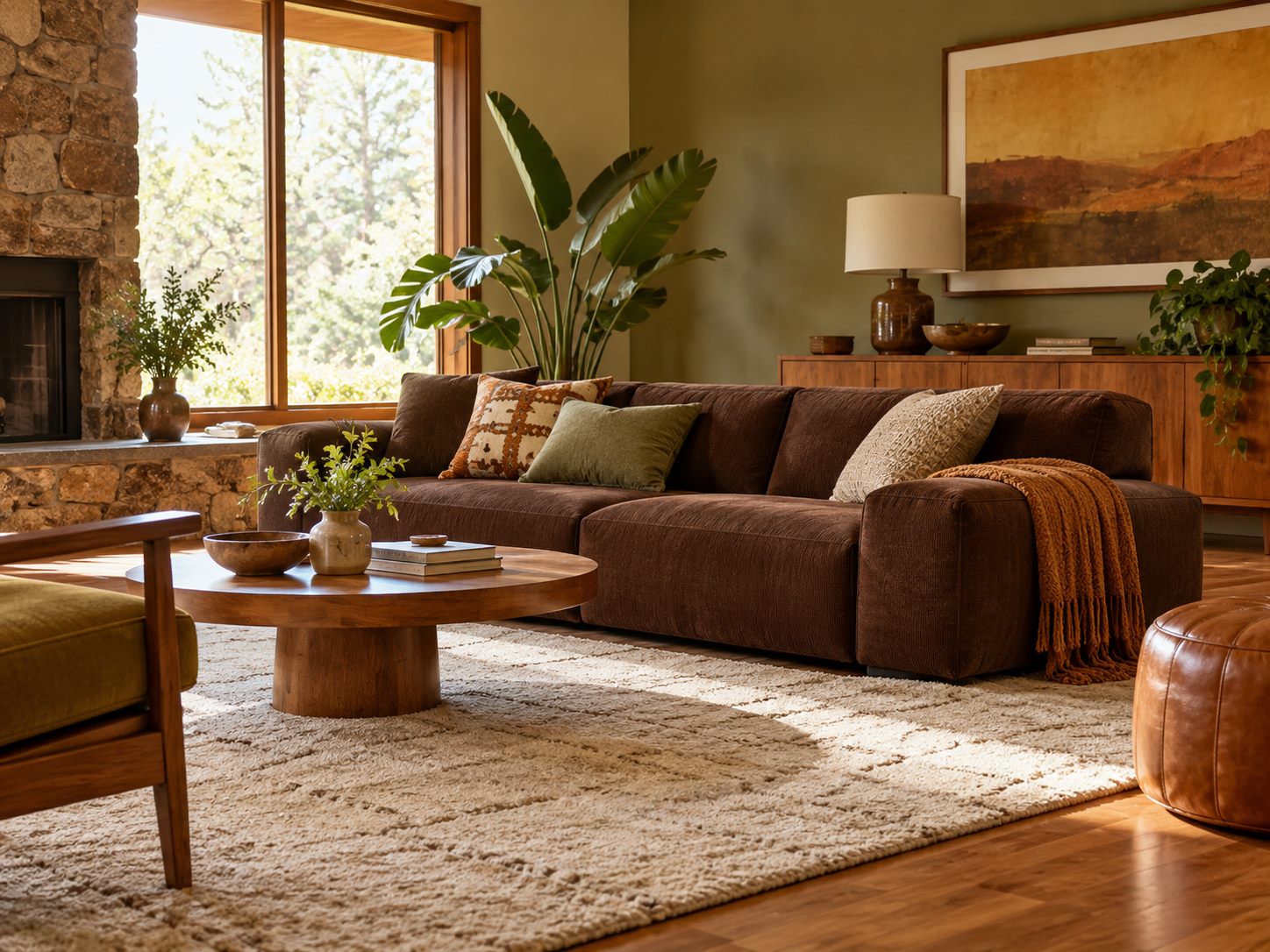
A low brown sofa creates a grounded center for a retro palette. Check seat height and support in person when possible; a low profile should still be comfortable to get out of. Pair it with a lighter rug to define the seating area and prevent dark furniture from merging with the floor.
2. Use a Rust-and-Cream Geometric Rug
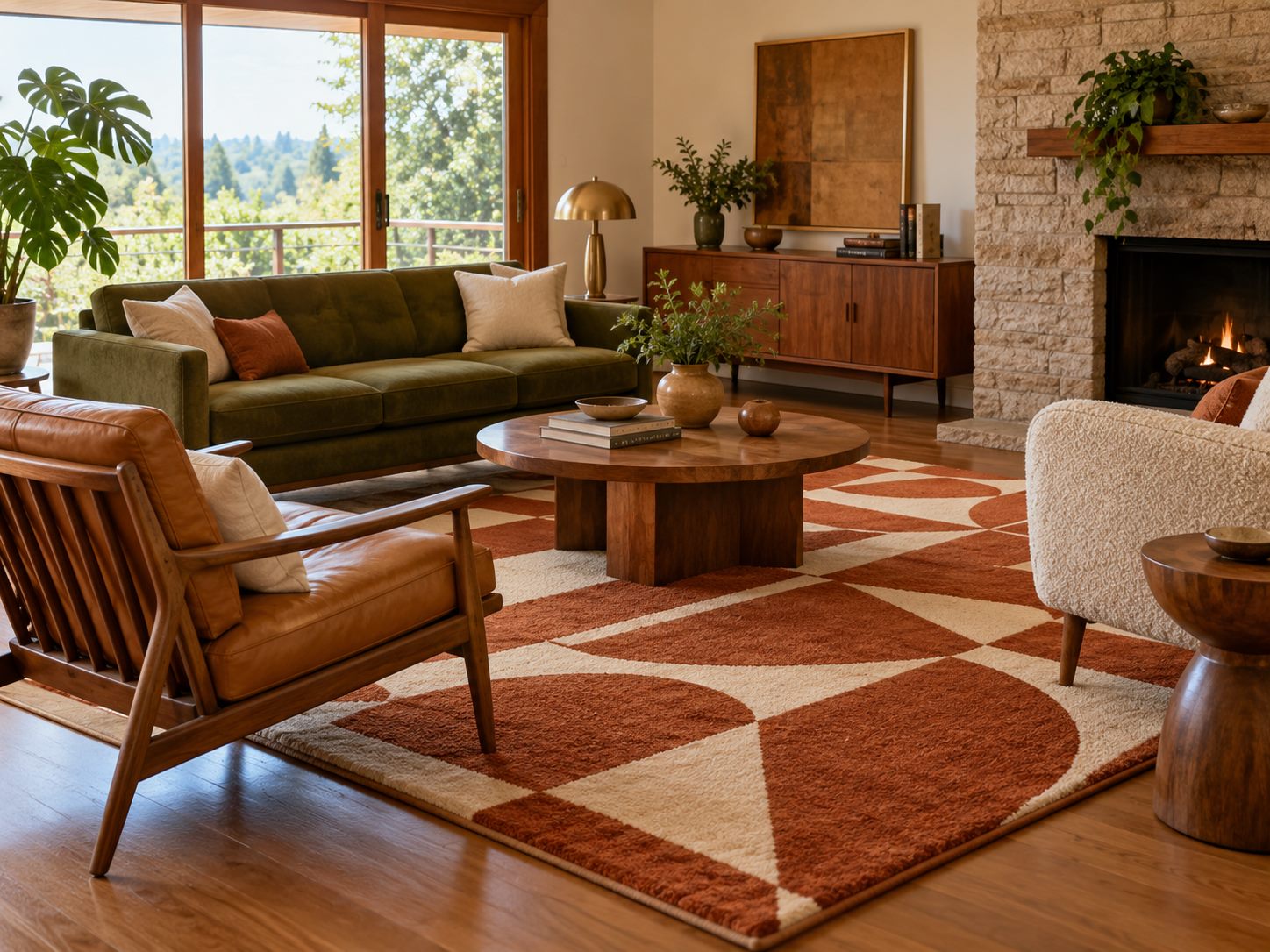
A geometric rug can organize a mixed seating group. Choose a pattern large enough to read beneath the coffee table, then keep surrounding cushions mostly plain. Mark the rug footprint before buying and check that doors and nearby furniture will not catch its edge.
3. Add a Rattan Lounge Chair
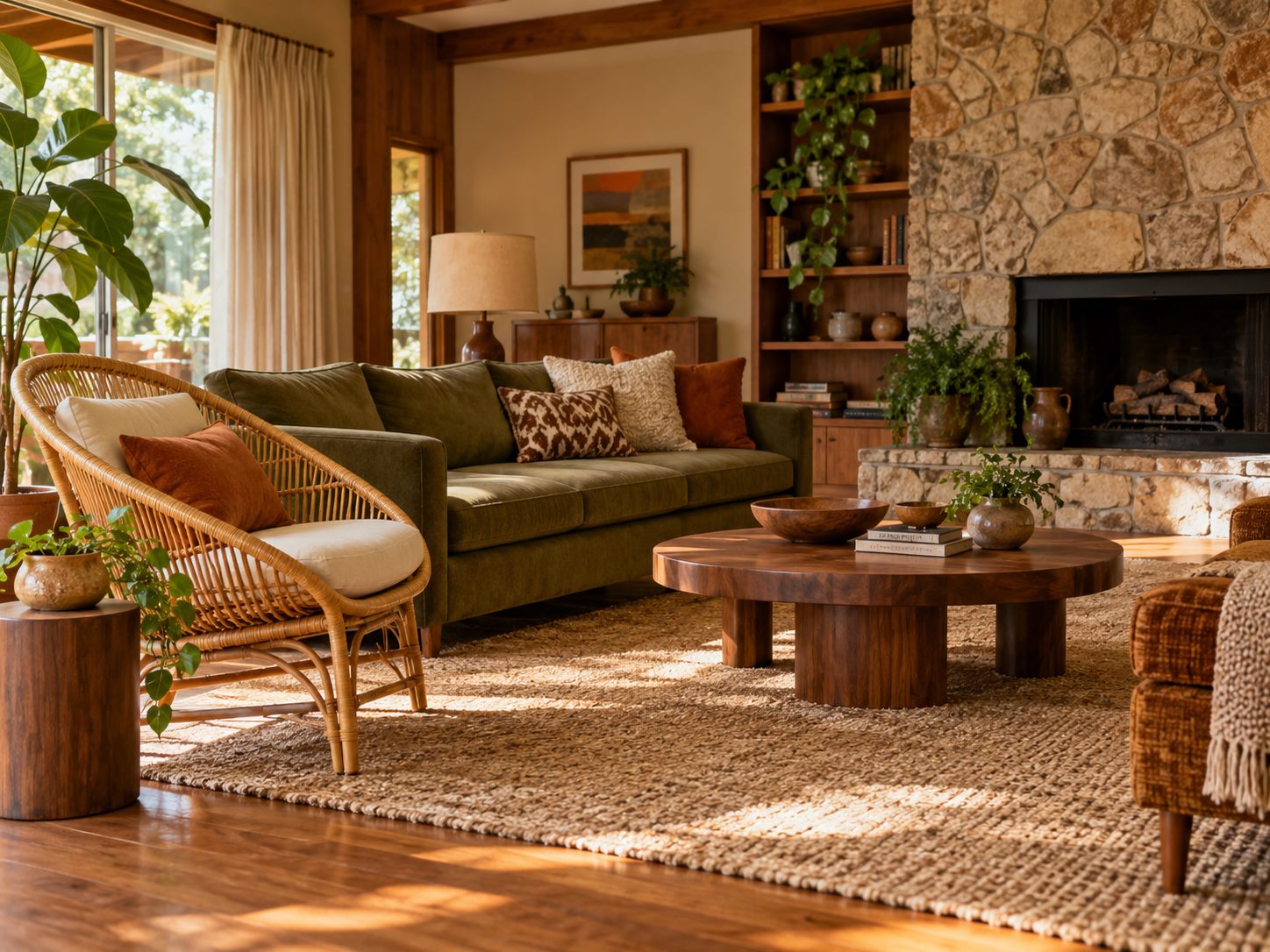
A woven chair introduces a lighter texture beside upholstered seating. Position it where its footprint does not interrupt a route through the room. A properly fitting seat cushion makes it more useful for longer sitting. Check the frame and joints carefully when buying secondhand.
4. Keep a Wood-Paneled Accent to One Wall
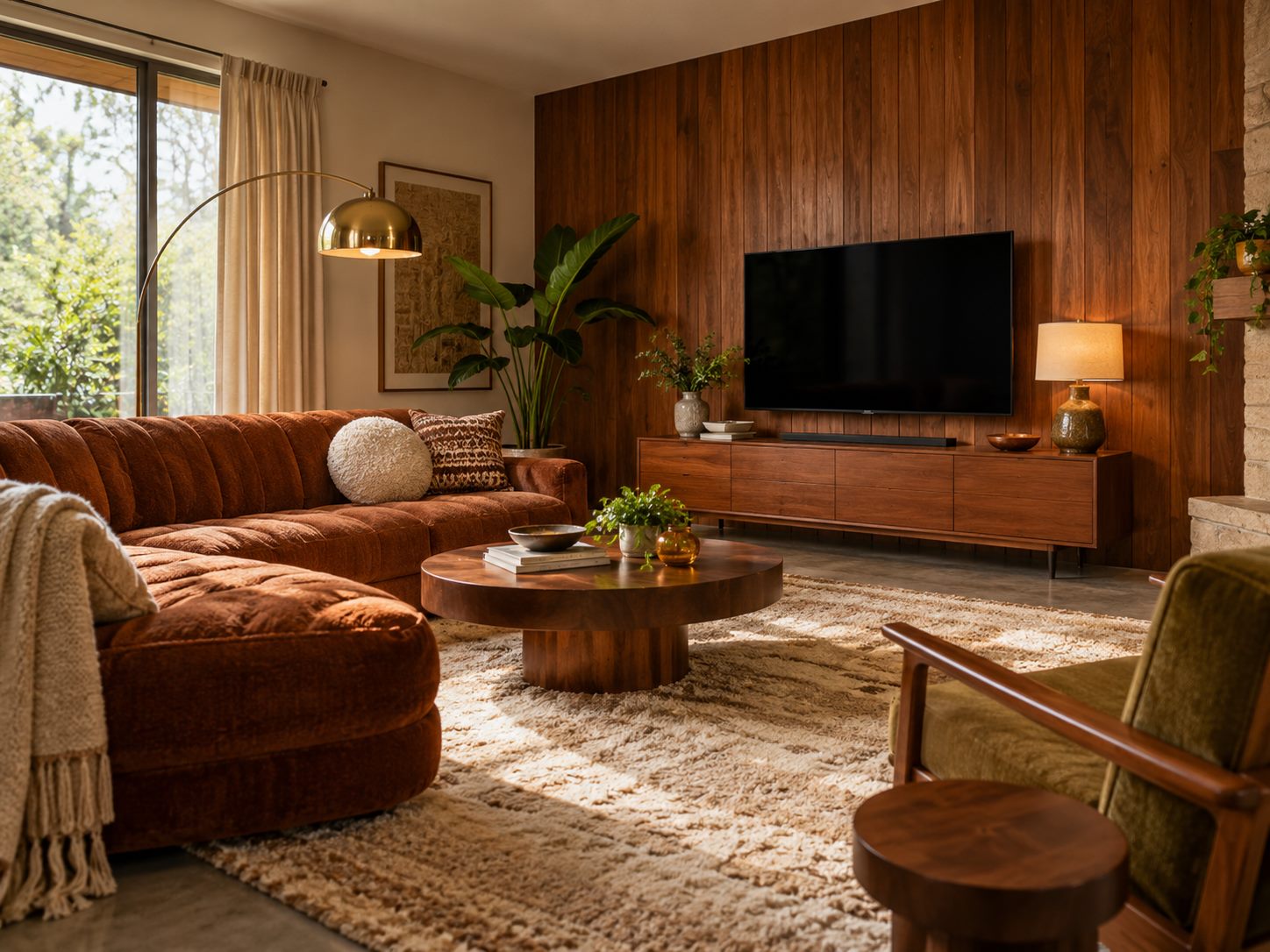
A single wood-finished wall can provide warmth without enclosing the entire room. Choose the wall that already anchors the seating or media unit. Consider how the finish looks in low light, and use an appropriate installation method rather than attaching heavy panels without checking the wall construction.
5. Put a Globe Lamp on a Sideboard
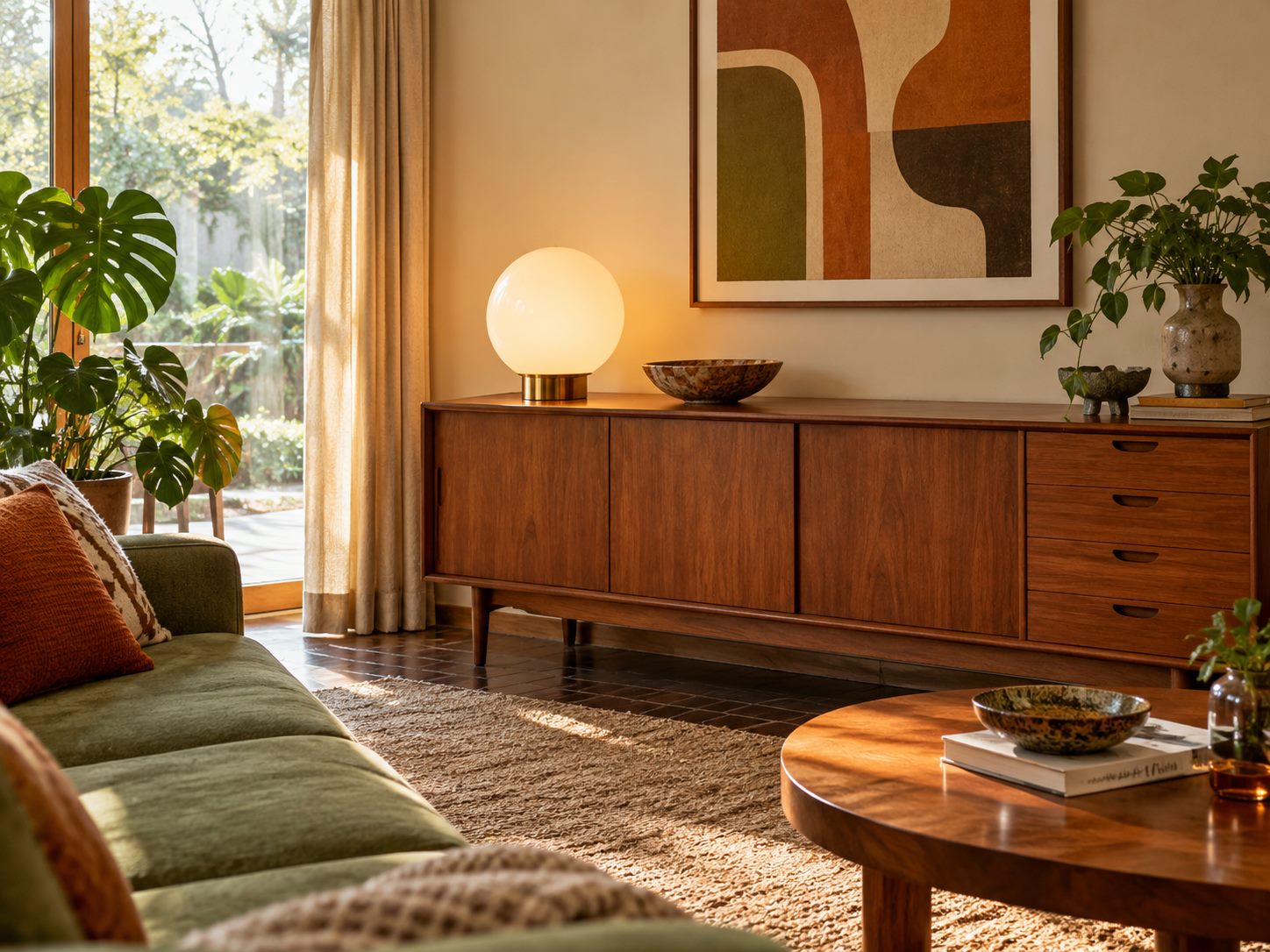
A globe lamp adds a rounded shape above a horizontal cabinet. Keep its height related to the artwork or mirror nearby, and check glare from the sofa. Leave a clear area around the lamp for everyday use instead of turning the sideboard into a crowded display shelf.
6. Choose an Oval Timber Coffee Table
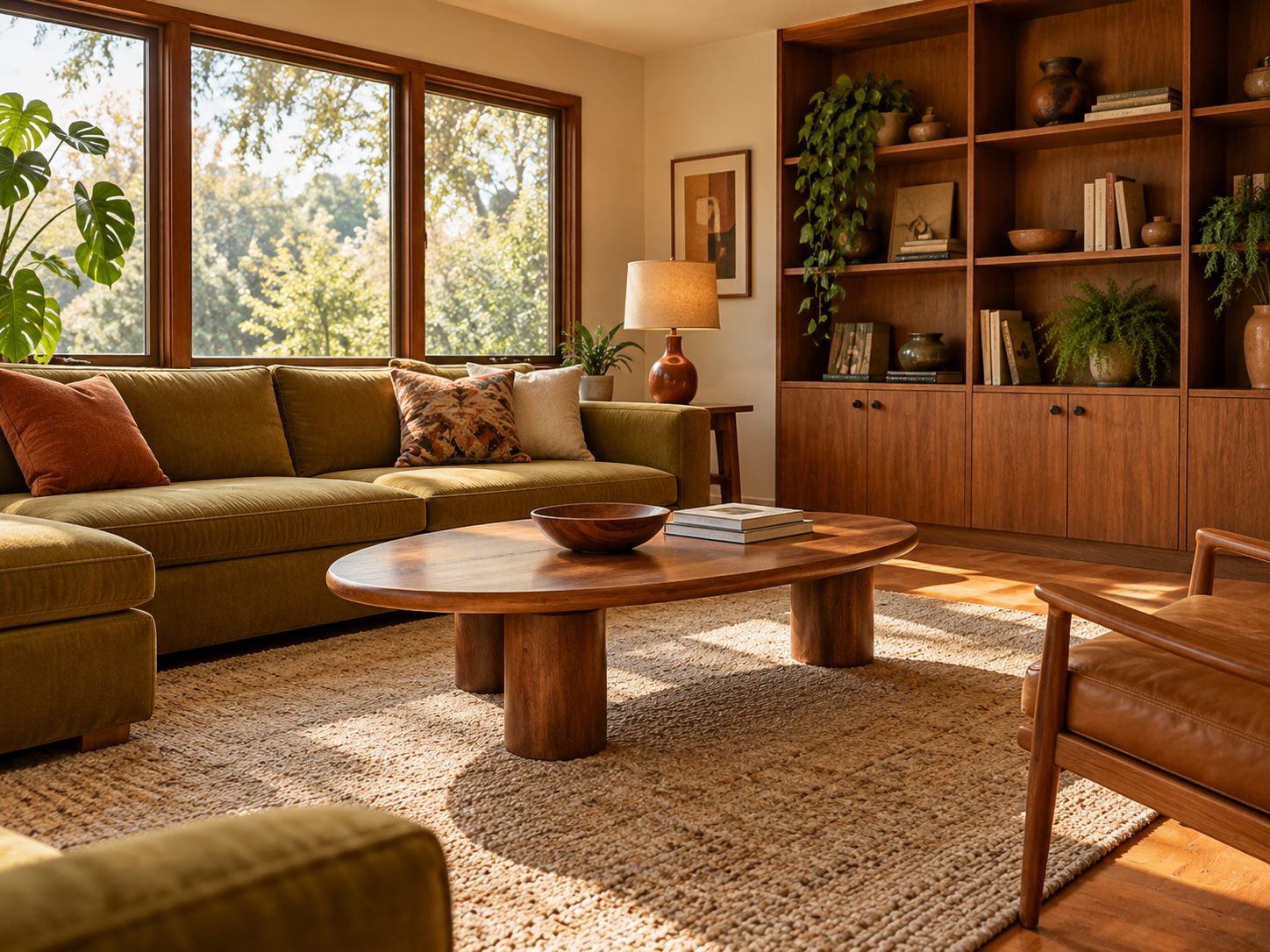
An oval table softens a room with rectangular shelving and windows. Measure it against the sofa and walking routes, including when someone is seated. A simple timber top can carry the visual warmth on its own; keep the decoration to a low bowl or a short stack of books.
For a softer color direction, compare our warm neutral living room ideas.
7. Bring Mustard into a Pair of Cushions
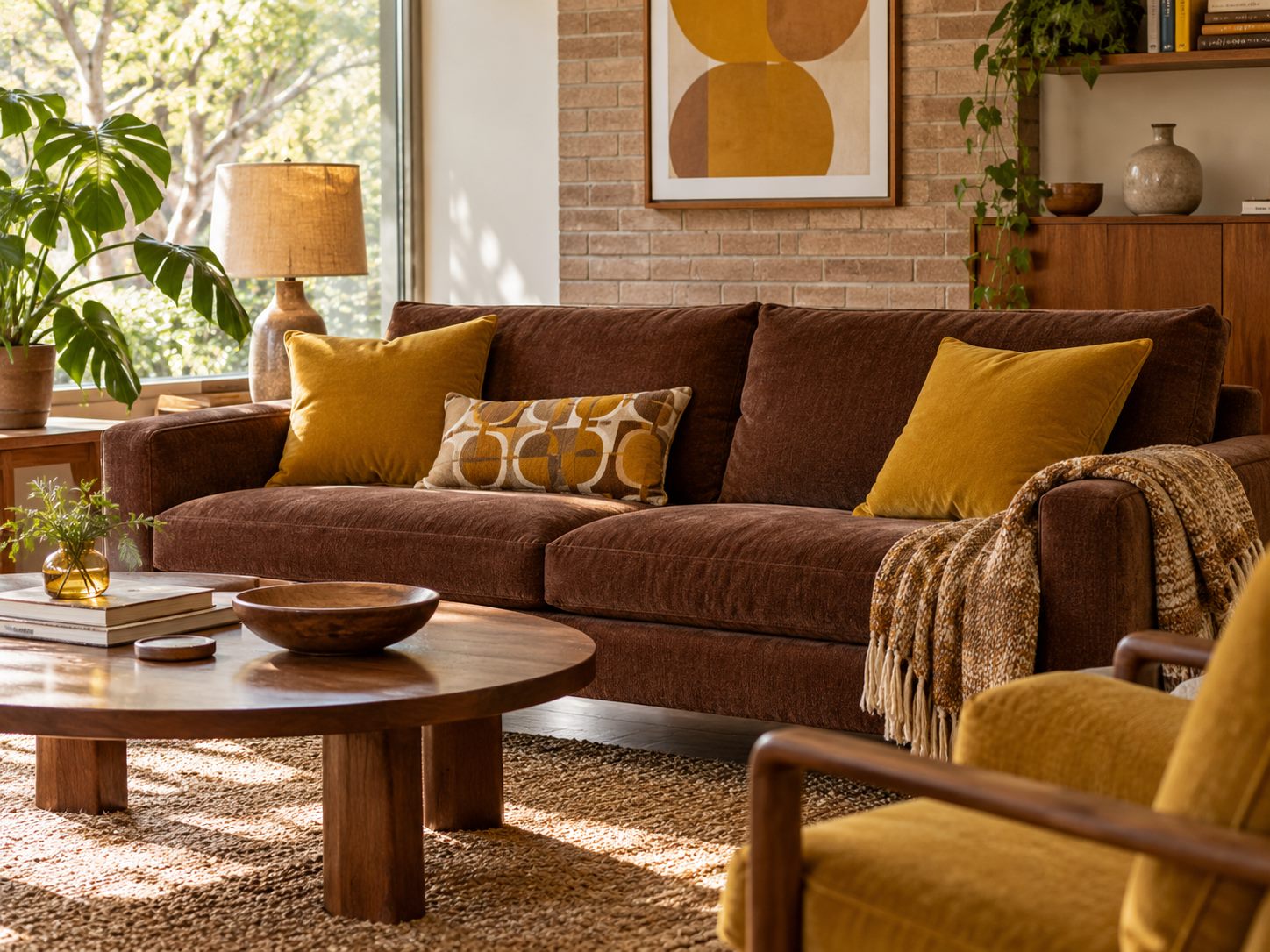
Mustard cushions can brighten brown upholstery without requiring a new sofa. Repeat a small amount of the color elsewhere, perhaps in a print, to connect the room. Compare the fabric in daylight before buying; different mustard shades can lean green, orange, or gold.
8. Build a Reading Corner with a Floor Lamp
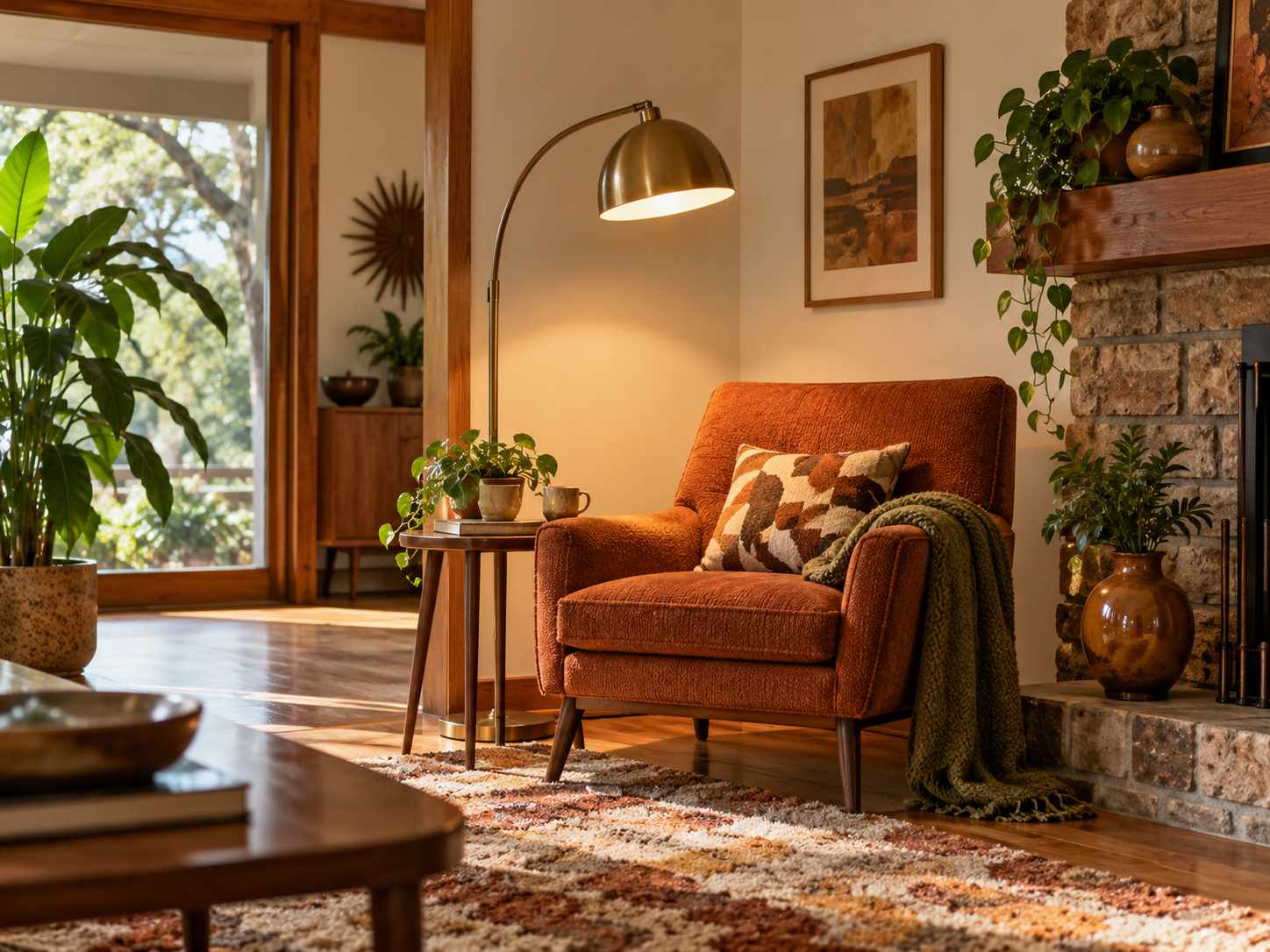
A comfortable chair and a floor lamp can make a neglected corner useful. Place the shade so the light falls onto reading material without shining directly into your eyes. Keep the lamp base and cable out of the walkway, and add a small table only when there is space.
9. Use a Modular Bookcase for Mixed Storage
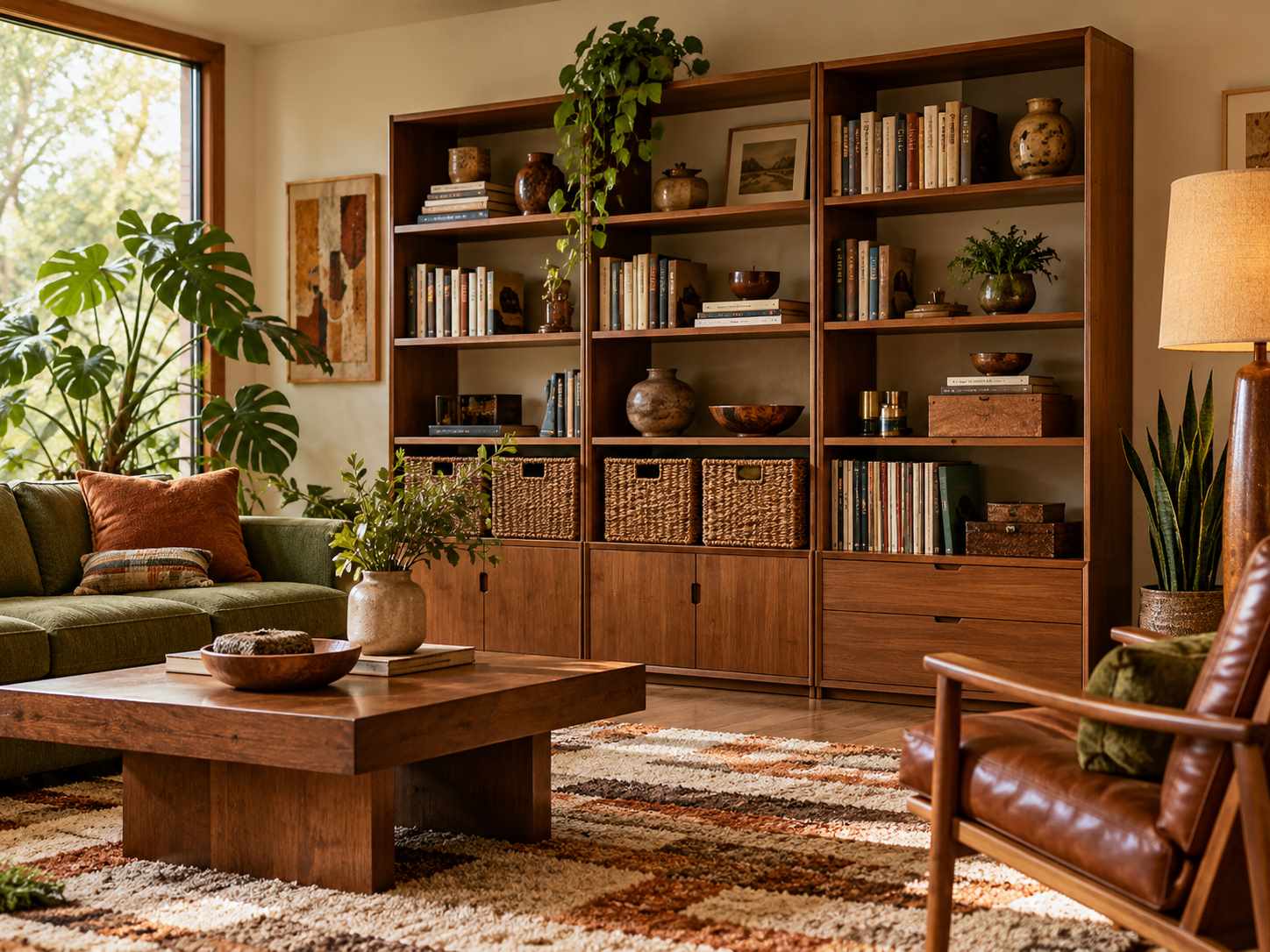
An open bookcase can combine books, baskets, and a few objects without requiring a matching furniture set. Plan closed storage for items you do not want to see. Follow anchoring and loading instructions, and keep heavier pieces low rather than distributing them for appearance alone.
10. Let One Large Plant Break Up the Furniture
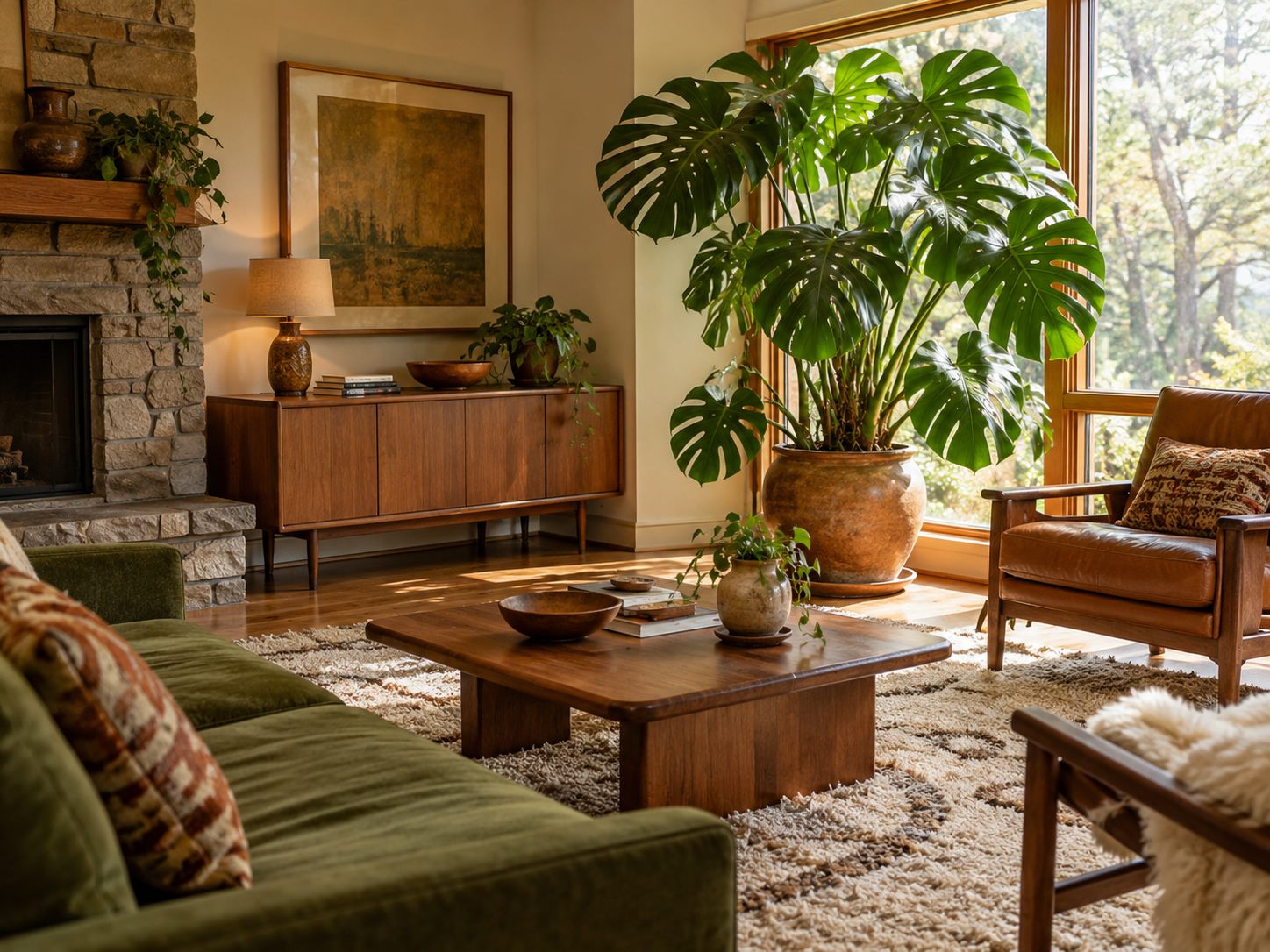
A large plant near a window adds a different silhouette to a room full of furniture. Choose its location for the light it needs rather than an empty photographic corner. Protect the floor from moisture and check suitability for pets. Avoid squeezing pots into an already narrow walking route.
11. Add a Chunky Woven Throw
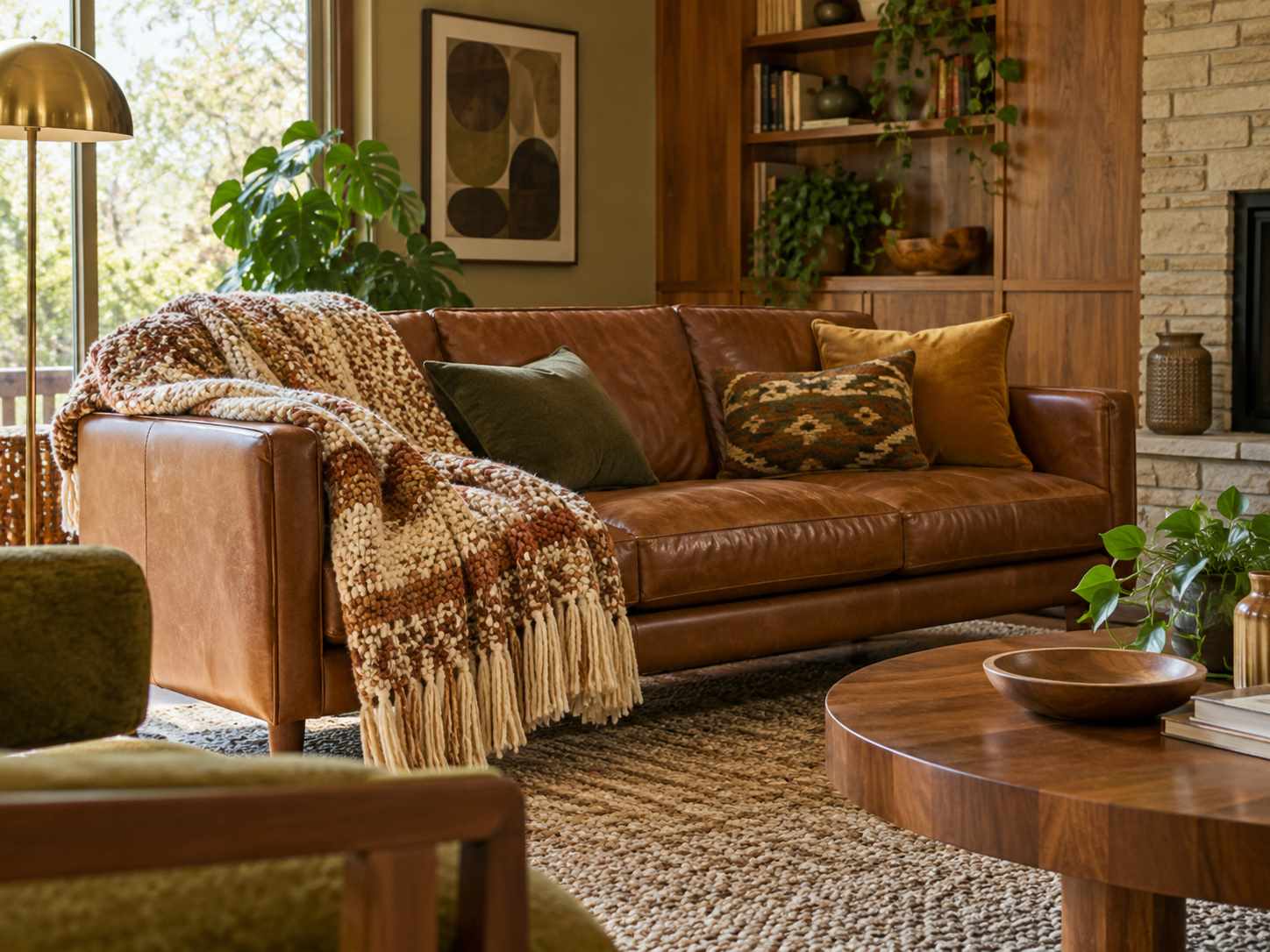
A textured throw can soften smooth leather, wood, or tightly woven upholstery. Choose a size you will actually use while sitting, not just a decorative strip. Fold it over one arm or the back of the sofa so part of the original upholstery remains visible.
12. Try a Smoked-Glass Side Table
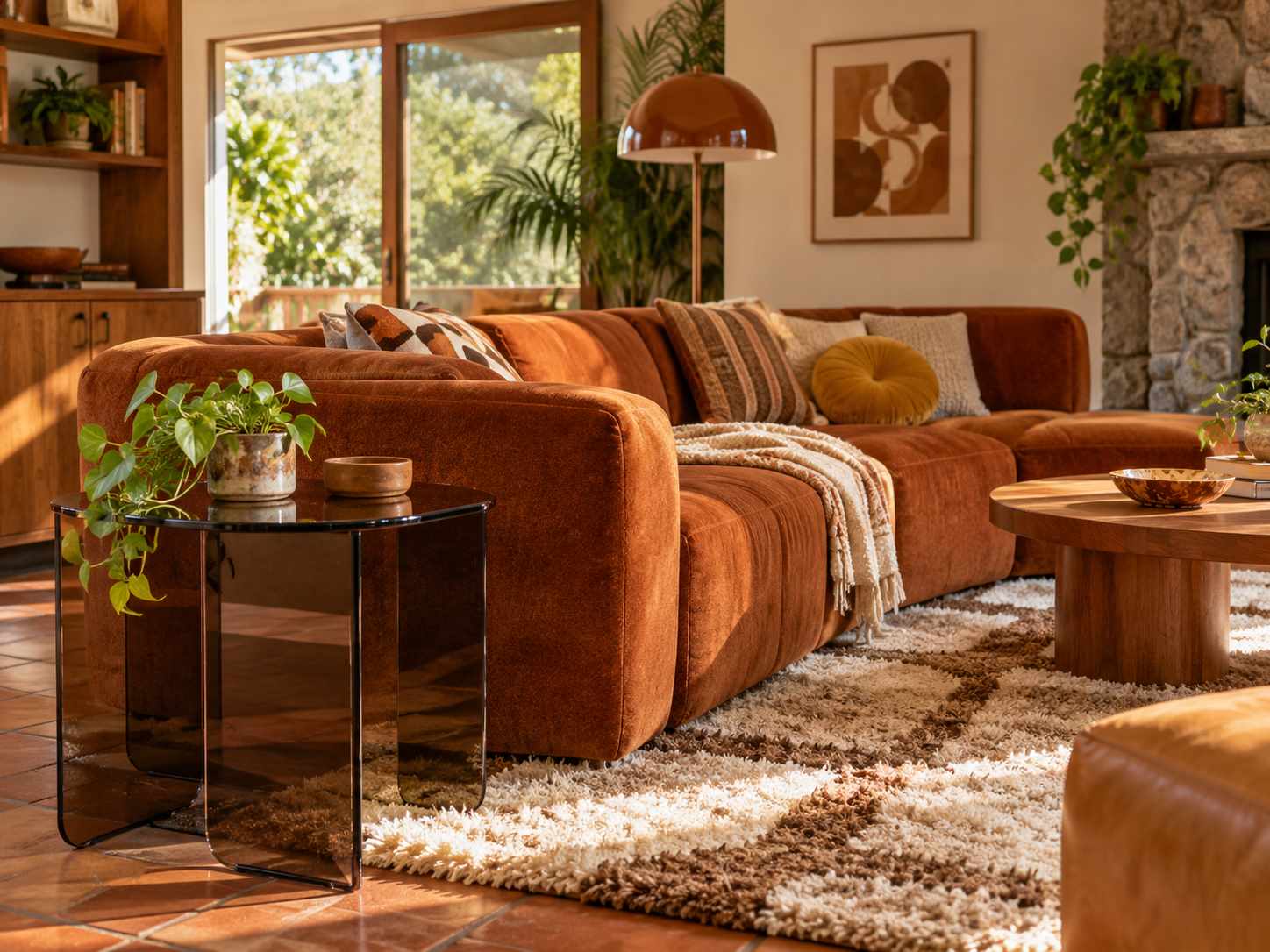
A small smoked-glass table introduces contrast without the visual bulk of another wooden cabinet. Check stability and edge safety for your household. Position it where it will not be repeatedly knocked, and avoid using delicate vintage glass when a more durable table would better suit the room.
For help arranging smaller displays, read our guide to styling open shelves.
13. Group Pottery on One Low Shelf
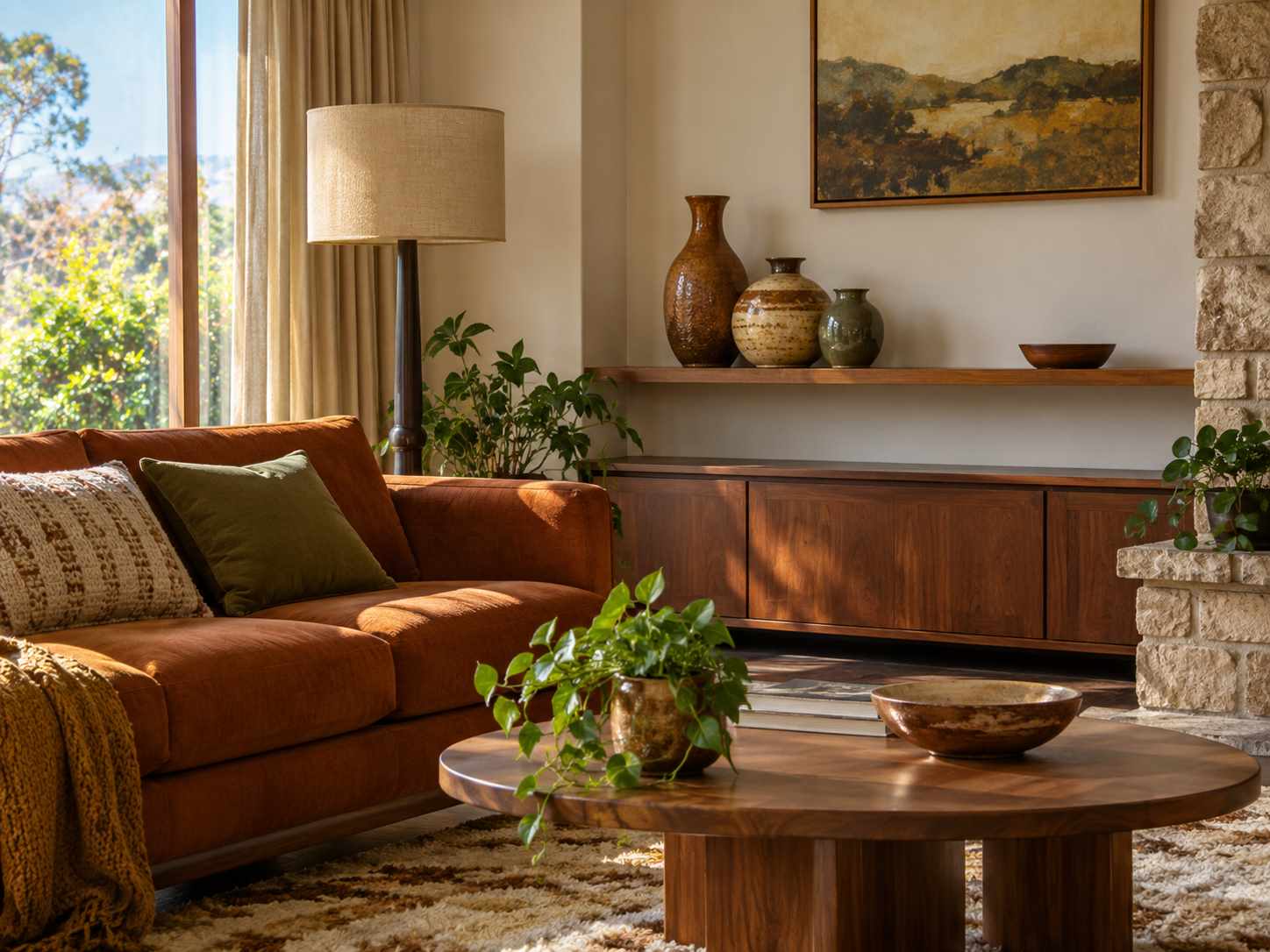
A small grouping of pottery makes a stronger statement than one vase on every surface. Vary the height while keeping the colors related. Leave a gap beside the group so its shapes are clear, and use stable pieces on shelves that are safely fixed.
14. Bring a Wide Stripe into the Window Treatment
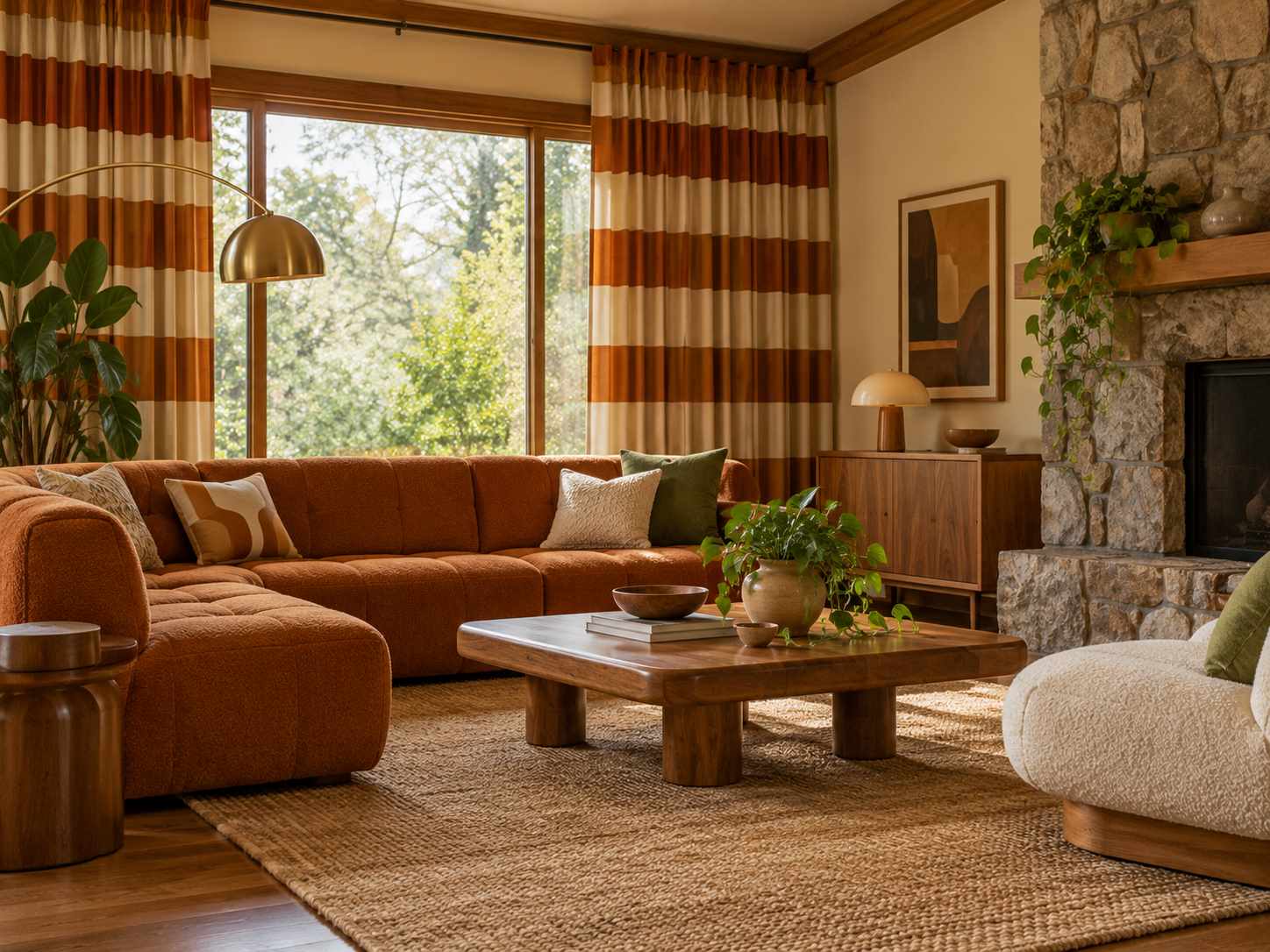
A broad striped curtain can create height in a room with low furniture. Choose a stripe that repeats a main color already used in the seating group. Check the fabric weight, cleaning instructions, and light filtering before deciding; a strong pattern should still suit the window’s practical needs.
15. Place a Small Ottoman Inside the Seating Group
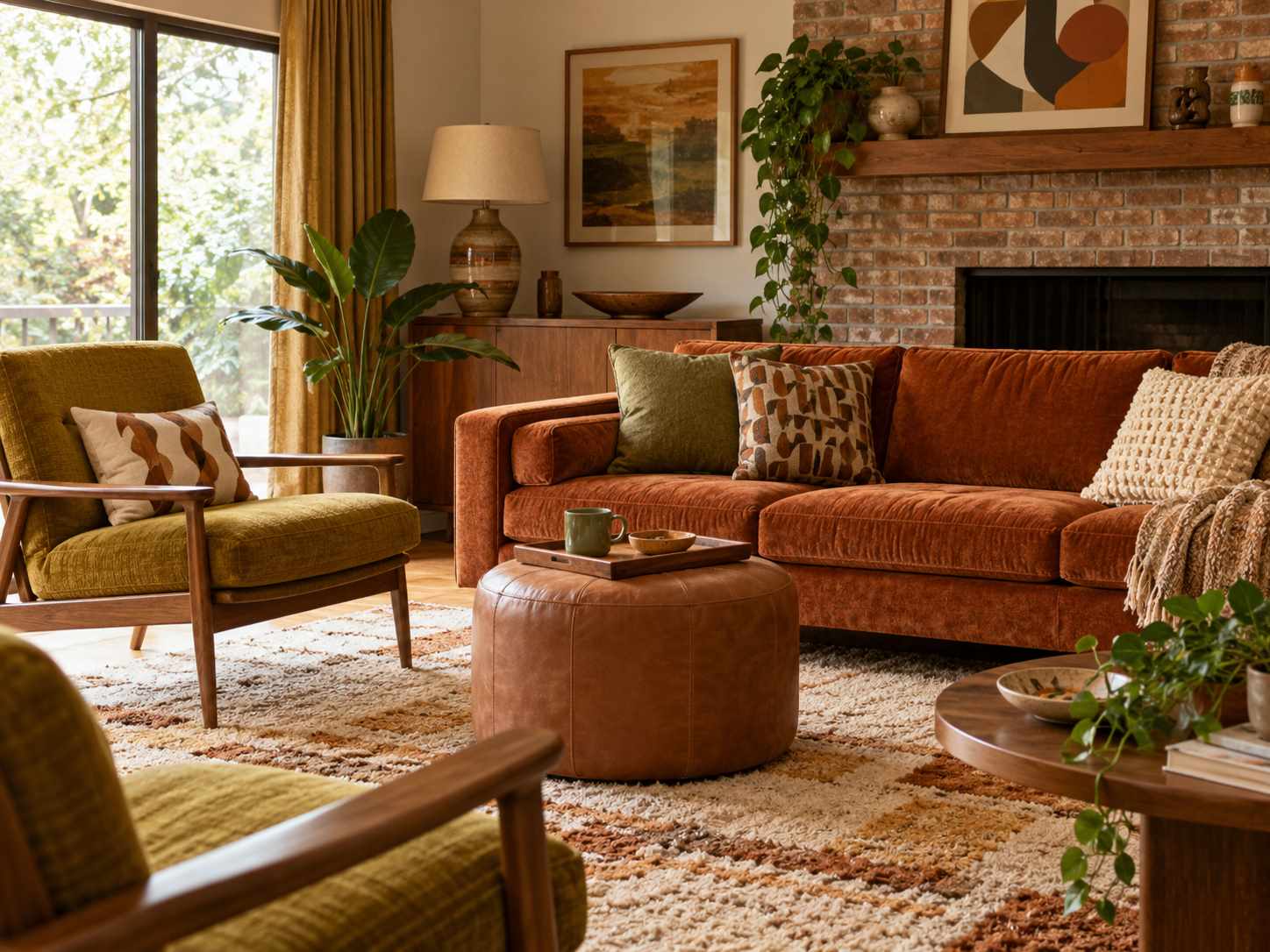
An ottoman provides a flexible footrest or occasional seat without another full armchair. Check that it can move easily when you need more floor space. A firm tray can support a drink temporarily, but it should not turn a soft or unstable surface into the room’s main table.
16. Frame a Warm-Toned Abstract Print
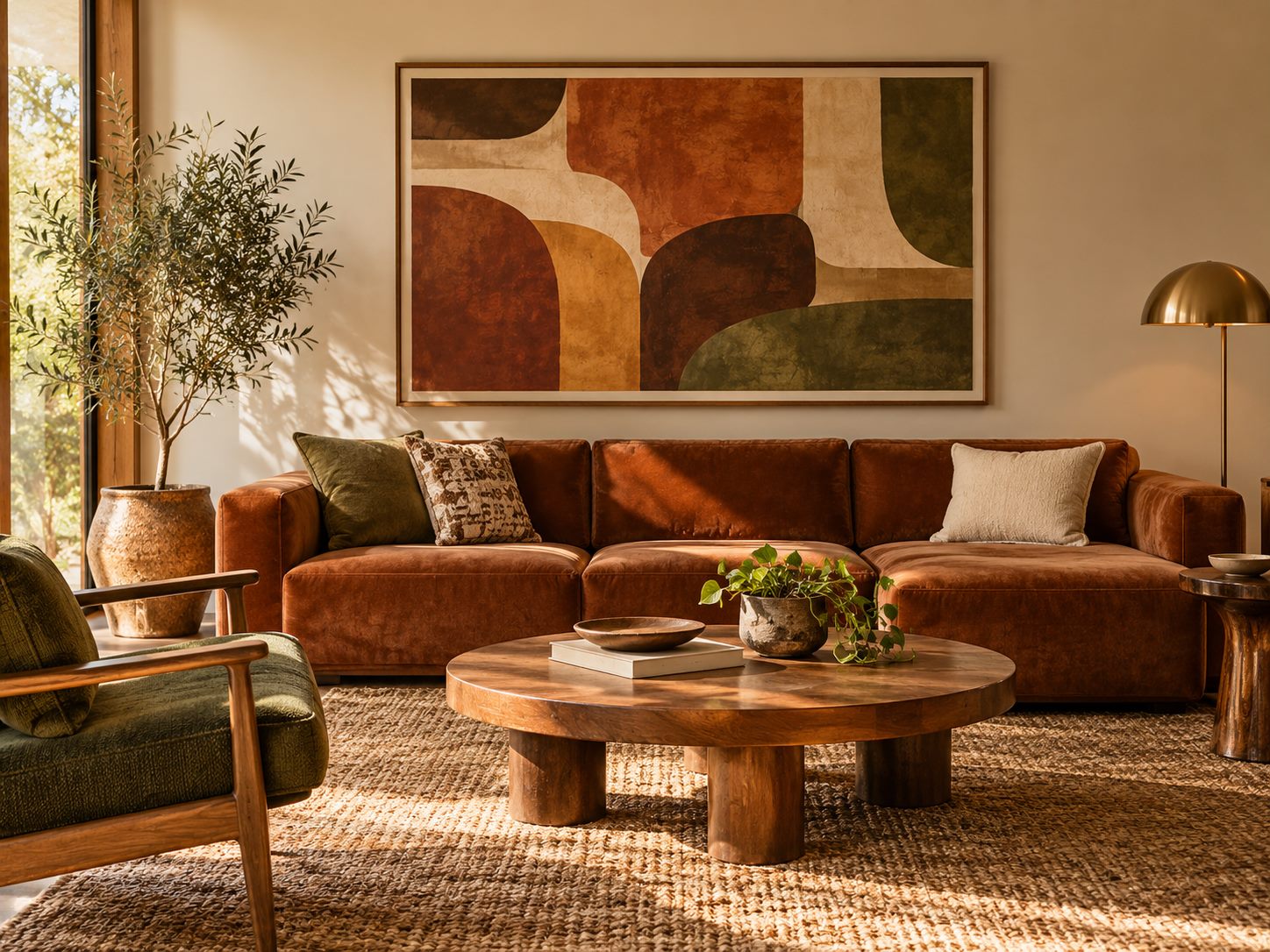
One large print can connect rust, brown, cream, and olive without adding more textiles. Choose artwork you have rights to use and give it enough wall space. Relate its width to the furniture below instead of selecting a small frame that gets lost above a substantial sofa.
17. Use a Record Cabinet as Everyday Storage
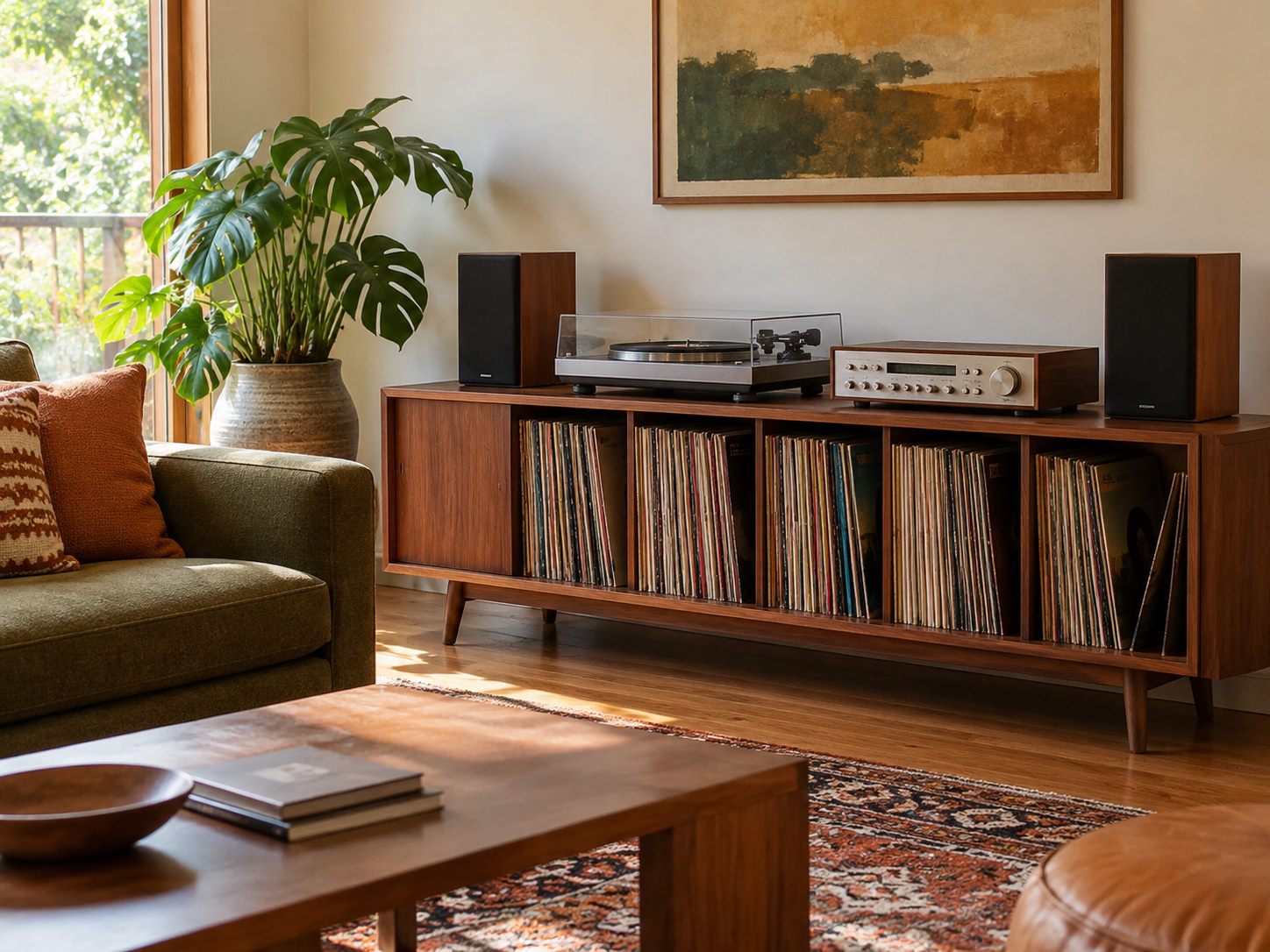
A low record cabinet can hold music and introduce a pleasing horizontal line. Check the interior against the dimensions of the records or equipment you own. Plan cable routing and ventilation for electronics, and keep the top useful instead of covering it with decorative objects.
Frequently Asked Questions
Can I create a 70s look in a small living room?
Yes. Choose one low-profile seat, a warm palette, and a small textured rug. Keep furniture depth and walking routes more important than collecting every retro detail.
What wood colors work well?
Warm medium and dark tones can work with cream, rust, and olive. Match the warmth of different woods rather than expecting every piece to be identical.
Should all the furniture be vintage?
No. New seating can provide comfort while one older cabinet or chair contributes character. Inspect any secondhand furniture for damage and stability.
How much orange is too much?
Start with one main orange or rust element, then repeat a smaller touch. If the room feels intense, introduce a lighter neutral rather than adding another strong color.
How do I keep the room practical?
Provide closed storage, reachable tables, and suitable task lighting. Leave clear routes through the room and choose textiles you can maintain.
Related Decorating Guides
- 17 1930s Living Room Decor Ideas with Modern Comfort
- 17 80s Living Room Decor Ideas for a Balanced Retro Look
- 17 Aesthetic Farmhouse Living Room Ideas with Useful Details
Conclusion
A useful 70s living room balances warm color with places to sit, read, store, and move. Choose a few connected materials, let one pattern take the lead, and keep the remaining details calm. Save the ideas that fit your layout before making a larger furniture decision.
Find more seating and finishing details in our living room guides.