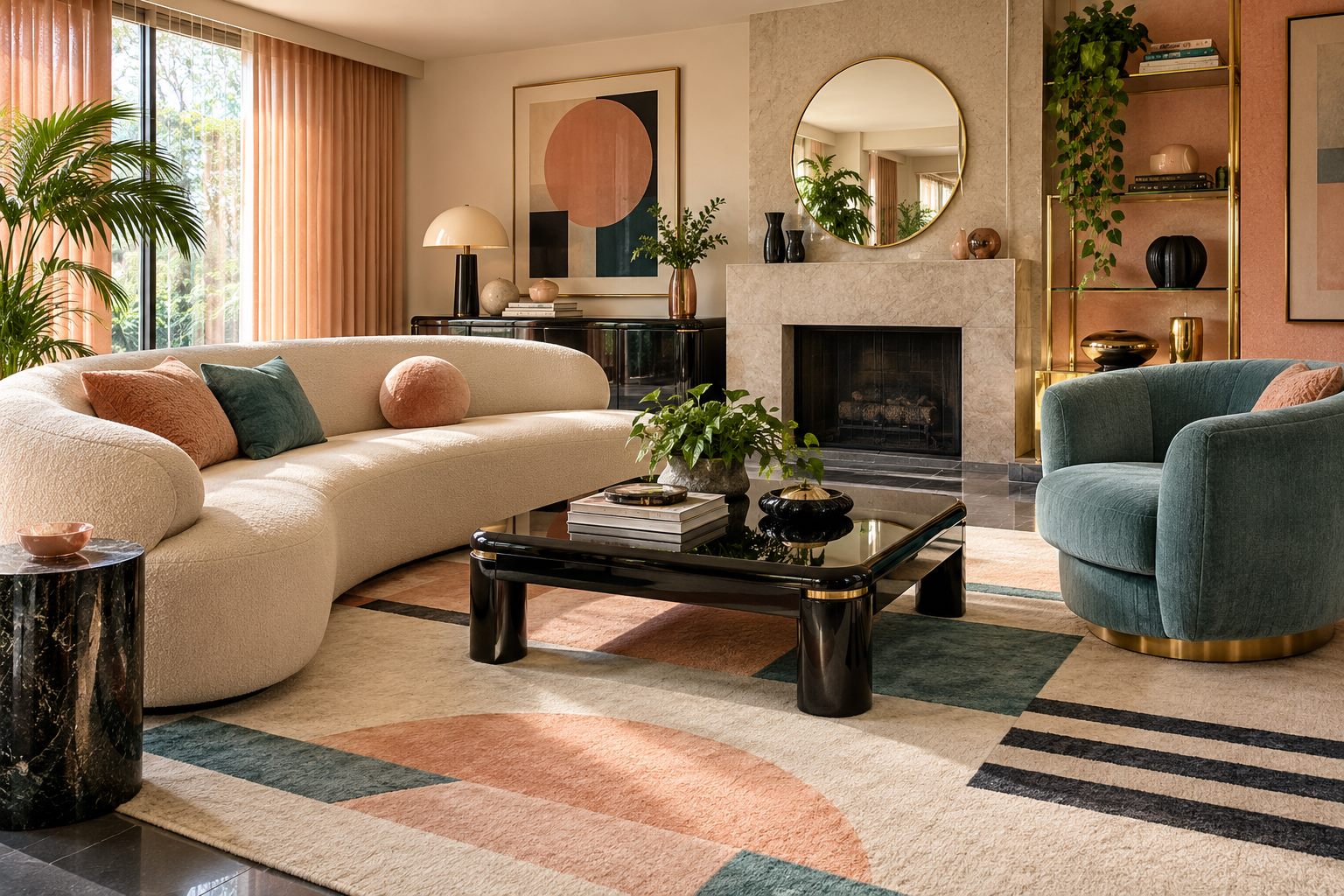
A well-balanced 80s living room can combine expressive shapes with seating you want to use every day. Instead of collecting every retro reference, choose a direction: soft pastels, graphic contrasts, or a few glossy furniture finishes. These 80s living room decor ideas explore each approach through individual pieces and small groupings. Start with the sofa and storage, then decide where the strongest visual contrast belongs. Give each statement room to breathe and keep walking routes, table access, and lighting in mind as you build the scheme.
Key Takeaways
- Use one visual focal point and quieter supporting furniture.
- Balance glossy finishes with fabric, wood, or a textured rug.
- Test bold colors on a small surface before committing to a whole room.
1. Use a Rounded Cream Sofa as a Quiet Base
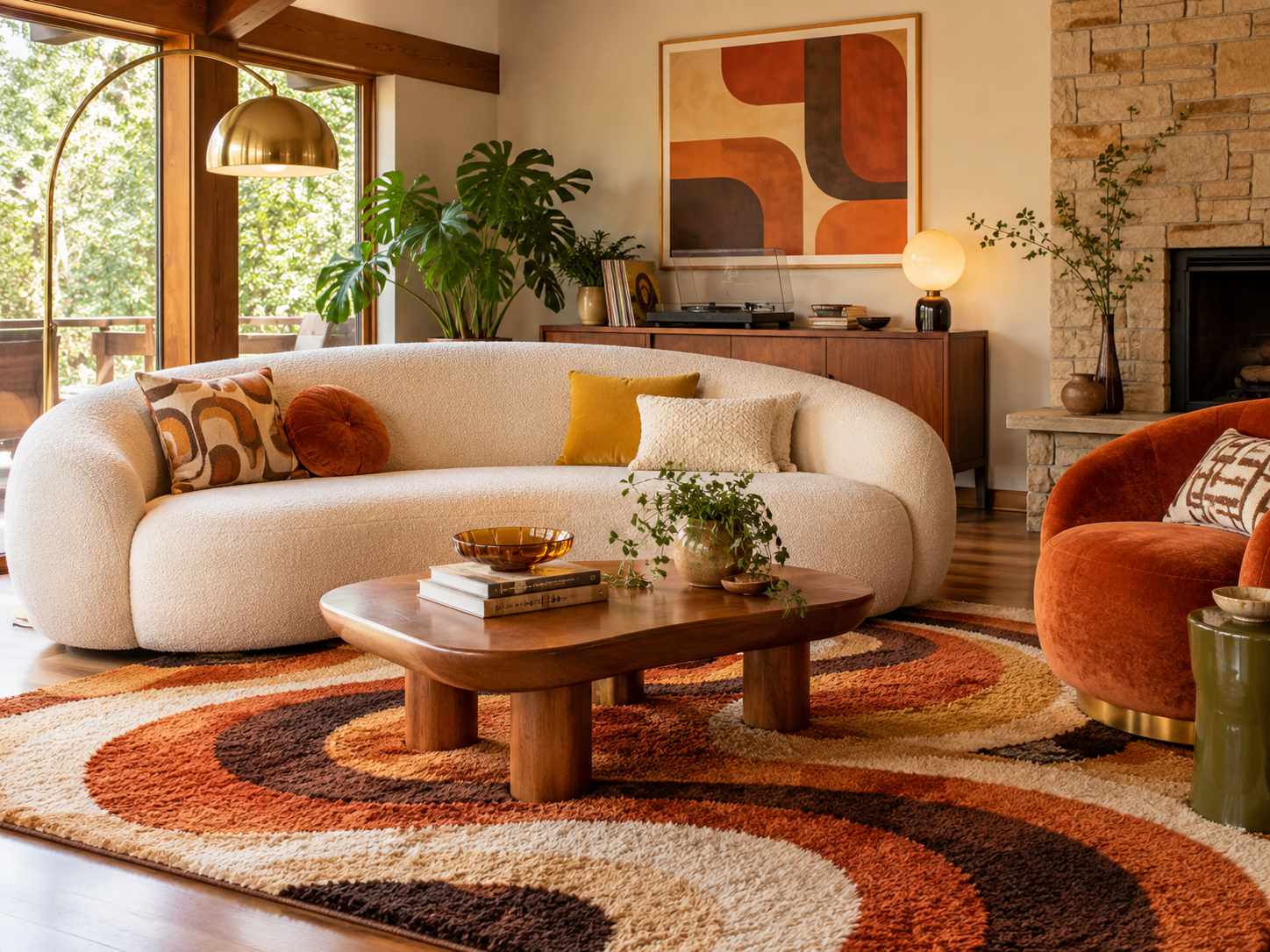
A rounded sofa gives a strong silhouette while its pale upholstery leaves room for color elsewhere. Check the usable seating space rather than judging only the outer shape. Pair it with one graphic rug or a colorful side chair, and choose a fabric you can maintain.
2. Pair Peach Walls with a Blue Accent Chair
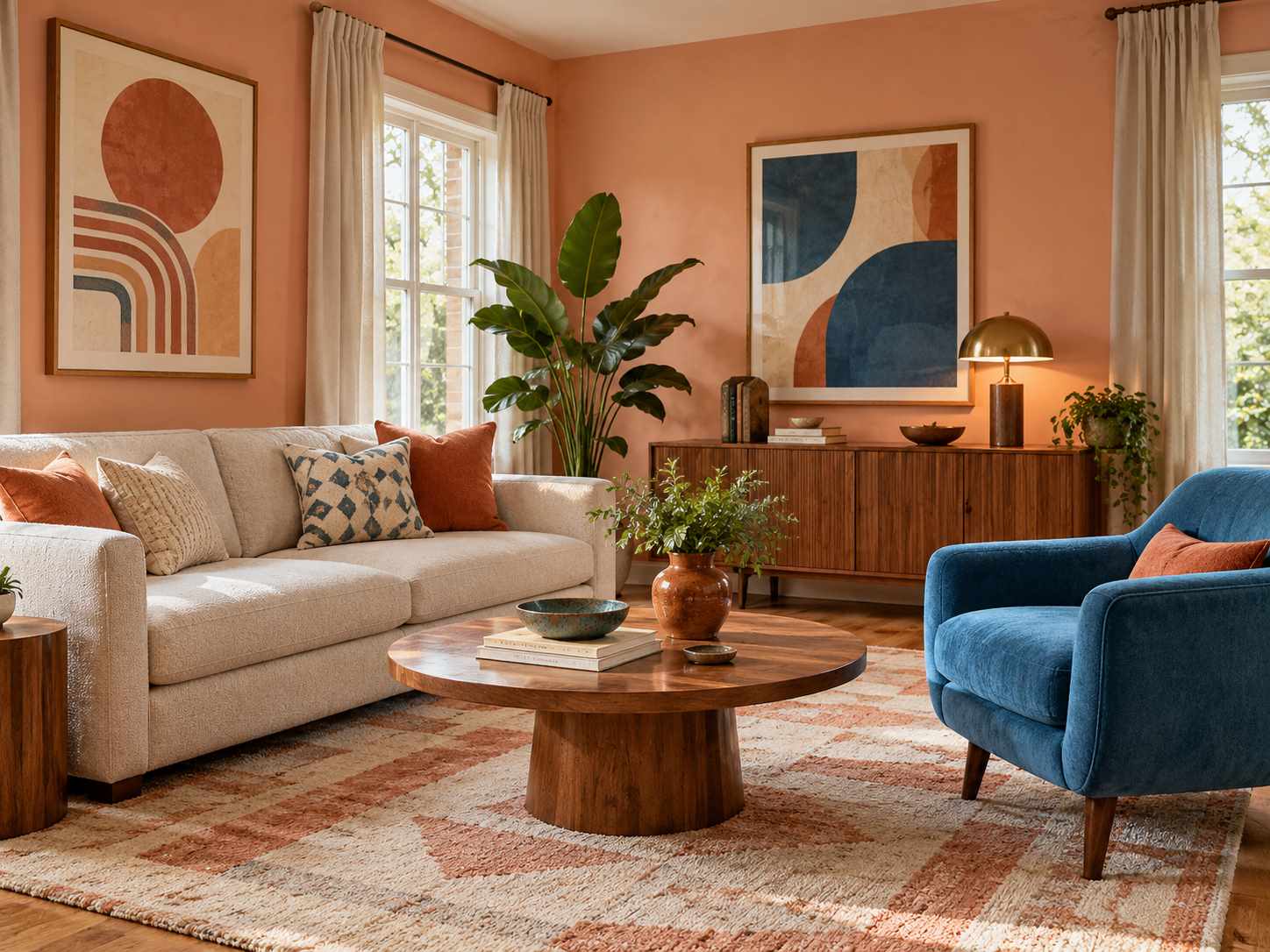
Peach and a muted blue can create a clear color relationship without making every surface bright. Test the shades together in the room before painting. Keep the main sofa and curtains neutral so the contrast feels deliberate, and use the blue chair where it can function as real seating.
3. Add a Black Lacquer Coffee Table
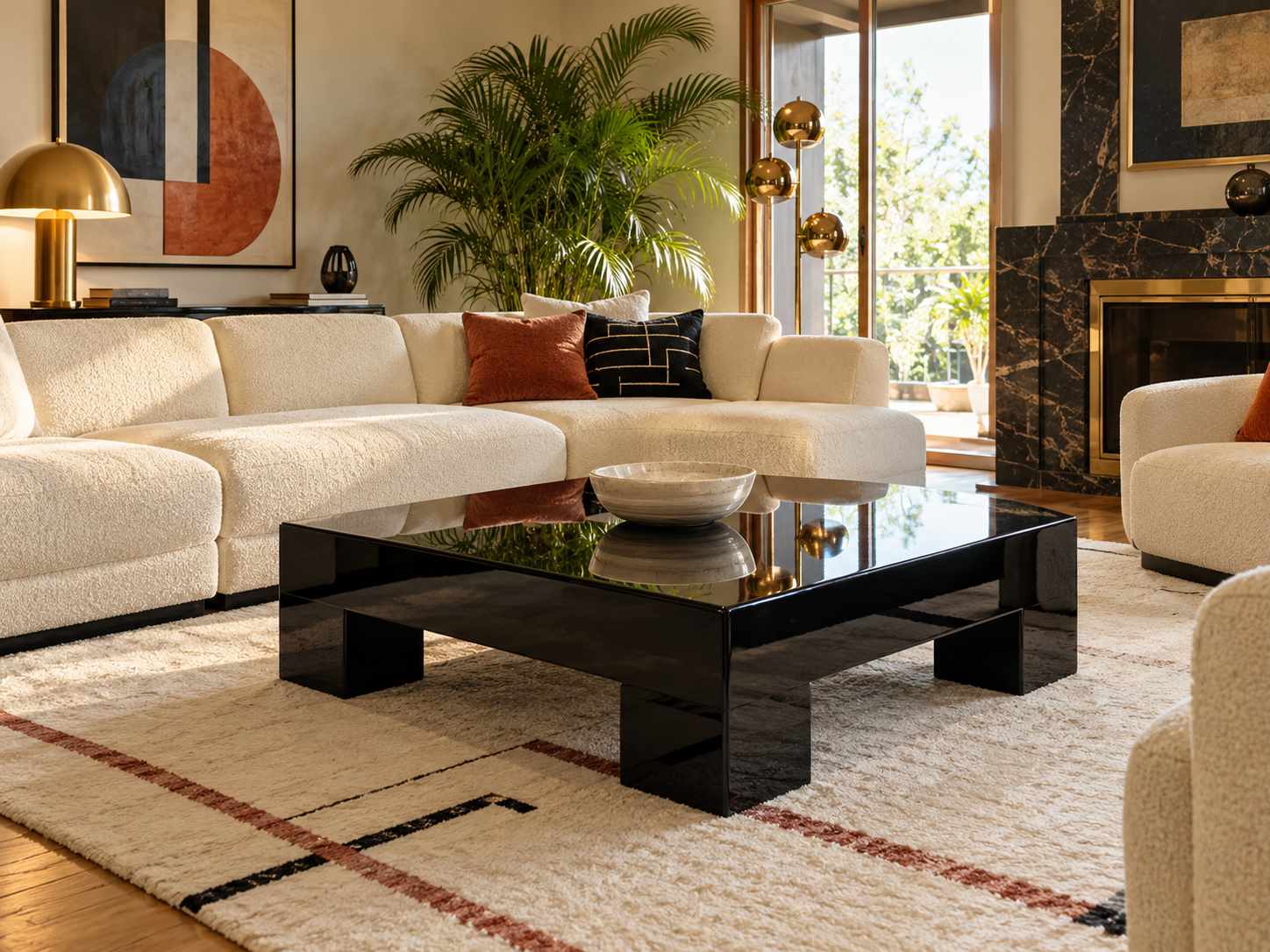
A black glossy table brings definition to pale upholstery. Choose a size that leaves a useful route around the seating group, and check the finish’s care instructions. A low ceramic bowl is enough decoration when the table surface already has visual presence.
4. Introduce a Memphis-Style Print in a Small Dose
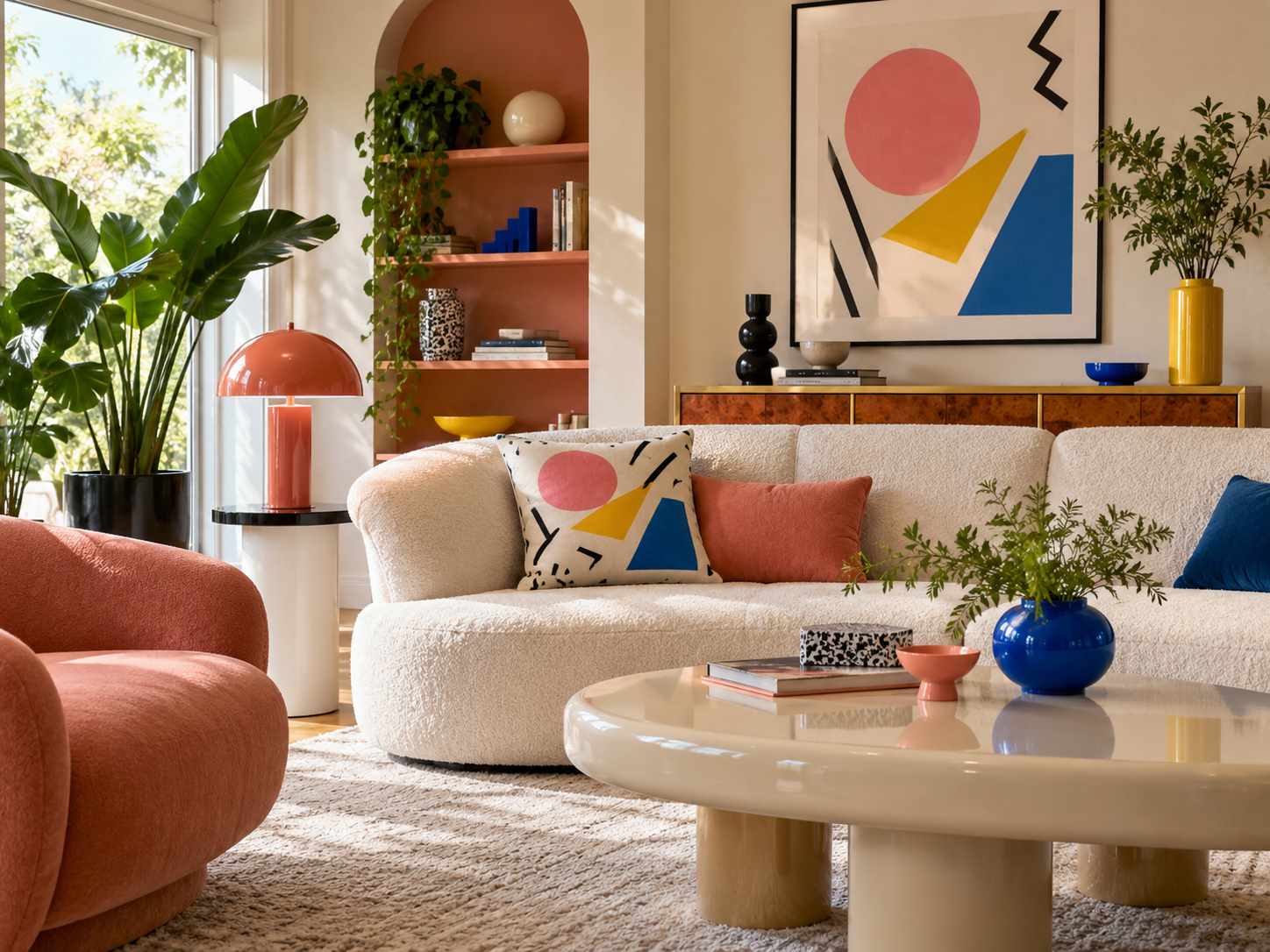
A geometric print can bring playful energy to a cushion or artwork. Keep it to one main area and repeat a color from the design in a plain accessory. Choose original or licensed artwork and avoid matching the same print across every soft surface.
5. Use a Tall Arched Mirror Beside a Cabinet
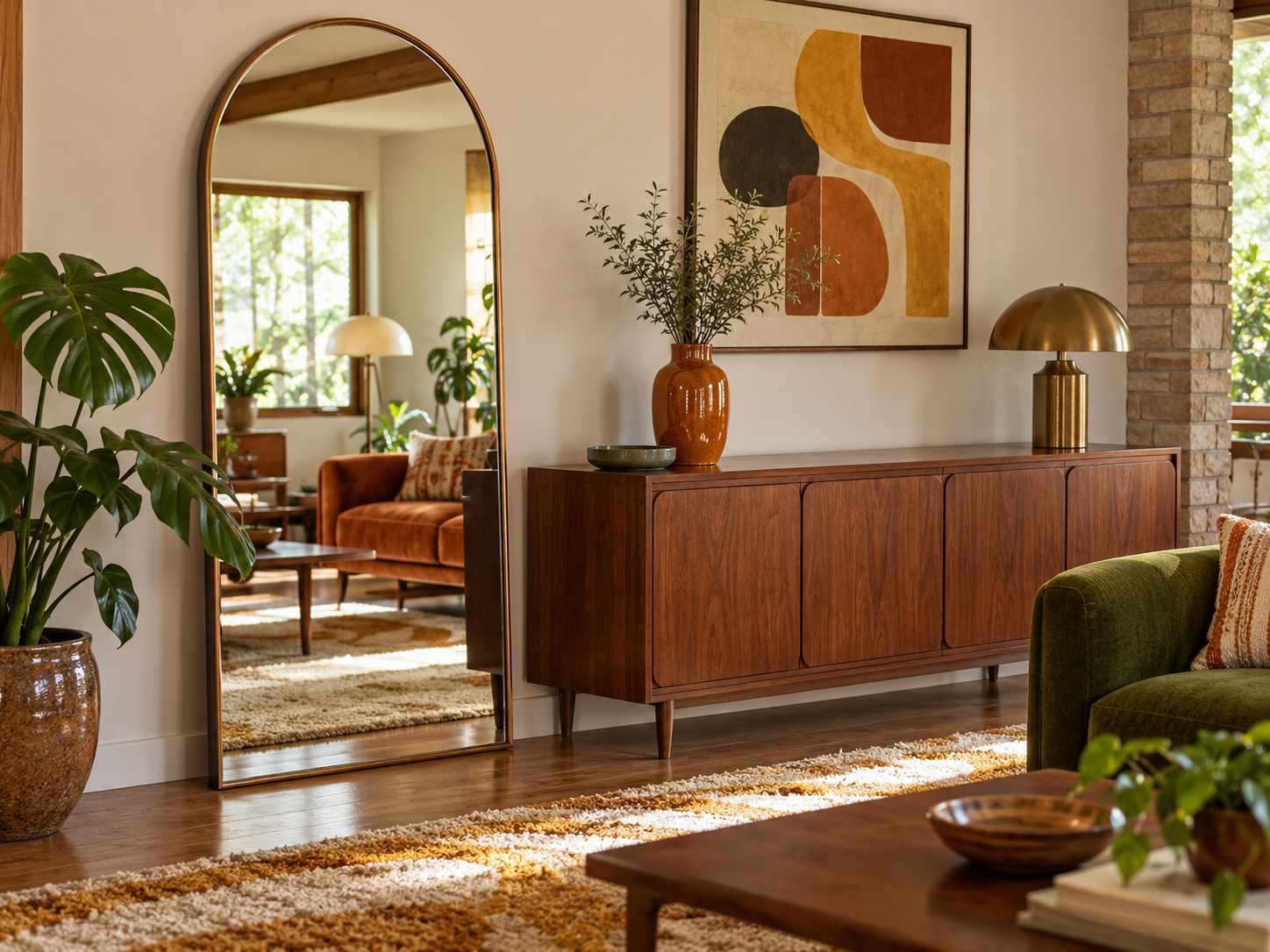
An arched mirror gives a long wall a different outline from rectangular storage. Check the reflected view and secure the mirror appropriately; a leaning arrangement still needs anchoring when specified. Let the cabinet top stay simple so the shapes, rather than a crowd of objects, carry the scene.
6. Create a Pair of Pastel Side Tables
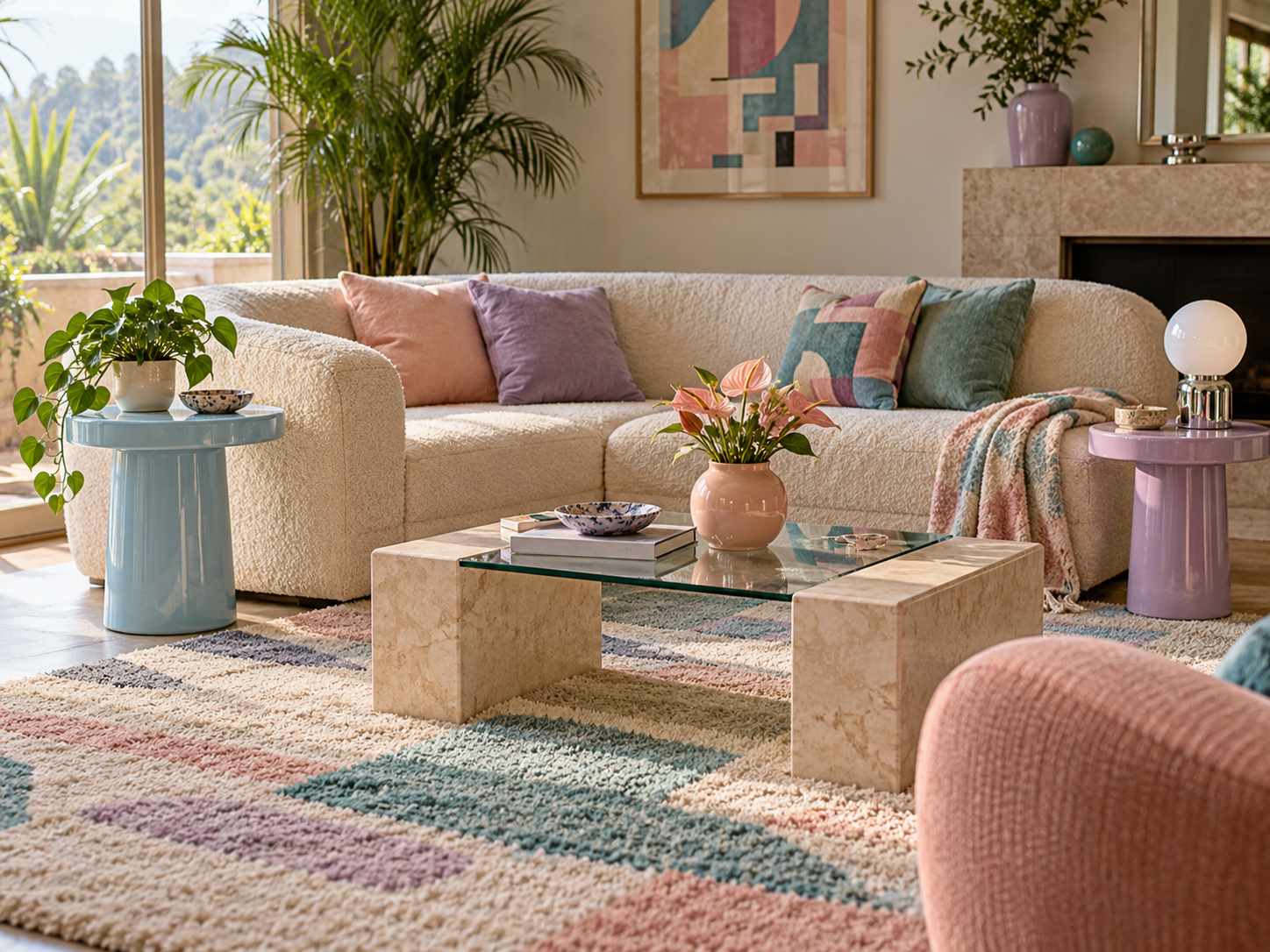
Two small side tables can distribute useful surfaces around the room. Try related colors such as pale blue and soft lilac rather than identical pieces. Check the height against the seats they serve and keep bases out of walking routes. Function should decide their position.
For a softer color direction, compare our warm neutral living room ideas.
7. Choose a Glass-Top Table with a Solid Base

A clear top lets a patterned rug remain visible while the base contributes shape. Check edge safety, stability, and cleaning demands for your household. If the surface will be used heavily by children or pets, a durable opaque table may be a more practical interpretation.
8. Build a Reading Corner Around a Floor Lamp
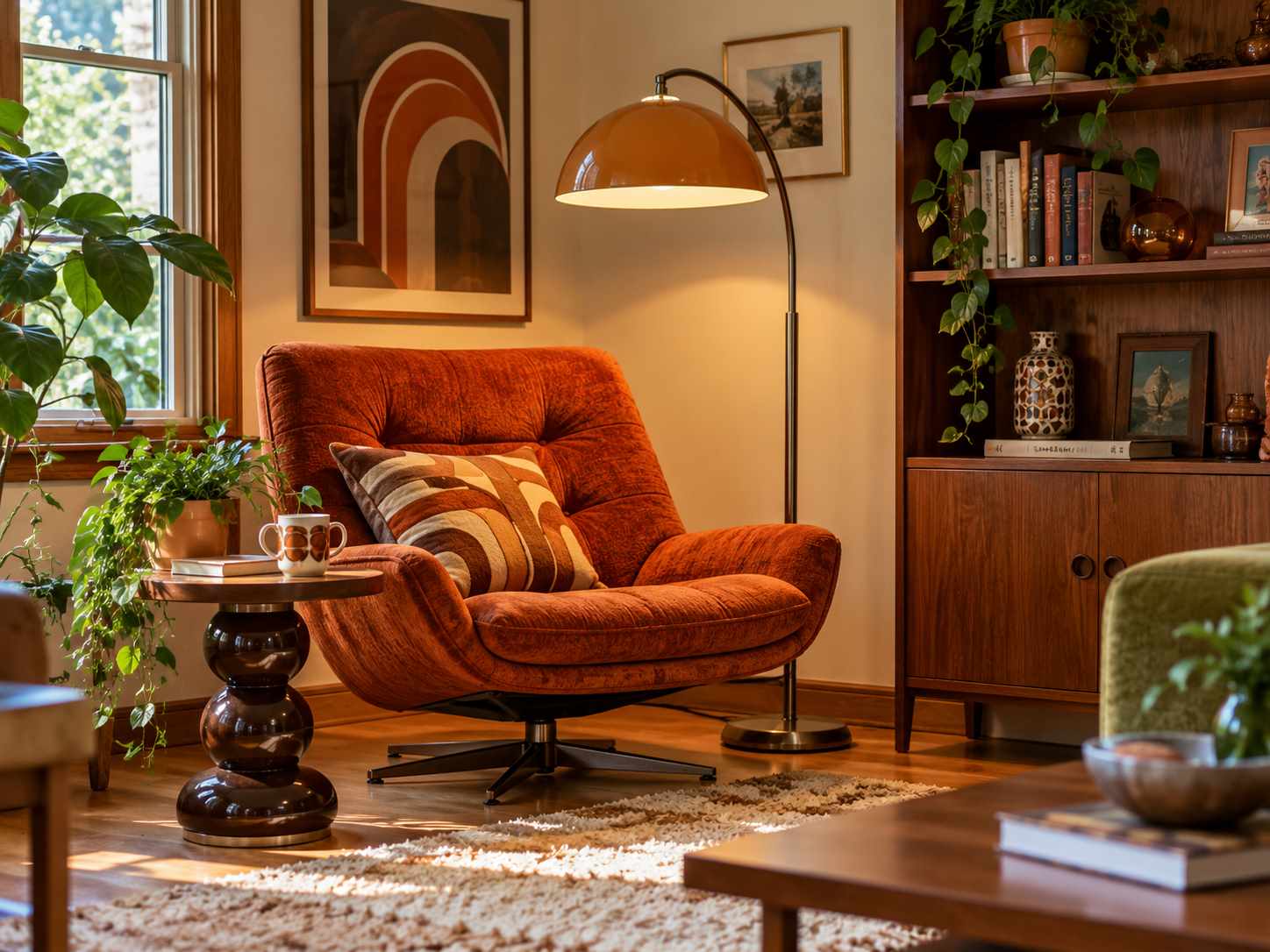
A sculptural floor lamp can make a simple chair feel intentional. Place the shade so it lights the reading area without exposing the bulb to the rest of the room. Keep the base stable and the cable clear of feet. The corner should remain comfortable after the lamp is switched off.
9. Use a Striped Rug to Organize the Layout
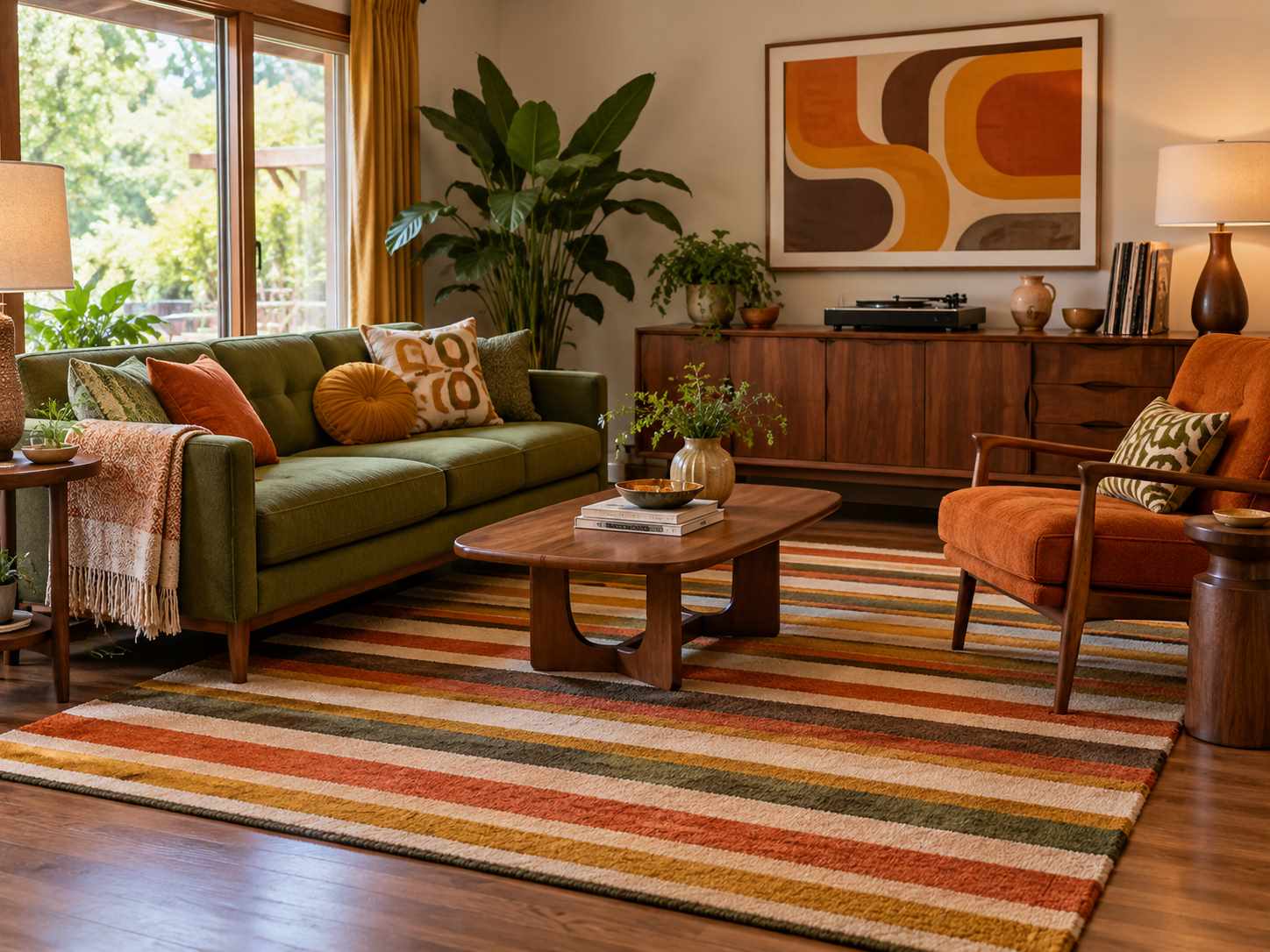
A striped rug can connect a sofa with an accent chair while giving the room direction. Choose stripe colors that already appear in the furnishings. Try the rug orientation on your floor plan before buying, since the pattern can emphasize either the length or width of the seating group.
10. Add a Curved Media Cabinet
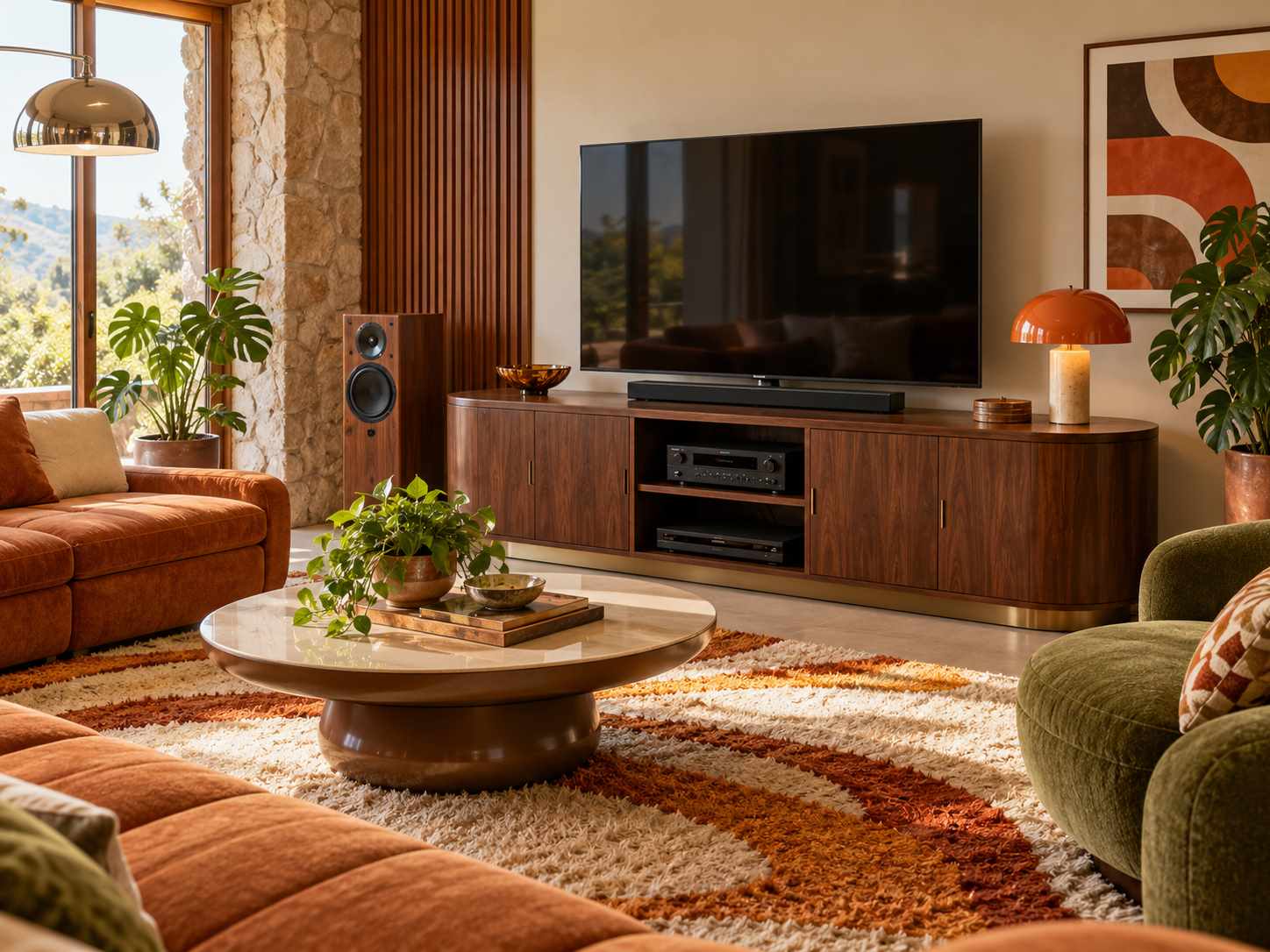
A cabinet with rounded corners can soften the media wall without relying on decorative clutter. Check equipment dimensions and ventilation requirements before deciding. Use closed storage for small accessories and keep frequently used controls accessible. The cabinet should work with the devices you own, not just hide them.
11. Group a Few Colored Glass Objects
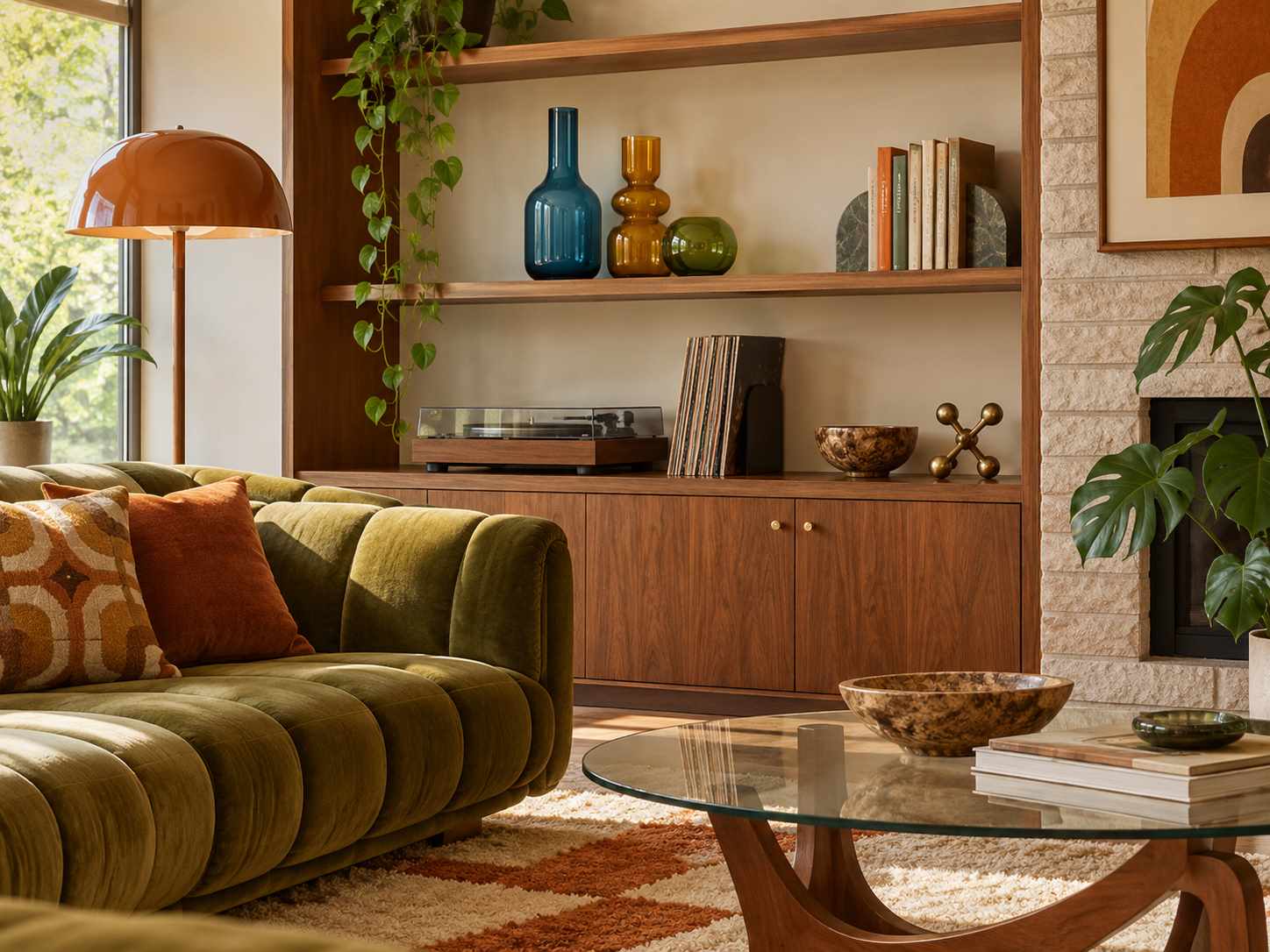
A small cluster of blue, amber, or green glass can provide color on a plain shelf. Keep the group stable and away from edges. Use different heights but leave a visible gap around the arrangement. A limited collection is easier to appreciate than glass objects spread across every surface.
12. Try a Deep Teal Armchair
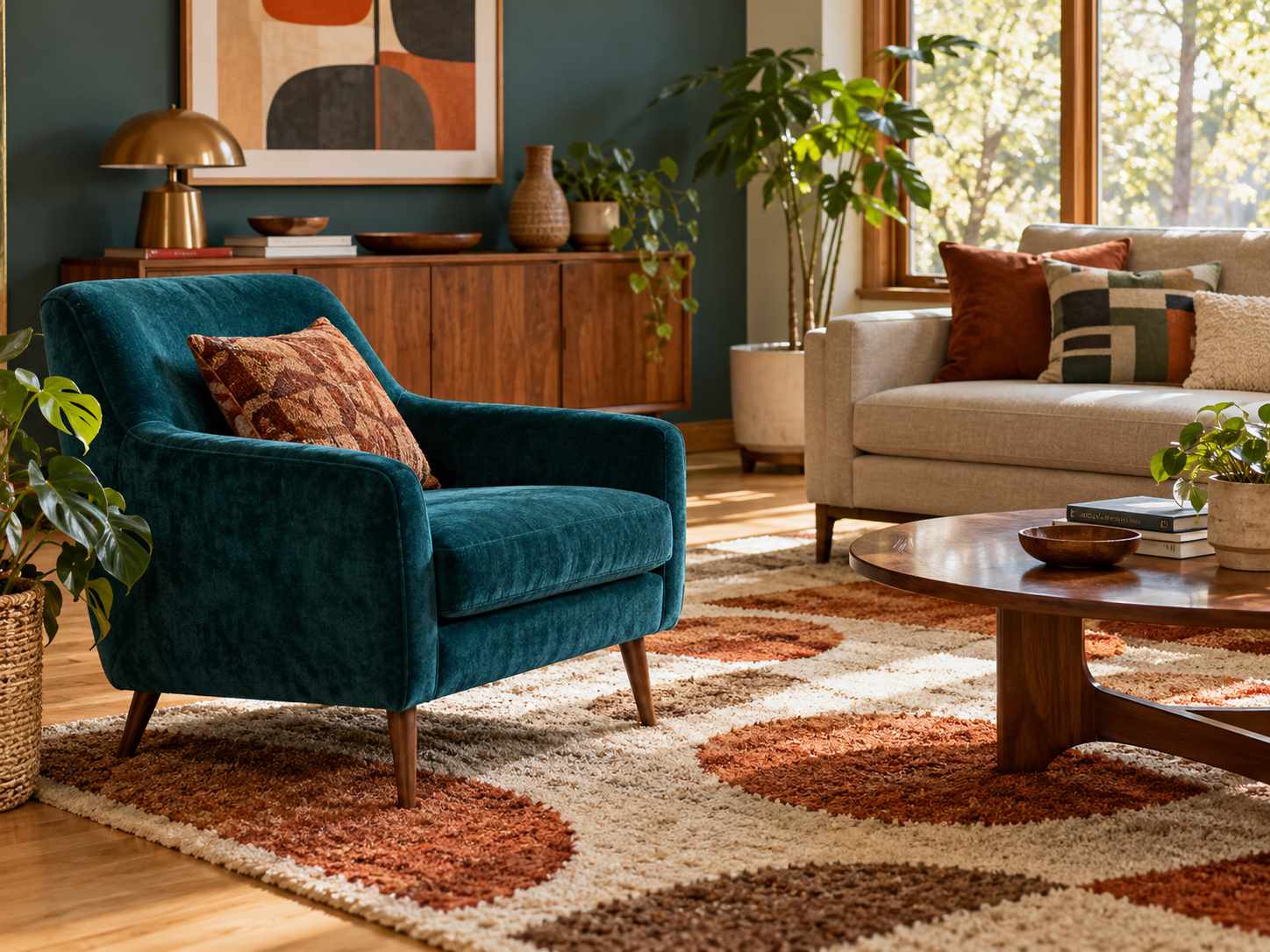
A teal chair can provide the room’s strongest color while the larger sofa remains neutral. Compare the upholstery with the rug and nearby wall in natural light. Choose a chair with a seat depth you enjoy, and allow room to turn toward the conversation area.
For help arranging smaller displays, read our guide to styling open shelves.
13. Use a Graphic Room Divider in an Open Plan
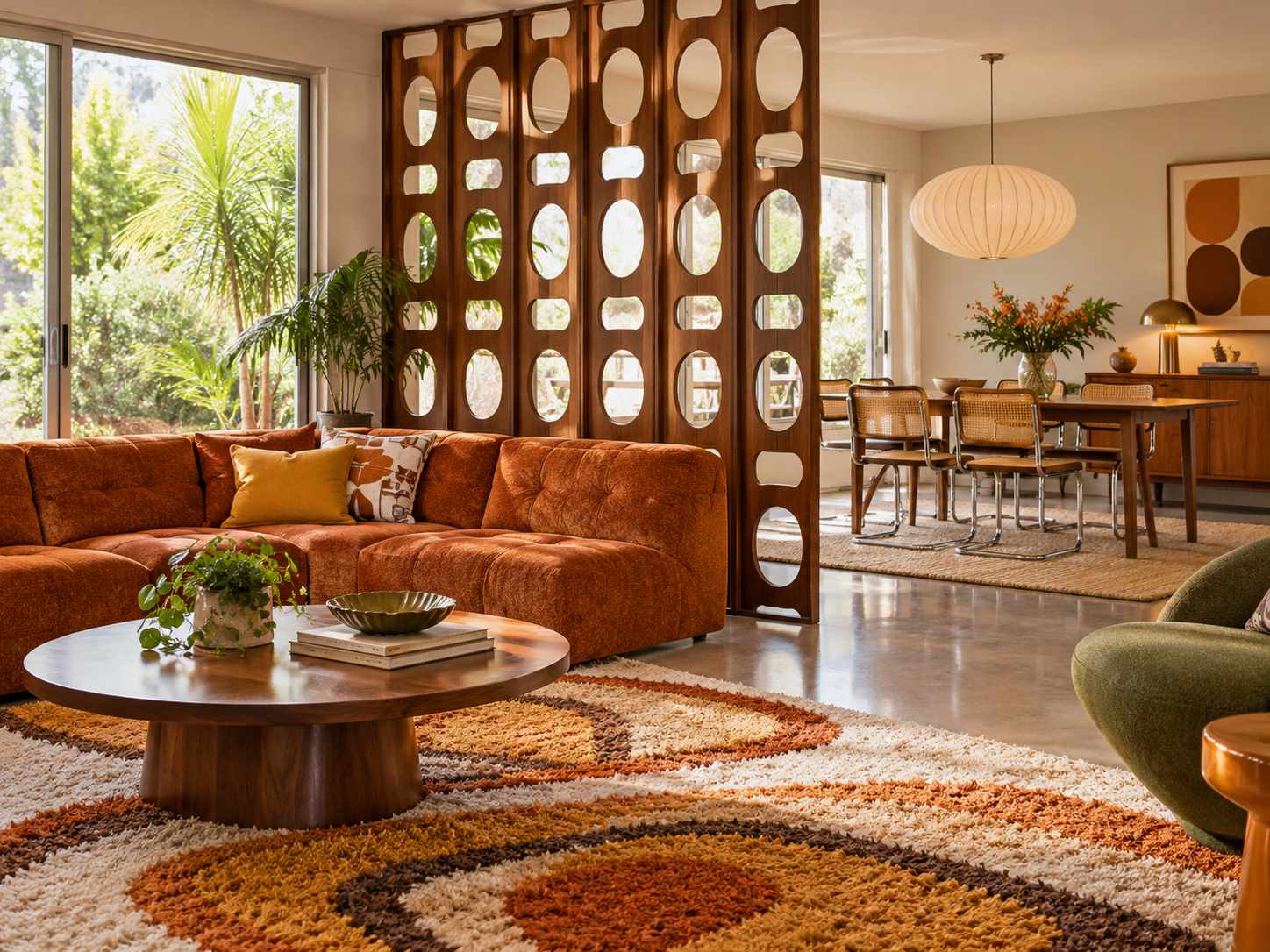
An open divider can suggest a boundary between seating and dining without a full wall. Choose a stable, appropriately anchored design and check the passage around it. Keep its pattern quieter than any nearby rug so the room does not acquire competing visual grids.
14. Balance a Large Floral Sofa with Plain Accessories
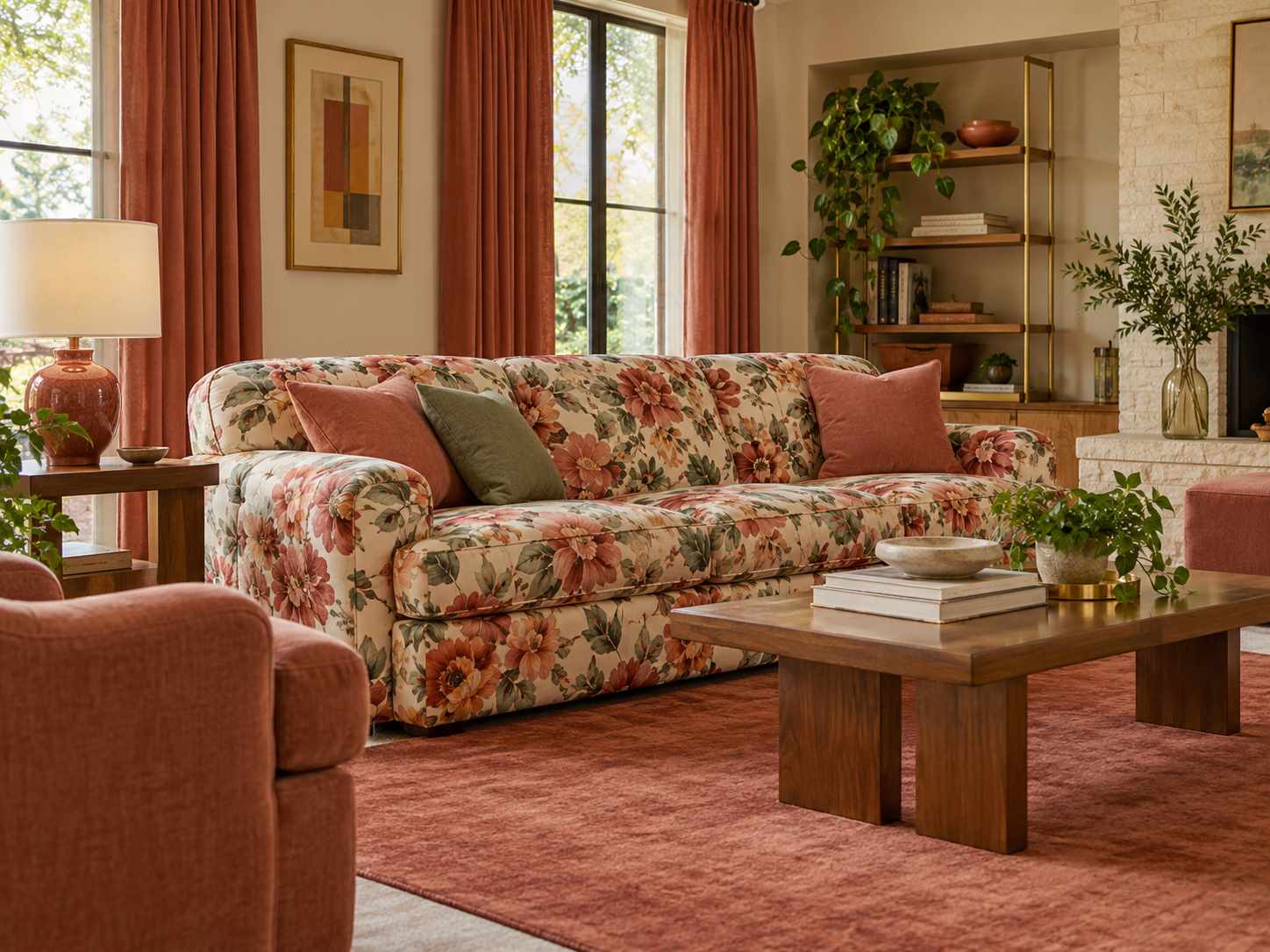
If you already own floral upholstery, use it as the main pattern. Pull one background tone into the curtains or rug and let side tables remain simple. A clear palette can help an expressive sofa feel intentional without disguising the fabric under multiple throws.
15. Bring a Marble-Look Surface into One Small Piece
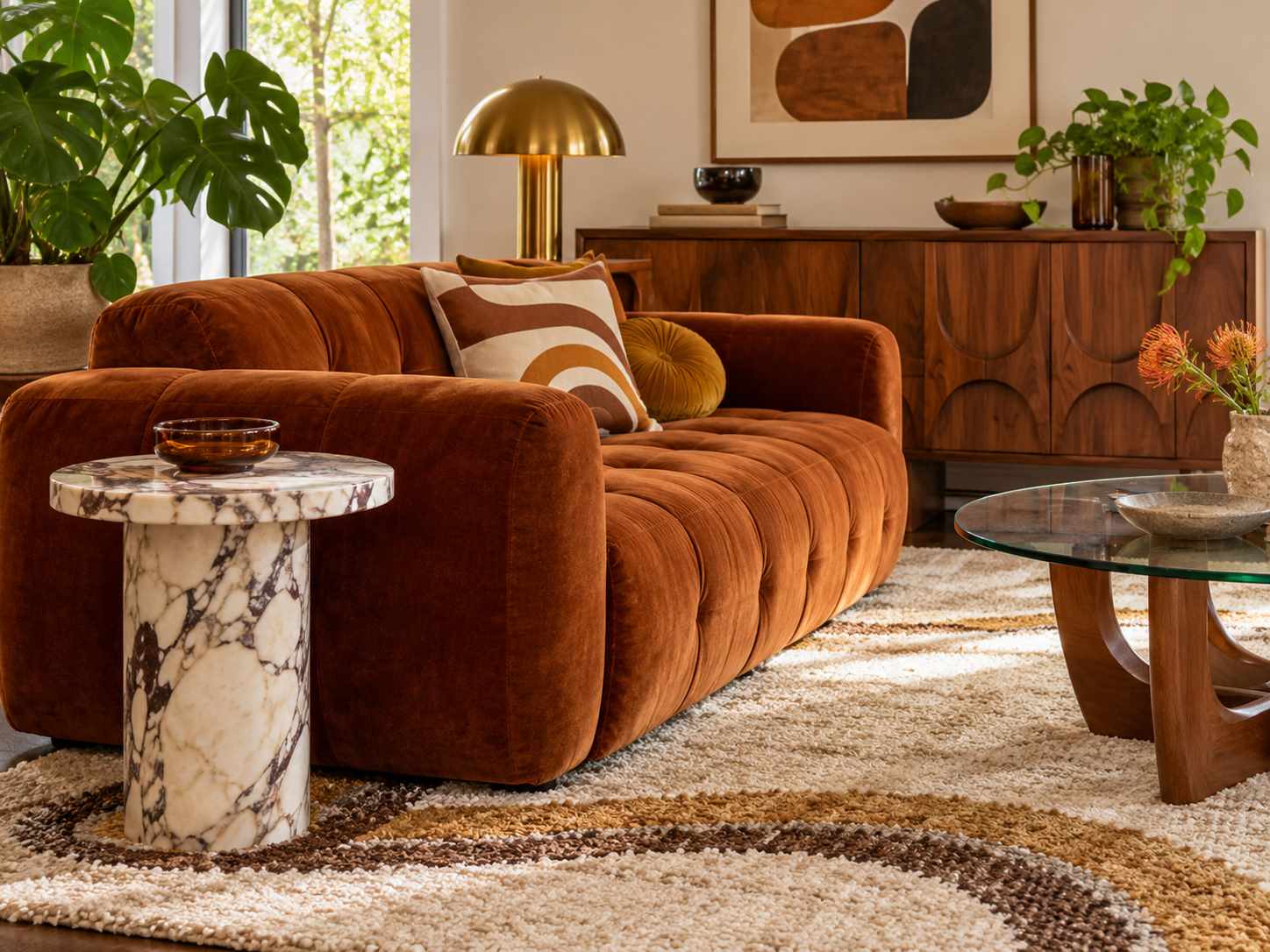
A marble-look side table can introduce movement without a large renovation. Choose the material for durability and maintenance as well as appearance. Compare its pattern with nearby textiles, and leave the top mostly clear so it contributes shape rather than becoming another display stand.
16. Use a Low Picture Ledge Away from Seating
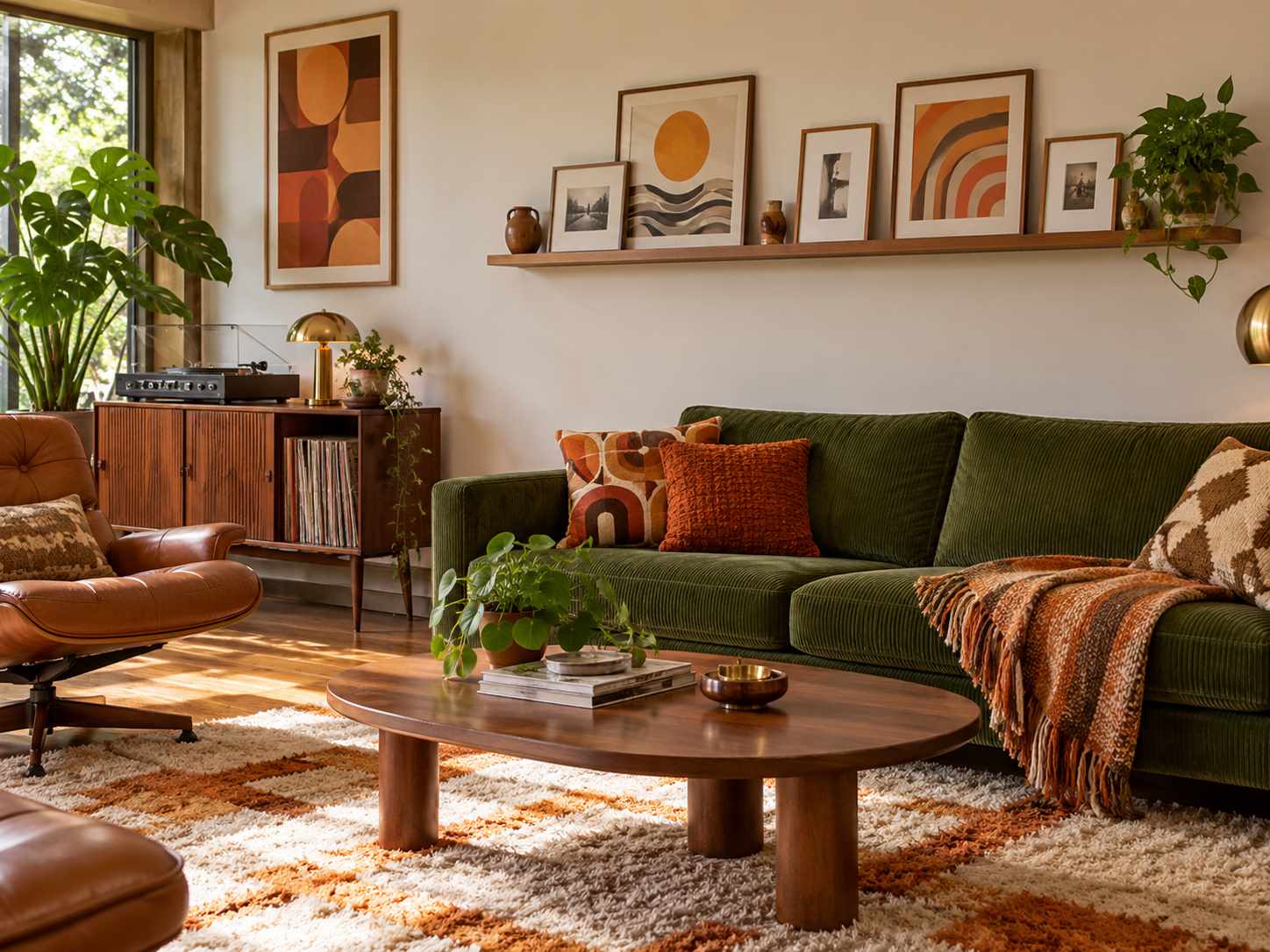
A picture ledge can hold a small rotating collection of framed work. Install it to the specified load and wall requirements, and position it away from spots where objects could fall onto someone. Keep frames related in scale and leave space to move them without crowding.
17. Finish the Room with a Plain Textured Curtain
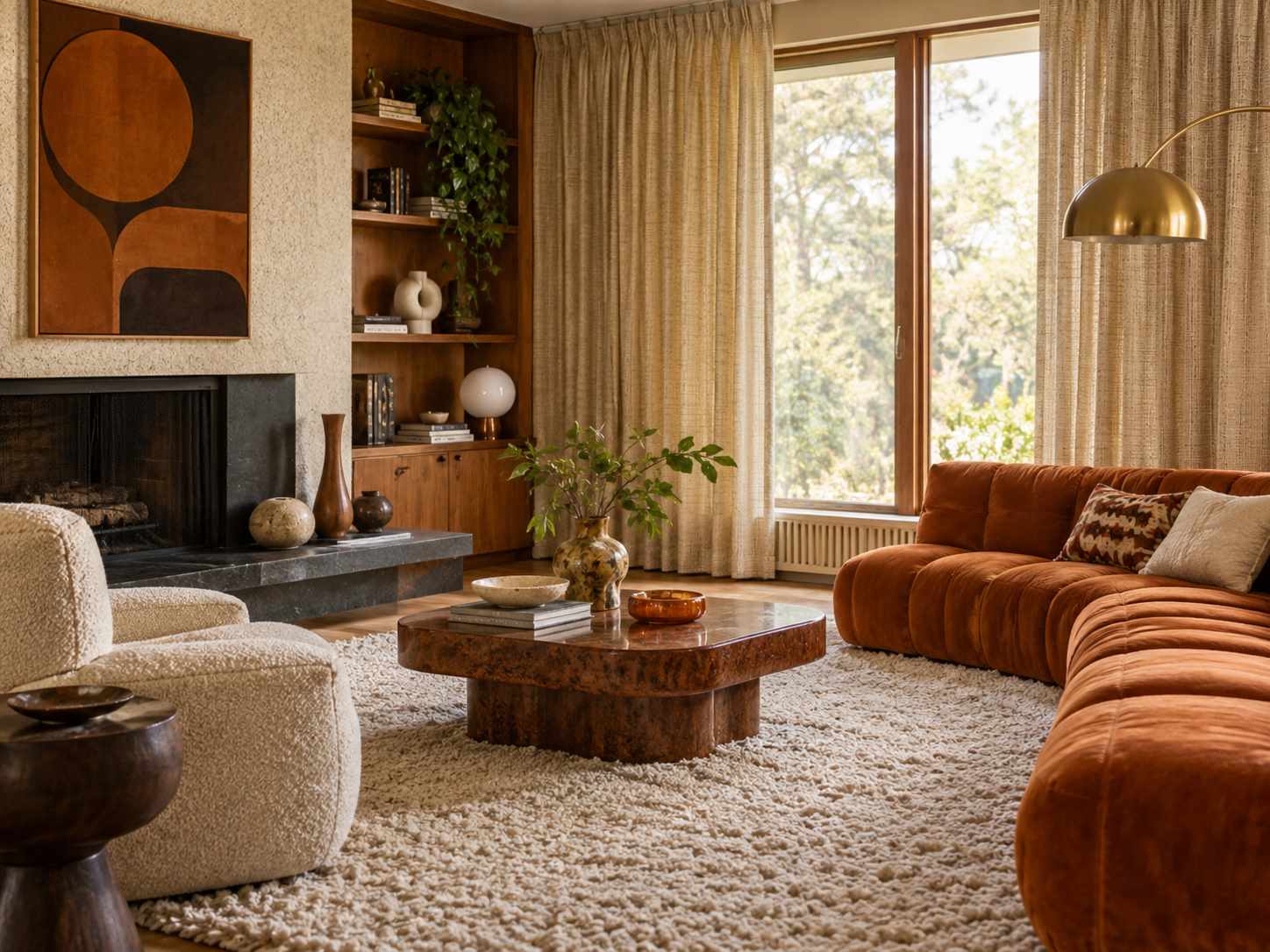
Plain curtains can quiet a scheme with several sculptural pieces. Choose a color that connects to the largest neutral surface in the room. Check how much light the fabric filters and keep its drop appropriate to nearby heaters and furniture. Texture can provide interest without adding another print.
Frequently Asked Questions
How can I avoid an 80s room looking themed?
Choose a few strong shapes and mix them with practical contemporary pieces. Leave some surfaces plain rather than repeating a retro motif everywhere.
What is a useful starting palette?
Cream with peach and muted blue is one option; charcoal with teal and warm white is another. Choose colors that suit your existing flooring.
Can I use dark furniture?
Yes. Balance a dark cabinet or table with lighter upholstery and adequate lighting. Check the room in evening light before adding more dark pieces.
Are glossy surfaces difficult to maintain?
Care varies by material and finish. Check the manufacturer’s guidance and consider fingerprints, scratches, and cleaning access before buying.
Where should the boldest pattern go?
Use it where you want the main focus, such as the rug or a single seat. Keep nearby patterns smaller or quieter so the main design remains clear.
Related Decorating Guides
- 17 70s Living Room Decor Ideas with Earthy Color
- 17 90s Living Room Decor Ideas for Comfortable Homes
- 17 Aesthetic Farmhouse Living Room Ideas with Useful Details
Conclusion
A balanced retro living room starts with a useful layout and a clear visual lead. Choose the curved sofa, graphic rug, or colorful chair that suits your room, then simplify the surrounding details. Save your favorite grouping and test the palette before making several purchases.
Find more seating and finishing details in our living room guides.