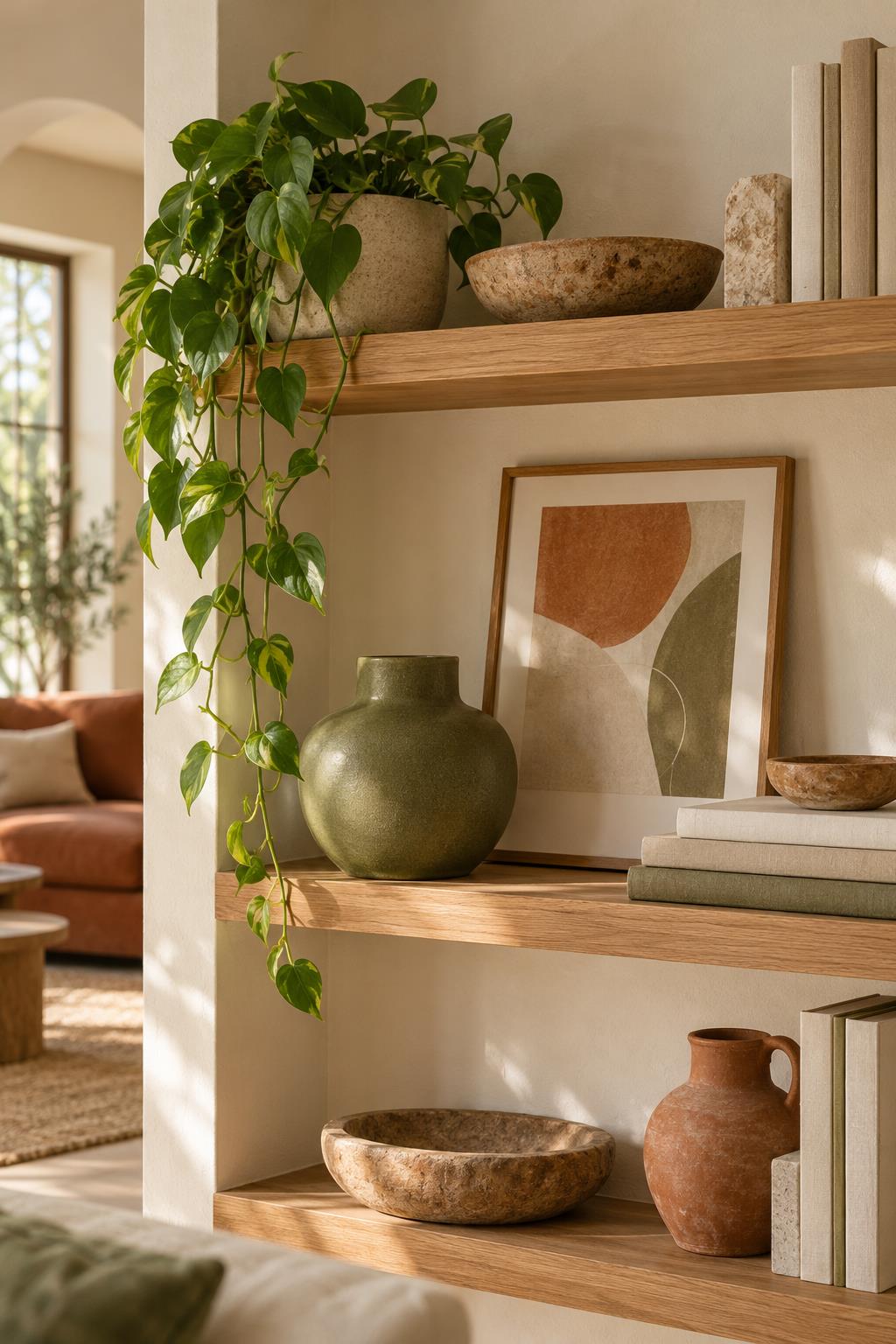
Good shelf styling begins with editing. A shelf does not need to be full to feel finished, and the most appealing arrangement often combines useful objects with a few pieces you enjoy looking at.
Empty one section at a time
Take a photo of the starting point, then clear a manageable section. Clean it and check the shelf’s load guidance. Place heavier items low and avoid treating a decorative floating shelf like a full bookcase.
Choose a loose color thread
Pull two or three colors from the room and use them as a guide. Cream ceramics, olive accents, and warm wood can work well together, but your existing objects should lead the choice. Do not replace favorite pieces just to enforce a palette.
Place the largest pieces first
Begin with a framed picture, a substantial bowl, or a small group of books. These pieces establish the structure. Keep frames stable and make sure their depth suits the shelf rather than leaving them balanced on an edge.
Vary the height and direction
Mix a short horizontal book stack with a taller upright group. Add a rounded vessel nearby to break up the rectangles. Let books remain easy to take out; styling should not make the shelf difficult to use.
Leave a deliberate gap
Step back and look for the busiest section. Remove one object and see whether the arrangement becomes clearer. Empty space helps individual shapes stand out and gives your eye somewhere to rest.
Add greenery only where it can thrive
Choose a plant for the actual light and care conditions. Use a suitable pot and protect the shelf from water. Keep trailing foliage clear of electrical fittings and avoid unsafe placement around children or pets.
Check the view from across the room
A shelf looks different at arm’s length than it does from a sofa. Take a quick photograph to assess the balance. Repeat a color or shape gently rather than making every section identical. Find more room context in our living room collection.