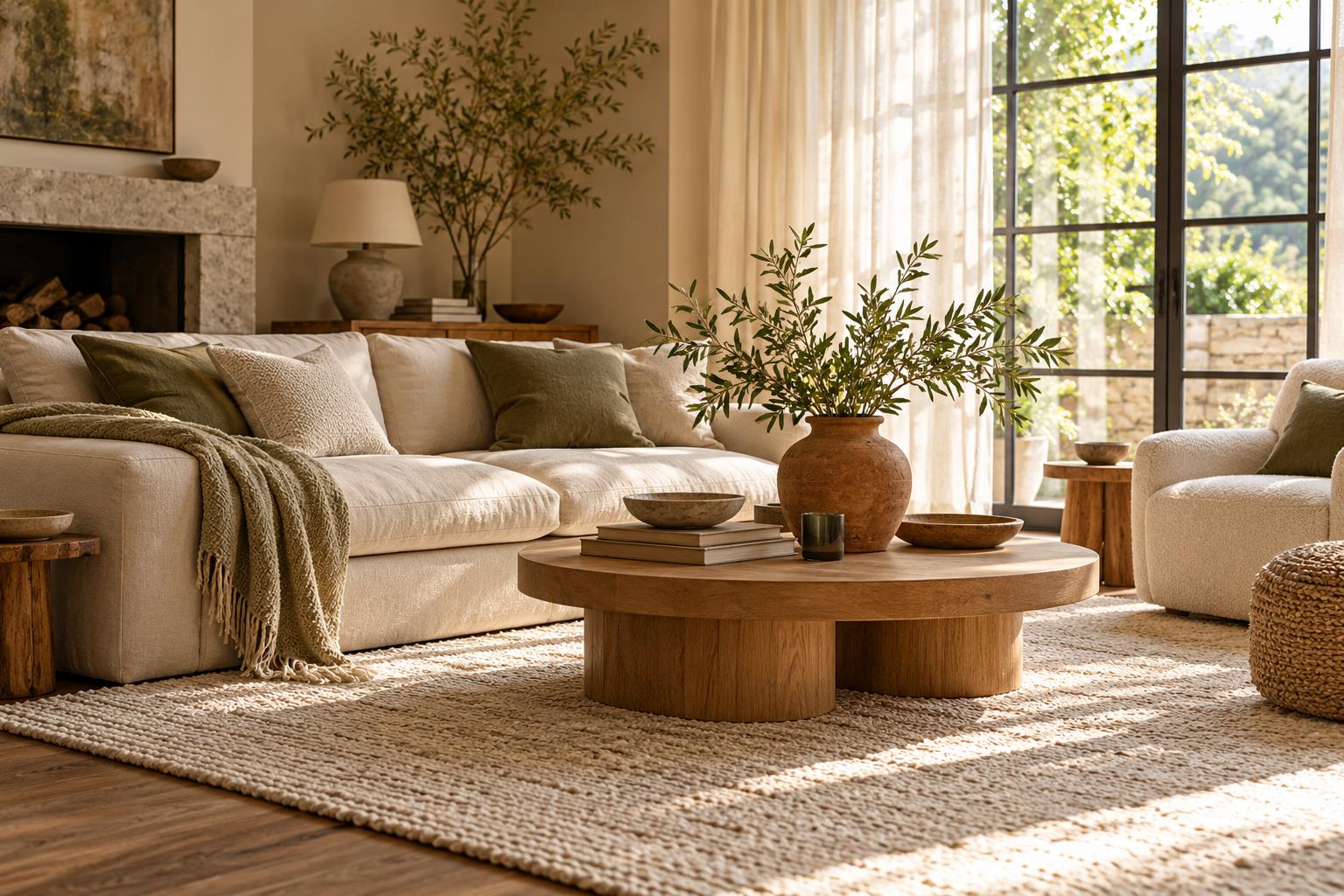
A neutral living room feels inviting when its quiet colors have something to say. The trick is to create differences in texture, shape, and tone so the room feels layered rather than flat.
1. Choose one warm starting point
Begin with the largest item you plan to keep, such as a sofa or rug. Look at its undertone in daylight: a yellow-beige sofa will behave differently beside pink-beige paint than it will beside a soft oatmeal wall. Bring samples together before committing.
2. Let texture do some of the work
Pair smooth wood with nubby upholstery, washed cotton, and a woven basket. Keep the palette restrained while varying the surfaces. You do not need a separate accent color for every piece to make the room interesting.
3. Give the sofa a grounded base
A rug can make a seating group feel connected. Measure the group and mark the proposed rug footprint with removable tape before ordering. Aim for a size that supports the front legs of the main seating when your layout allows it.
4. Introduce an olive accent
A muted green cushion or ceramic pot adds a soft contrast to cream and oak. Repeat it once elsewhere rather than scattering identical accessories around the room. This creates a connection without making the styling feel overly matched.
5. Mix rounded and straight shapes
If your sofa and shelving are rectangular, a curved lamp or round side table can loosen the arrangement. Check the route through the room before buying a large coffee table. An attractive shape still needs to work with everyday movement.
6. Use lamps at different heights
A floor lamp beside a chair and a smaller table lamp create more choices than an overhead fitting alone. Position shades to avoid glare from the seats you use most. Follow each fitting’s bulb and electrical instructions.
7. Leave breathing room on surfaces
Choose a few objects with different heights and leave part of the table clear. A low bowl can hold remotes while a taller vase adds shape. The room should still have somewhere to put a drink or book.
8. Add one darker anchor
A dark picture frame, lamp base, or small wooden table keeps pale colors from feeling washed out. Start with a single piece and assess it from the doorway before adding more.
9. Finish with what you already own
Bring in a favorite book, a meaningful photograph, or a bowl you use regularly. Personal details give a neutral scheme a point of view. For more finishing touches, explore our DIY and styling guides.