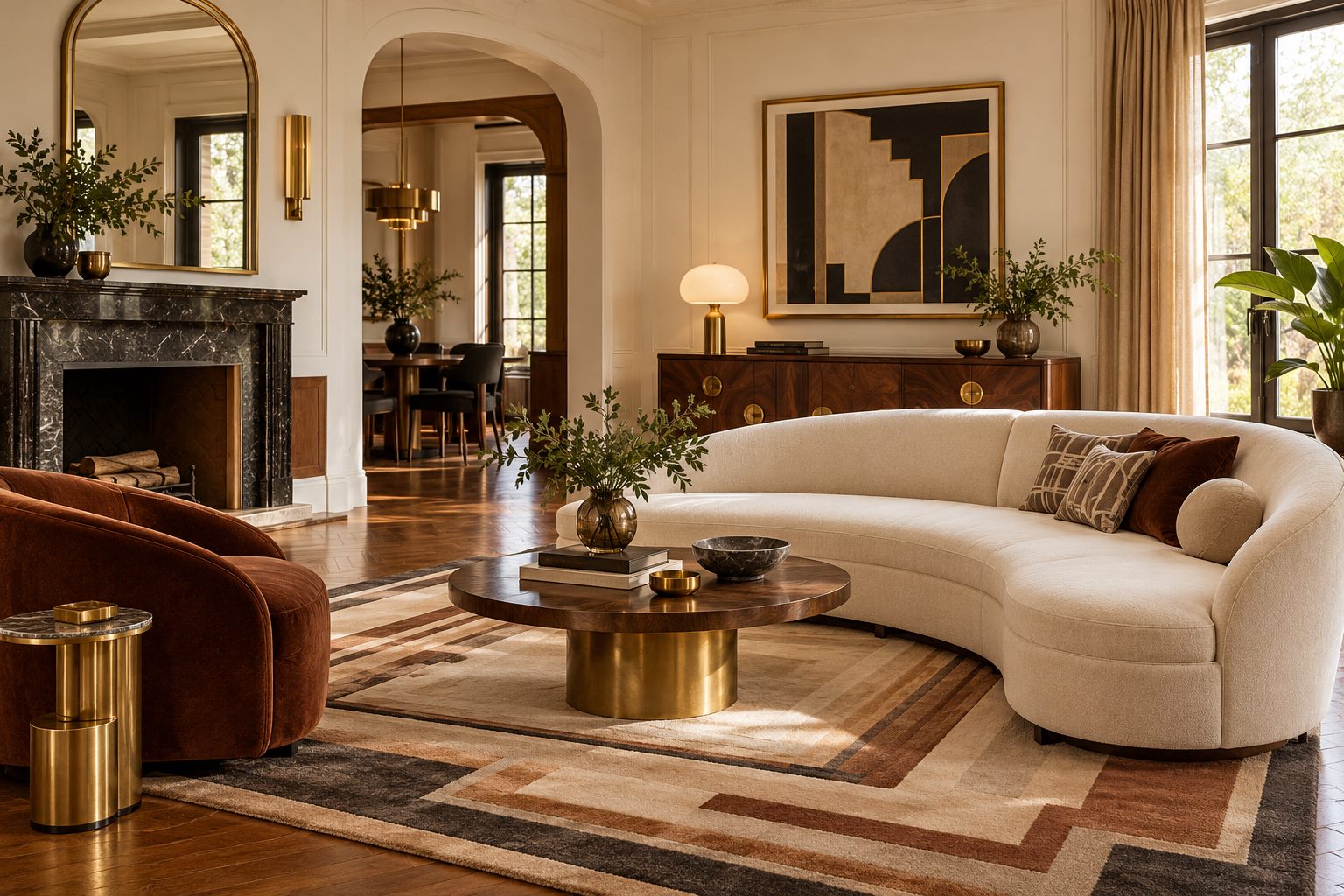
A living room with a 1930s mood can feel elegant without becoming a period set. Start with rounded furniture, controlled geometric patterns, and a few polished details, then make room for comfortable seating and everyday storage. These 1930s living room decor ideas offer different ways to balance decorative character with a space you can actually use. Choose one strong feature first, such as a curved sofa or patterned rug, and let quieter pieces support it. The aim is a considered room, not a collection of every vintage-looking object you can find.
Key Takeaways
- Choose one dominant geometric pattern and repeat its colors in smaller details.
- Pair polished surfaces with soft upholstery so the room remains comfortable.
- Measure furniture and walking routes before buying large vintage pieces.
1. Set a Curved Sofa Against a Plain Wall
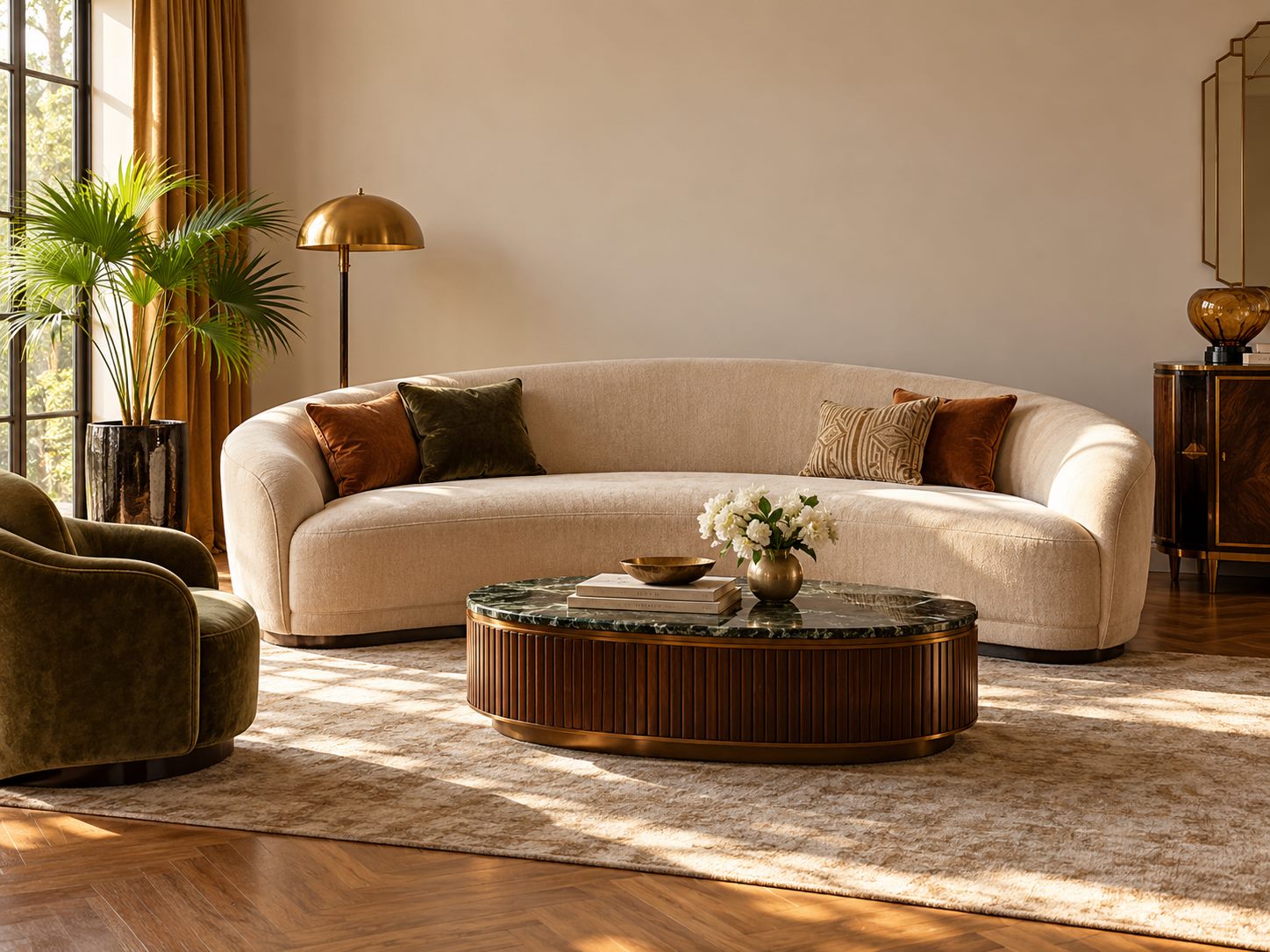
A gently curved sofa introduces a sculptural line without asking the whole room to compete. Place it against a plain wall so its silhouette reads clearly, then use a compact oval table in front. Check the seat depth and overall curve on your floor plan; a sweeping shape can occupy more space than its listed width suggests.
2. Frame the Seating with a Stepped Rug
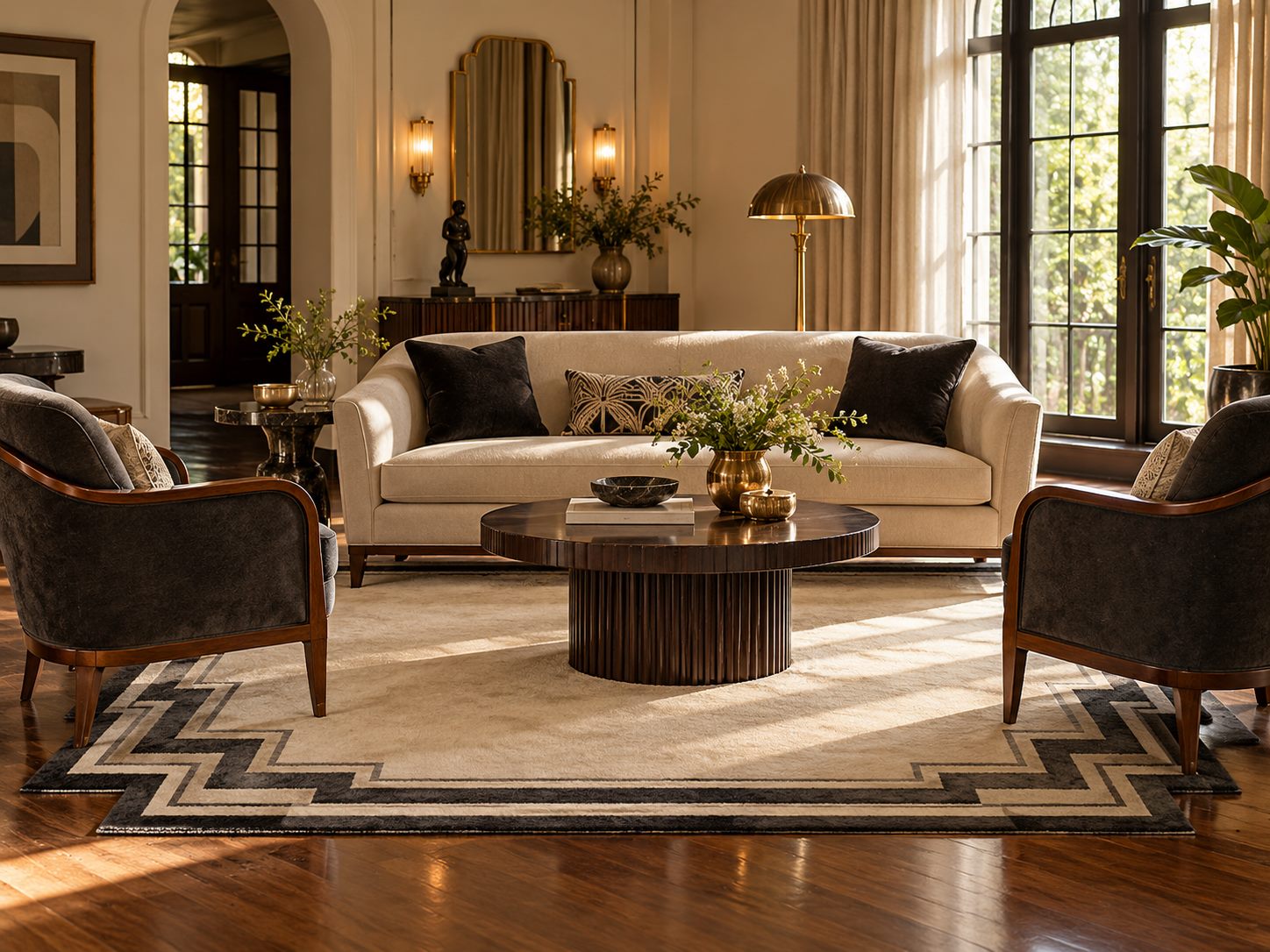
A rug with stepped borders creates a clear foundation for a sofa and two chairs. Choose a subdued cream-and-charcoal design if your furniture already has strong shapes. Mark the rug outline on the floor before ordering, and keep the front legs of the main seating on it where the layout allows.
3. Introduce Walnut Through One Storage Piece
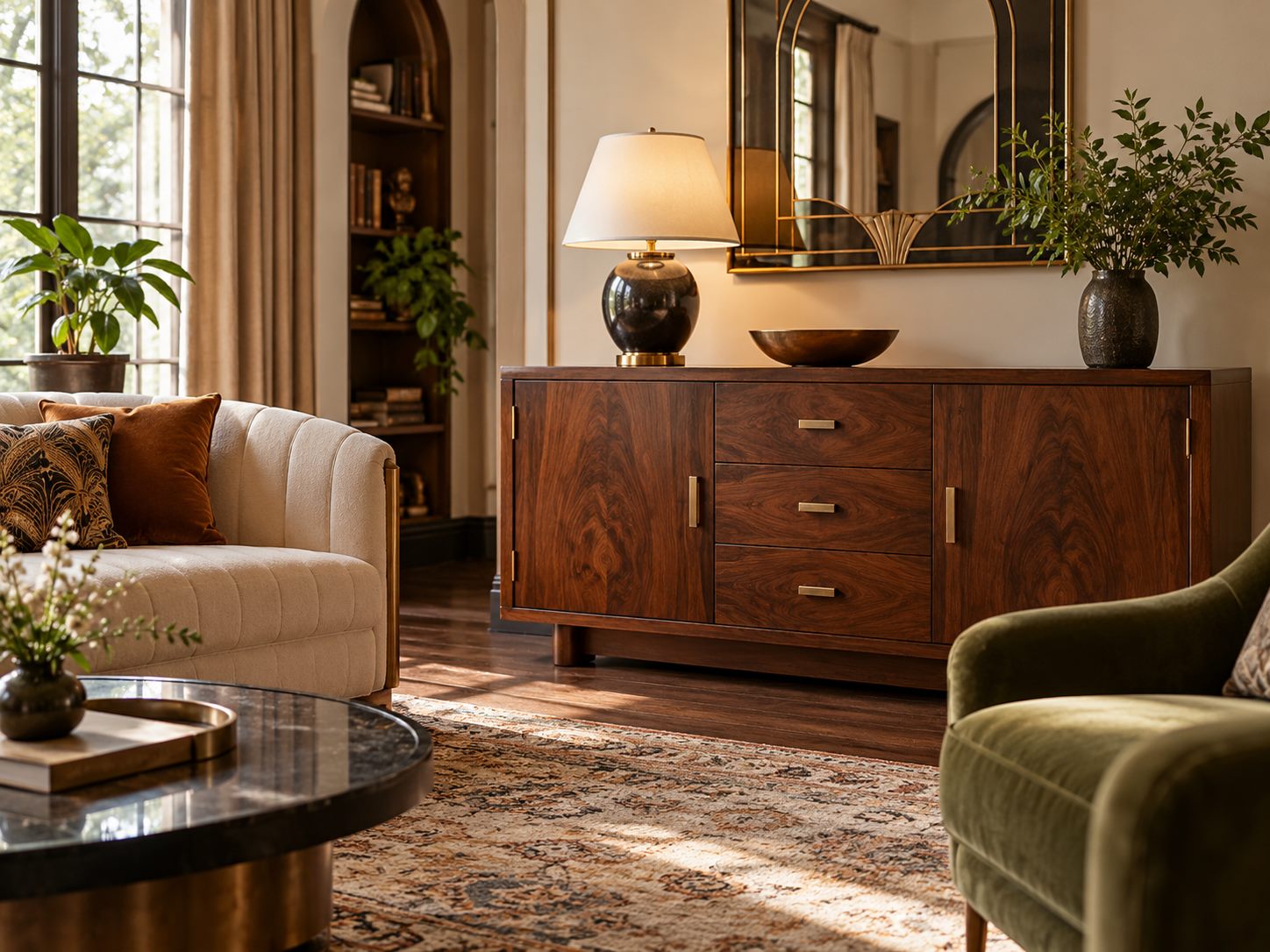
A walnut-toned sideboard adds warmth and useful closed storage. Let its grain remain visible by keeping the surface lightly styled with a lamp and a shallow bowl. Check drawers, hinges, and condition before purchasing an older piece. You can get the visual warmth with a newer cabinet when restoration is not part of your plans.
4. Use a Pair of Small Club Chairs
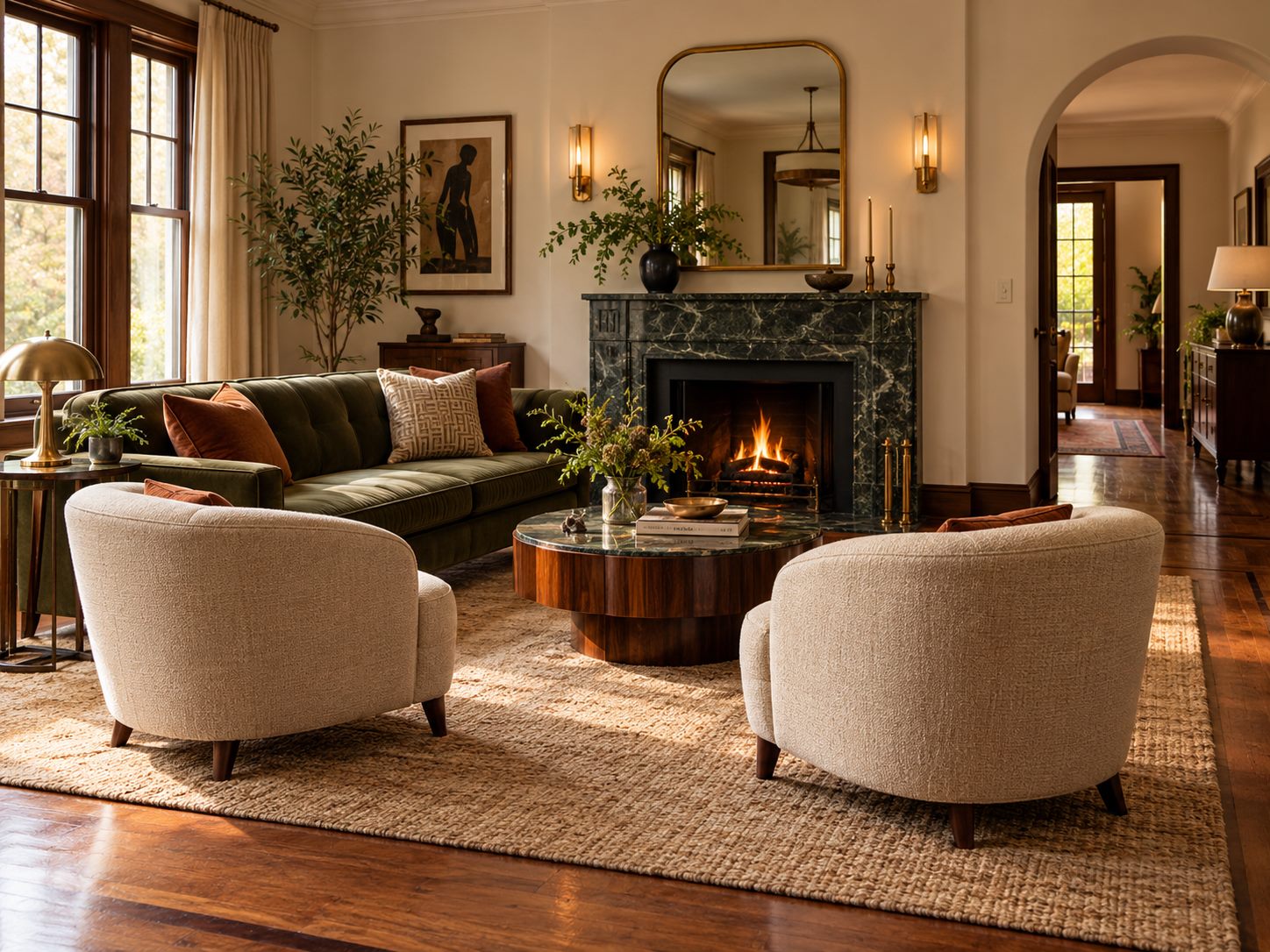
Two compact club chairs make a conversation area feel deliberate. Angle them toward the sofa rather than pushing every seat against the walls. A plain woven upholstery keeps the rounded arms from looking overly formal. Test whether the chairs still leave a comfortable route to doorways when someone is seated.
5. Balance a Round Mirror Above a Console
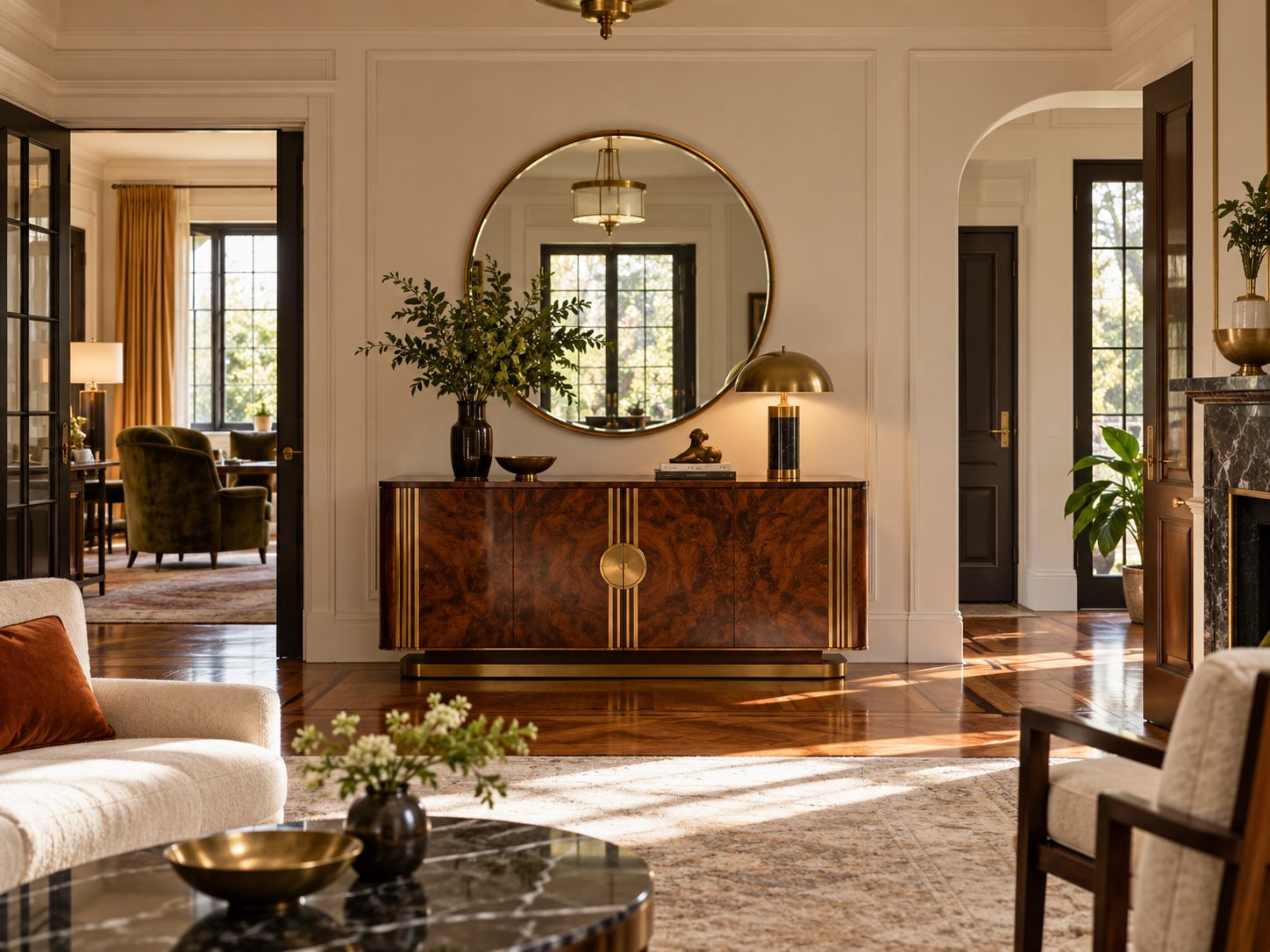
A circular mirror provides contrast to a rectangular console and a room full of straight architectural lines. Center the grouping as a whole, accounting for nearby doors and windows. Use fixings appropriate to the mirror and wall. A large mirror belongs where it can be securely supported, not simply where a decorative hook already exists.
6. Add Fluted Detail to a Small Cabinet
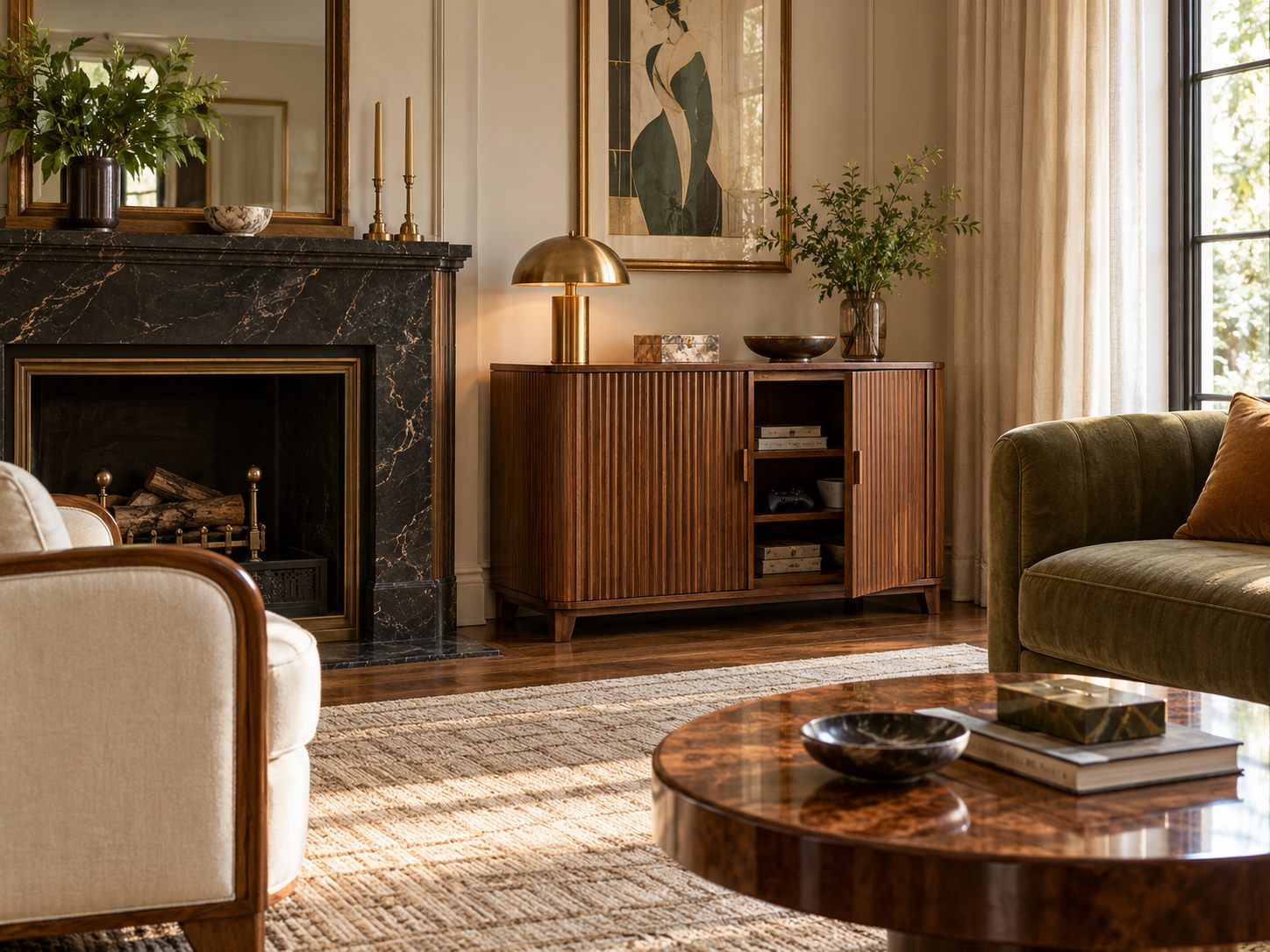
Fluting introduces rhythm without another printed pattern. A narrow fluted cabinet can hold games or media accessories while contributing a decorative surface. Choose a finish close to the room’s existing wood so the texture stands out more than the color contrast. Confirm that its doors can open without hitting nearby seating.
To compare a softer palette, read our warm neutral living room ideas.
7. Choose One Fan-Pattern Textile
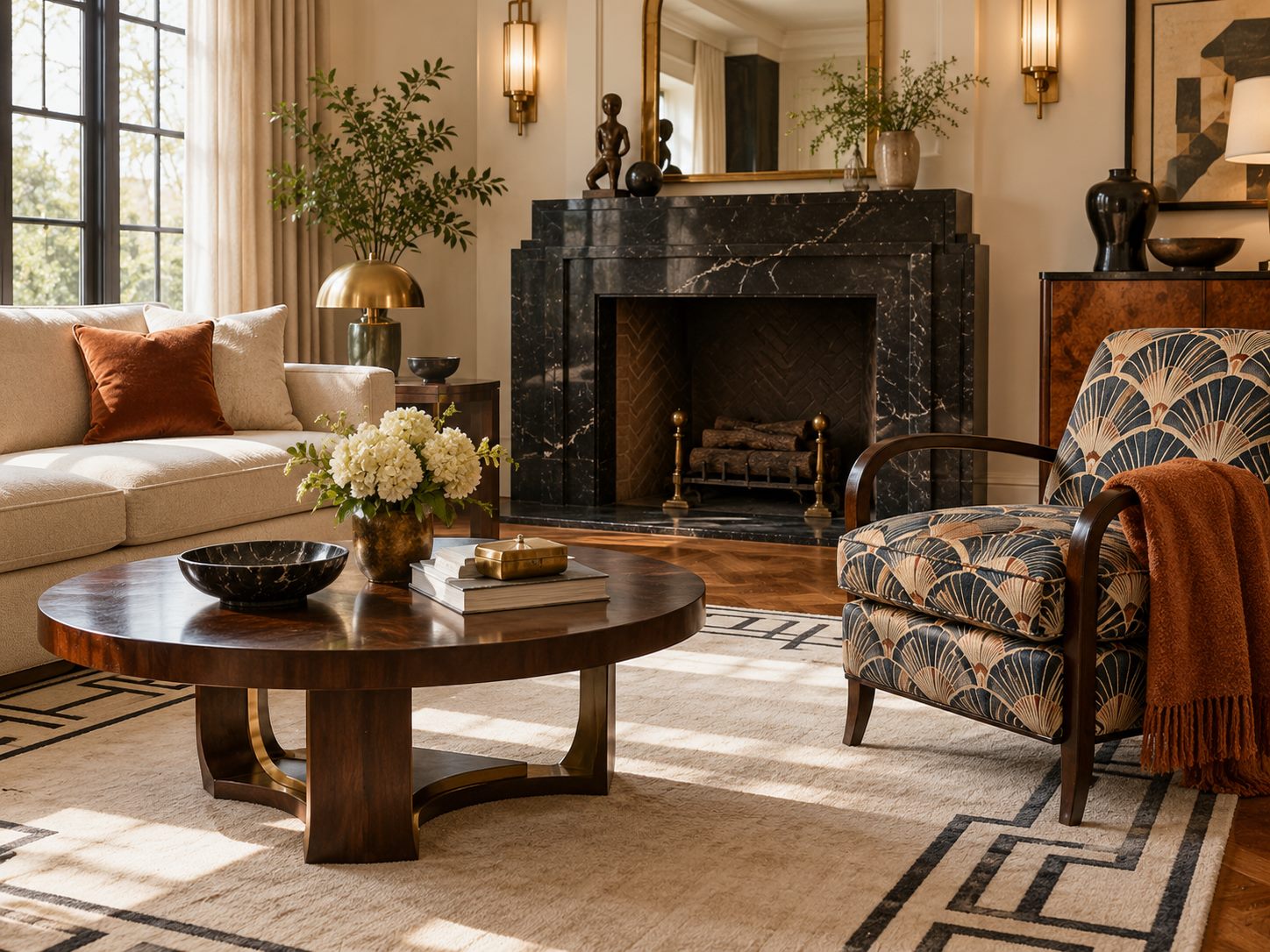
A fan motif works well on a cushion or a single upholstered seat when the rest of the room is quiet. Pull one color from the motif into a plain throw to create a connection. Keep neighboring fabrics simple, especially if you already have a geometric rug, so the pattern has room to be noticed.
8. Keep Brass Accents in a Small Group
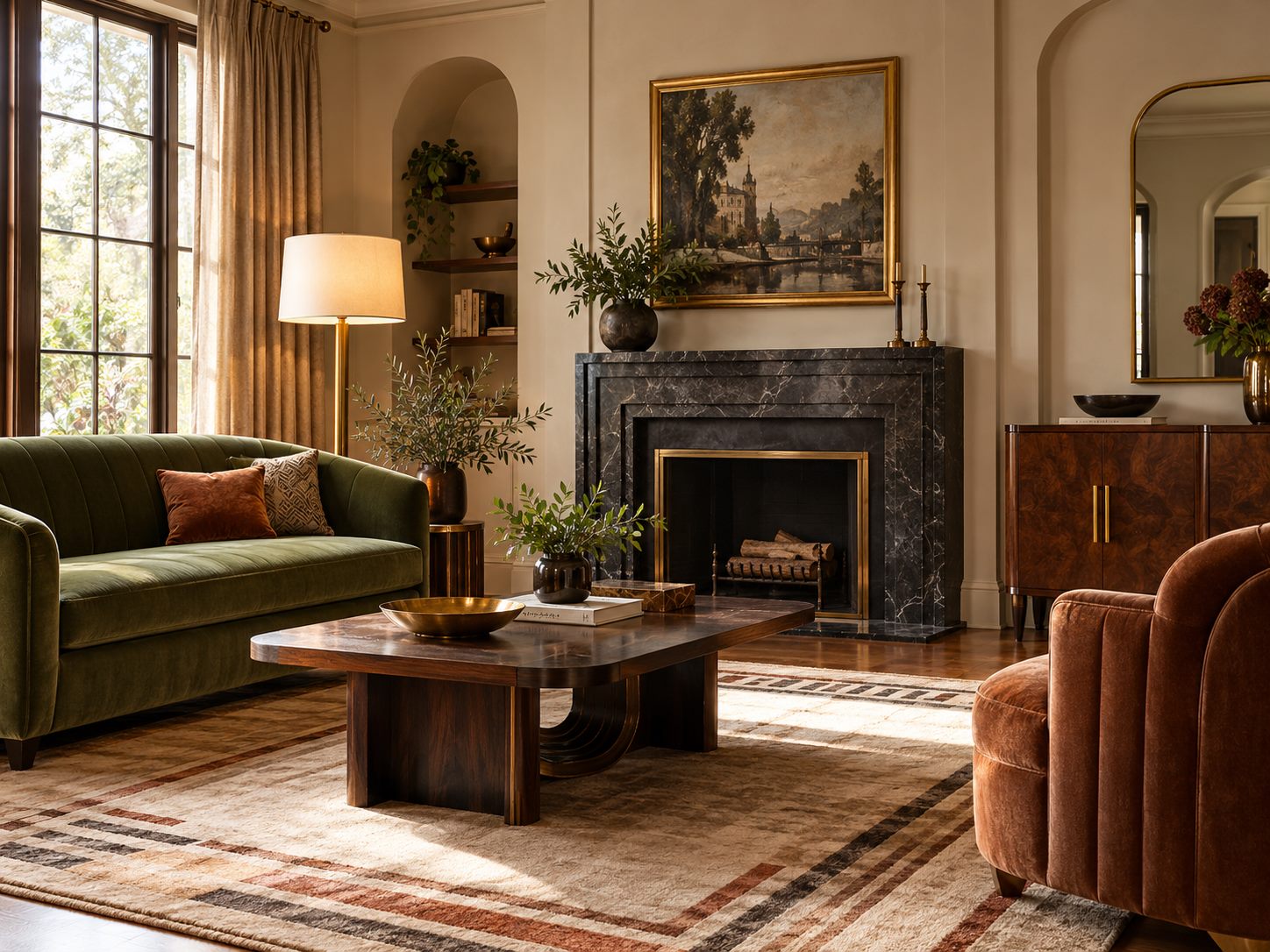
Repeat warm brass in two or three small details, such as a lamp stem, a frame, and cabinet handles. Similar warmth is more important than an exact finish match. Spread the pieces across the room to connect different areas. Avoid adding a metallic object to every surface, which can make the scheme feel busy.
9. Try a Two-Tone Wall with a Clear Divide
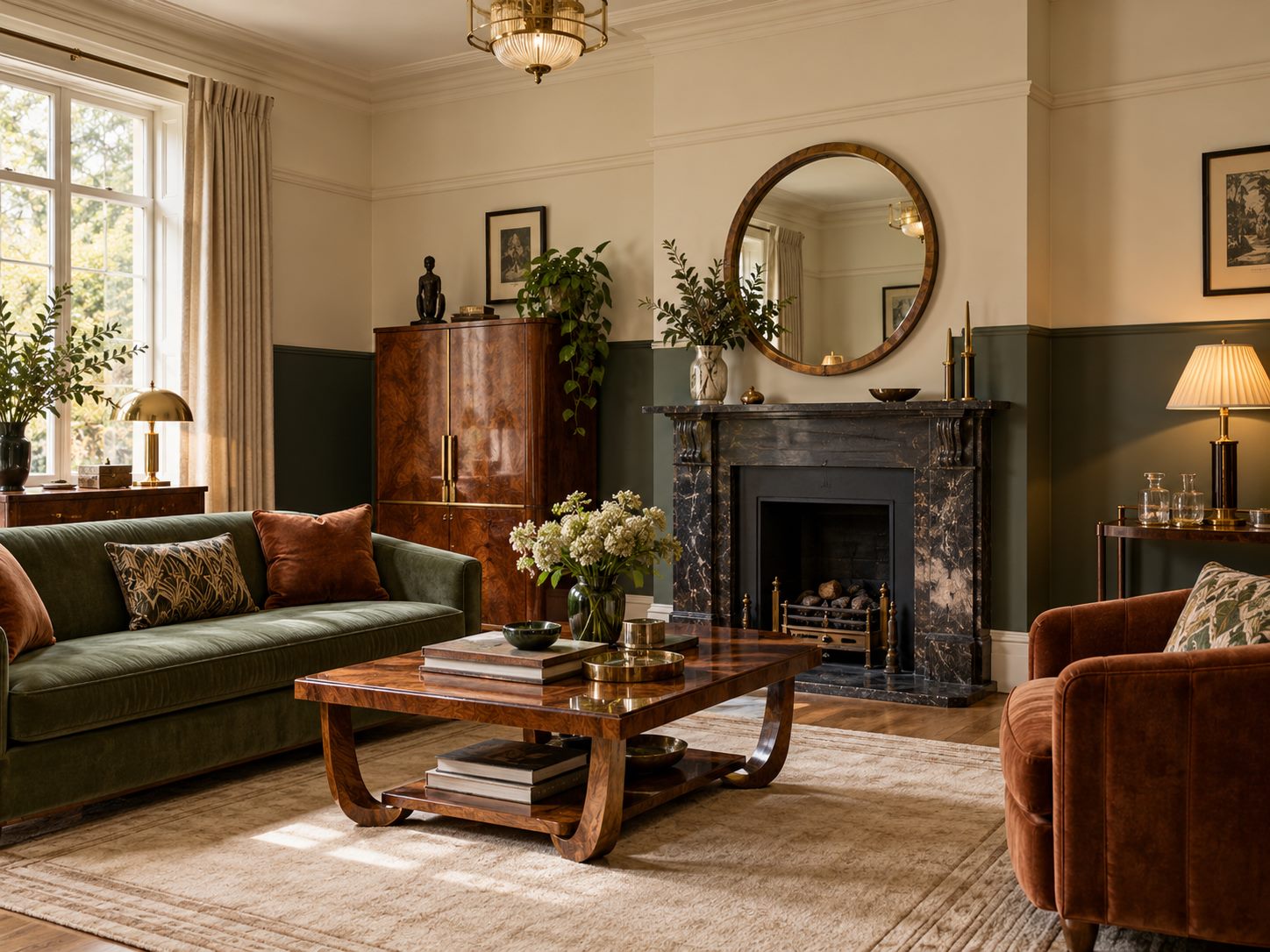
A darker lower wall and lighter upper section can make a plain room feel more structured. Use an existing picture rail or another architectural line where possible. Test both colors together in daylight and lamplight. Keep the darker band related to the furniture rather than choosing a contrast that interrupts every object against it.
10. Put an Opal-Glass Lamp Beside a Reading Chair
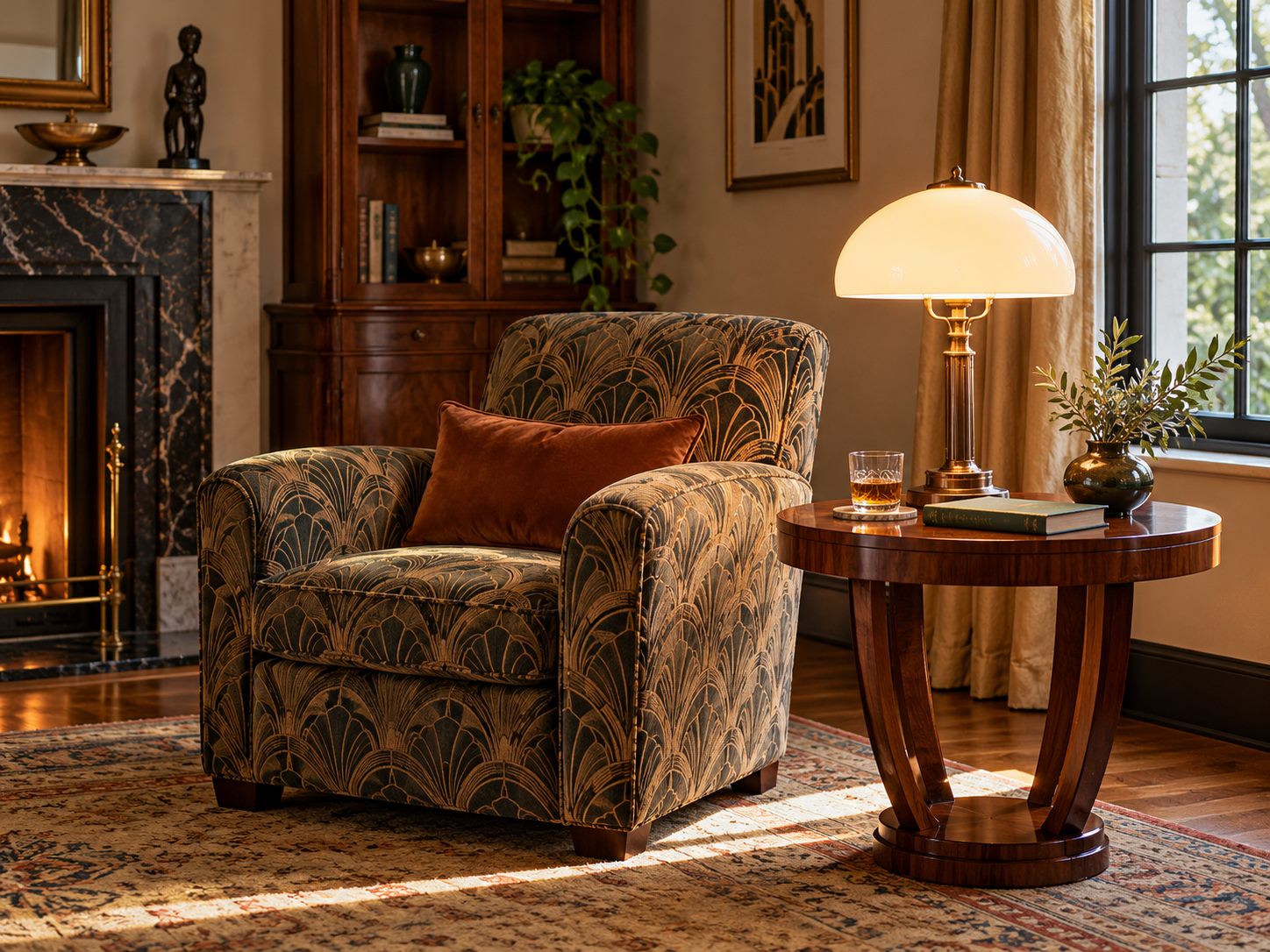
A softly diffused lamp suits a seating corner with polished wood and patterned fabric. Check the shade position from the chair so the light does not glare into your eyes. A nearby table should still have room for a book and drink. Use only the bulb type and wattage specified for the fitting.
11. Use a Low Oval Coffee Table
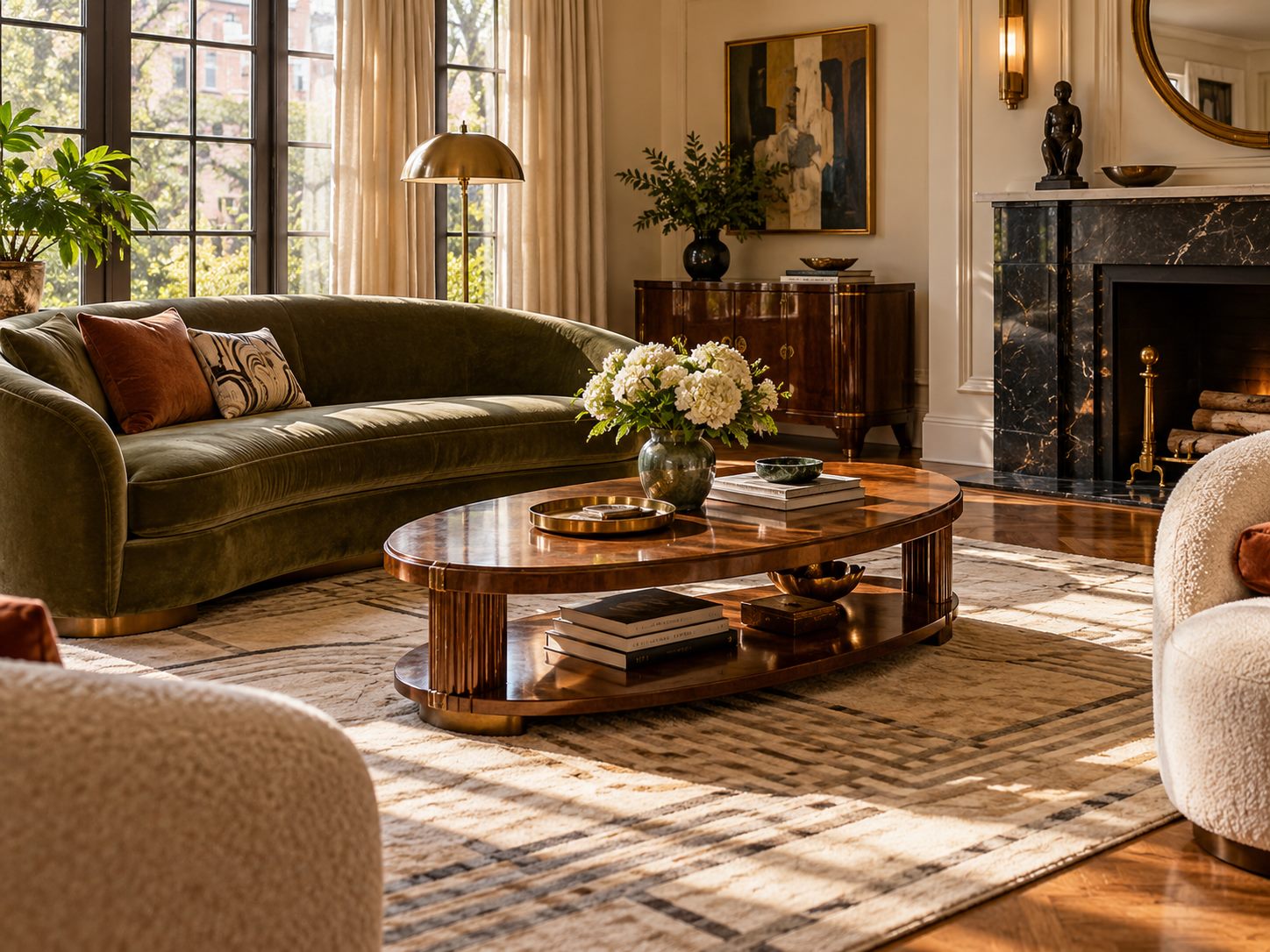
An oval table echoes rounded seating while making the center of the room feel less rigid. Choose its size around the way you sit and move, not just the available empty floor. A lower shelf can hold books without covering the top. Keep sharp or fragile decorative pieces away from a heavily used circulation route.
12. Create a Symmetrical Mantel Arrangement
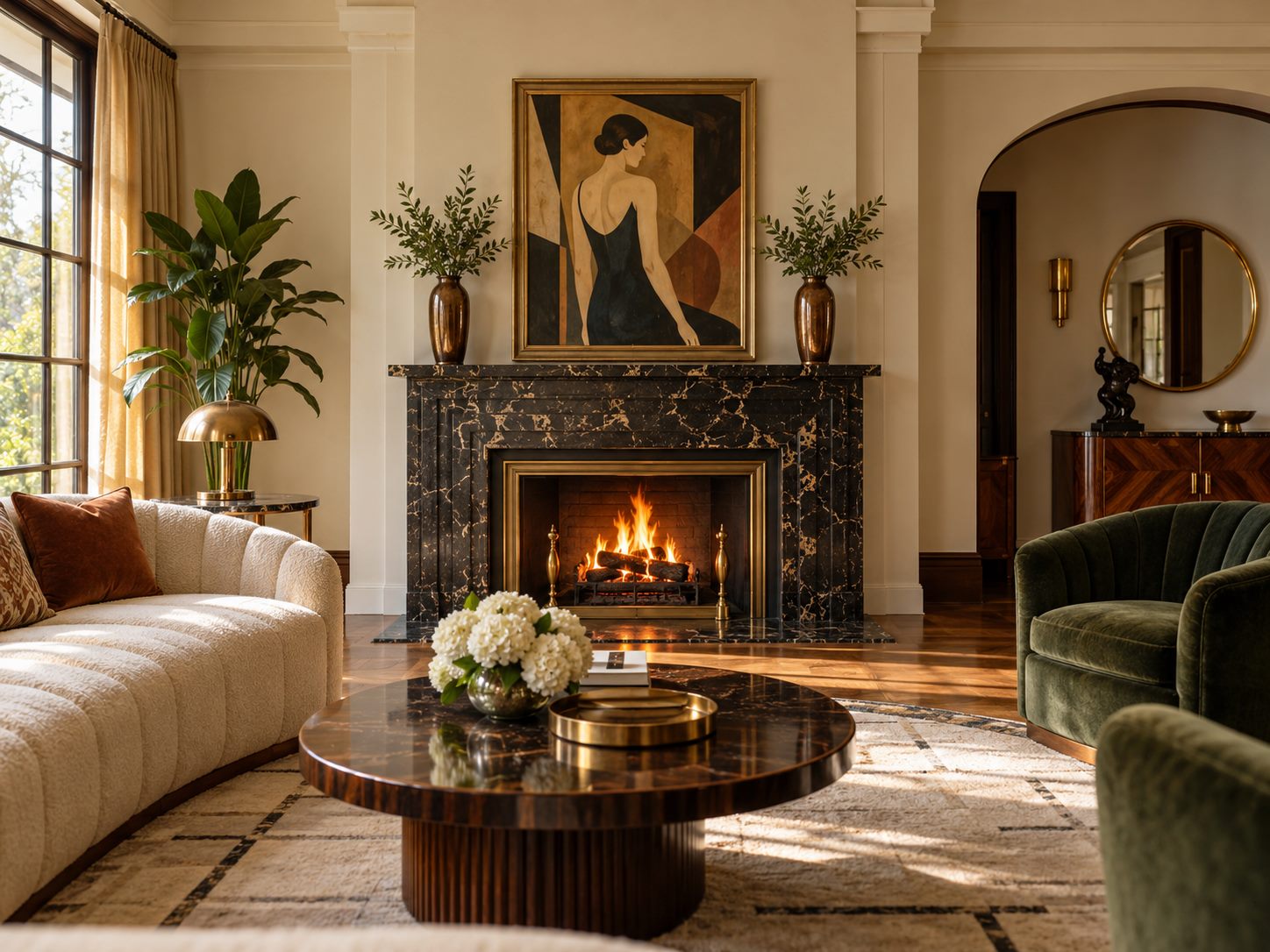
A balanced mantel display can feel composed with just a central artwork and two related objects. They do not need to be identical, but similar visual weight helps the arrangement settle. Keep all decorations at the clearances required for your fireplace. Where those clearances are uncertain, style a separate console instead.
For smaller decorative groupings, explore our guide to styling open shelves with books and pottery.
13. Bring in Ribbed Glass Away from Busy Areas
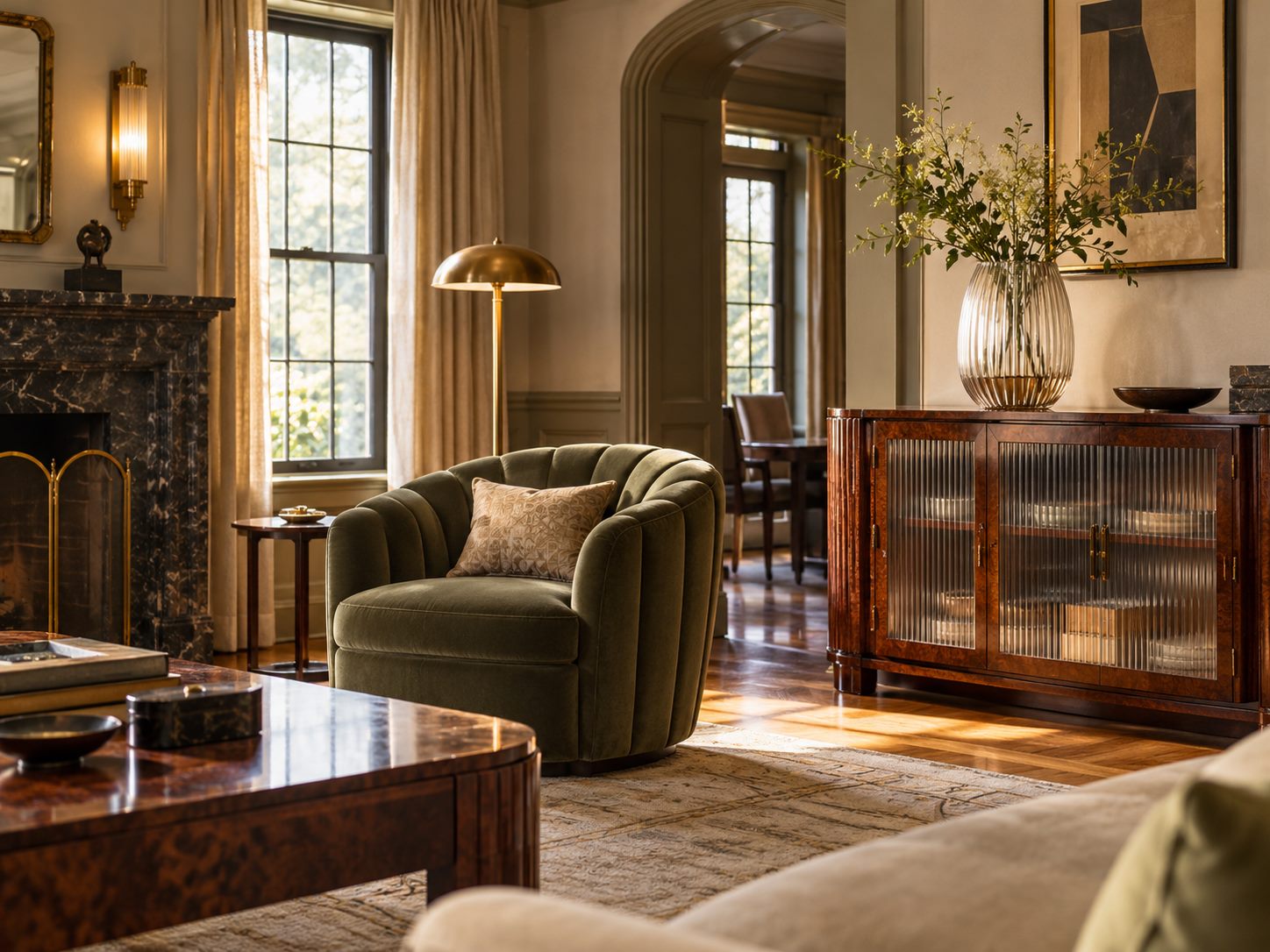
A ribbed-glass vase or cabinet door adds another texture without a loud color change. Place delicate glass on a stable surface away from an active walkway. A single substantial piece is easier to read than several tiny vessels. Let natural or lamp light reveal the texture rather than surrounding it with reflective ornaments.
14. Soften the Windows with Full-Length Curtains
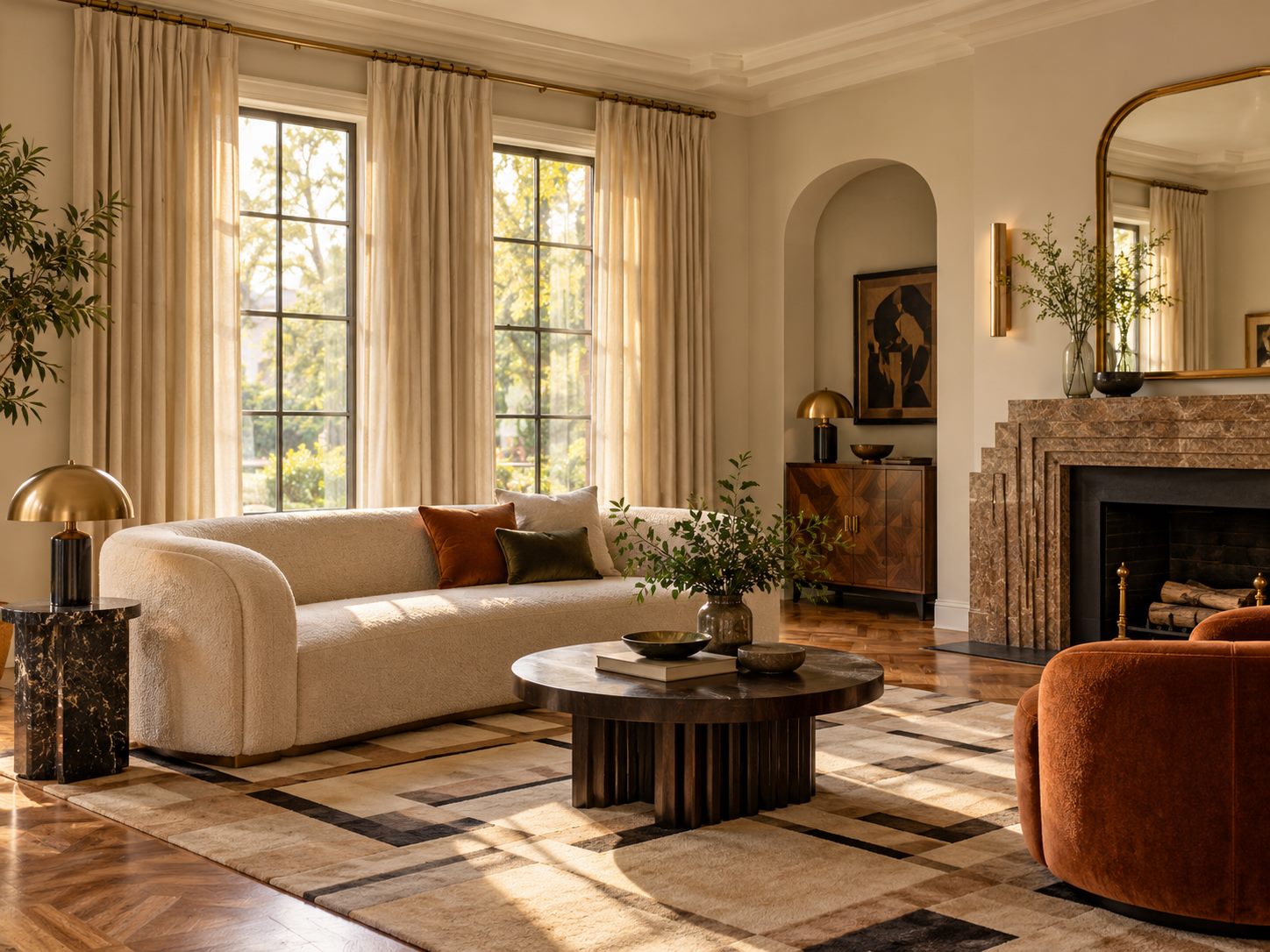
Plain curtains give geometric furniture and accessories a calmer background. Choose a color close to the walls if you want the shape of the room to remain the focus. Measure the drop after deciding where the rod will sit. Keep fabric clear of heaters and follow the mounting hardware’s instructions.
15. Display a Small Group of Monochrome Prints
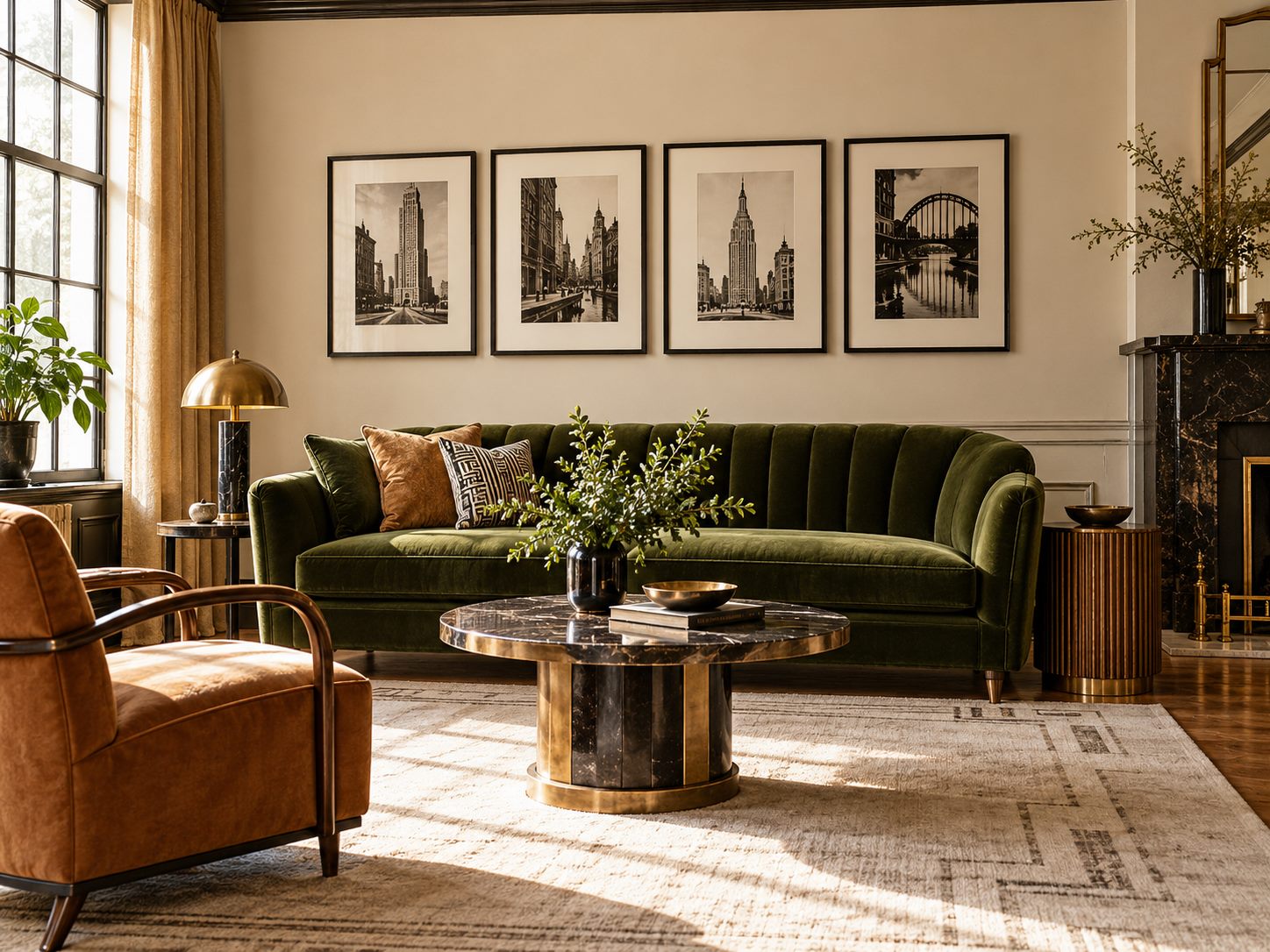
Three or four related black-and-white prints can bring focus to a wall without adding more competing colors. Use matching mats or frames to connect different subjects. Lay the arrangement on the floor first and compare it with the furniture below. Choose images you have rights to print or display.
16. Hide Modern Media in a Simple Cabinet
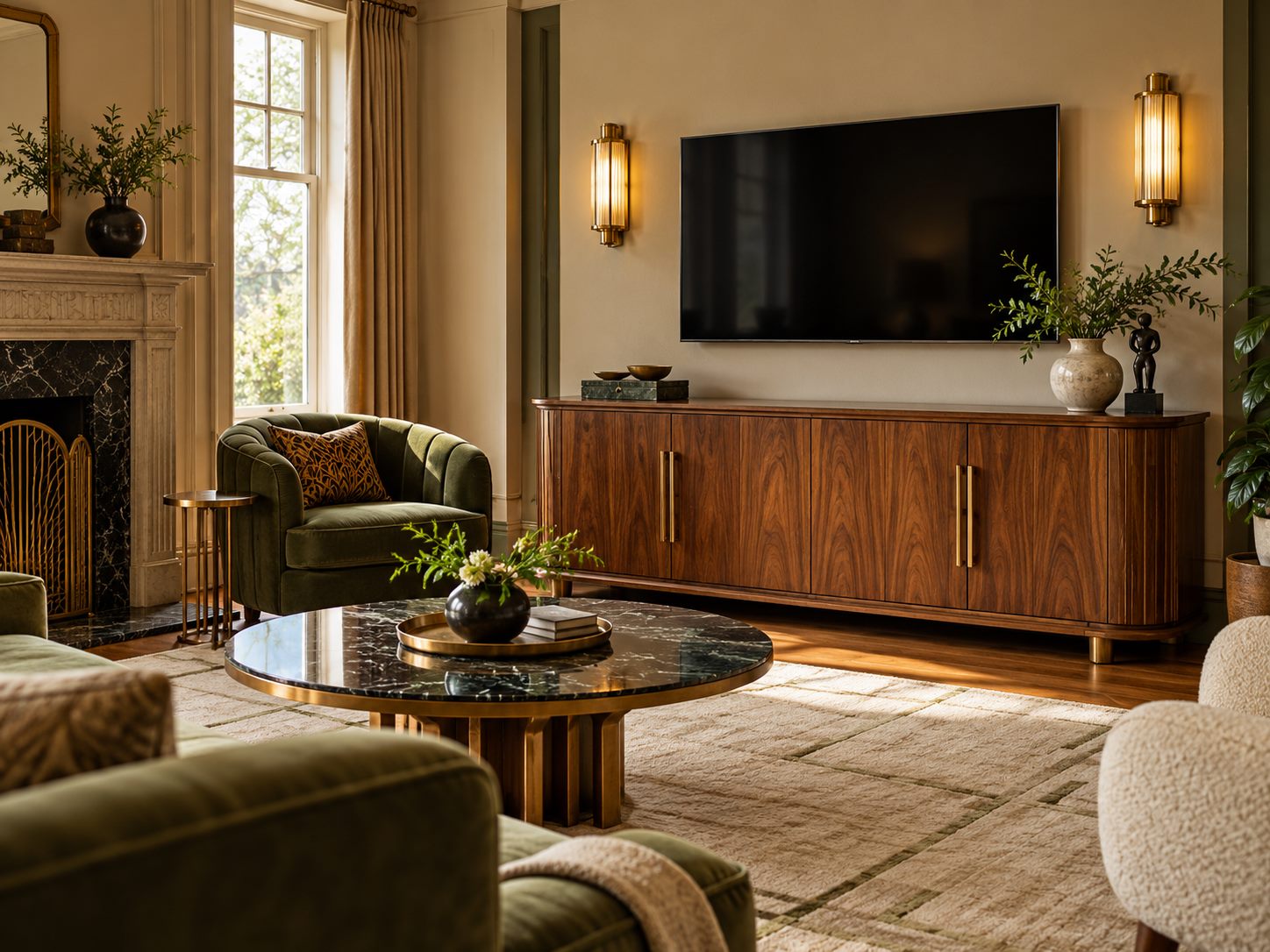
A living room still needs to support current routines. A closed cabinet can keep remotes, chargers, and games from interrupting a decorative scheme. Plan cable access and ventilation around the actual equipment, and follow the device guidance. Do not seal heat-producing electronics inside a cabinet just to achieve a tidier photograph.
17. Finish with a Quiet Corner Table
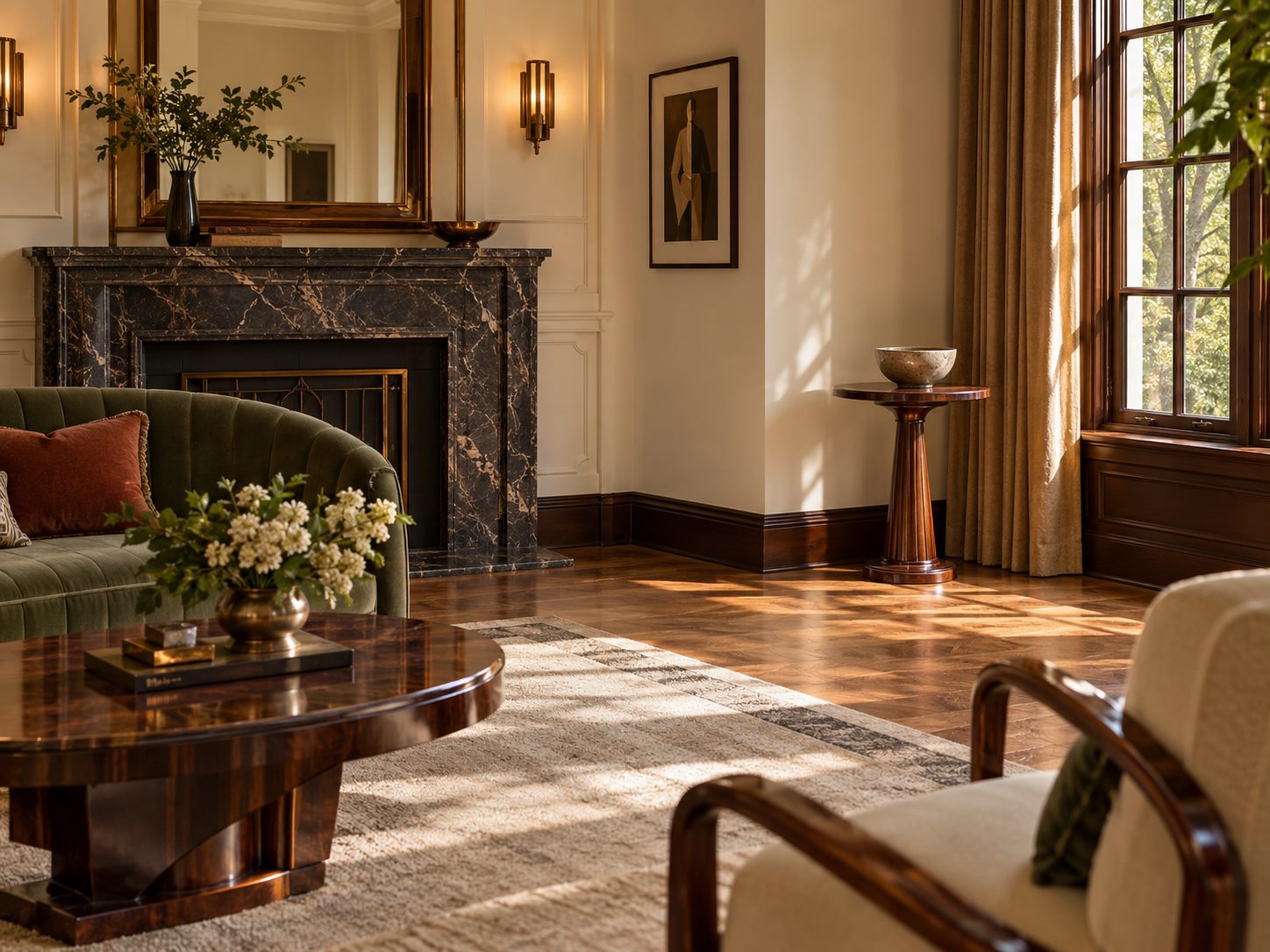
A small pedestal table with one ceramic bowl can complete an awkward corner more effectively than another large chair. Choose a stable base and leave the surrounding floor open. This works especially well near a window where a little wood and pottery feel enough. Let the room keep some empty space instead of decorating every gap.
Frequently Asked Questions
How do I suggest a 1930s look without replacing my sofa?
Start with one geometric rug, a round mirror, and a warm wood accent. Keep the sofa’s existing color in the new palette so the additions connect with what you already own.
Does a 1930s-style living room have to be dark?
No. Cream walls and pale textiles can provide the background while walnut, charcoal, or brass supplies definition. Choose contrast according to the light in your own room.
Which patterns are easiest to combine?
Pair one larger geometric design with plain upholstery and a smaller, quieter textile. Repeat a color between them and compare samples together before buying.
Can I mix vintage pieces with new furniture?
Yes. A useful mix can include one older cabinet and newer seating selected for comfort. Check vintage pieces for stability and condition rather than assuming age guarantees quality.
How many metallic accents should I use?
There is no fixed number, but a few repeated touches are a sensible starting point. Step back from the room and remove any piece that makes a surface feel crowded.
For a historic reference to this decorative style, explore Eltham Palace’s Art Deco interiors.
Related Decorating Guides
- 17 70s Living Room Decor Ideas with Earthy Color
- 17 80s Living Room Decor Ideas for a Balanced Retro Look
- 17 90s Living Room Decor Ideas for Comfortable Homes
Conclusion
Begin with the shape or material you most enjoy, then build around it slowly. A curved chair, walnut cabinet, or stepped rug can give the room a clear direction while everyday comforts stay in place. Save the ideas that fit your layout and try one complete grouping before changing the rest of the room.
Find more room layouts and finishing touches in our living room collection.