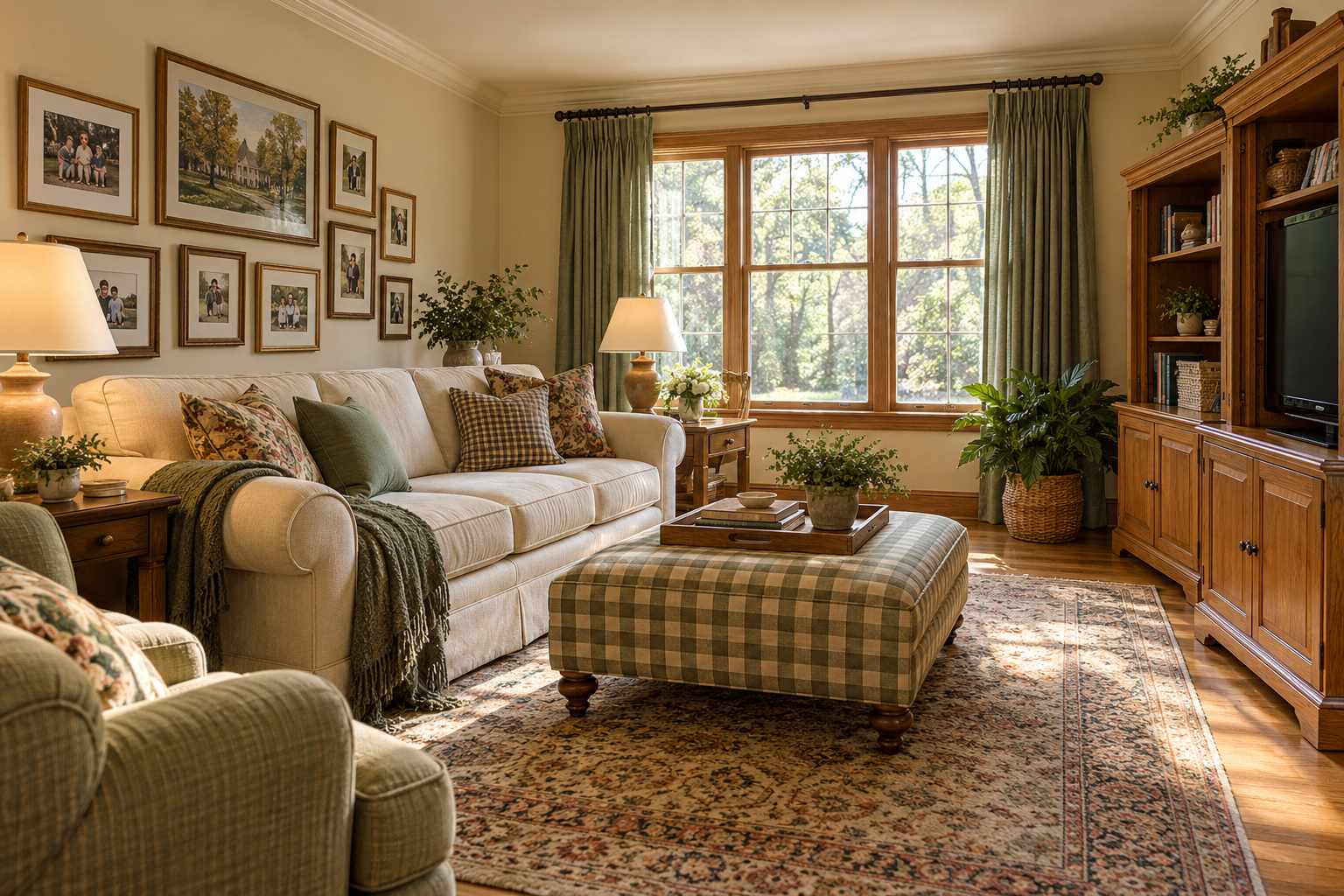
Comfort can lead a 90s living room without leaving the space overloaded with large furniture or matching accessories. Warm oak, generous cushions, soft patterns, and useful media storage can be adapted to a modern routine. These 90s living room decor ideas explore individual choices that work with furniture you may already have. Decide where the room needs more comfort and where it needs more breathing space. Then use a small number of colors and materials to connect the seating, windows, and storage.
Key Takeaways
- Keep comfortable seating but check how much floor it occupies.
- Use warm wood selectively and repeat softer colors in textiles.
- Plan media storage around ventilation, cables, and real equipment.
1. Keep a Roll-Arm Sofa as the Main Seat
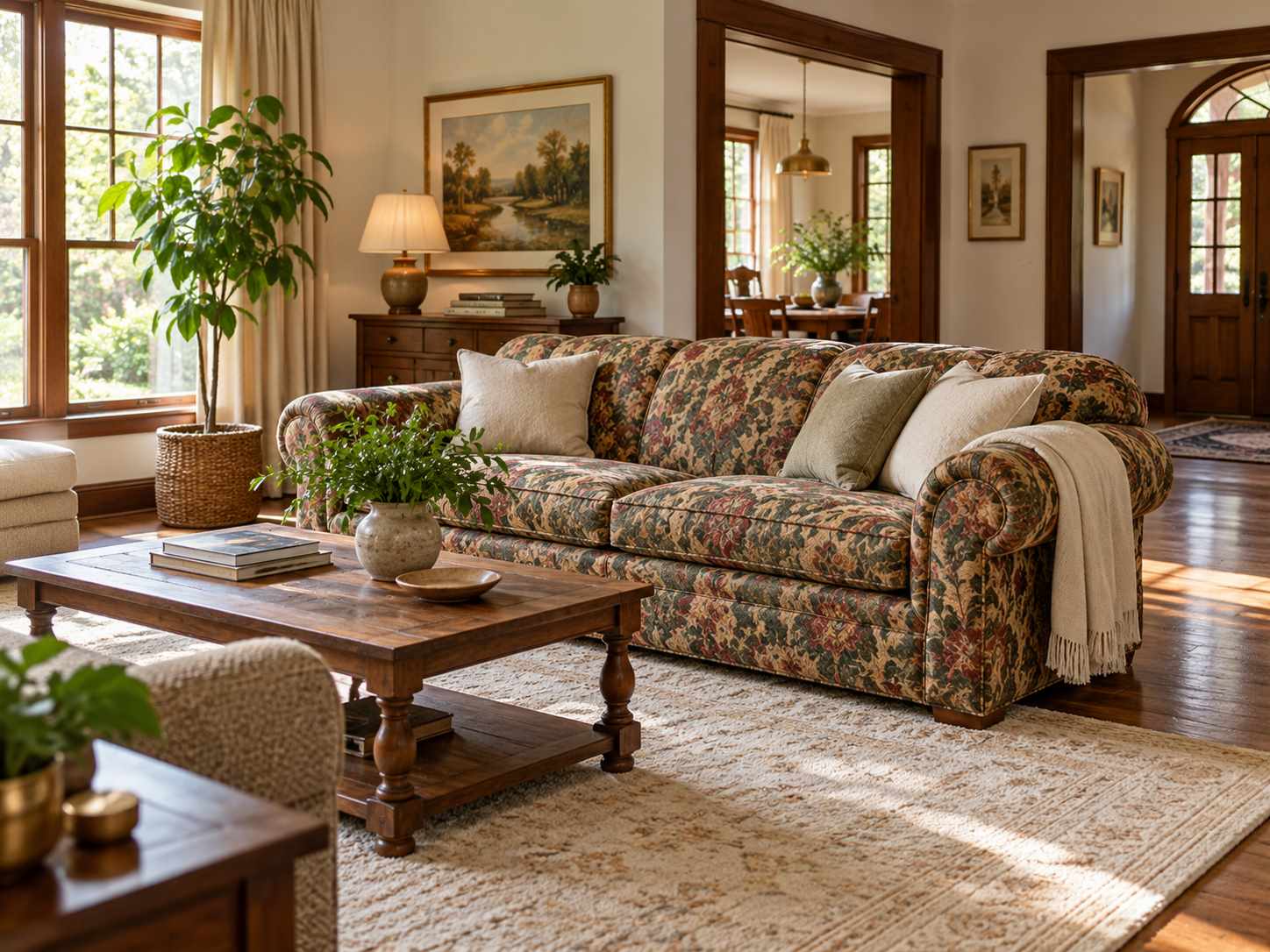
A roll-arm sofa can provide a comfortable center without needing matching chairs. Check its placement against the room’s doors and circulation. Plain cushions and a lighter rug can balance a substantial shape, especially when the sofa already has a strong fabric pattern.
2. Use an Oak Media Cabinet with Closed Storage
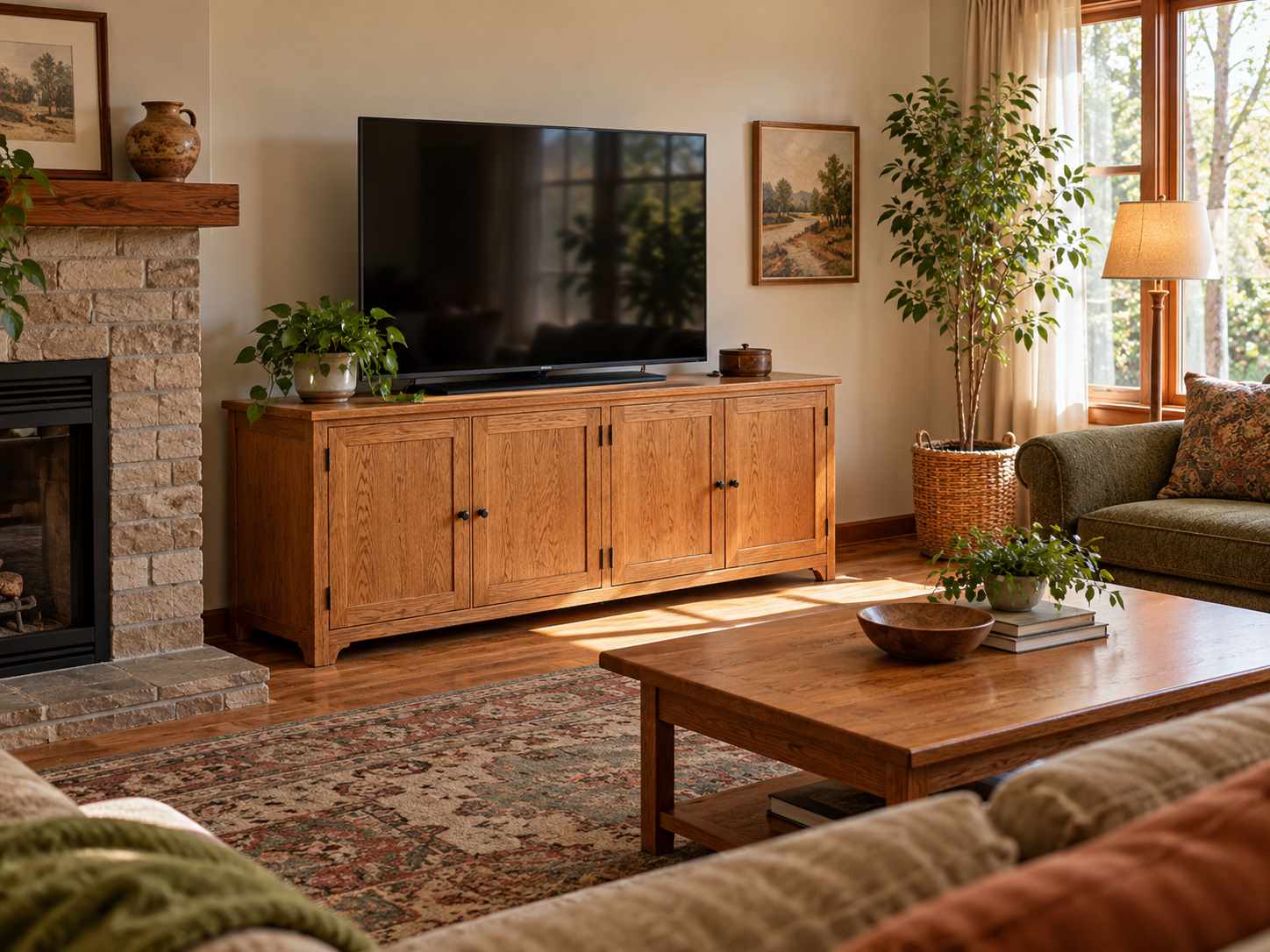
An oak cabinet can hold modern media while connecting with older furniture. Check device dimensions, cable access, and ventilation before choosing it. Put small accessories behind doors and leave the top largely clear so the room does not become a display of equipment and ornaments.
3. Bring Sage into the Curtains
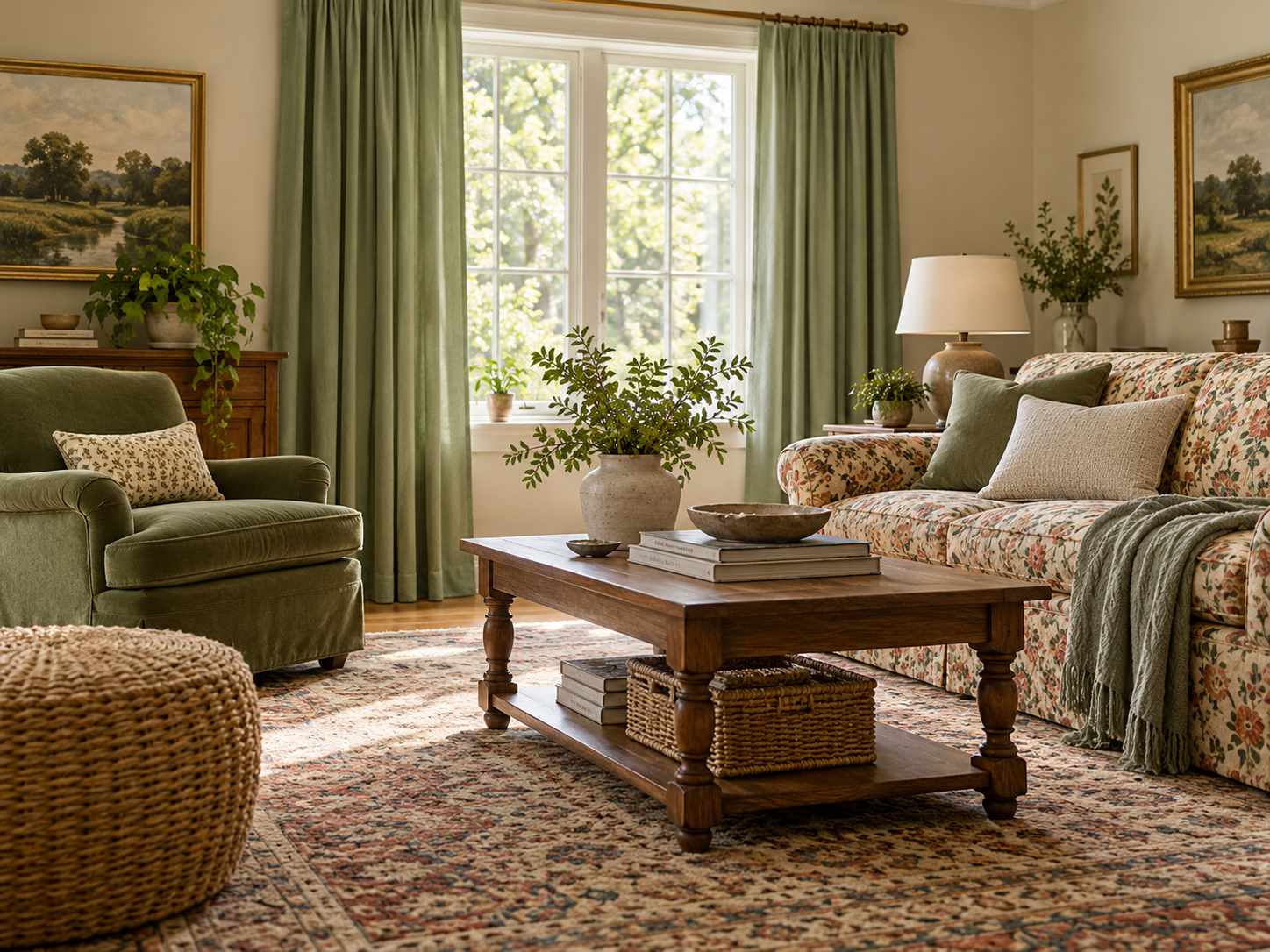
Sage curtains add a soft color field around the window. Compare them with the wall and upholstery before buying, and choose the lining according to privacy and light-control needs. A plain curtain gives patterned seating a quieter background.
4. Use a Checked Ottoman Instead of Another Chair
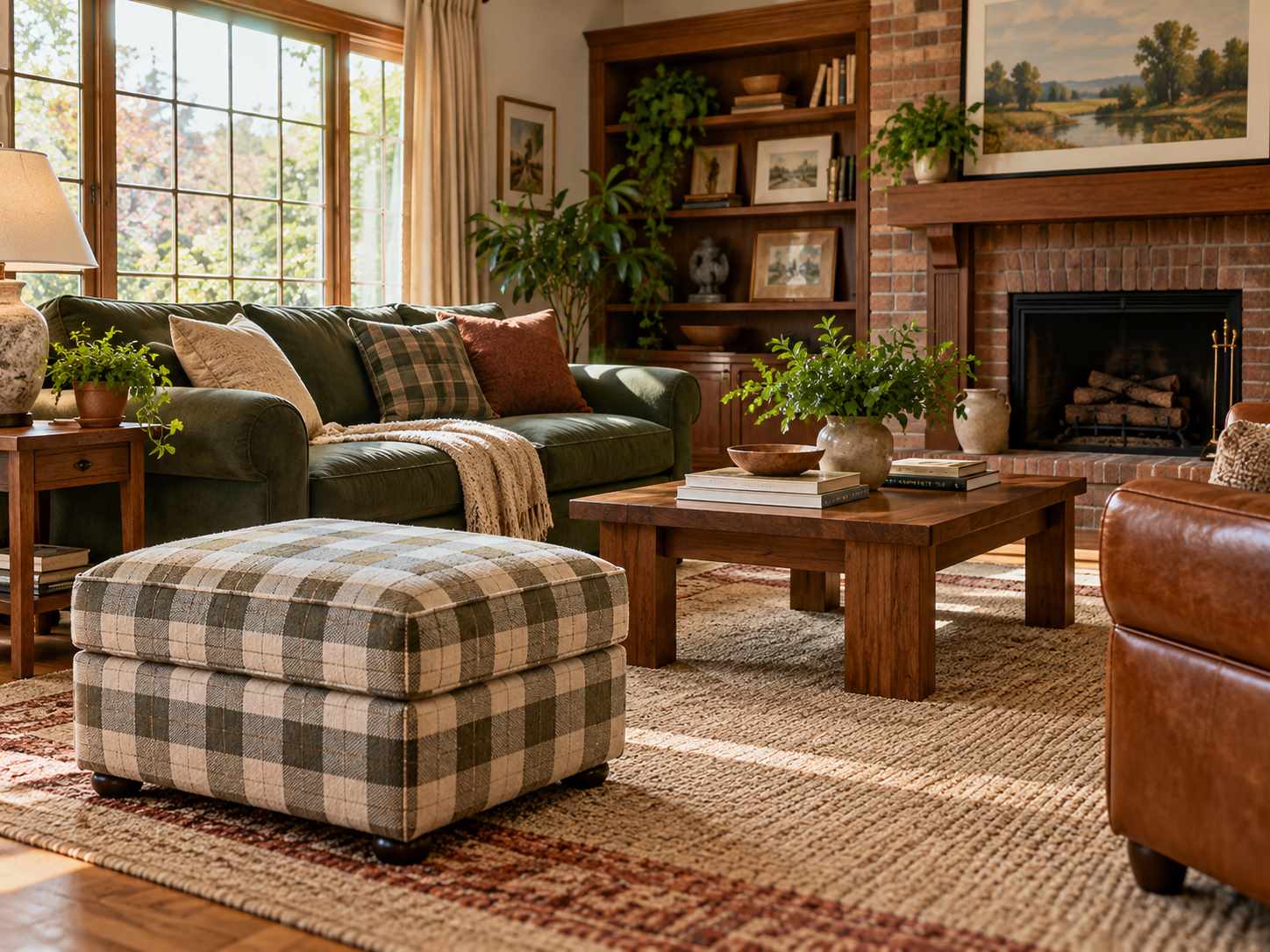
A checked ottoman offers a footrest and occasional extra seat without a full armchair’s height. Select colors already present in the room. Check that it can be moved when needed and that its base is stable on your floor.
5. Arrange Family Photos on One Wall
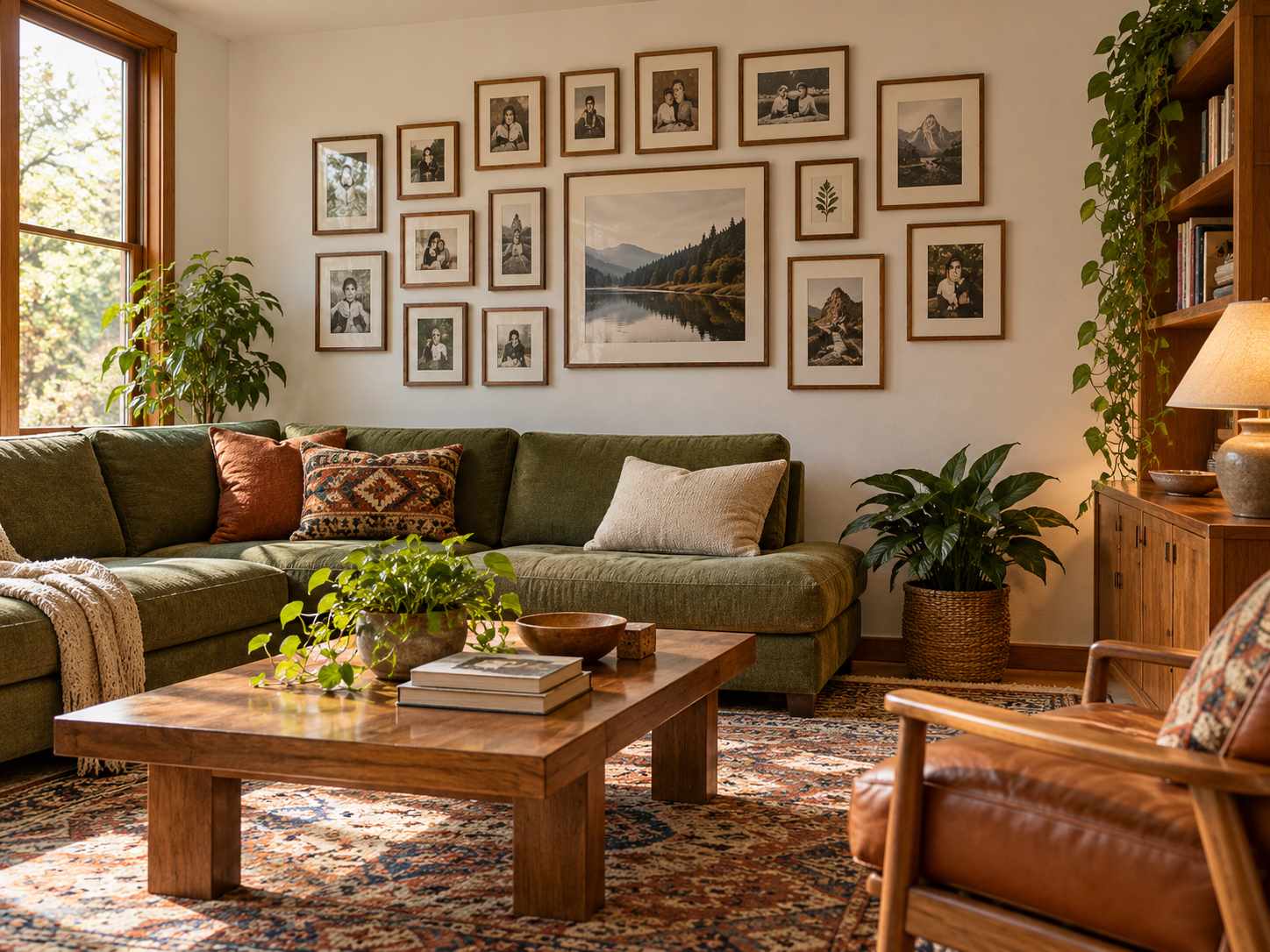
A defined photo wall can feel more coherent than frames on every available surface. Use a common frame finish or mat color to connect different photographs. Plan the arrangement on the floor first and use appropriate wall fixings.
6. Add a Small Floral Armchair
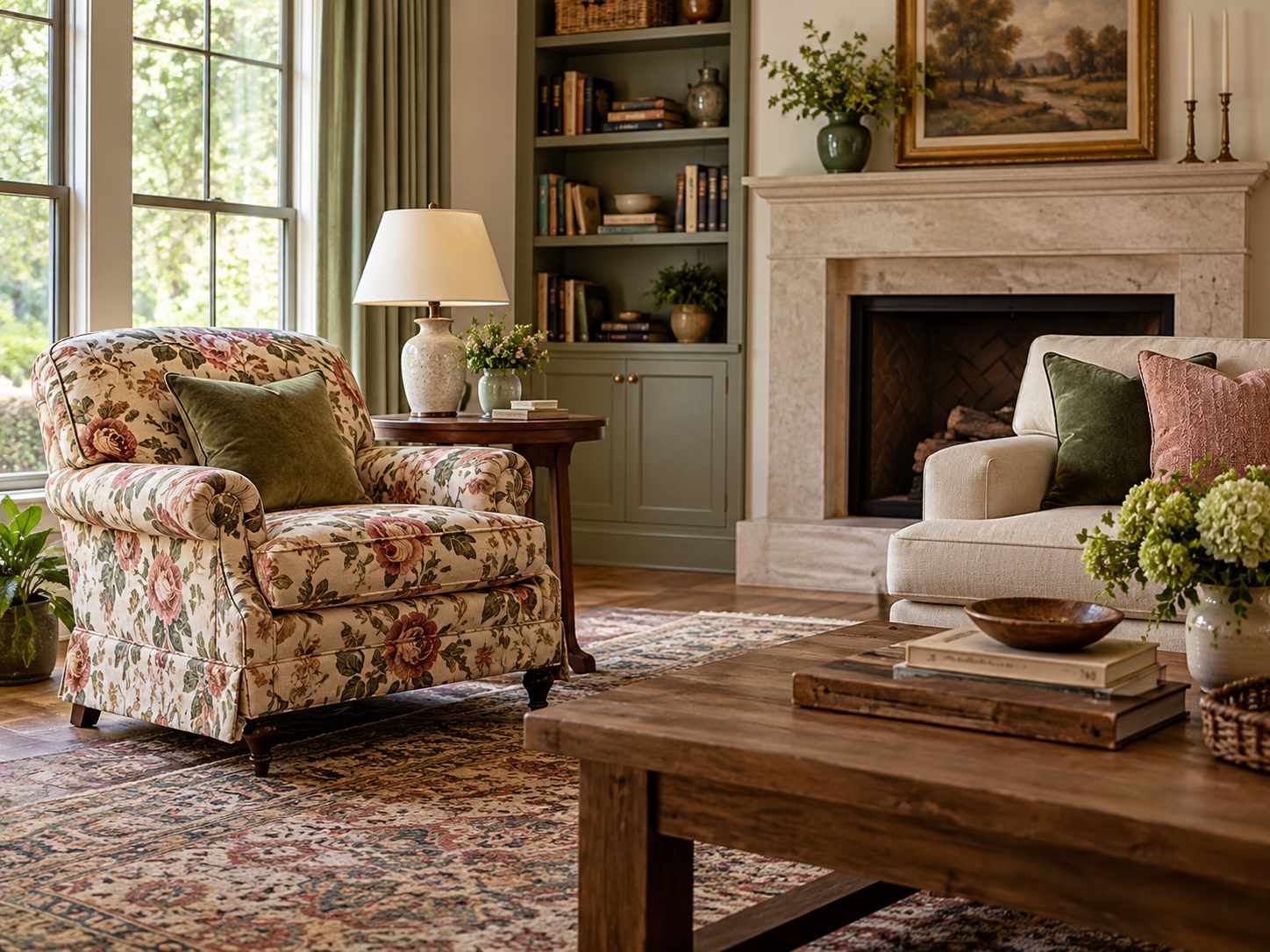
A floral chair can provide pattern while the sofa remains plain. Pull a background tone from the fabric into another textile. Choose a chair that supports the way you sit and leave room beside it for a reachable table.
For a softer color direction, compare our warm neutral living room ideas.
7. Use a Warm Neutral Wall Color
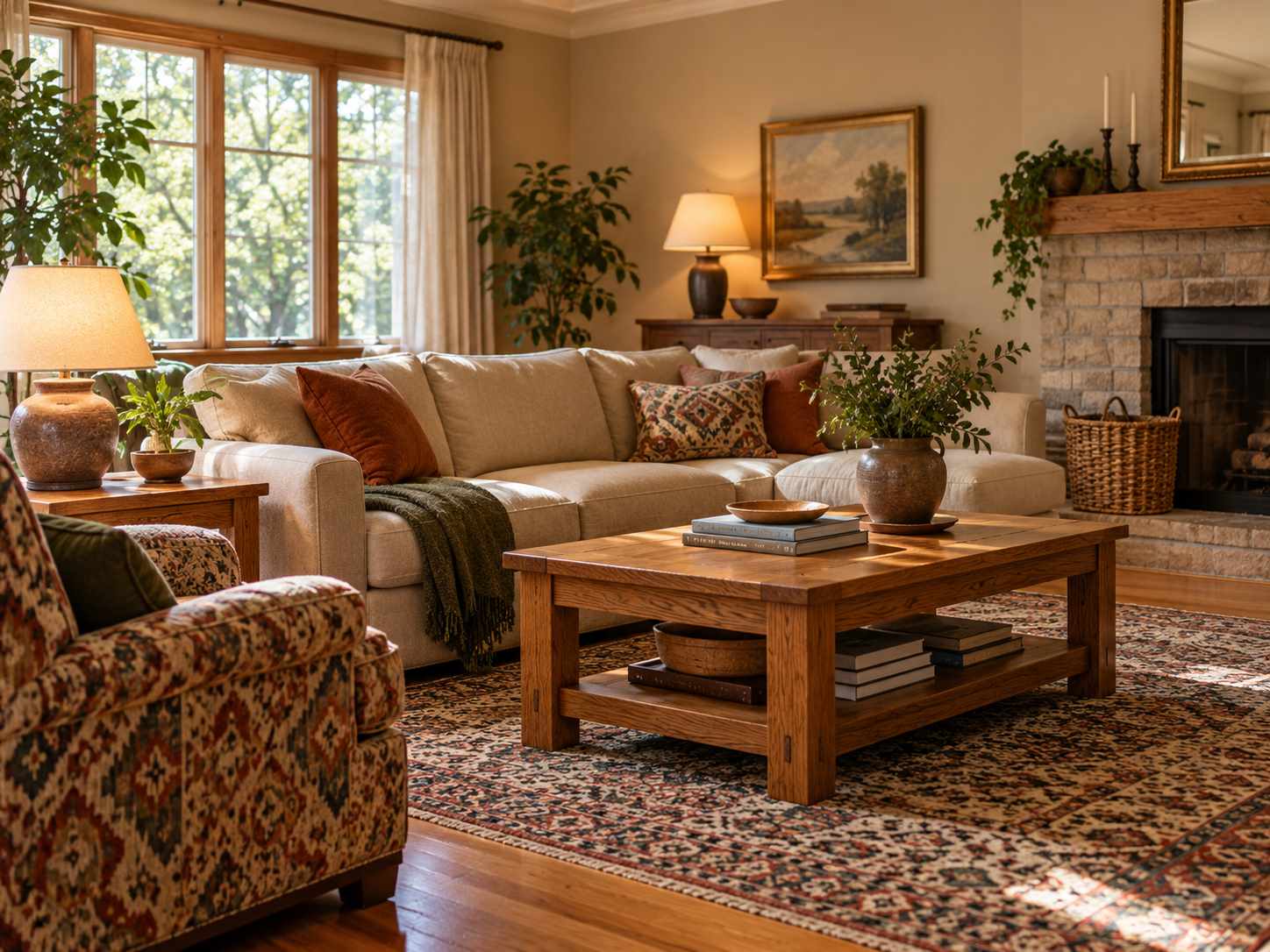
A warm neutral can connect oak, patterned fabric, and newer furniture. Test samples beside your largest pieces in both daylight and lamplight. Avoid choosing a color simply because it is described as beige; its undertone needs to work with the floor.
8. Create a Reading Table Beside the Sofa
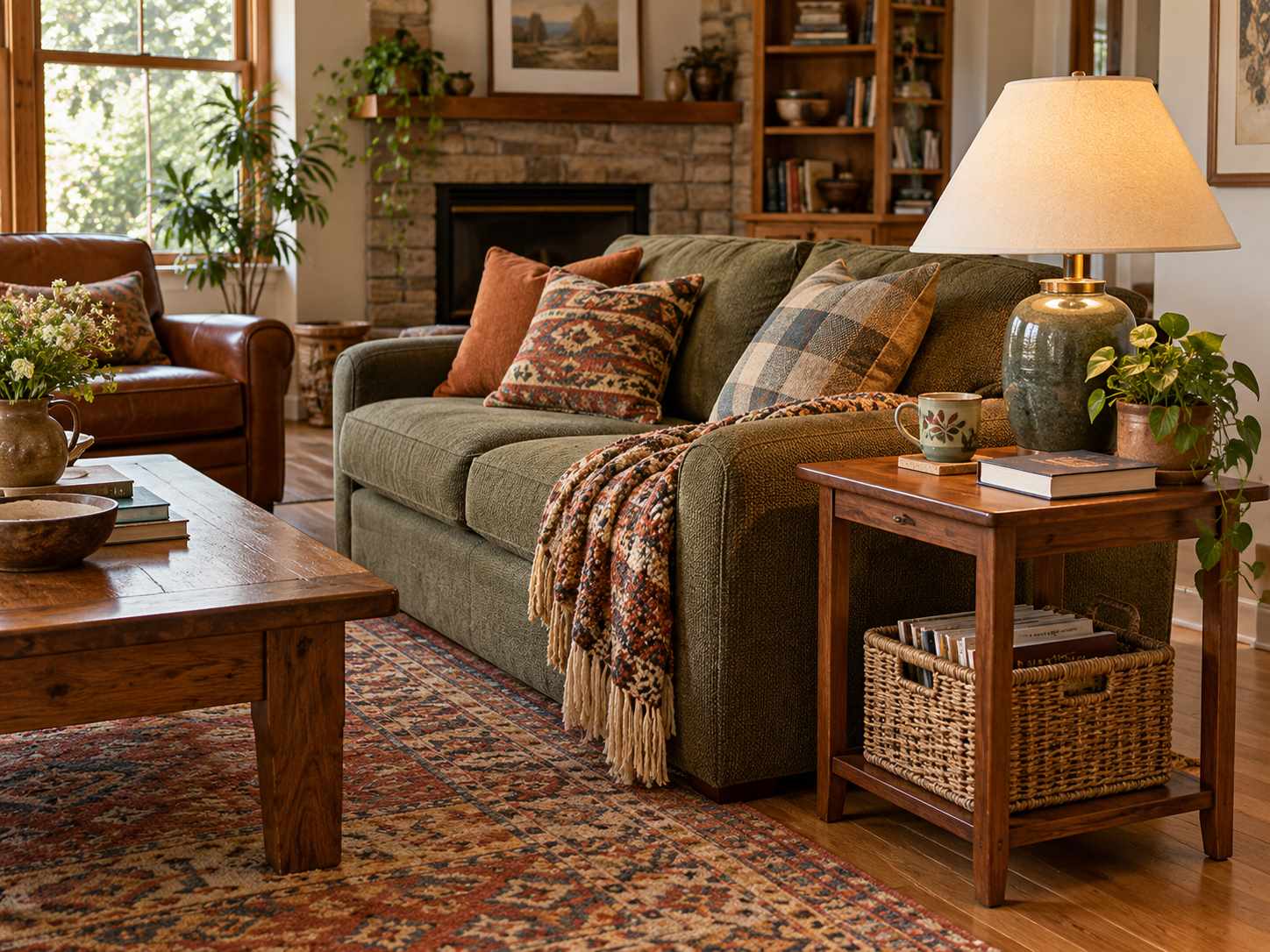
A small table can hold a lamp, a book, and a drink without covering the coffee table. Check its height from the seat and leave space for the lamp’s base. Keep magazines in one basket below rather than stacking them around the floor.
9. Try a Striped Rug Beneath Plain Seating
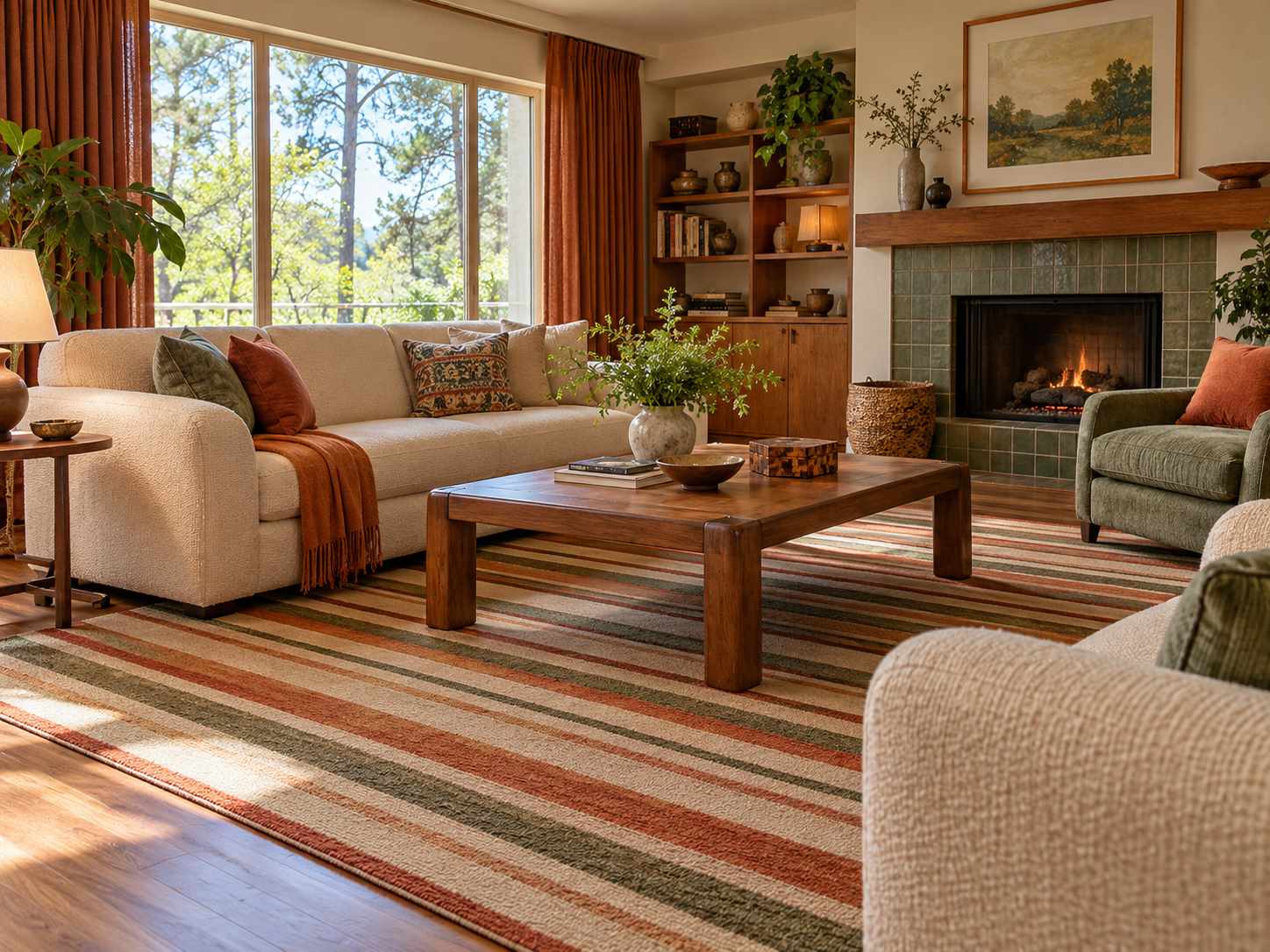
A stripe can introduce order without another floral print. Use colors that repeat the upholstery or curtains, and choose a rug size that connects the seating group. Check that the stripe orientation supports the layout instead of making the group feel divided.
10. Use a Simple Wooden Magazine Rack
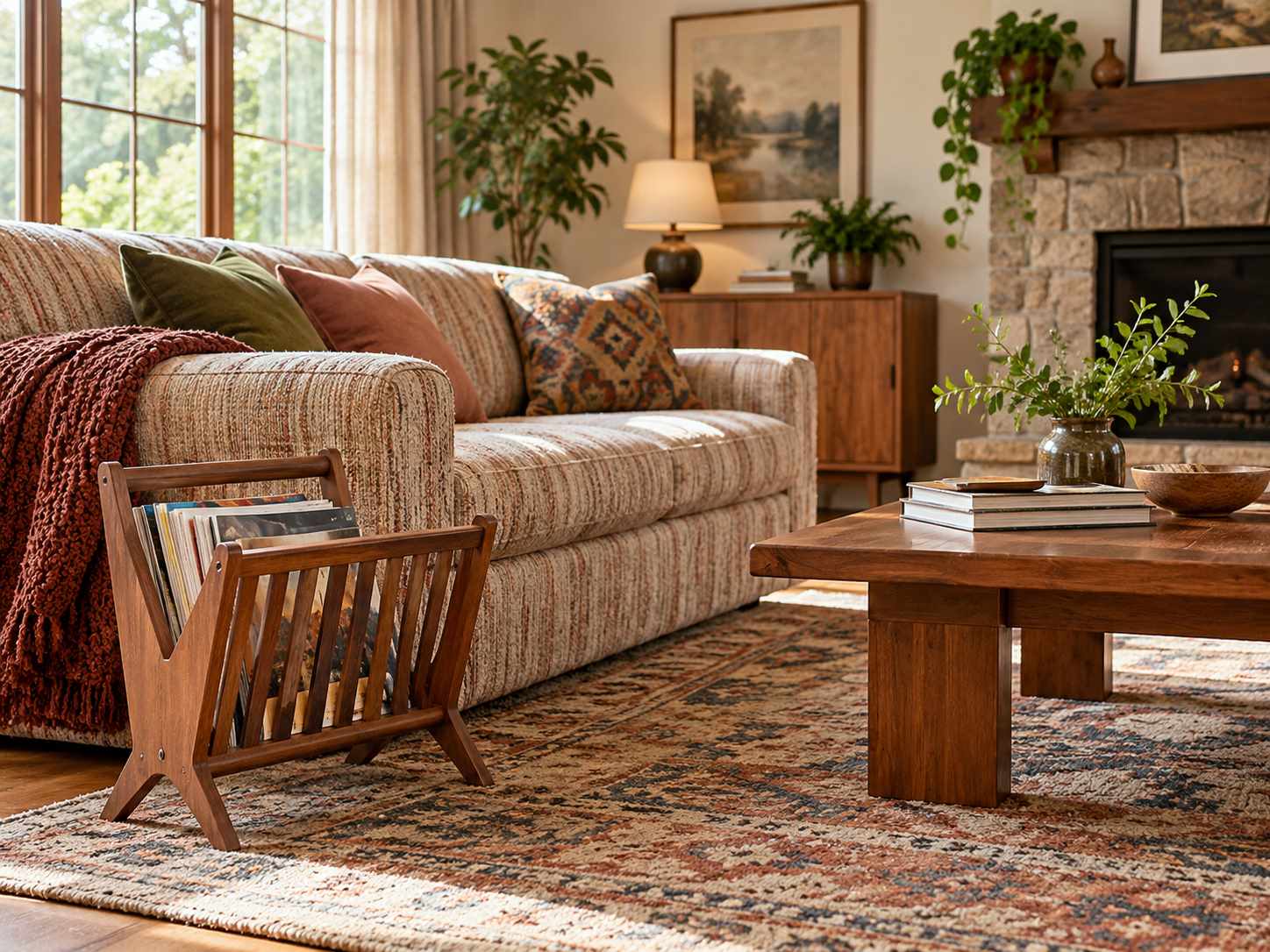
A rack gives current reading material a home and adds a small vertical detail. Choose a design that is stable and easy to empty for cleaning. Limit it to what you actually read so it does not become permanent storage for old paper.
11. Balance a Dark Bookcase with Pale Objects
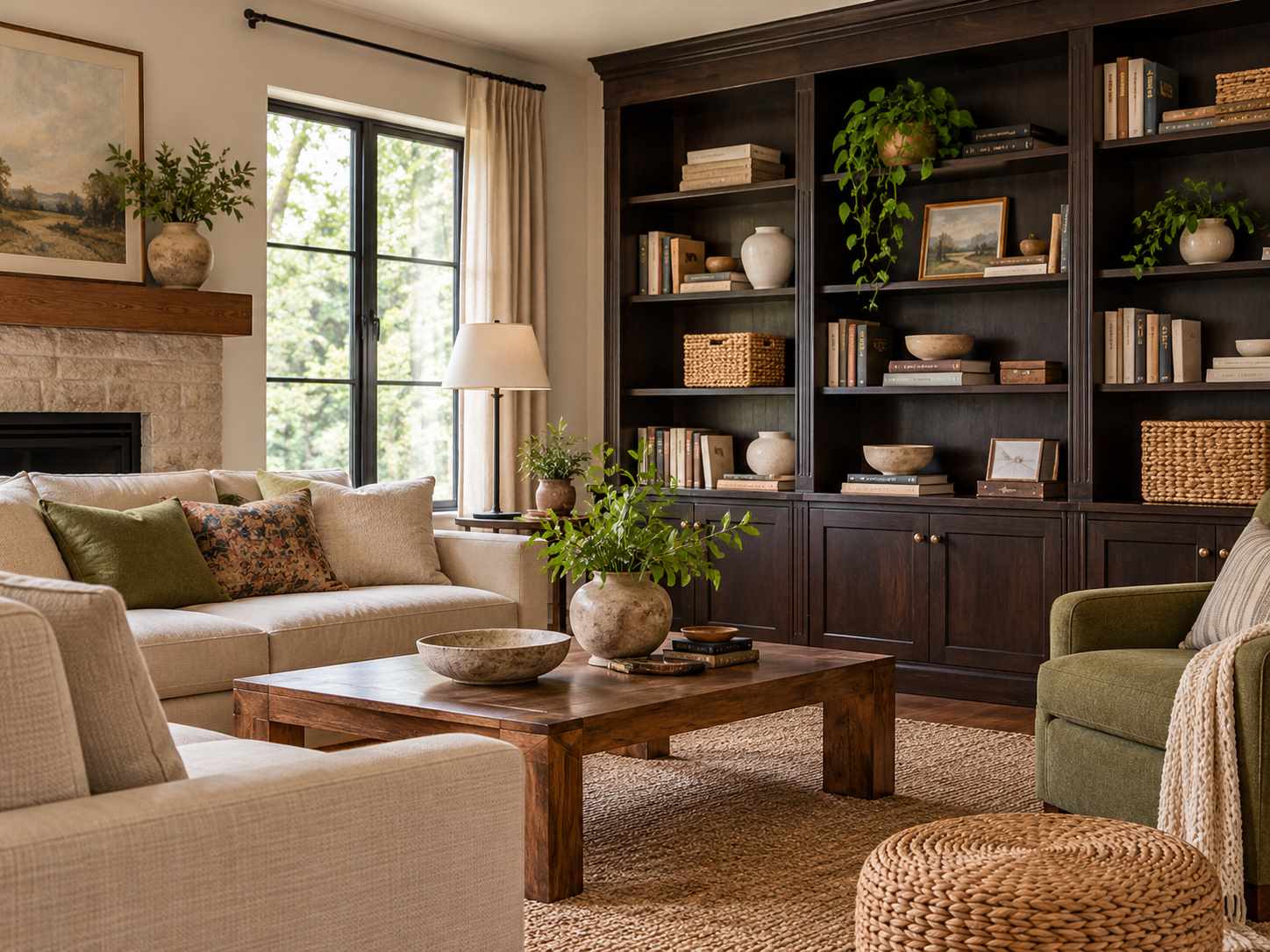
A darker bookcase can remain useful without dominating the room. Leave some shelves partly open and use a few pale baskets or ceramics to create contrast. Keep books accessible and follow loading and anchoring guidance rather than arranging heavy objects solely for symmetry.
12. Introduce a Muted Plaid Throw
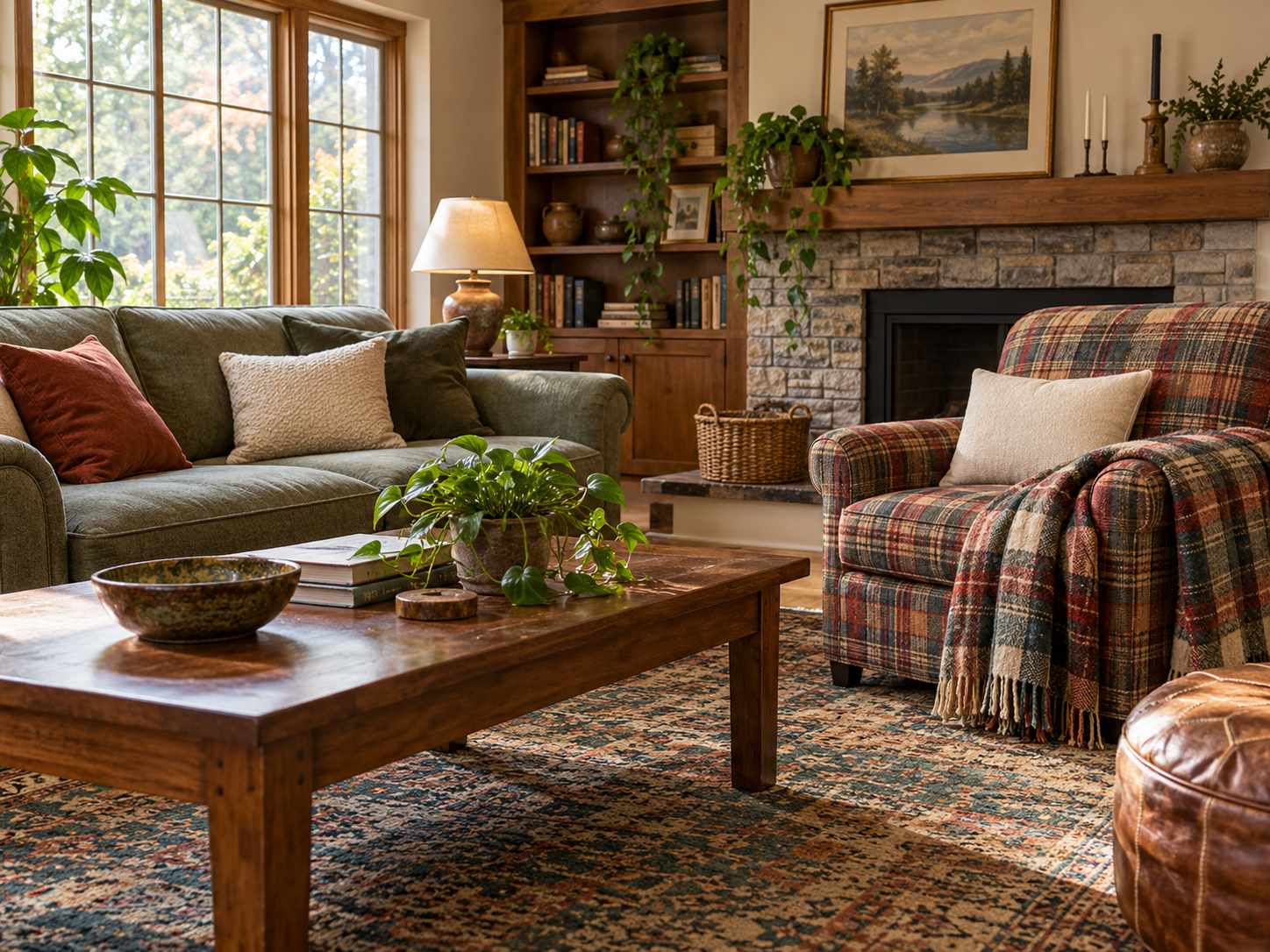
A plaid throw can connect several colors already present in the room. Use it on one seat and keep nearby pillows simpler. Choose a fabric that feels comfortable in use and can be cleaned easily; texture matters more than making the fold look exact.
For help arranging smaller displays, read our guide to styling open shelves.
13. Choose a Pleated Floor-Lamp Shade
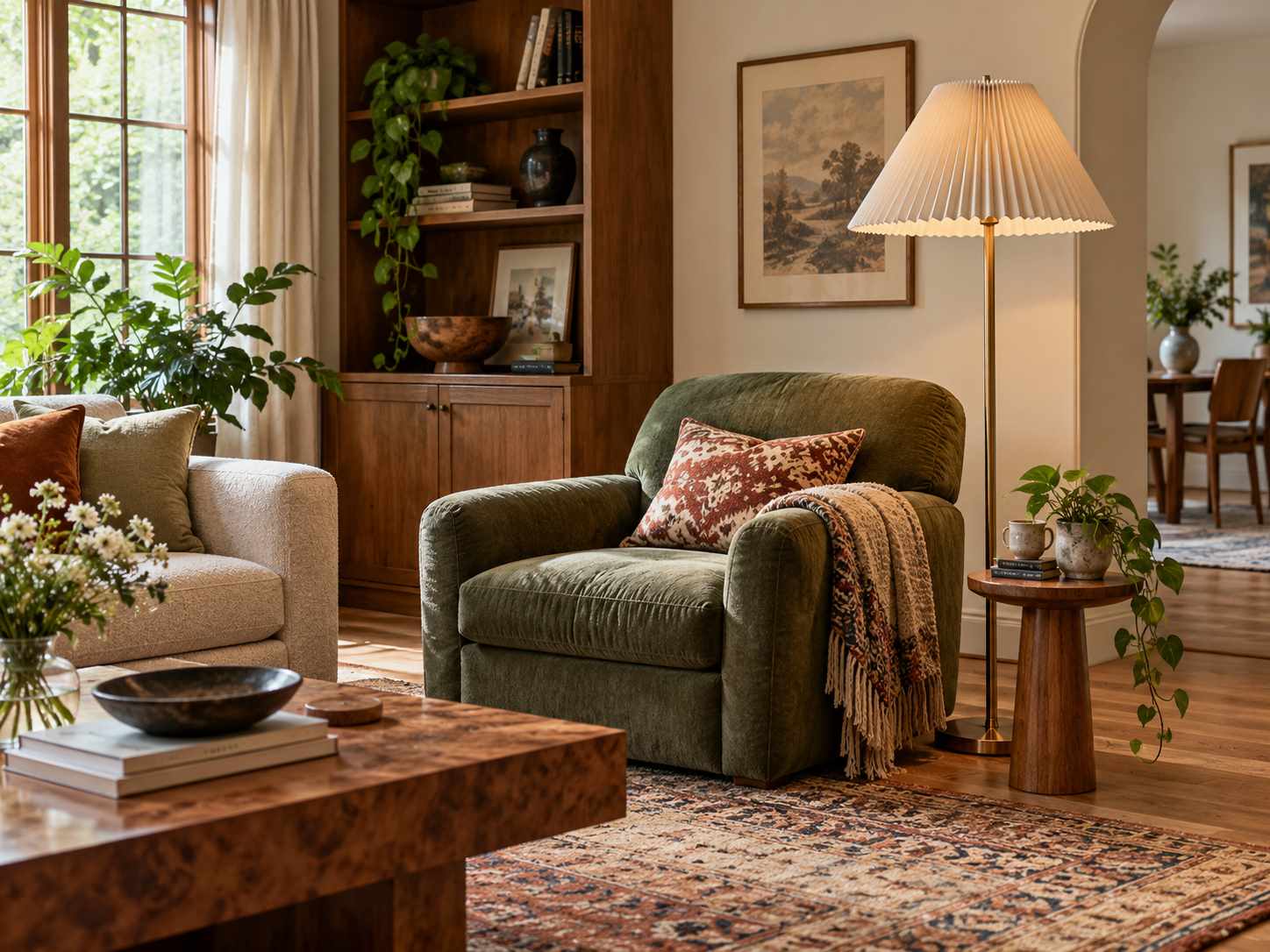
A pleated shade adds texture and a softer silhouette near a reading chair. Check the shade’s compatibility with the fitting and the recommended bulb. Position the lamp where its base does not interrupt the route through the room.
14. Use a Small Round Dining Table in an Open Plan
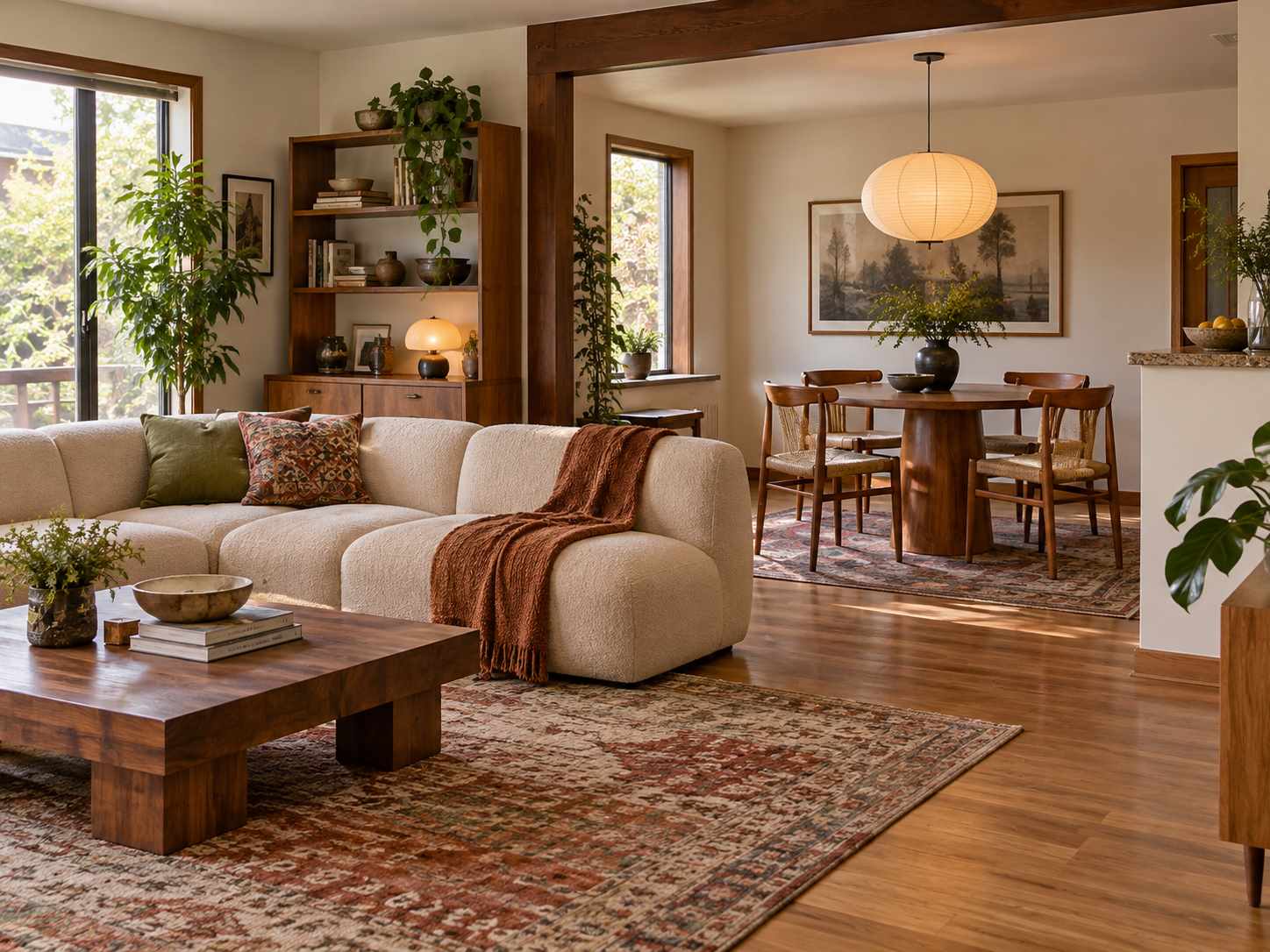
A round table can distinguish a dining corner from the main seating without a bulky divider. Check chair clearance and movement around the table before choosing its diameter. Repeat one wood tone or textile color to connect the two areas.
15. Give a Window Seat Useful Storage
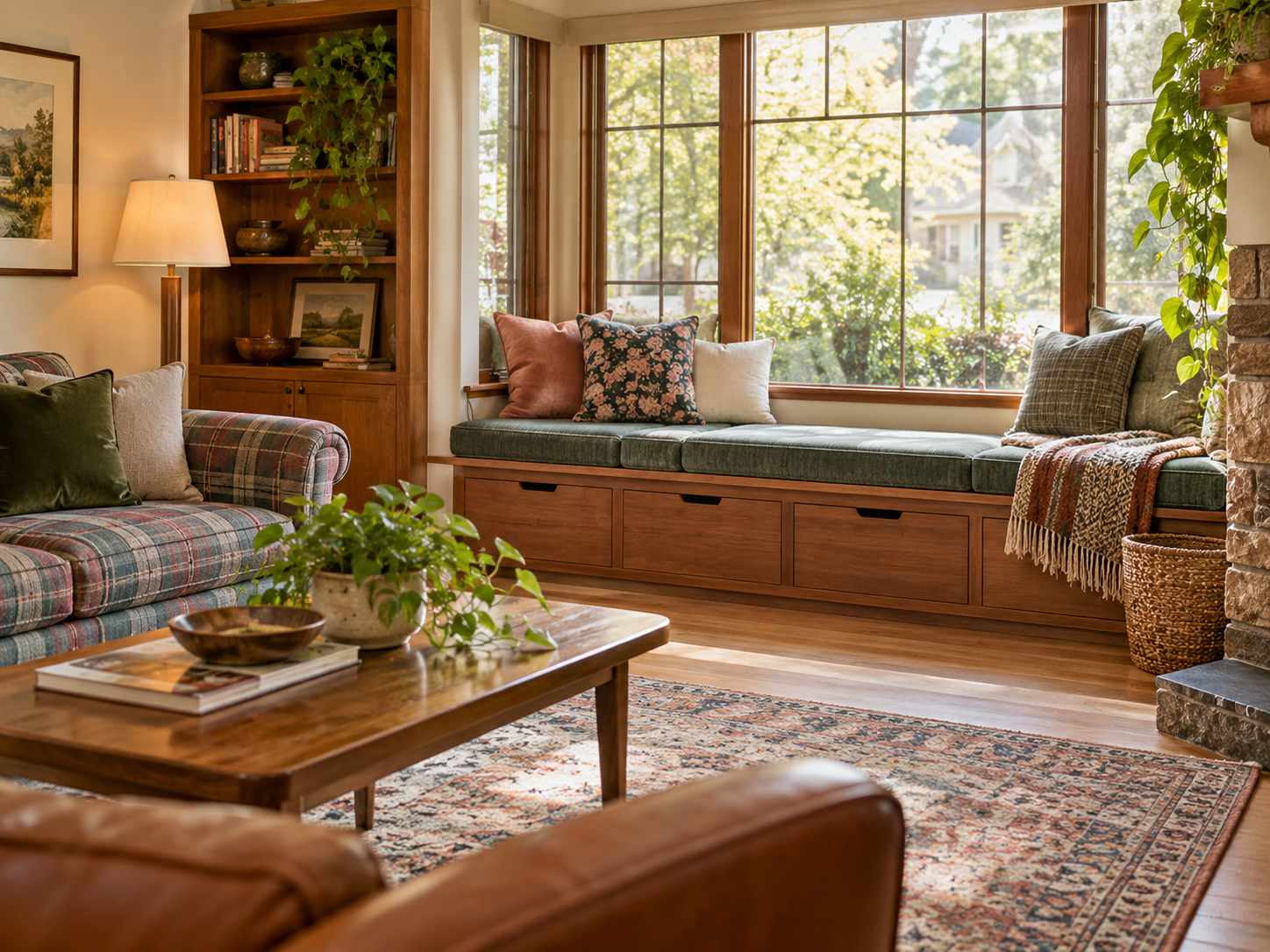
If your room already has a window seat, use fitted cushions and organized storage beneath it. Check ventilation or radiator requirements before closing any cavity. A few washable covers can make the seat useful for reading without turning it into a pile of decorative pillows.
16. Keep a Neutral Slipcover for a Worn Chair
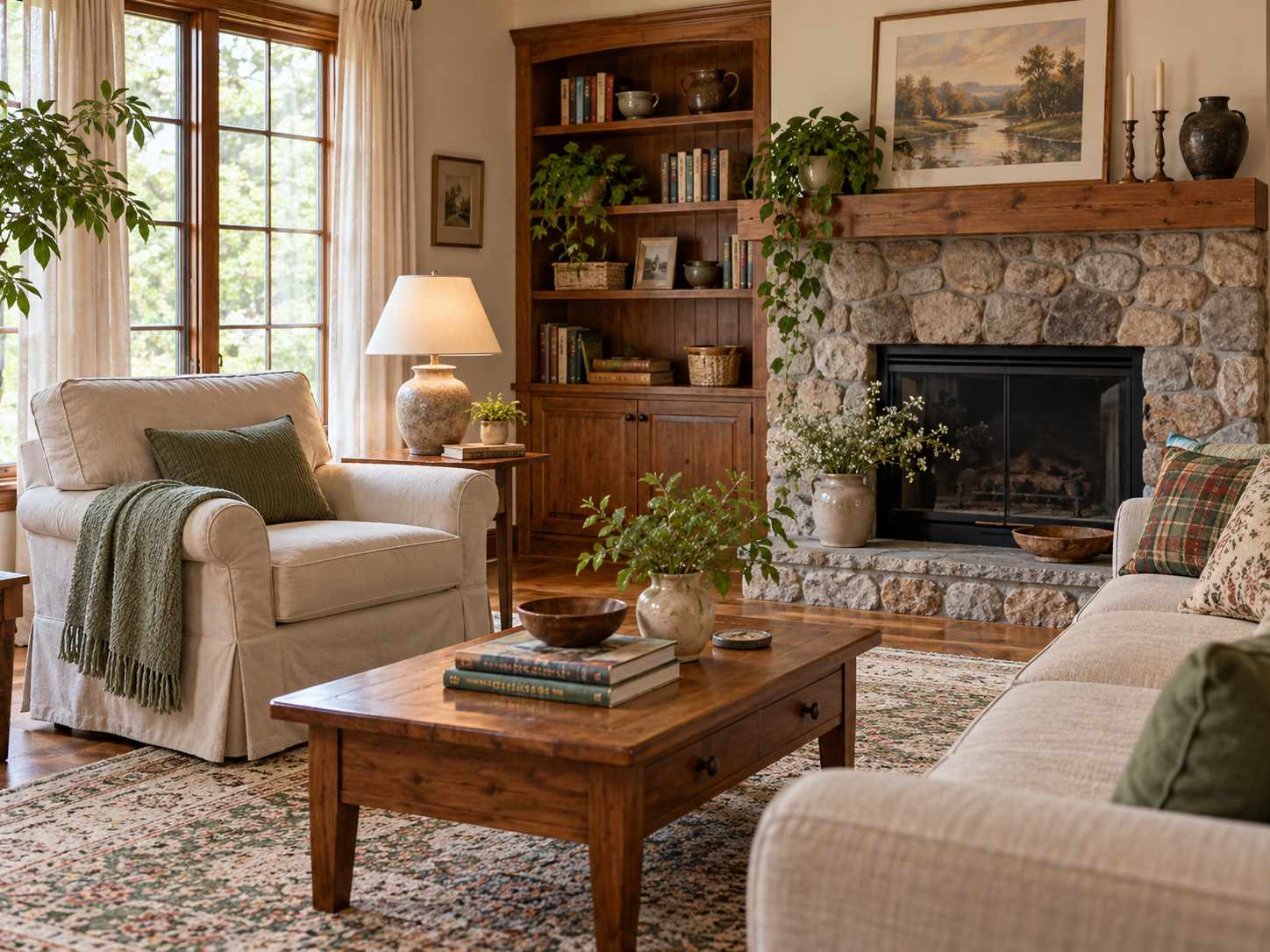
A well-fitting slipcover can refresh a structurally sound chair while preserving a useful seat. Check the fabric and washing instructions, and make sure the cover does not interfere with moving parts. Repeat its color elsewhere so the chair feels part of the room.
17. Leave the Coffee Table Ready for Daily Use
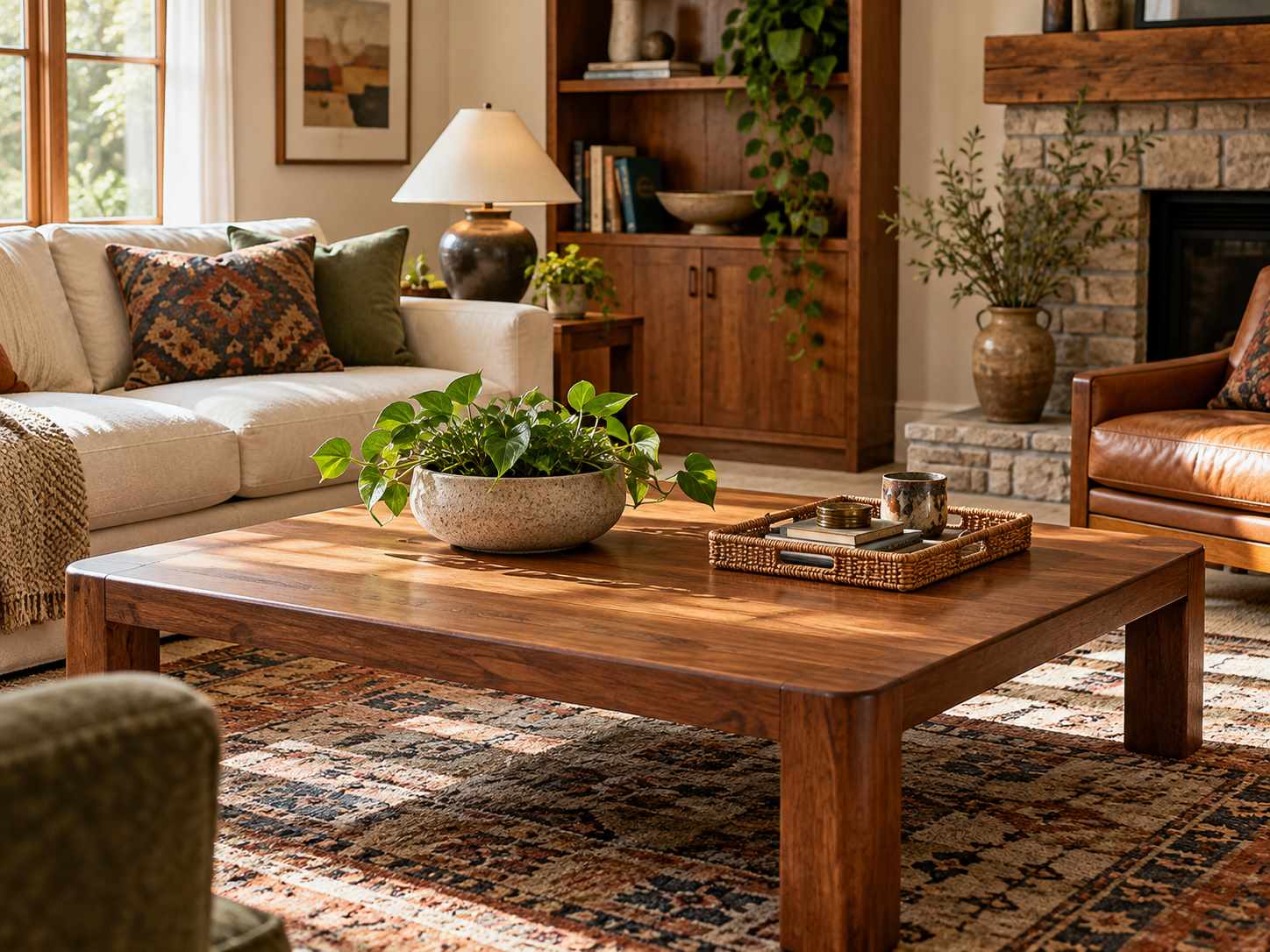
A tray can contain a few essentials, but most of the table should remain available. Choose one low decorative object rather than several tall pieces. Review what accumulates there during a normal week and provide separate storage for anything that repeatedly gets in the way.
Frequently Asked Questions
Can a 90s living room look current?
Yes. Keep the comfortable furniture you enjoy and simplify the surrounding patterns or accessories. A clearer layout often changes the room more than a full replacement.
How do I work with a large sofa?
Check the route around it and reduce competing furniture. Smaller side tables or an ottoman may work better than several additional chairs.
Should all wood furniture match?
No. Similar warmth can connect different finishes. Repeat one tone in a small detail and leave some contrast between the larger pieces.
What pattern should I start with?
Choose the pattern on a piece you plan to keep, then pull colors from it. Add plain textiles before introducing another patterned item.
How can I improve media storage?
Measure your equipment and plan cable routes and airflow first. Closed storage can hide small accessories while leaving devices safe and accessible.
Related Decorating Guides
- 17 70s Living Room Decor Ideas with Earthy Color
- 17 80s Living Room Decor Ideas for a Balanced Retro Look
- 17 Aesthetic Farmhouse Living Room Ideas with Useful Details
Conclusion
Keep the comfortable elements that already work and give them a clearer setting. Warm timber, a restrained textile palette, and practical storage can bring a familiar mood into a room that supports present-day routines. Save the ideas that solve a real layout or storage problem first.
Find more seating and finishing details in our living room guides.