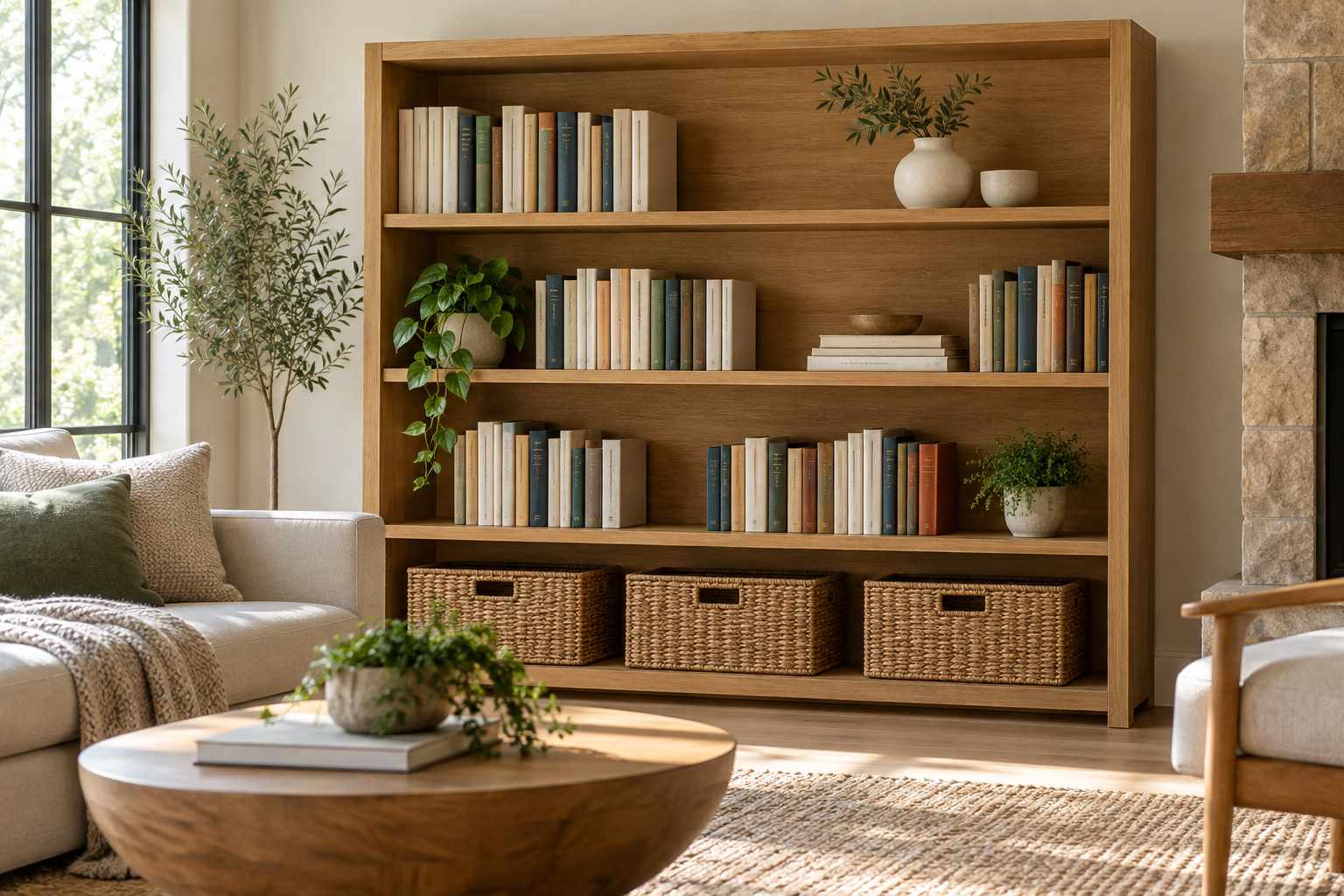
A bookshelf should hold the books you use while giving the room a clear, considered surface. Begin by sorting the collection and checking the unit’s load and anchoring instructions. These chic bookshelf ideas cover different ways to combine books, closed storage, artwork, and a little open space. Choose an arrangement that makes sense for your reading habits rather than hiding useful titles for a photograph. A few deliberate groupings can make a substantial collection feel ordered without turning the shelf into a row of decorative props.
Key Takeaways
- Let books establish the arrangement before adding ornaments.
- Keep heavy items low and follow loading and anchoring instructions.
- Leave practical gaps for removing books and cleaning surfaces.
1. Start with Books Organized by Use
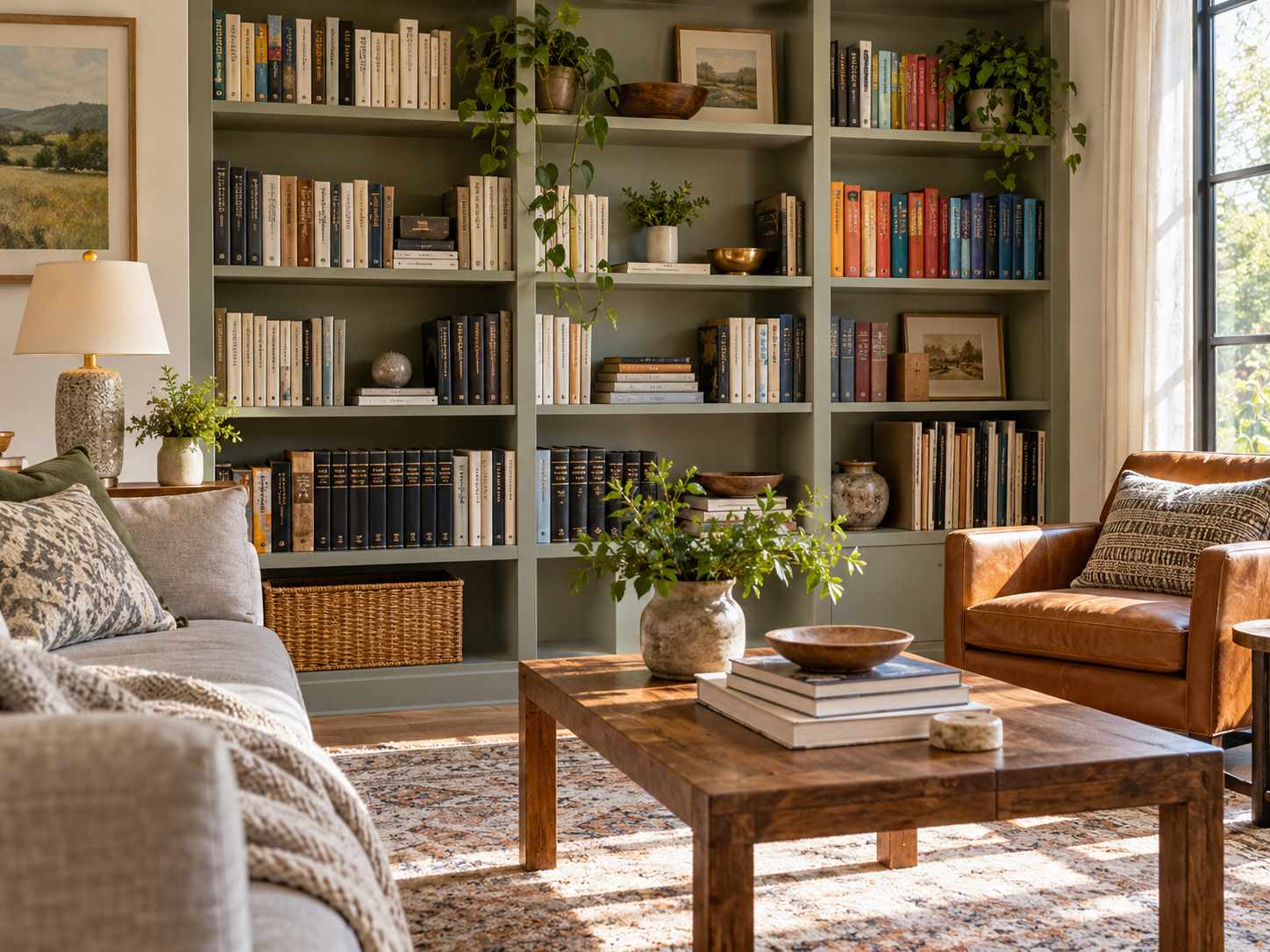
Put frequently read books where you can reach them comfortably. Group reference books, novels, and oversized volumes in a way you can remember. This gives styling a useful foundation and prevents decorative objects from occupying the shelf space the collection actually needs.
2. Use One Horizontal Stack as a Break
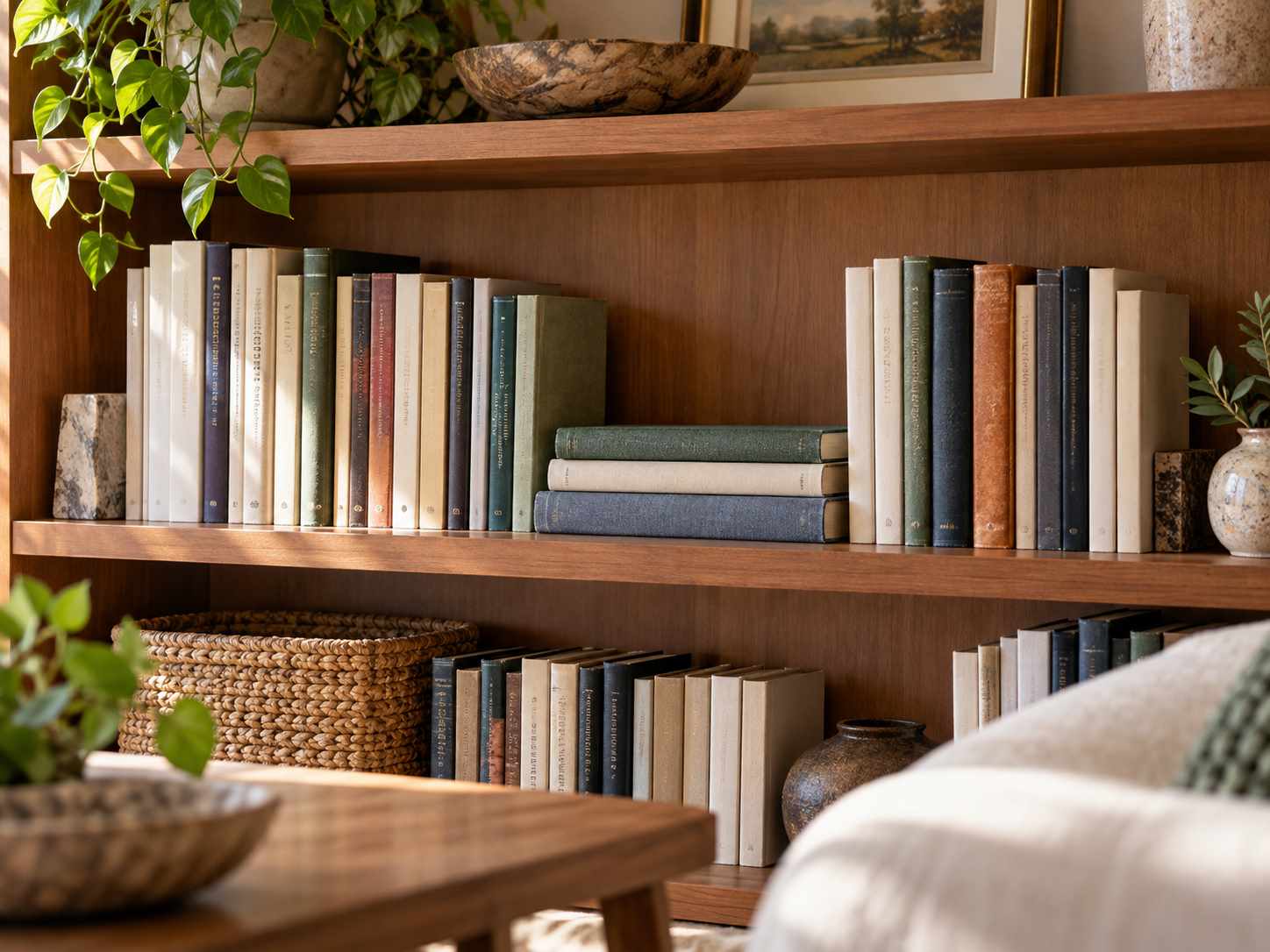
A short horizontal stack can interrupt a long row of upright books. Keep it low enough that titles remain easy to lift without moving several objects. Avoid turning every stack into a display stand, especially when the books are ones you often read.
3. Add Closed Baskets to the Lowest Shelf
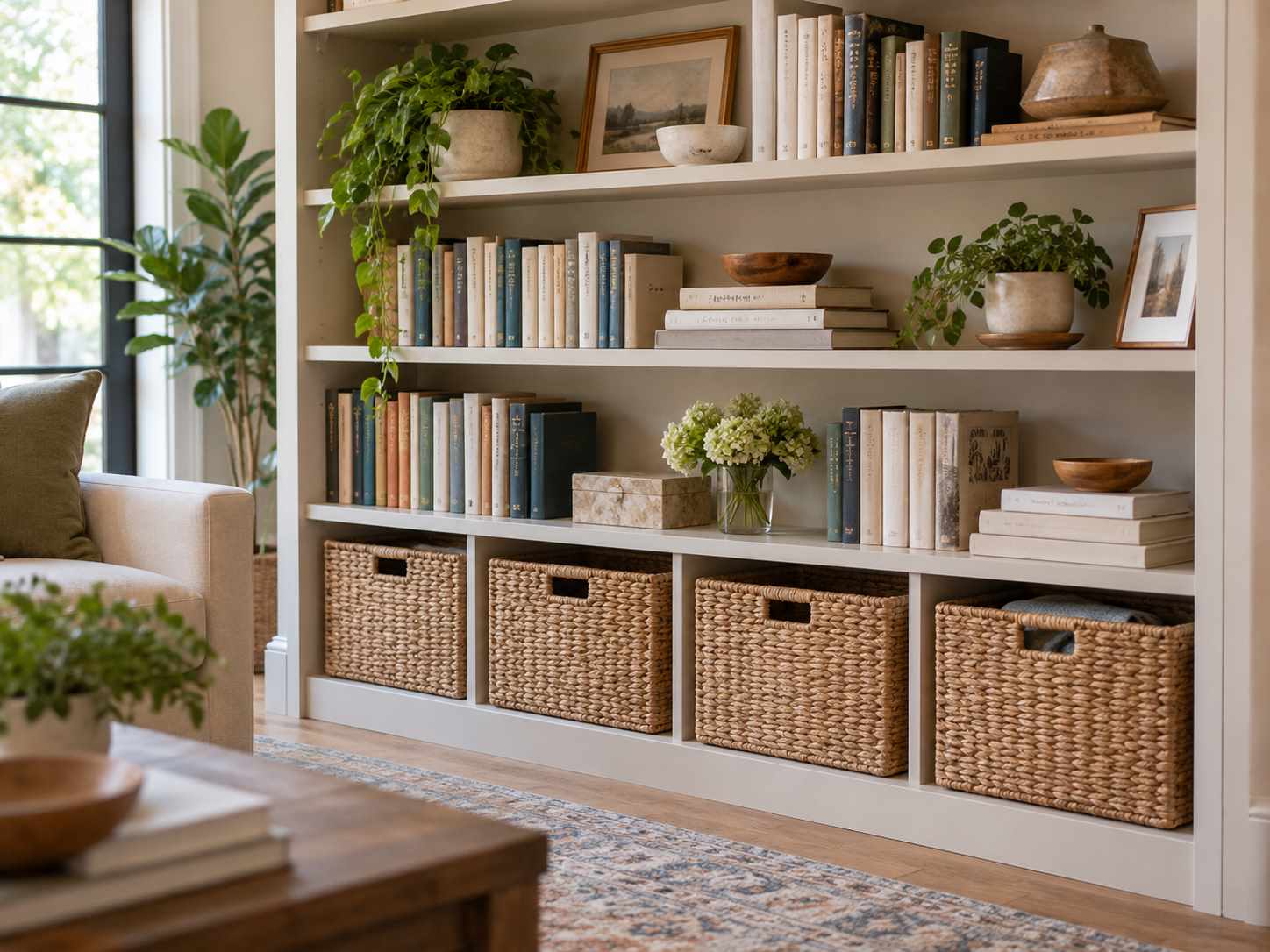
Baskets can contain cables or small household items while leaving upper shelves for books. Check the internal dimensions and make sure the baskets slide out easily. Keep their contents light enough to handle comfortably and avoid using them to hide an unmanageable amount of clutter.
4. Give Oversized Books Their Own Bay
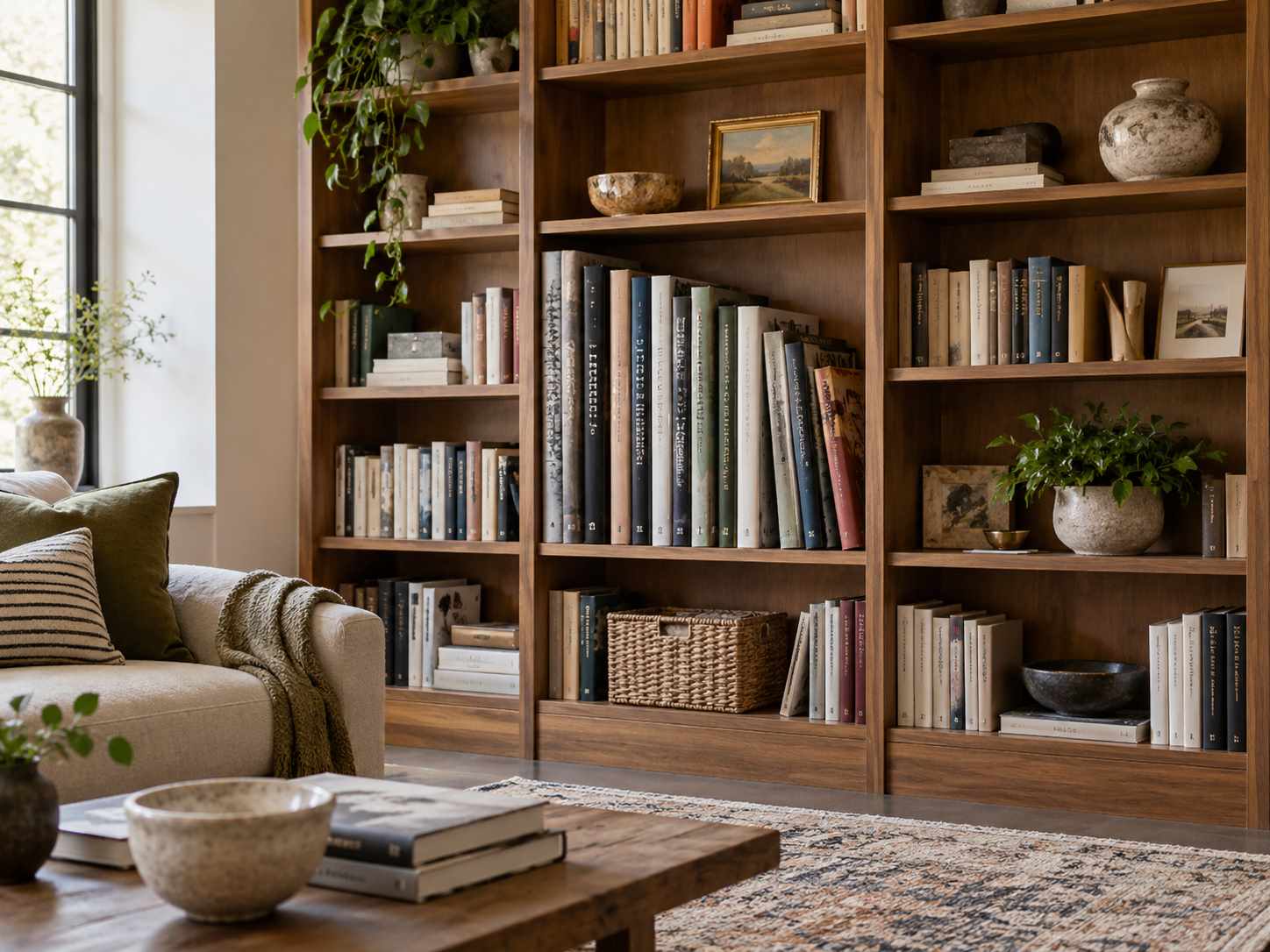
Tall art books need a section with enough height and depth to support them properly. Adjust shelves if the unit permits it and follow the loading guidance. Let a clearly planned large-book section look intentional rather than forcing volumes into unstable angles.
5. Use Bookends with a Simple Shape
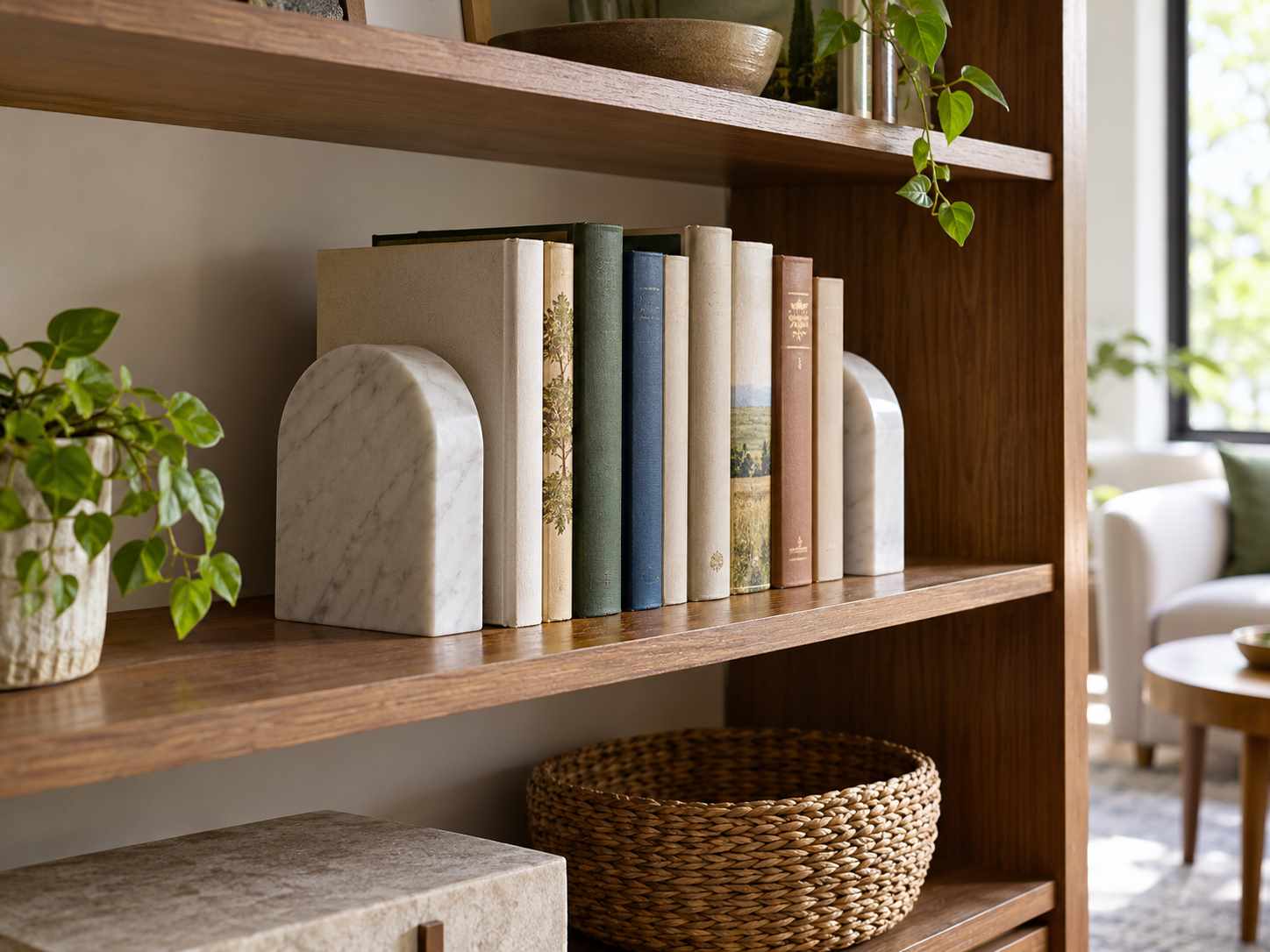
Stable bookends can hold a partial row without requiring another decorative object. Choose a size and weight appropriate to the books. Leave enough room to remove a title comfortably and check that the ends will not scratch the shelf surface.
6. Paint the Back Panel a Quiet Accent Color
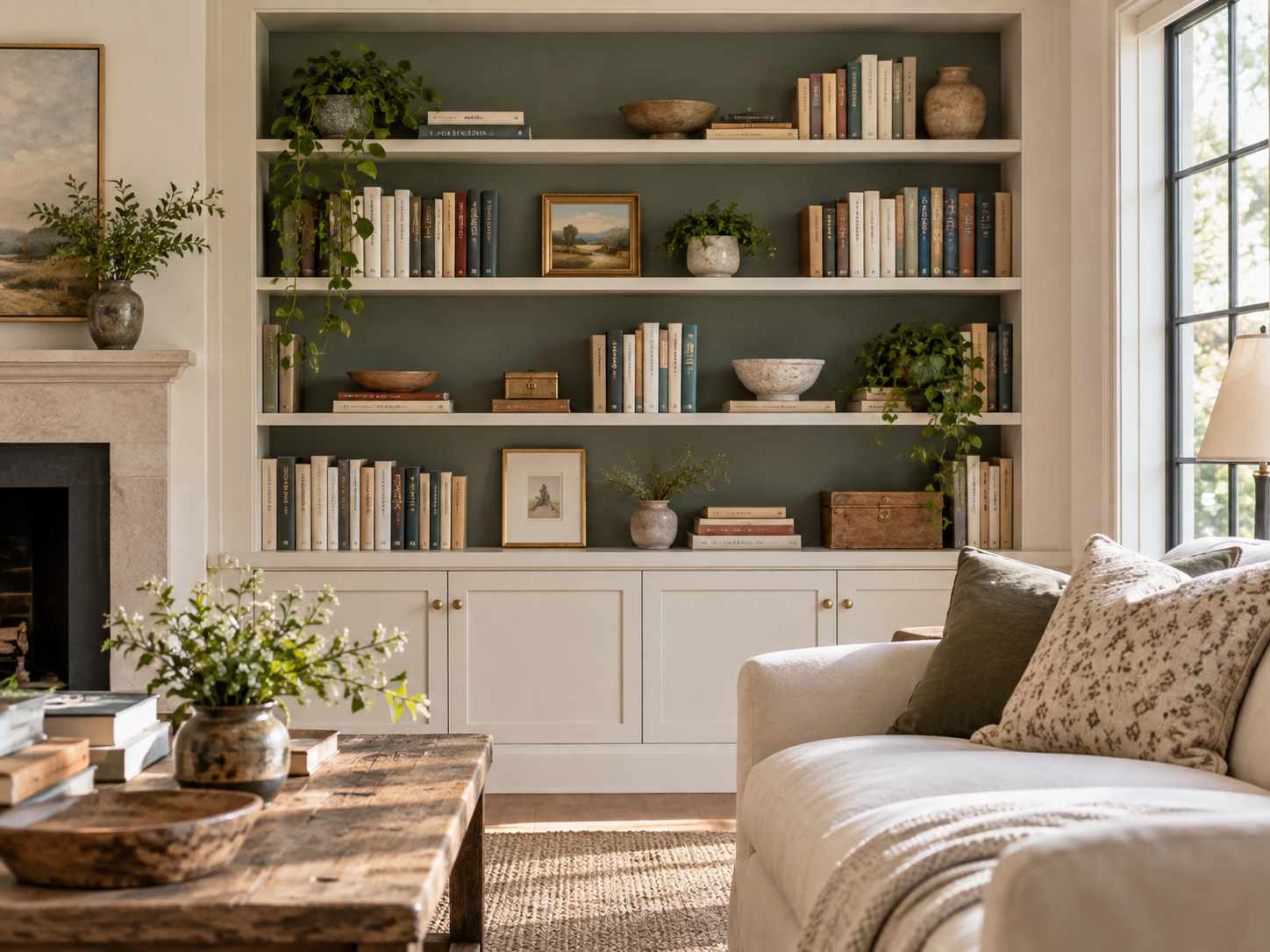
A colored back panel can distinguish books from the unit’s frame. Try a muted tone from the room rather than a new unrelated color. Check surface preparation and coating suitability, and let the paint dry fully before returning books.
For practical arrangements of books and decorative objects, see our open-shelf styling guide.
7. Display One Small Artwork in an Open Bay
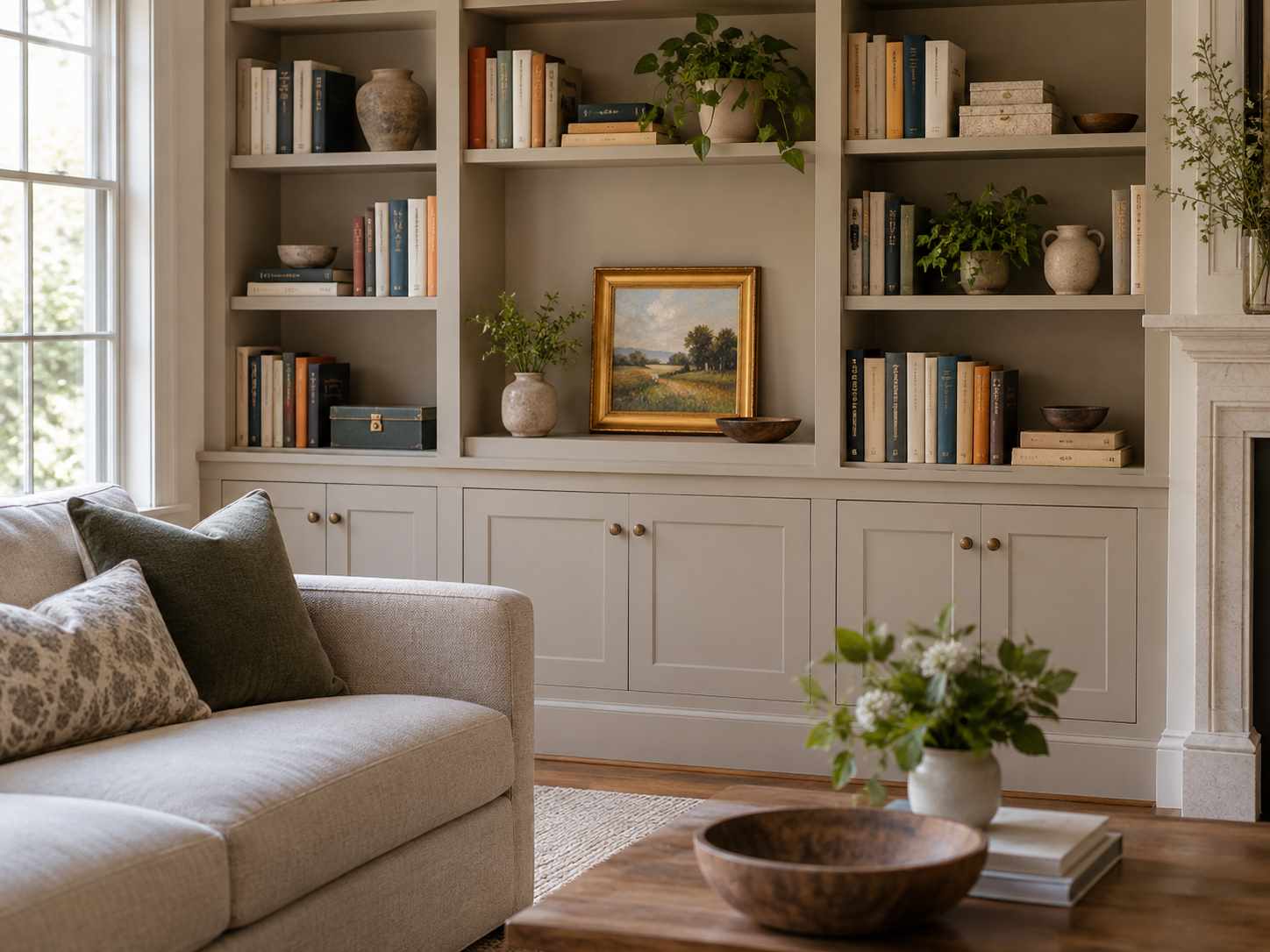
A small artwork can provide a visual pause where the collection leaves space. Choose a secure, stable presentation and keep it separate from books you often remove. Use original or licensed art, and avoid leaning fragile frames where they can slide forward.
8. Keep a Ceramic Group to One Shelf
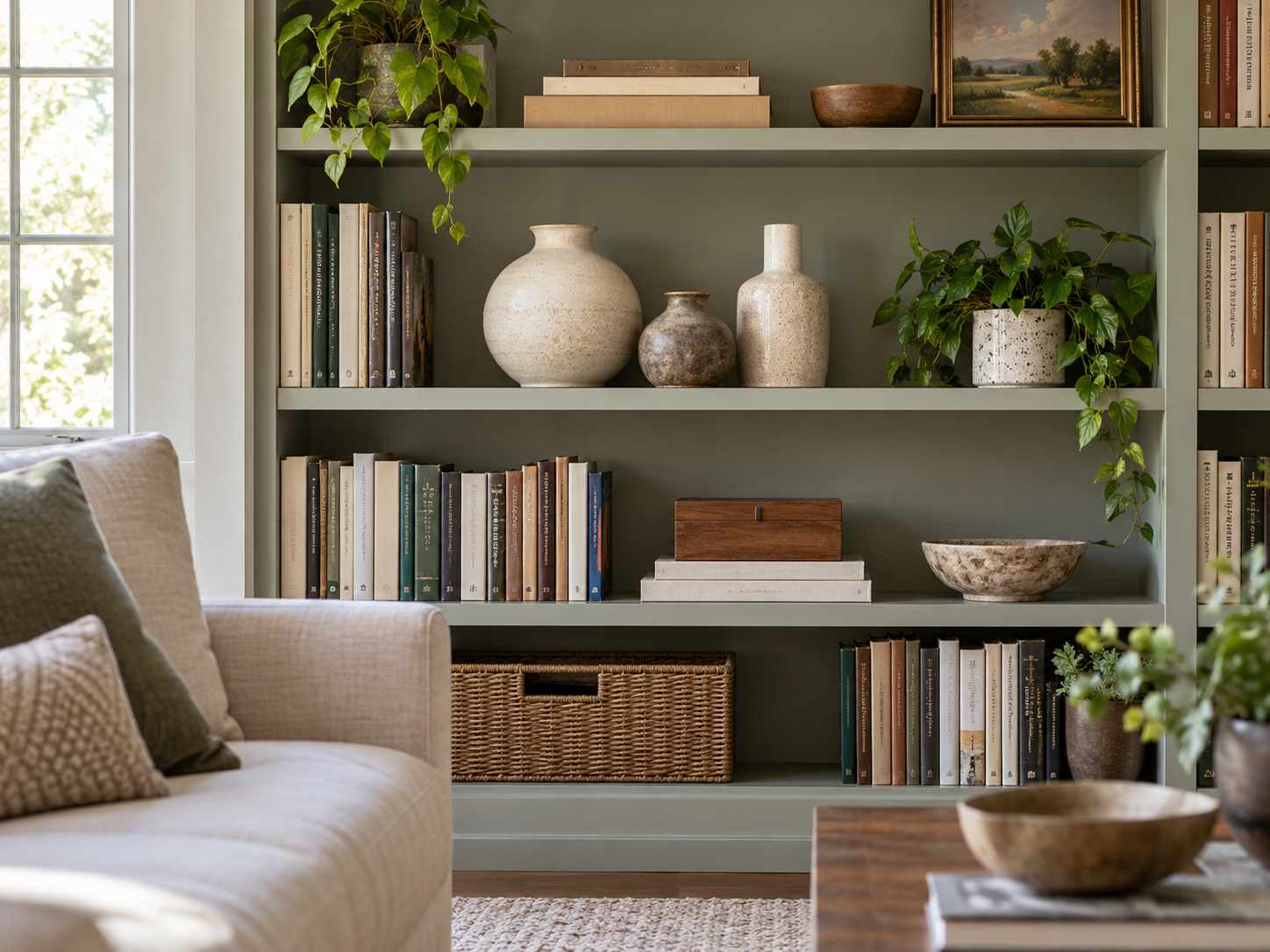
A small pottery group can introduce a different texture without taking over the bookcase. Keep the pieces stable and below the shelf’s load limit. Leave a clear gap around them so their shapes read as a group rather than loose objects filling every opening.
9. Use Matching Storage Boxes for Paper
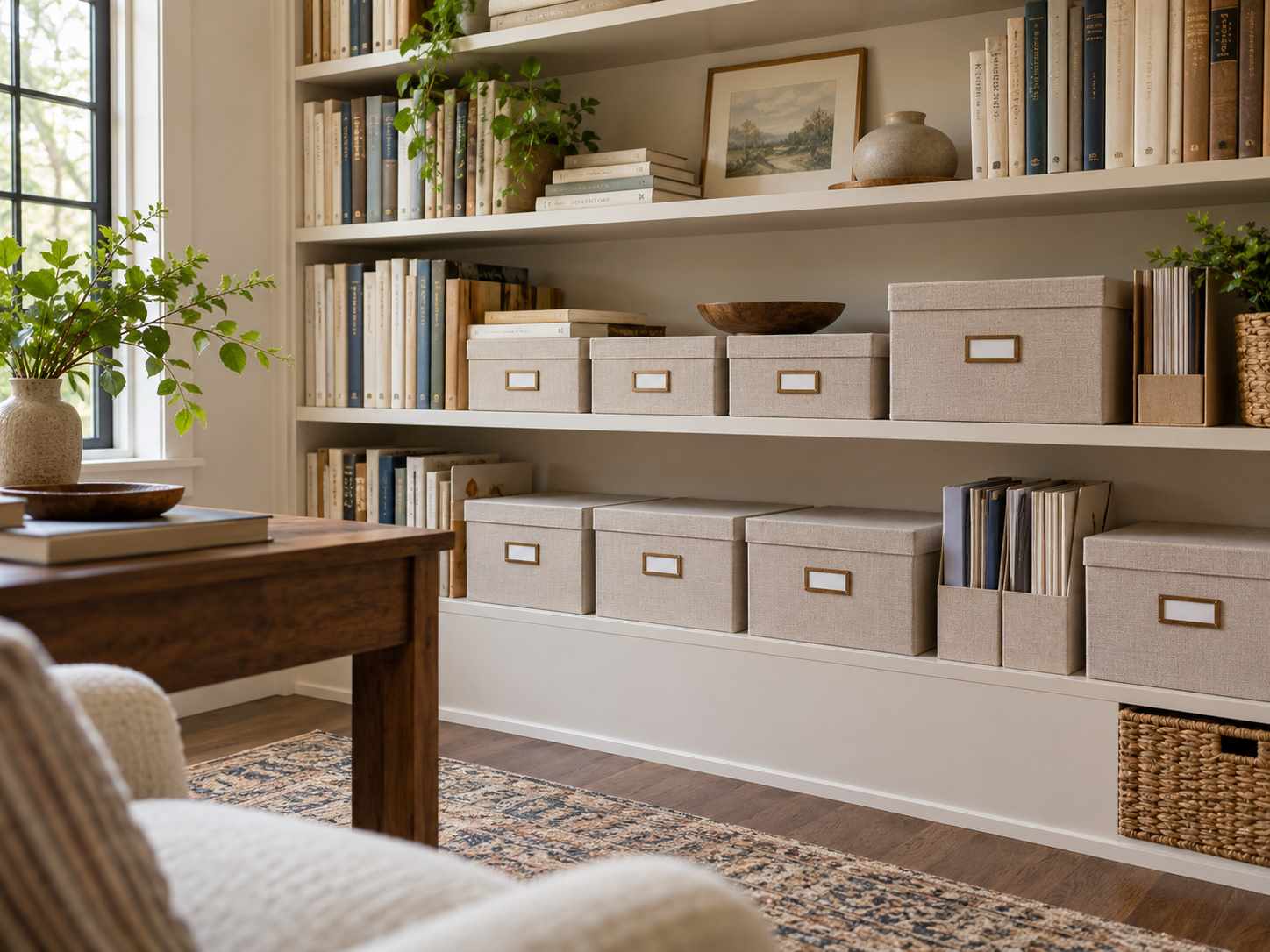
Related boxes can make household paper storage look deliberate. Label the contents in a way that is useful to you and choose boxes that can be lifted out easily. Keep important documents in storage appropriate to their security and preservation needs.
10. Create a Reading Nook Beside the Bookcase
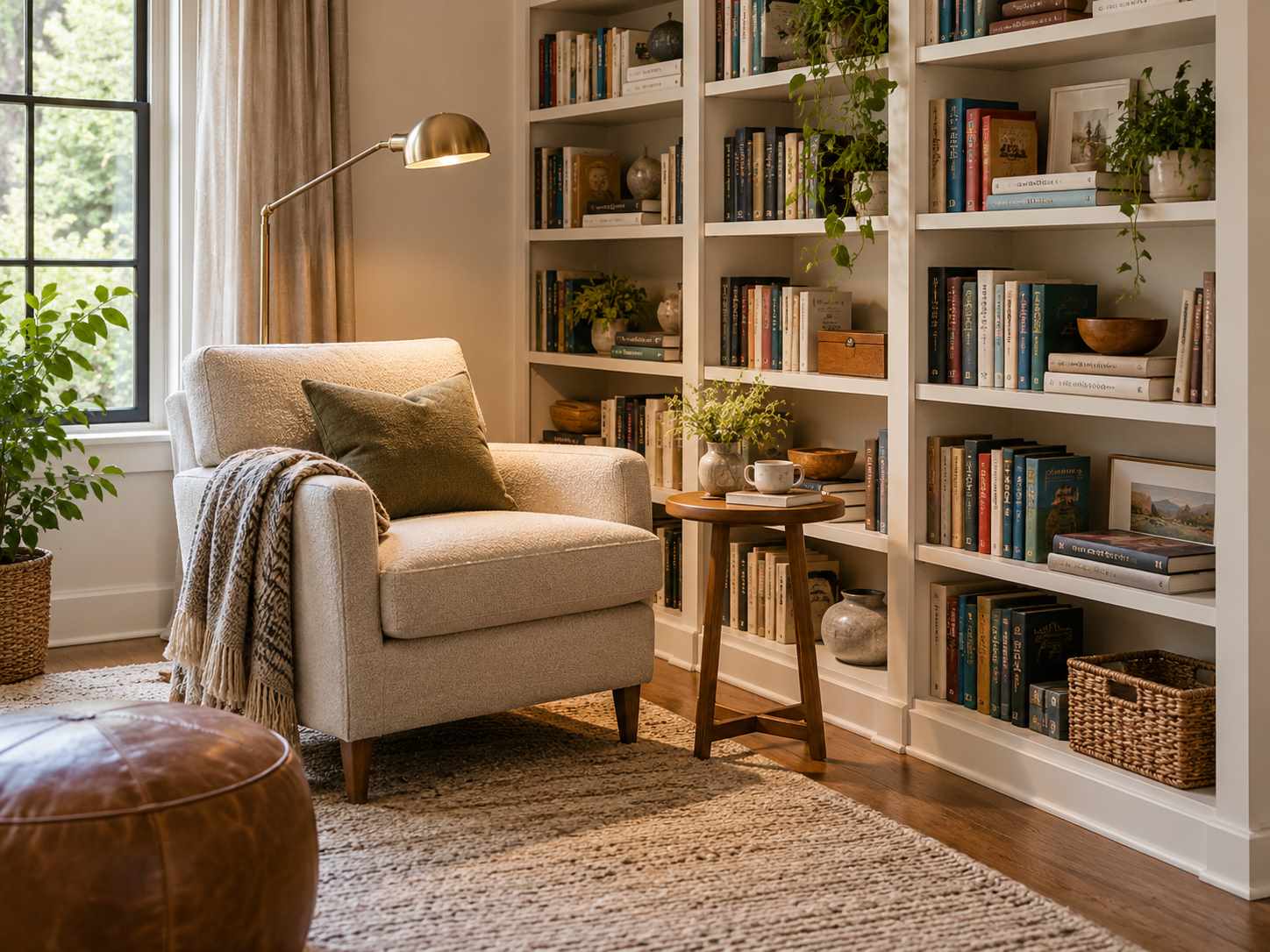
A comfortable chair and useful lamp can make the shelves part of a daily routine. Leave access to the lower shelves and space to move around the chair. A small reachable table may be more useful than adding another decorative object to the bookcase.
11. Leave One Bay Partly Empty
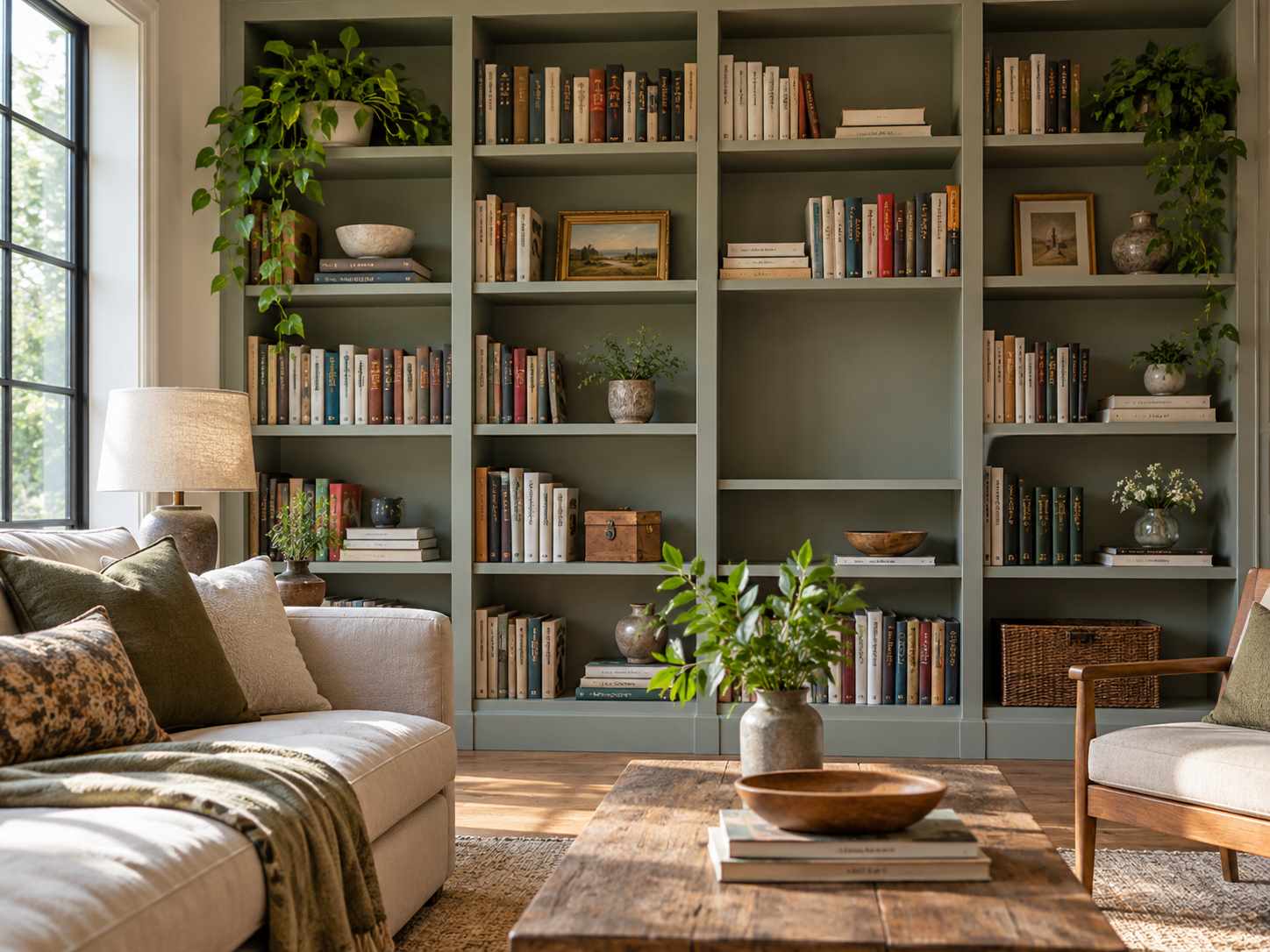
A little open space can help a full bookcase feel easier to read. Choose a bay where the absence looks deliberate and keep it available for a growing collection. Empty space should not require storing useful books elsewhere just to maintain a styled appearance.
12. Connect Shelves with a Repeated Material
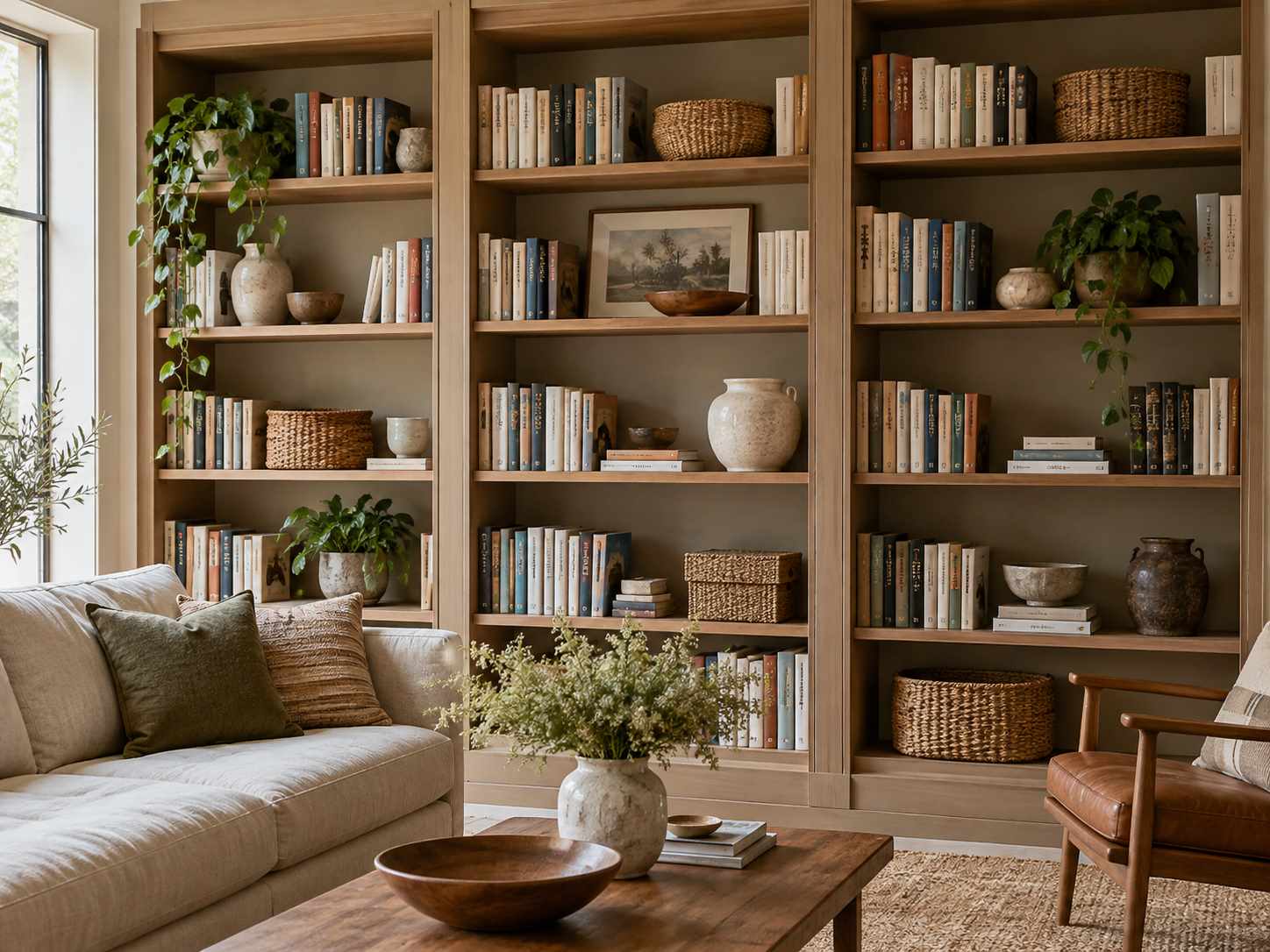
A few wooden, woven, or ceramic details can connect different bays. Repeat the material gently rather than placing the same object on every shelf. Let the books remain the main content, with accessories helping the arrangement settle.
For useful layouts in compact spaces, browse our small-space collection.
13. Use a Narrow Unit in an Awkward Alcove
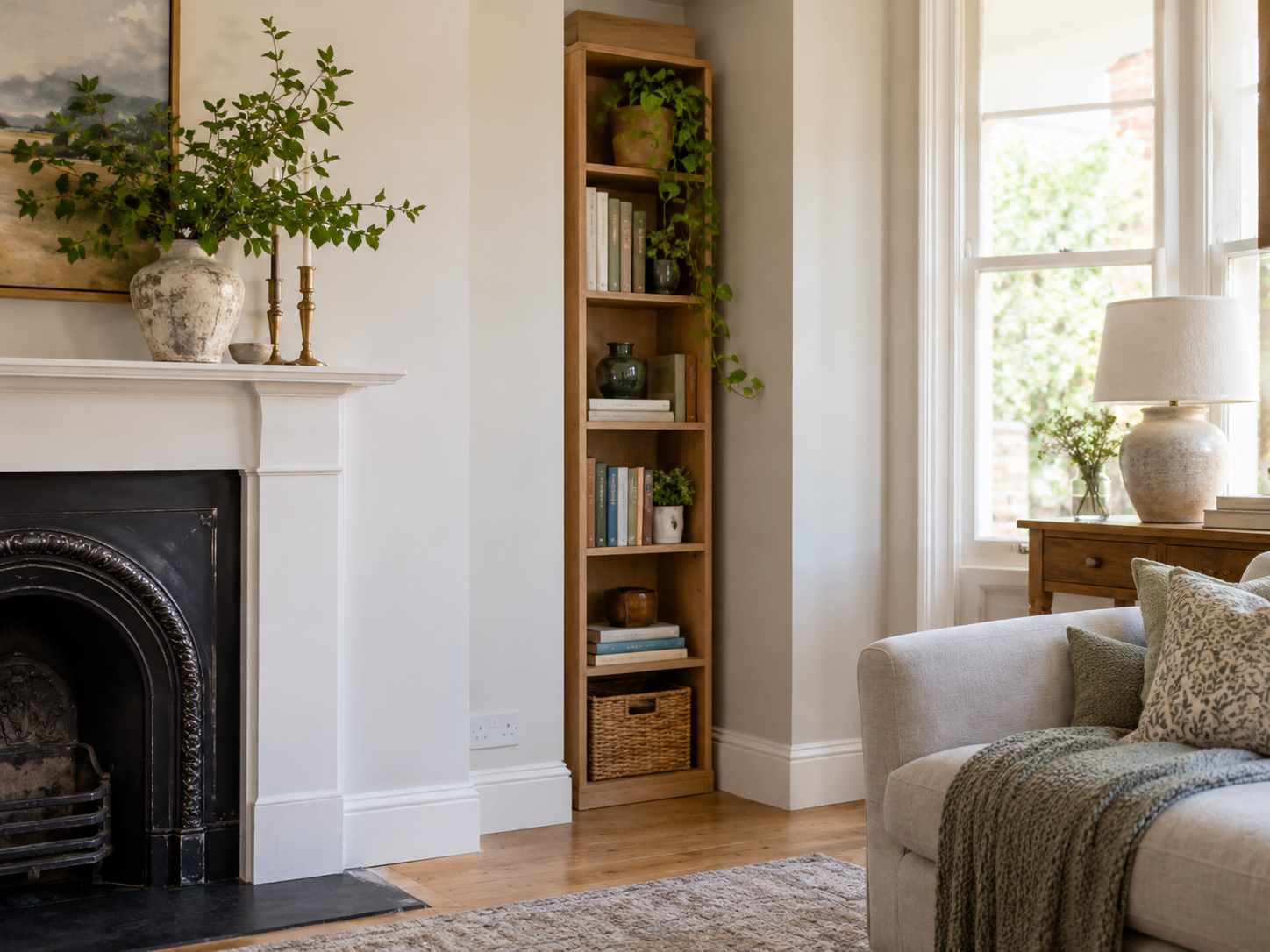
A narrow bookcase can give a small alcove a purpose when the dimensions suit it. Measure trim, sockets, and access before buying. Follow anchoring guidance and keep the unit clear of vents or equipment that needs airflow.
14. Place a Trailing Plant on a Suitable Side Shelf
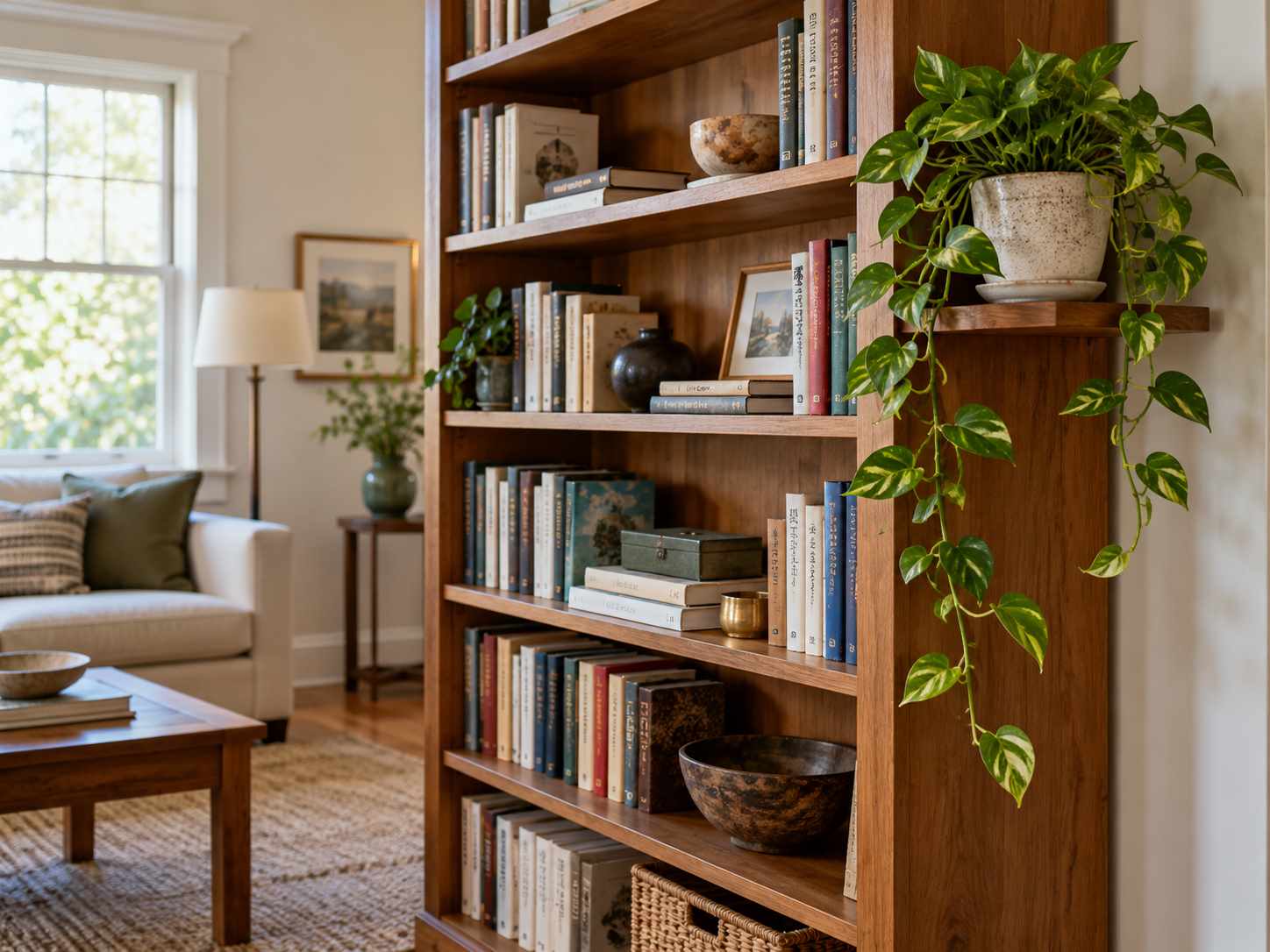
A plant can soften a bookcase if the light suits it and watering is manageable. Use a protective pot and keep moisture away from books. Avoid trailing growth across titles, electrical equipment, or the route for reaching a shelf.
15. Separate Children’s Books by Reach
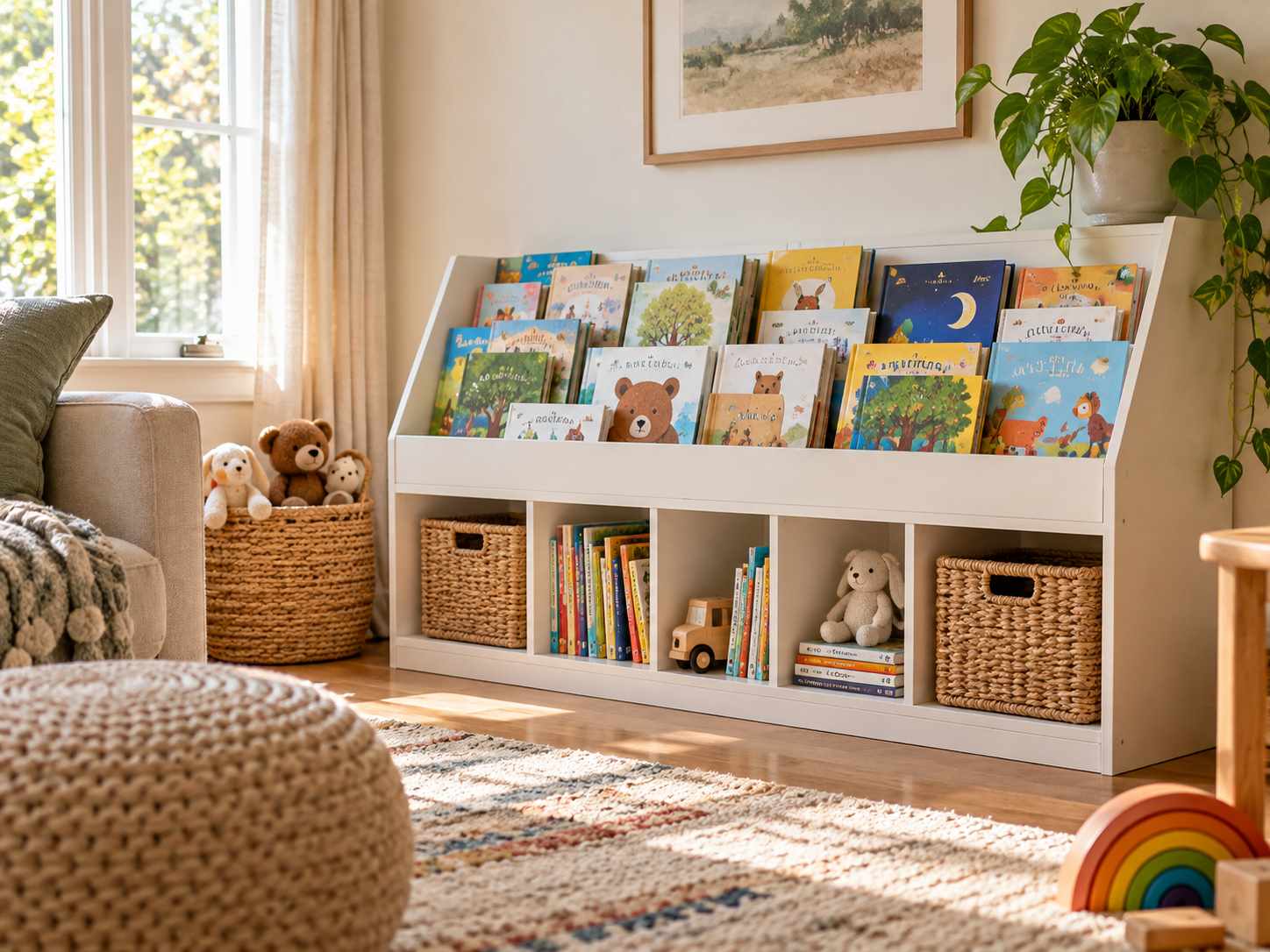
Put children’s books where their intended readers can access them without climbing. Keep the unit appropriately anchored and choose storage that supports safe use. A low dedicated section can be more useful than mixing children’s books into a high decorative arrangement.
16. Use a Low Bookcase Behind a Sofa
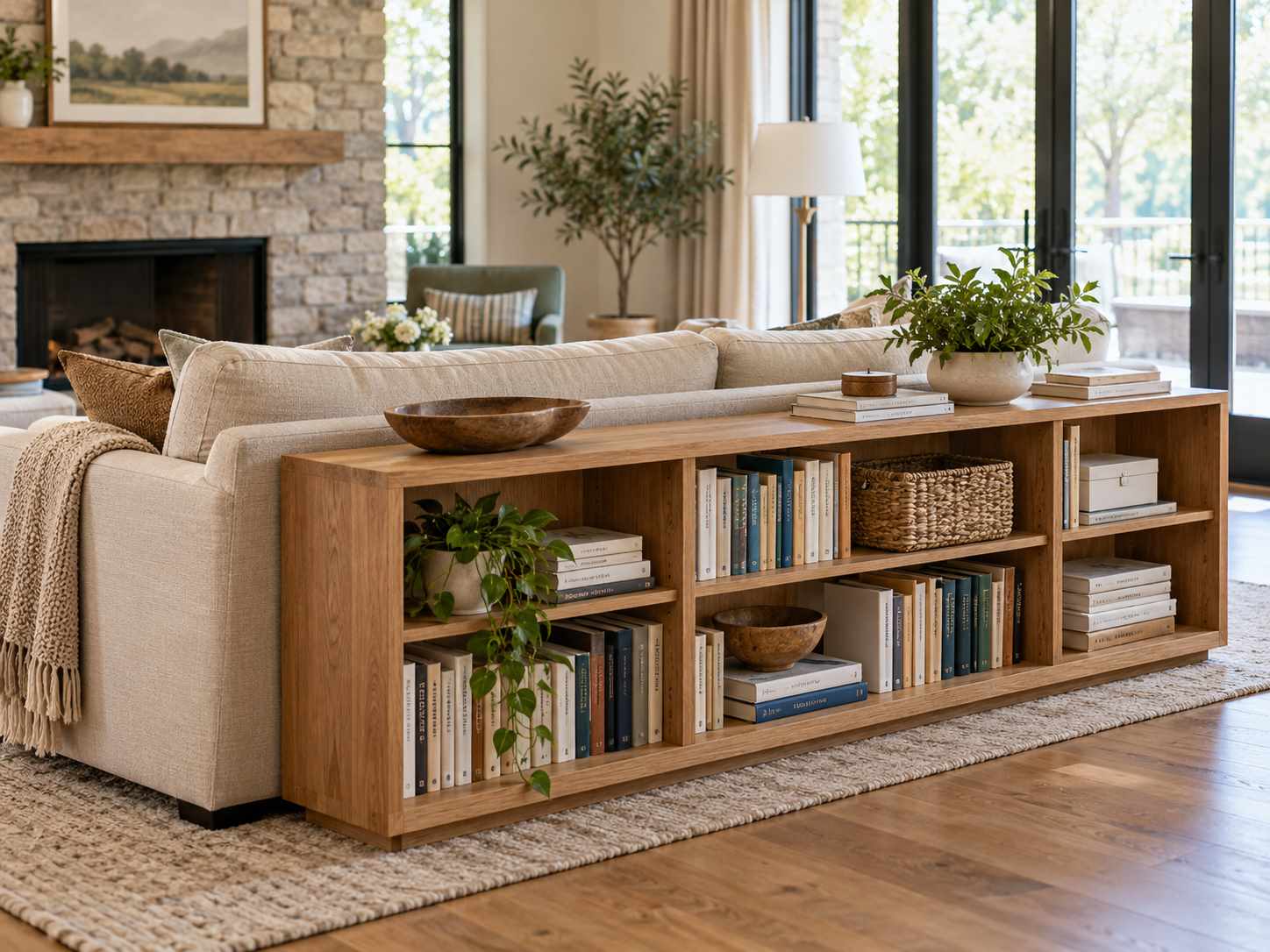
A low bookcase can provide storage while defining the back of a seating group. Check the clearance around the sofa and keep the top stable and lightly styled. Avoid tall loose objects where people may brush past them.
17. Finish with a Weekly Shelf Reset
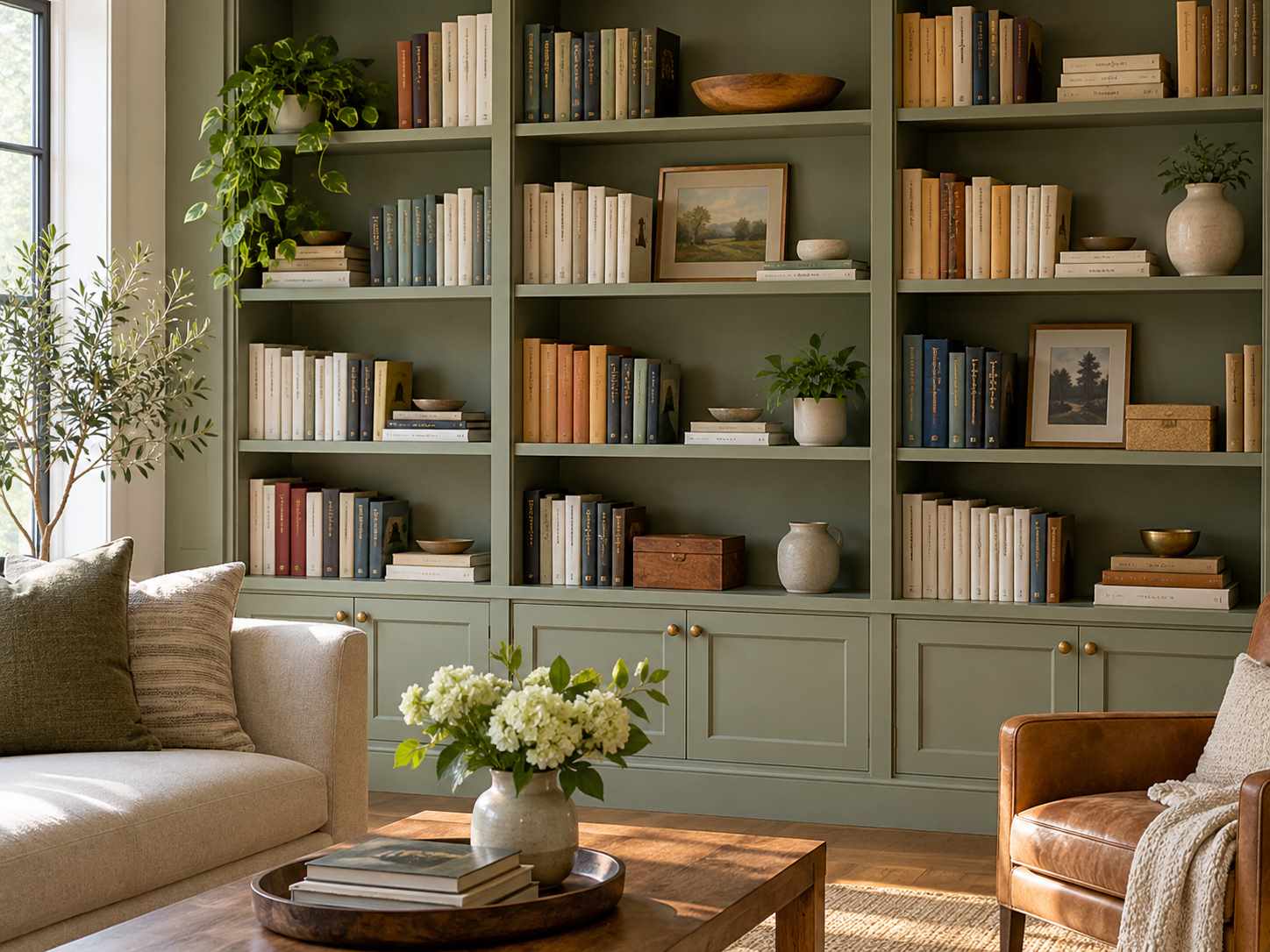
Return books to their groups and remove objects that have accumulated without a purpose. Check that shelves remain easy to use and dust. A quick reset helps a styled bookcase stay practical without requiring a complete rearrangement every time you bring home a new title.
Frequently Asked Questions
Should I organize books by color?
Only if that helps you find them or you enjoy the arrangement. Sorting by subject, author, or use is often more practical for a frequently read collection.
How many decorations should a bookshelf have?
There is no fixed number. Add objects only after the books have useful space, and leave enough room to remove titles and clean the shelf.
Can I put plants near books?
Yes, when the light suits the plant and water is kept away from the collection. Use protective containers and avoid trailing growth over books or equipment.
Where should heavy books go?
Keep heavier items low and within the unit’s stated capacity. Follow the shelf and anchoring instructions rather than arranging weight only for appearance.
How do I style a very full bookcase?
Organize the books clearly and use repeated spacing or bookends. You do not need to remove useful books simply to add decorative objects.
For more on anchoring storage furniture, review CPSC’s furniture-anchoring guidance.
Related Decorating Guides
- 17 Bedroom Storage Ideas for Clothes, Bedding, and Daily Life
- 17 Anime Bedroom Decor Ideas with Organized Displays
- 17 Apartment Ideas for Couples Sharing One Home
Conclusion
Organize the books first and let decoration support the collection. A few useful baskets, one artwork, and some open space can make shelves feel considered without sacrificing access. Save the arrangements that fit your books and the way you read.
Find more focused room projects in our complete decorating guide library.