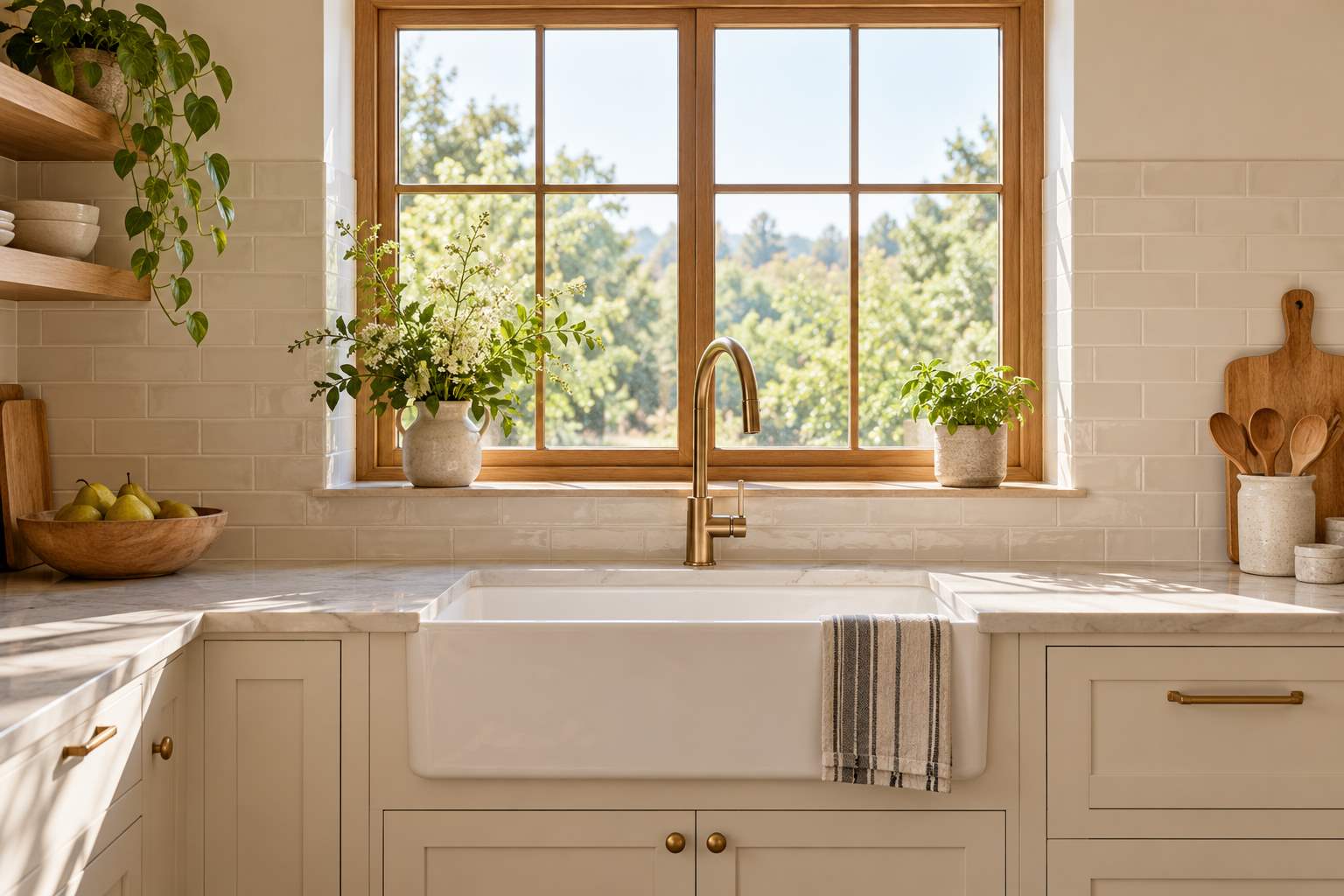
The space above a kitchen sink needs to handle splashes, light, and regular cleaning before it carries decoration. Start by checking whether the sink sits beneath a window, a cabinet, or a plain wall. These above kitchen sink ideas offer different ways to finish each arrangement without crowding the work area. Choose materials suited to the moisture they will encounter, keep windows and taps easy to use, and leave electrical changes to a qualified professional. A clear, useful sink area can still have plenty of character.
Key Takeaways
- Keep the tap, window, and daily cleaning routes accessible.
- Choose finishes and fixings suited to splash and moisture.
- Use one main decorative treatment rather than filling the whole wall.
1. Extend a Simple Tile Backsplash Upward
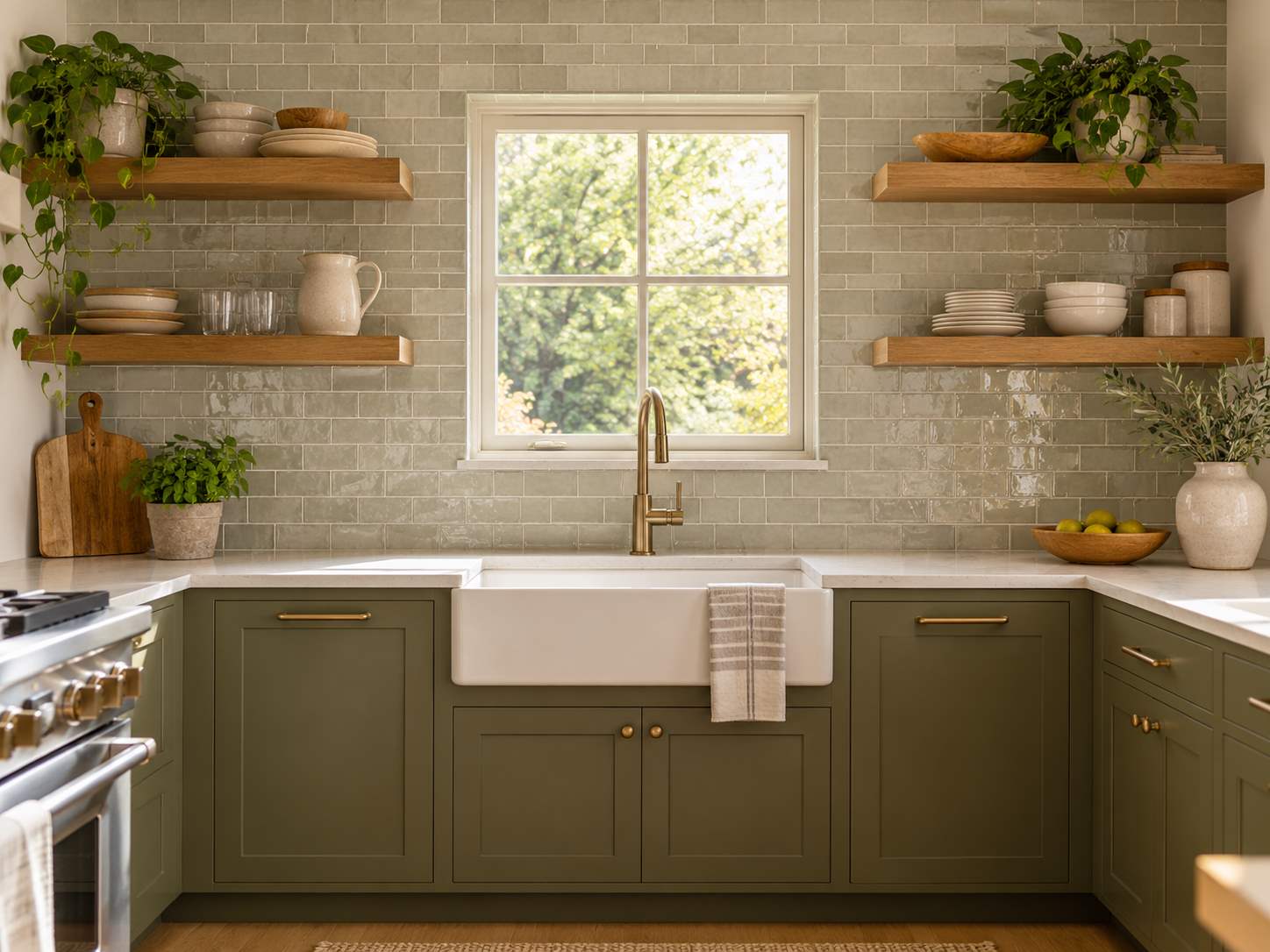
A taller run of tile can give a sink wall a finished backdrop without separate ornaments. Choose a tile and grout system appropriate to the area and have the substrate and installation checked. A restrained layout lets the surface texture provide interest while making the wall straightforward to wipe.
2. Use a Plain Roman Shade on a Nearby Window
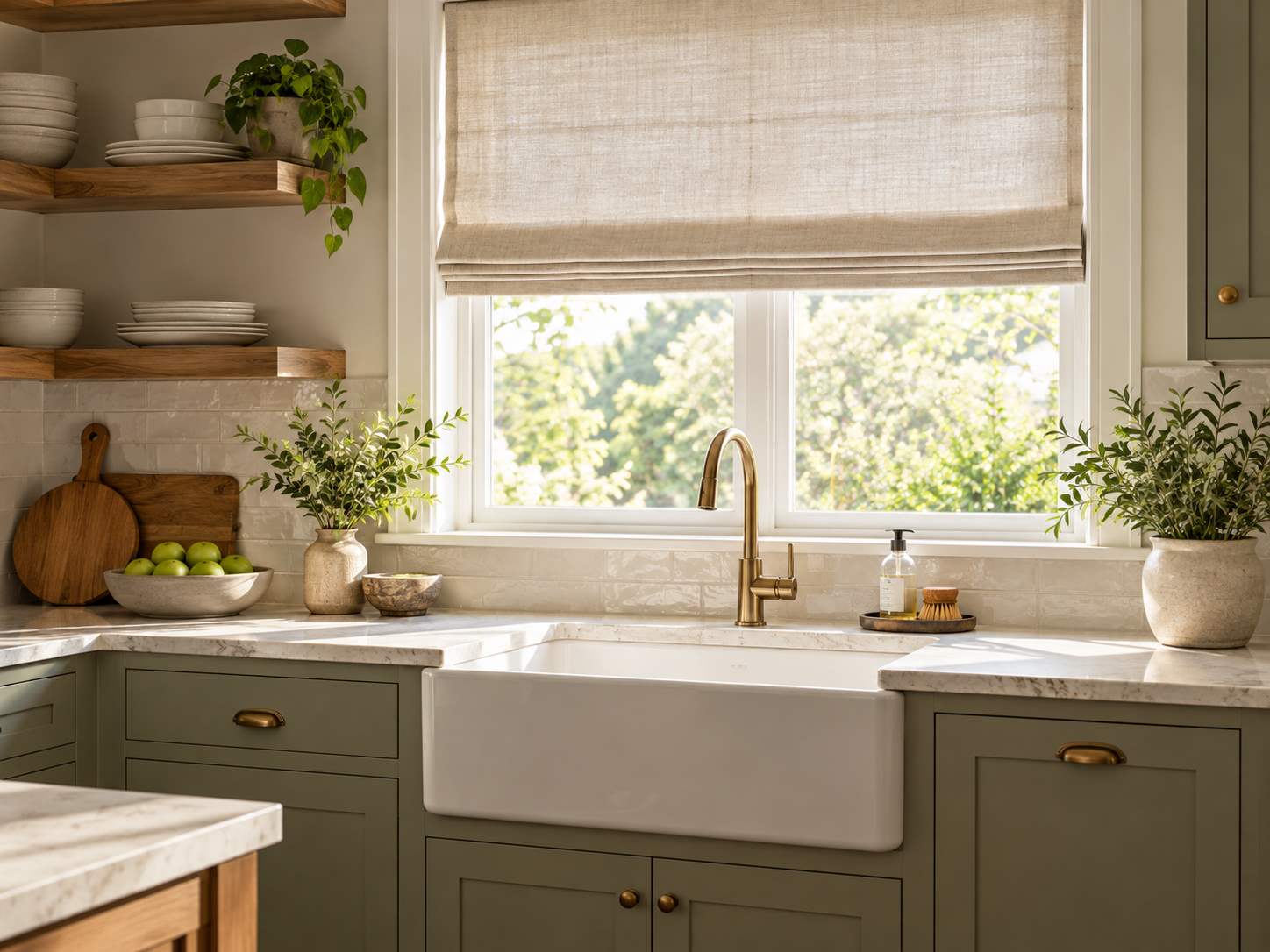
A simple shade can soften a window above the sink when it is positioned away from splashes and heat. Choose an appropriate washable or easy-care material and check the mounting position. Cordless operation is a sensible choice where children may be present.
3. Keep the Window Ledge Mostly Clear
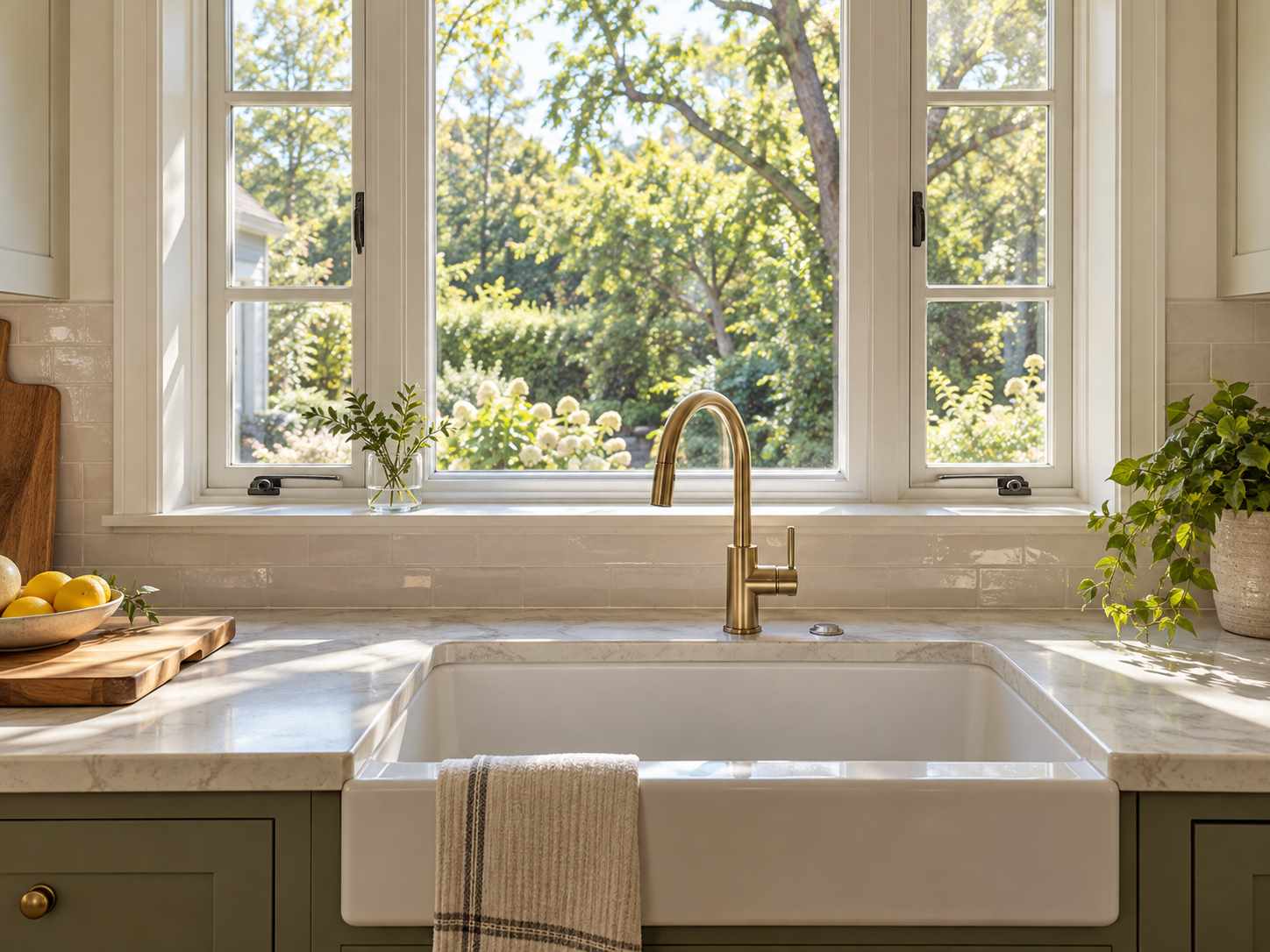
An uncluttered ledge can make the sink feel brighter and easier to clean. Choose one small object only if it does not interfere with opening the window or wiping condensation. A useful view may provide enough decoration without additional pieces.
4. Add a Narrow Shelf Outside the Splash Zone
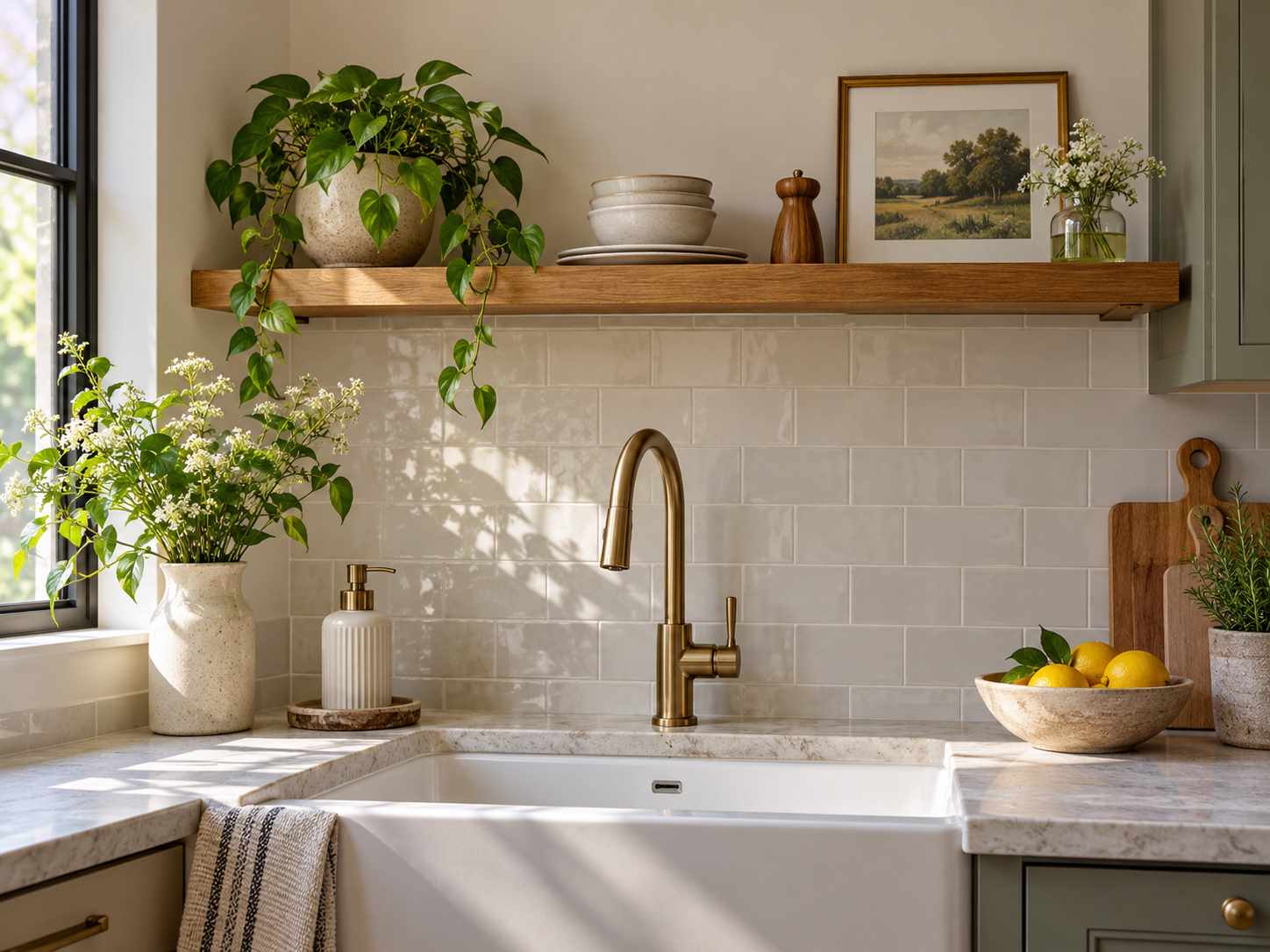
A narrow shelf can hold a few lightweight objects where the wall stays dry enough. Confirm its fixing method and load guidance, and leave enough room to clean underneath. Avoid placing heavy or fragile pieces where they could fall into the sink.
5. Choose a Quiet Patterned Tile Panel
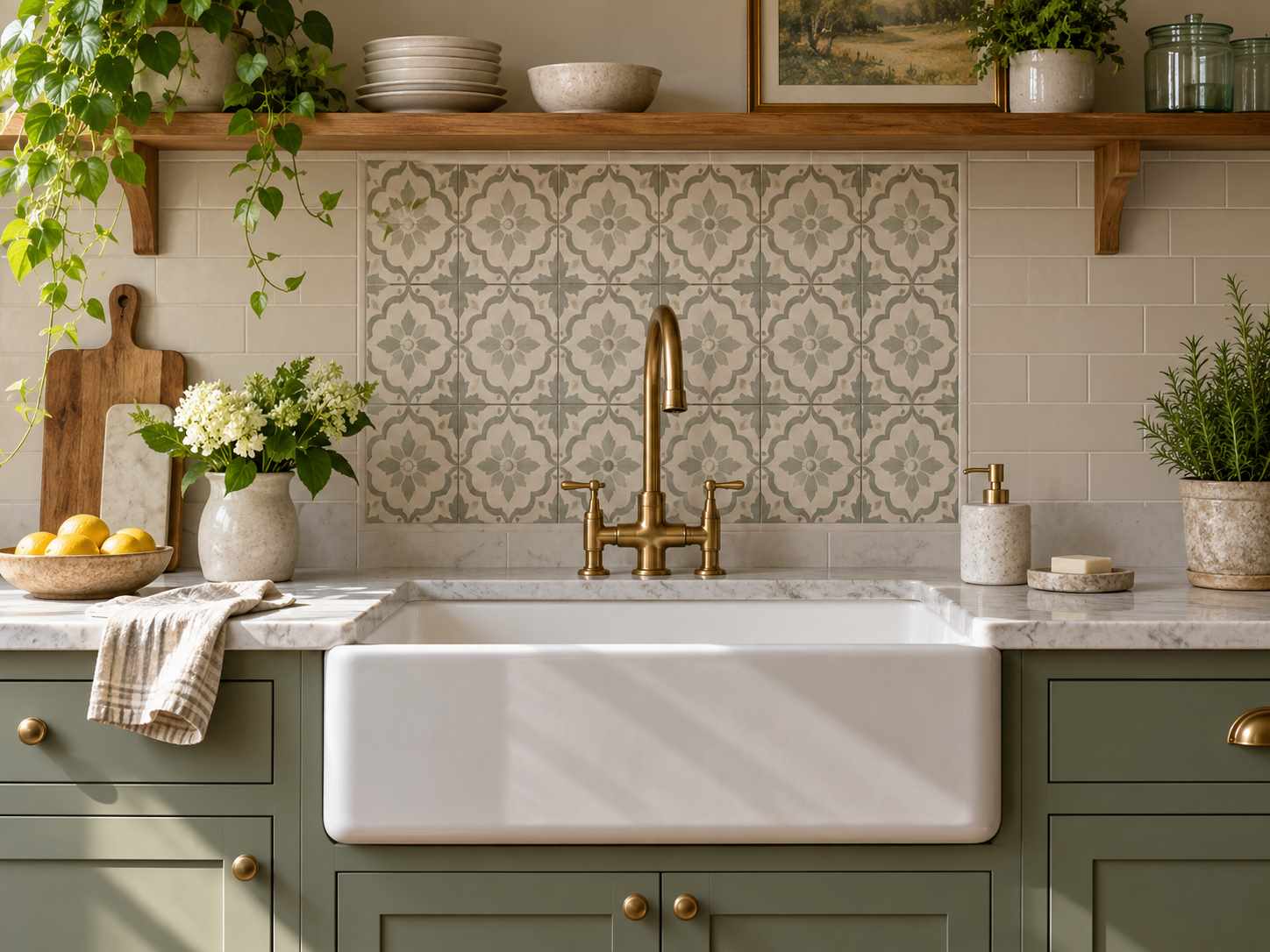
A patterned tile panel can define a sink within a larger plain backsplash. Plan the pattern’s center around the sink and tap rather than an arbitrary wall midpoint. Keep surrounding accessories simple so the panel reads clearly and the workspace remains useful.
6. Use a Moisture-Suitable Framed Print on a Dry Side Wall
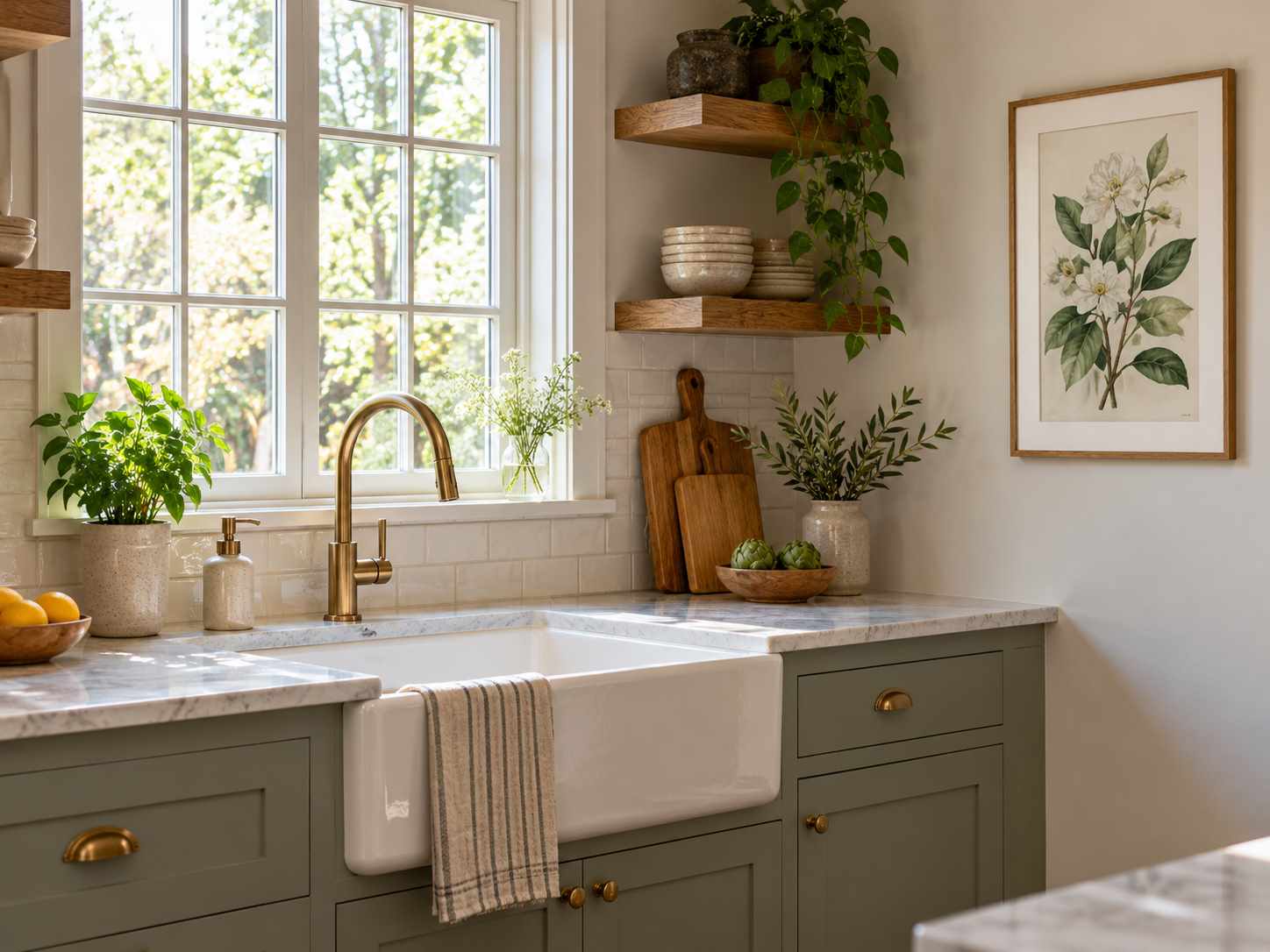
Move artwork to a dry wall beside the sink if the main wall receives regular splashes. Choose a presentation suitable to the conditions and keep it securely mounted. A botanical or abstract image can add character without competing with utensils or dishes.
For practical arrangements of books and decorative objects, see our open-shelf styling guide.
7. Bring in a Small Plant with Appropriate Light
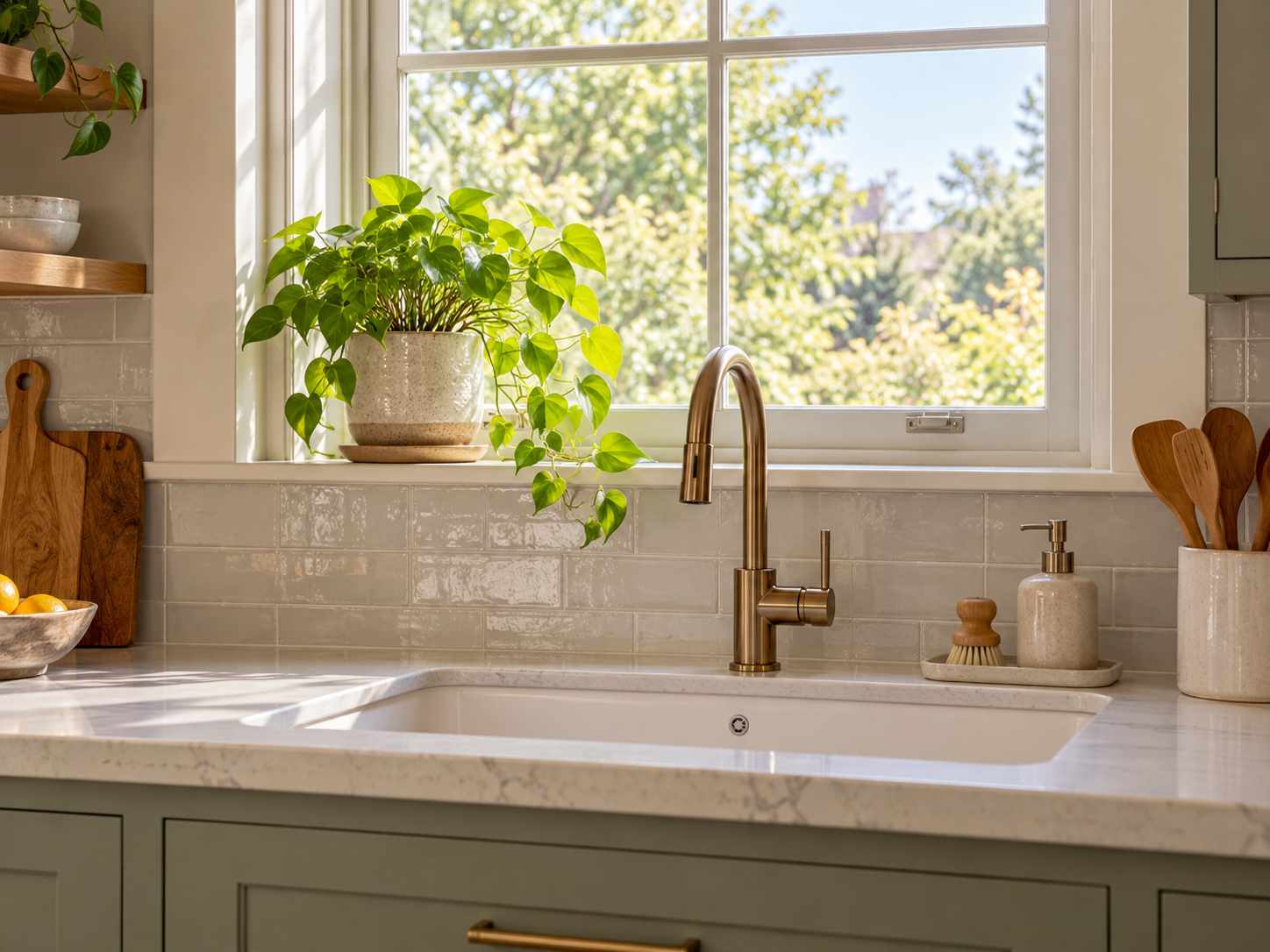
A plant can add a softer shape beside a sink window, provided the light and temperature suit it. Use a stable pot with water protection and keep it out of the tap’s working area. Check suitability for pets and avoid blocking the window mechanism.
8. Use an Integrated Task-Light Arrangement
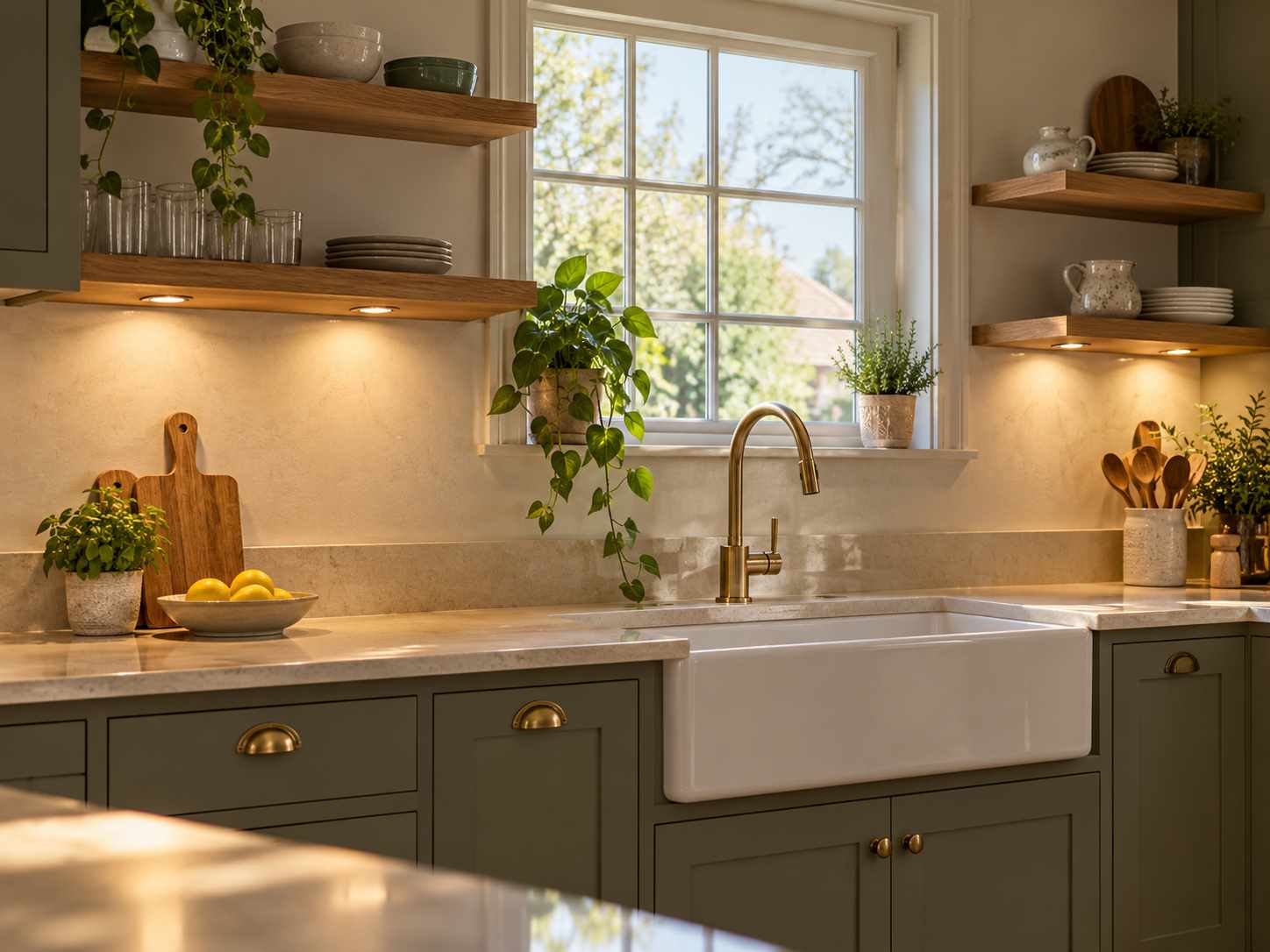
Good task lighting can make the sink wall feel complete without decorative clutter. Have a qualified electrician select and install fittings appropriate to the location. Check the light from the position where you wash dishes so your body does not block the main beam.
9. Try a Contrasting Grout Color Gently
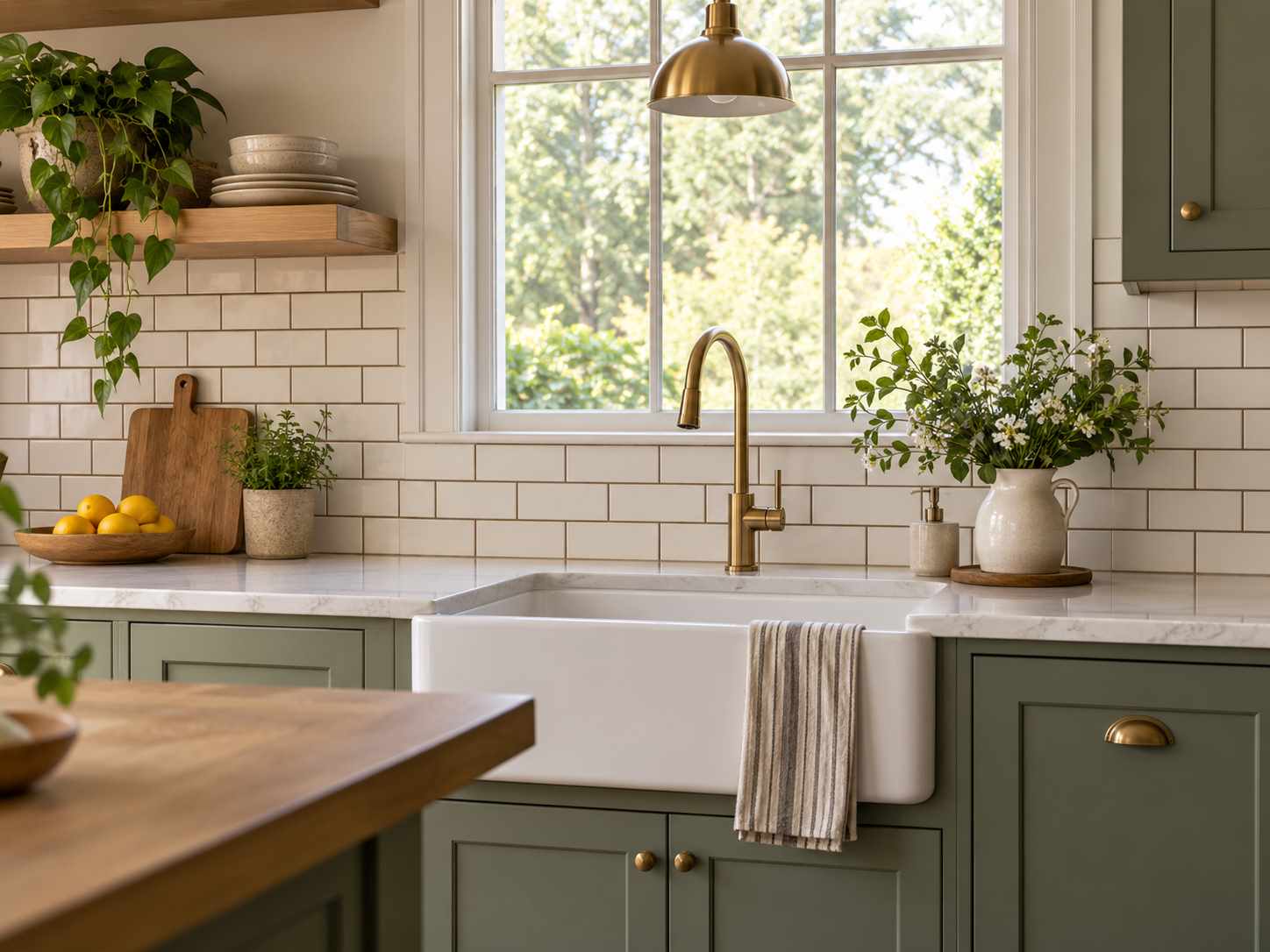
A subtle grout contrast can make plain tile more expressive. Compare a physical sample with your cabinets and counter before choosing. Consider cleaning and maintenance as well as appearance, and use the correct grout system for the tile and location.
10. Frame the Window with Simple Painted Trim
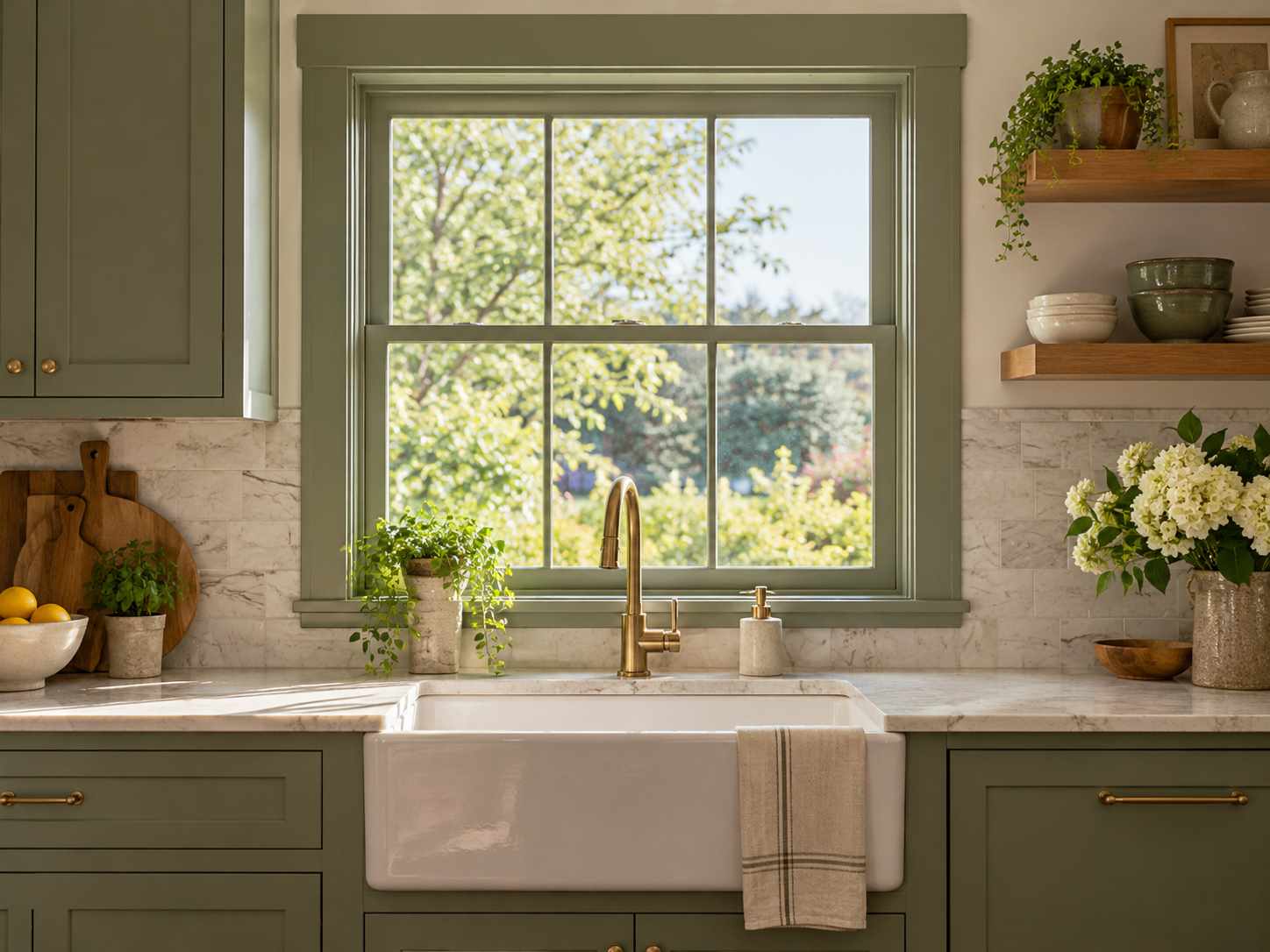
Freshly finished trim can give an existing sink window a clearer outline. Use a coating appropriate to the surface and nearby moisture, and address damage before painting over it. A color related to the cabinetry can connect the window with the rest of the kitchen.
11. Use a Short Rail on an Adjacent Dry Wall
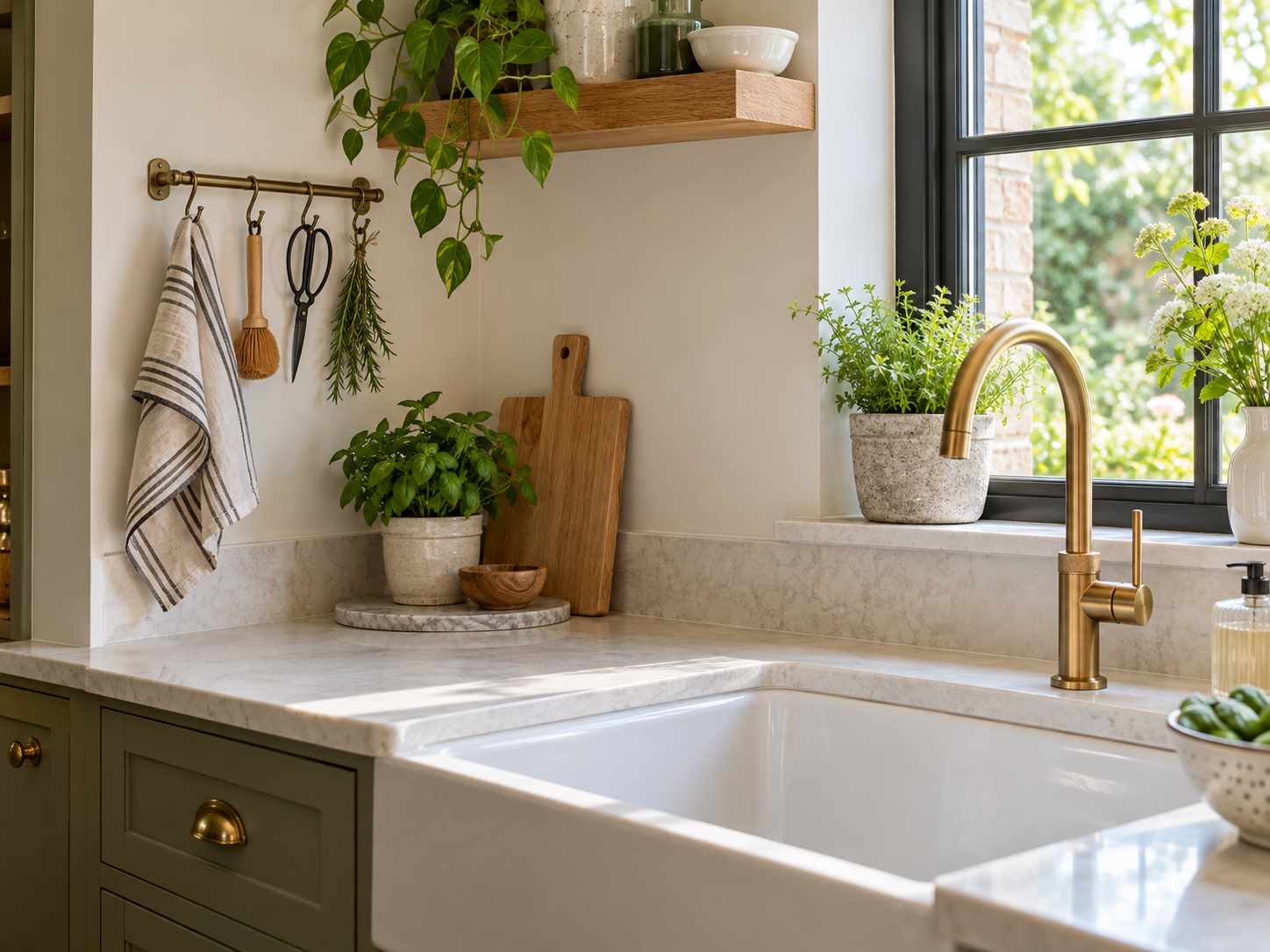
A rail can hold a cloth or a few suitable lightweight tools without occupying the counter. Place it outside the tap’s main working area and use proper fixings. Keep items from hanging where they drip onto electrical fittings or interfere with food preparation.
12. Choose a Small Open Cabinet for Everyday Cups
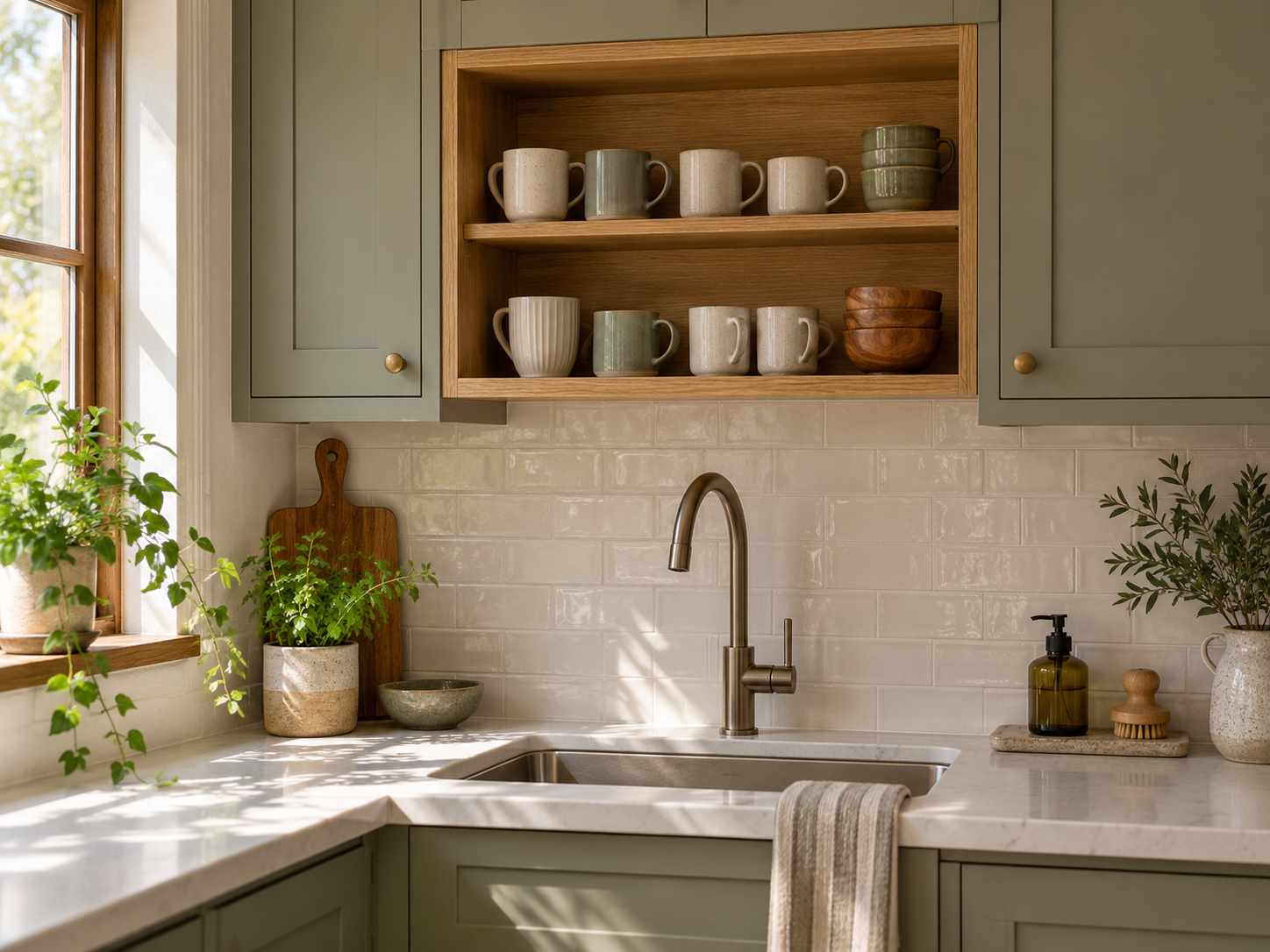
A shallow open cabinet can make frequently used cups easy to reach when the wall arrangement allows it. Check head clearance and the doors or shelves around it. Keep the contents limited and choose a finish that can be cleaned in the kitchen environment.
For useful layouts in compact spaces, browse our small-space collection.
13. Let a Stone-Look Slab Form the Backdrop
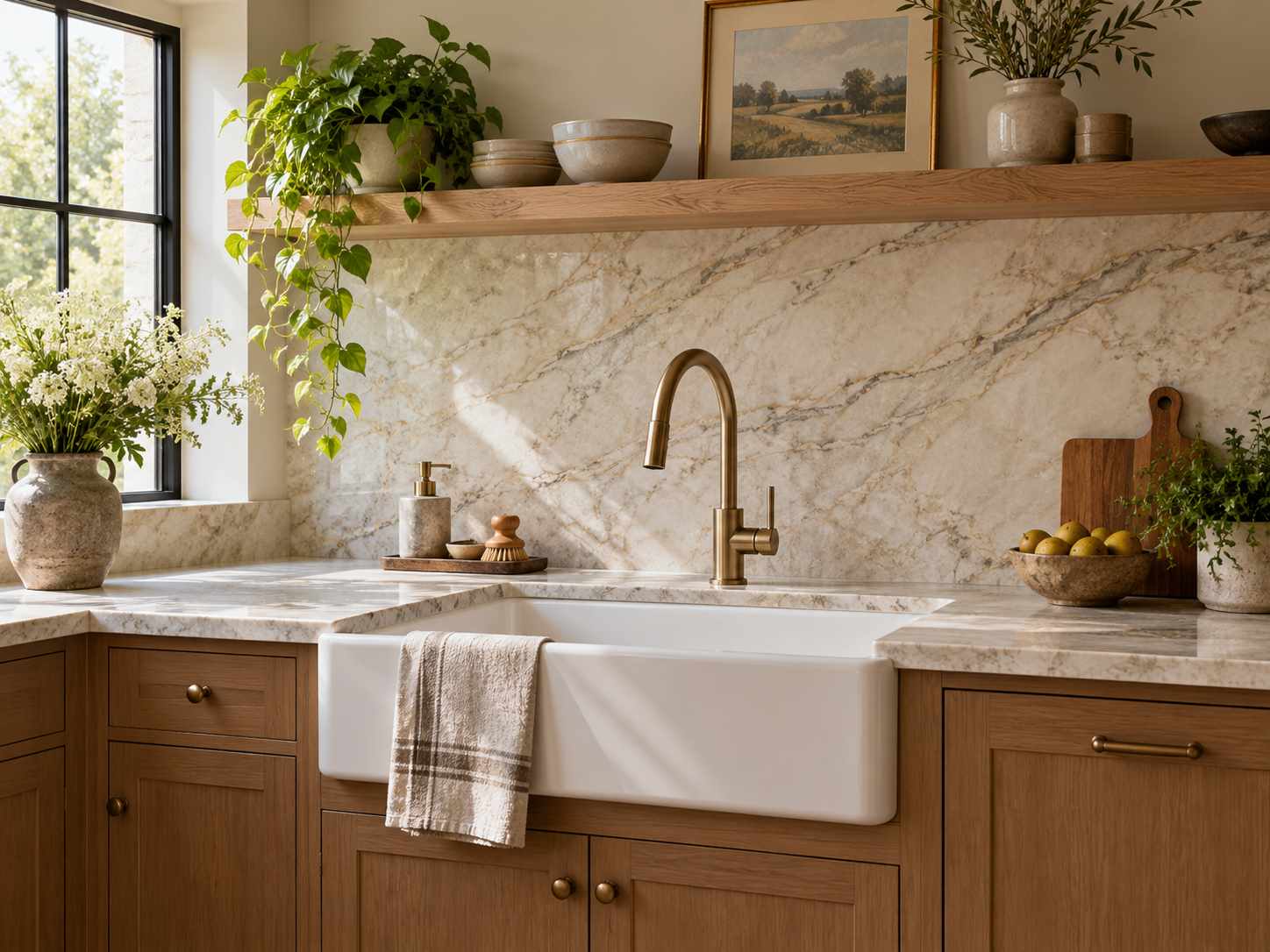
A continuous slab-style surface can create a quiet wall behind the sink. Product suitability, joints, edges, and installation need careful checking. Compare samples with the counter so the patterns work together, and avoid assuming every stone-look material tolerates the same cleaning products.
14. Use a Washable Wall Finish Beyond the Backsplash
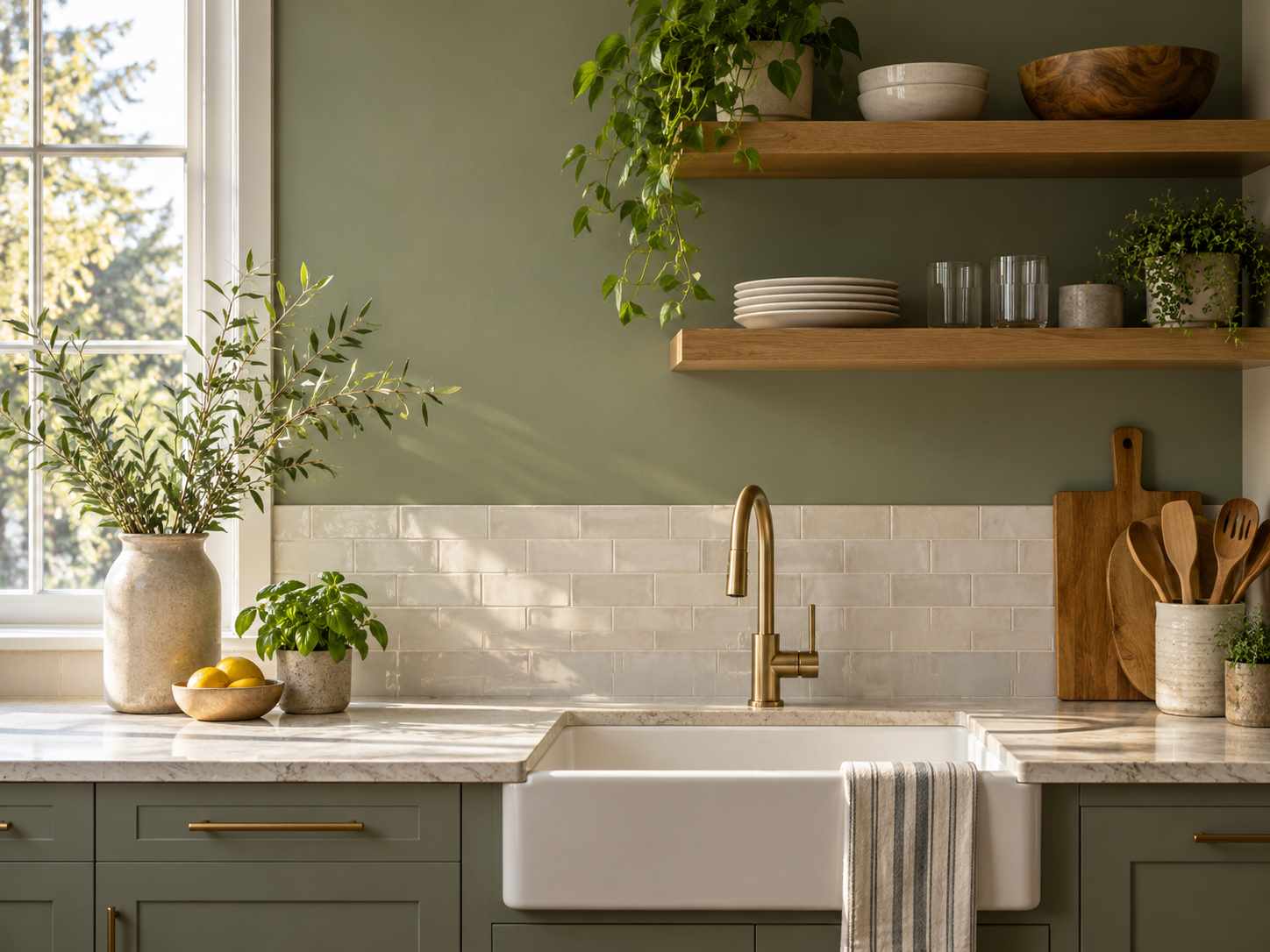
A suitable painted wall above a protected splash area can keep the kitchen visually calm. Prepare the surface properly and choose a coating recommended for the conditions. Keep the strongest color away from competing cabinet tones unless you have tested the whole palette together.
15. Add a Recessed Niche During a Planned Renovation
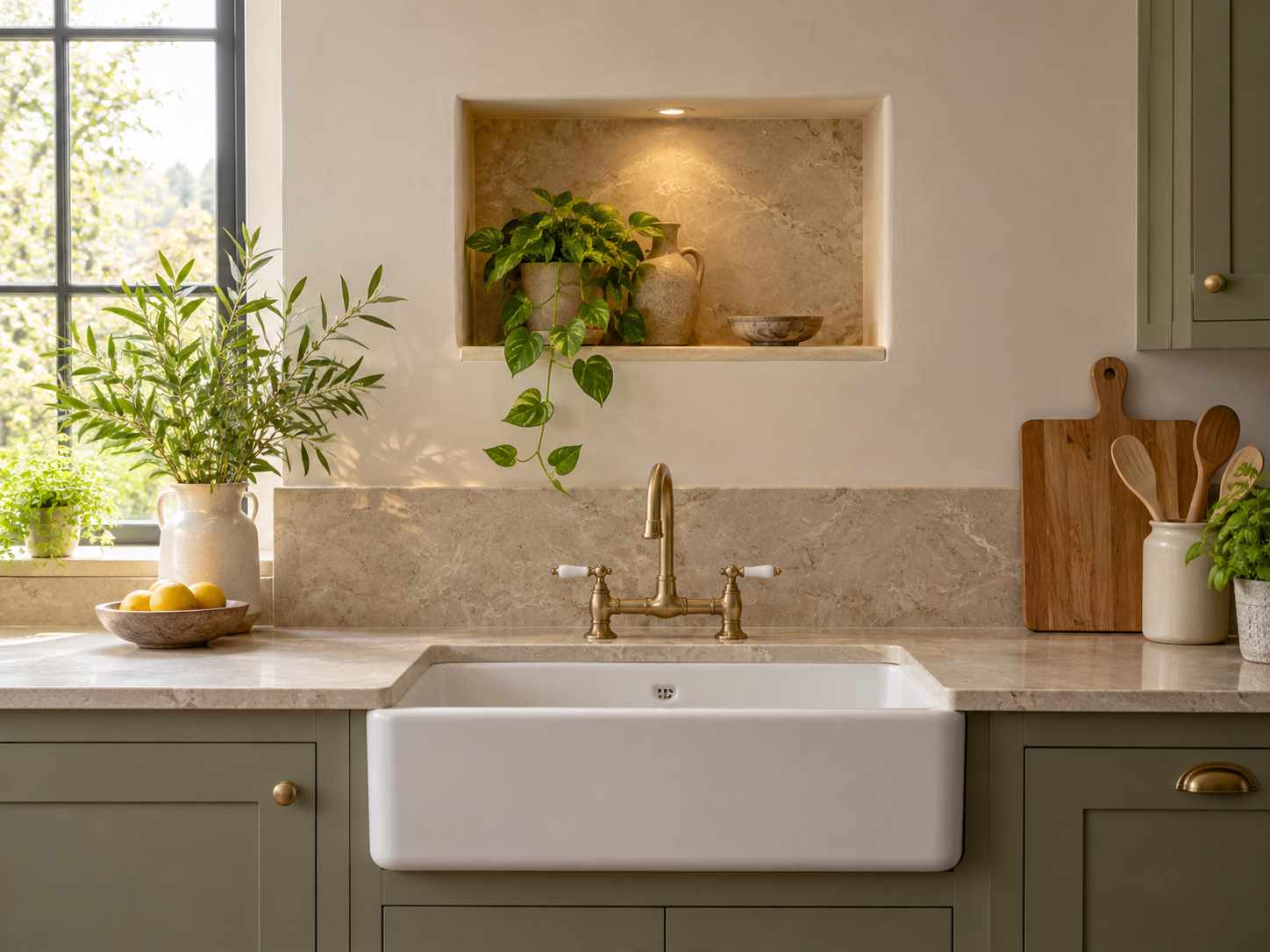
A niche can provide a defined spot for a small item without a projecting shelf. Its position and construction need professional planning, including checks for hidden services and moisture detailing. Treat it as part of a renovation rather than cutting into a wall for a styling experiment.
16. Repeat Cabinet Hardware in One Small Detail
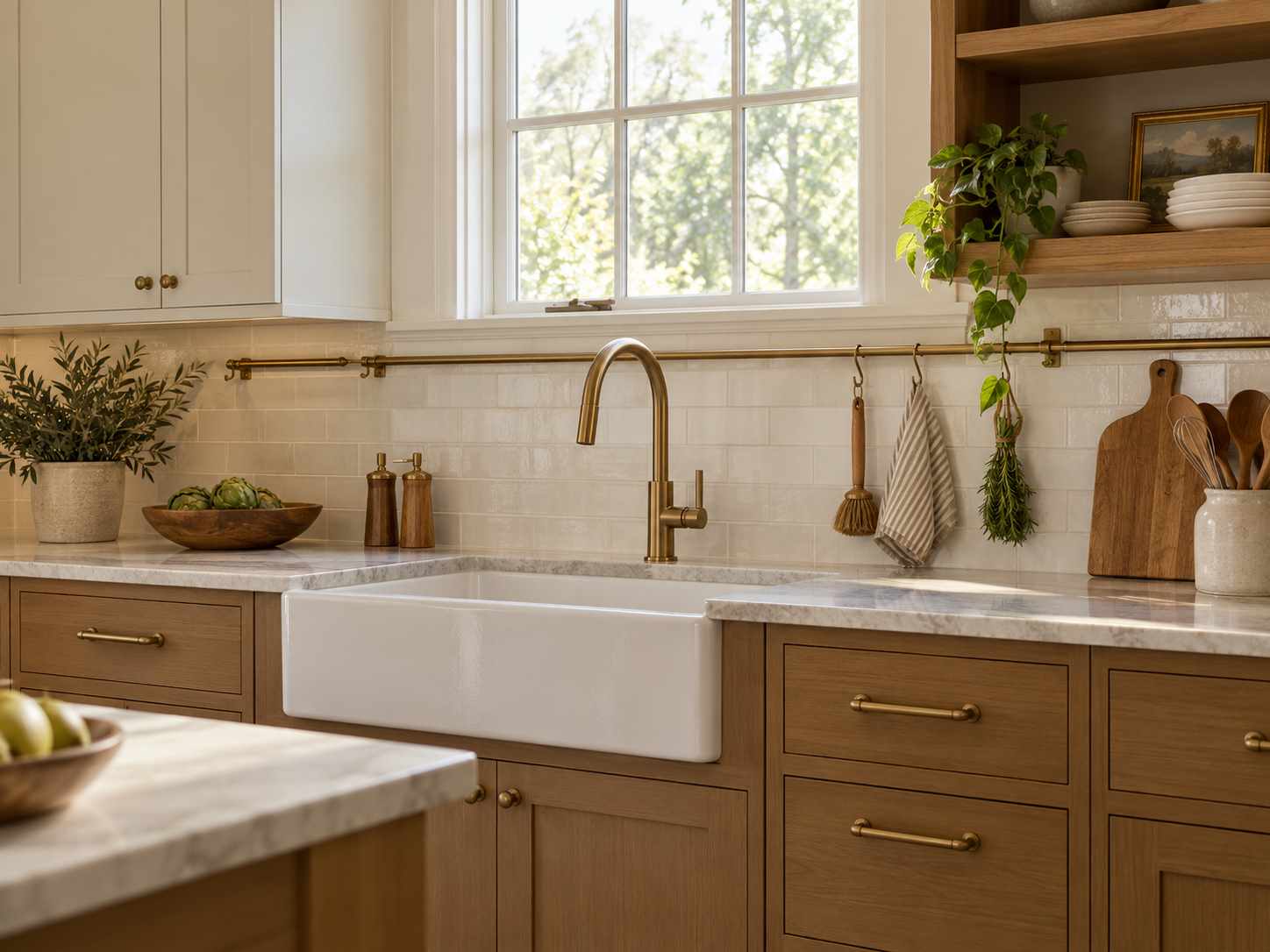
A restrained metal detail can connect the sink wall to the rest of the kitchen. Use something functional, such as a properly fitted rail or a small dry-area frame. Matching warmth is usually enough; adding metal ornaments around every fitting can make the area harder to clean.
17. Use Clear Wall Space as the Final Finish
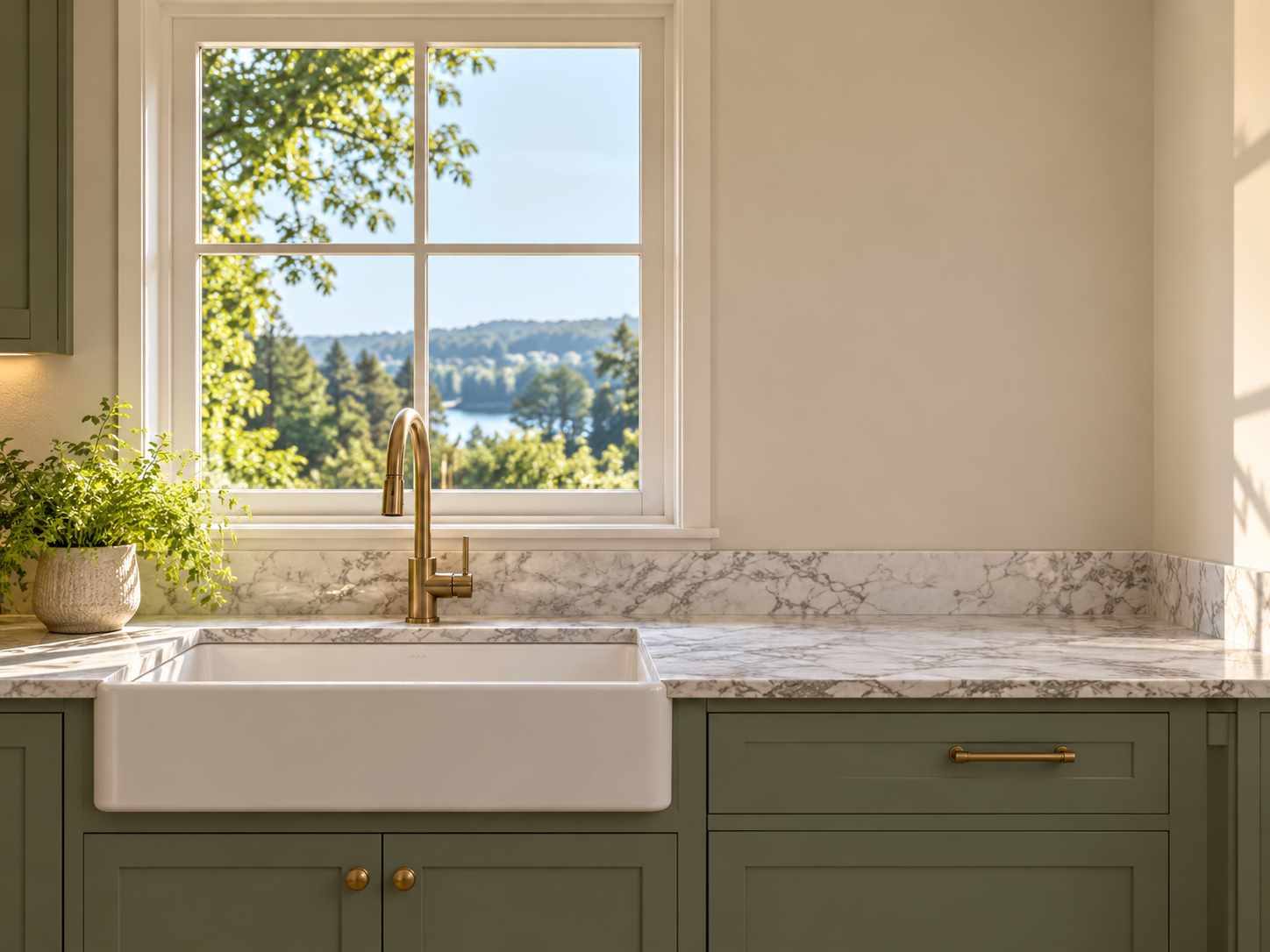
A plain wall can be the right answer when the sink already has a strong tap, patterned counter, or good window view. Remove objects that complicate wiping and leave one clear visual focus. A useful sink area does not need a decoration in every available gap.
Frequently Asked Questions
What should go above a kitchen sink without a window?
A suitable tile treatment, good task lighting, or a quiet washable finish can work. Choose according to splash exposure and available wall space before adding shelves or art.
Can I put a shelf directly above the sink?
Only if the location, fixings, material, and clearance are appropriate. Keep heavy or fragile objects away from the sink and make sure the shelf does not interfere with daily use.
Are plants a good choice?
They can be if the available light and temperatures suit the plant. Use a stable pot and leave windows, taps, and cleaning routes clear.
How do I decorate a small sink wall?
Choose one treatment, such as a tile panel or plain shade, and keep accessories limited. Too many small items can make the area feel busy and harder to clean.
Should I install a decorative light myself?
Use a qualified electrician for wiring and fittings near water. The location and product requirements matter more than a decorative image.
Related Decorating Guides
Conclusion
Choose the finish that solves the wall’s practical needs first, whether that is splash protection, better light, or a clear window. Then add one detail that connects with the rest of the kitchen. Save the ideas that suit your actual sink arrangement and keep the work area easy to use.
Find more focused room projects in our complete decorating guide library.