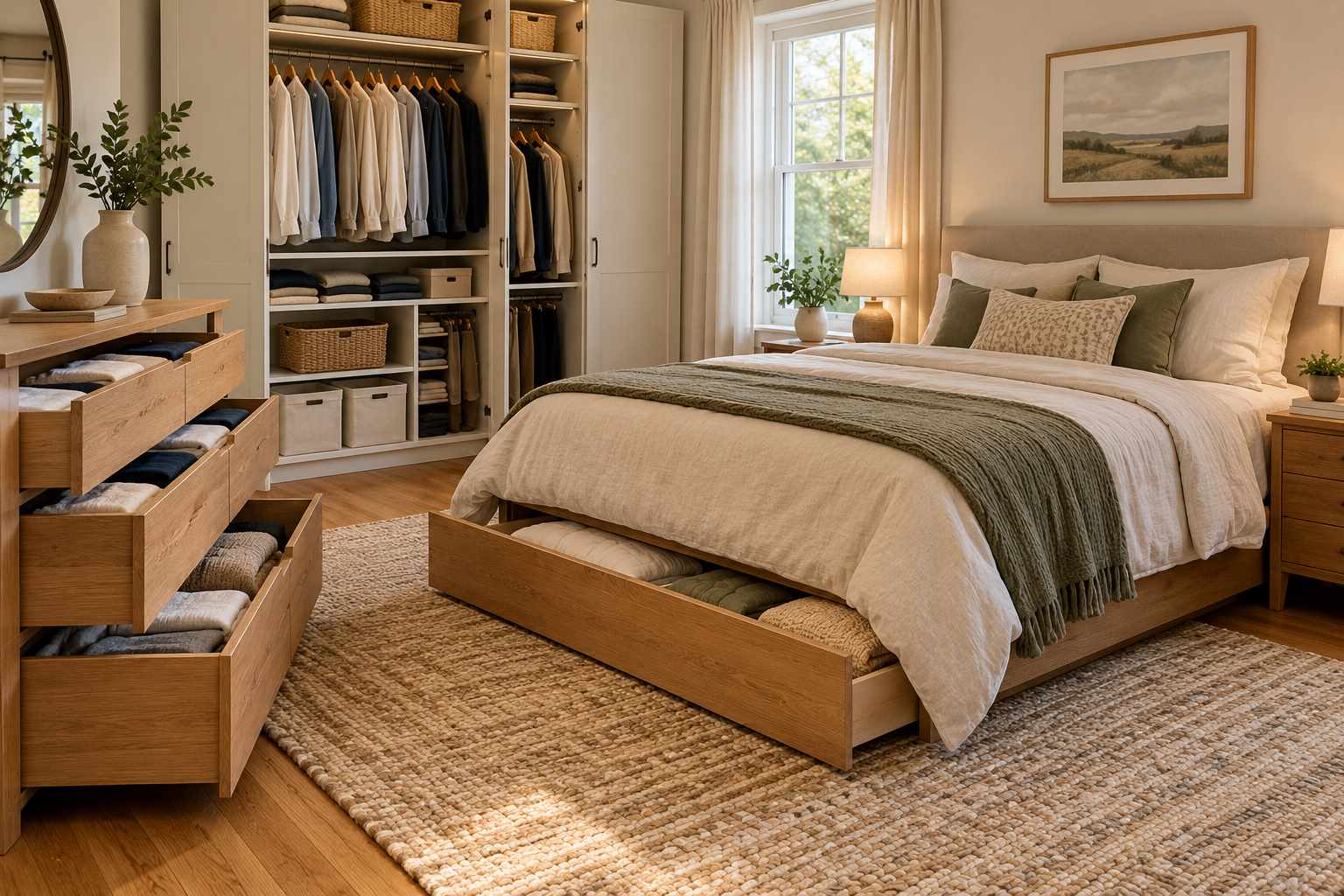
Bedroom storage improves when it is planned around the items you own and the way you use them. Start by measuring clothing, bedding, and everyday essentials before choosing another cabinet or organizer. These bedroom storage ideas cover existing furniture, overlooked spaces, and focused additions. Keep access and maintenance in mind, including the room needed to open drawers or lift a bed mechanism. A clear system with some spare capacity is more useful than tightly filling every available space.
Key Takeaways
- Measure belongings and furniture openings before buying storage.
- Keep daily items reachable and heavy items low.
- Leave enough room to return things without a precise packing routine.
1. Divide a Dresser by Clothing Type
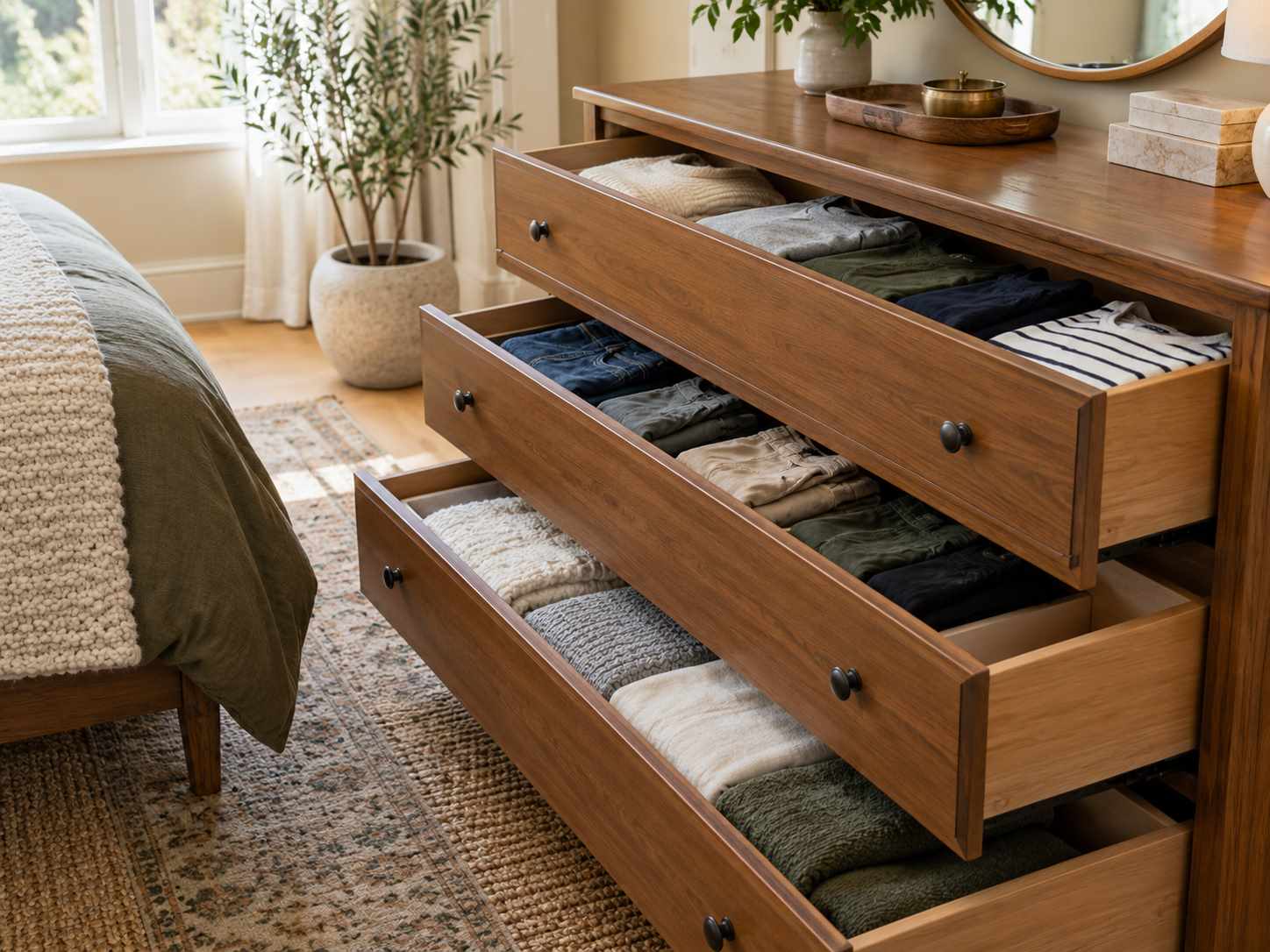
Give each drawer a clear category before adding dividers. Check what fits comfortably and leave space for clean laundry to return. A simple arrangement is easier to maintain than several small compartments that do not match the clothes you actually own.
2. Use Bed Drawers for Suitable Spare Bedding
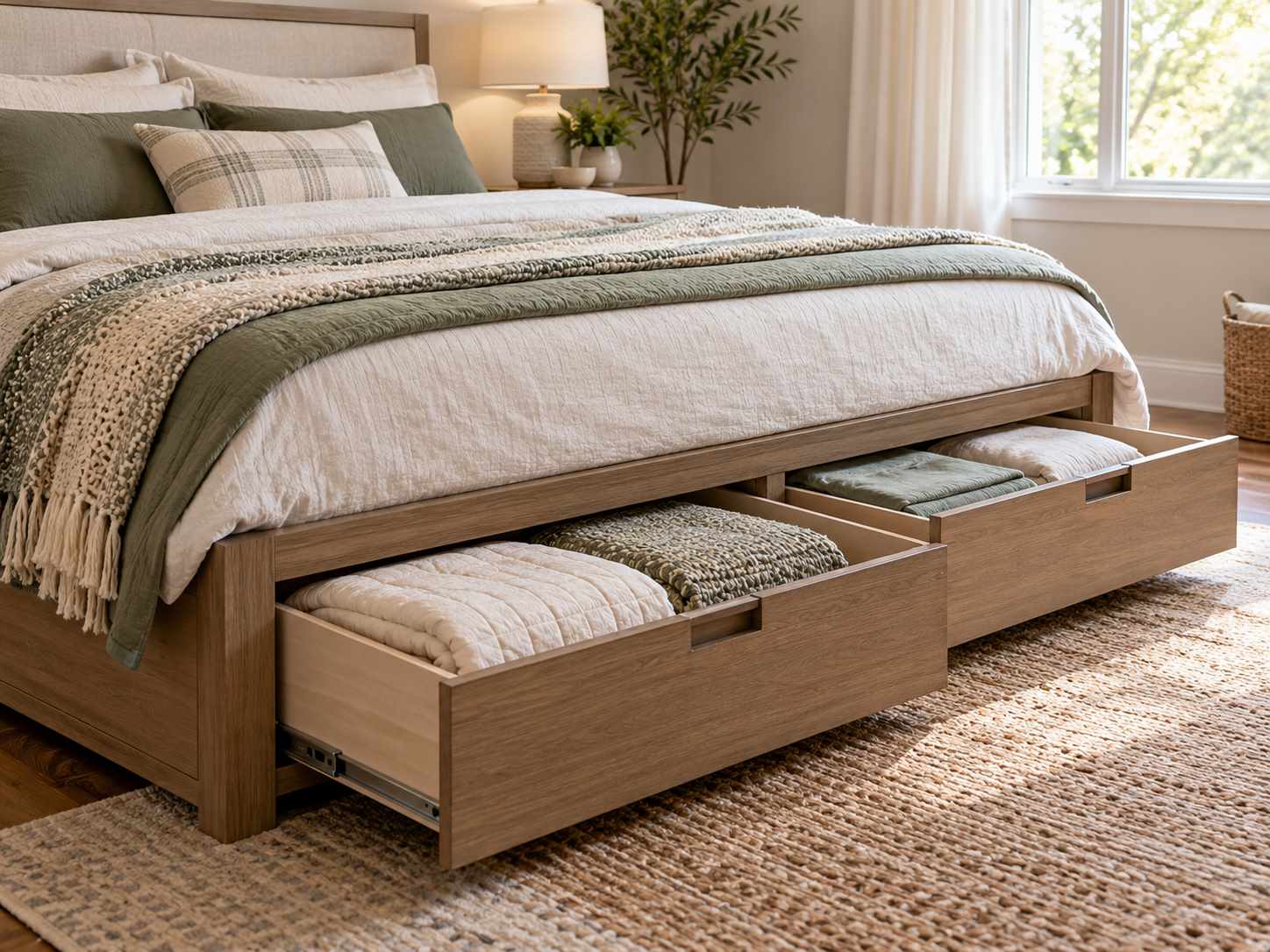
Built-in drawers can hold occasional-use textiles when their size and access suit the room. Check the open footprint and the product’s load guidance. Keep bedding clean and dry, and avoid filling drawers so tightly that they become difficult to operate.
3. Choose Under-Bed Boxes That Slide Out Easily
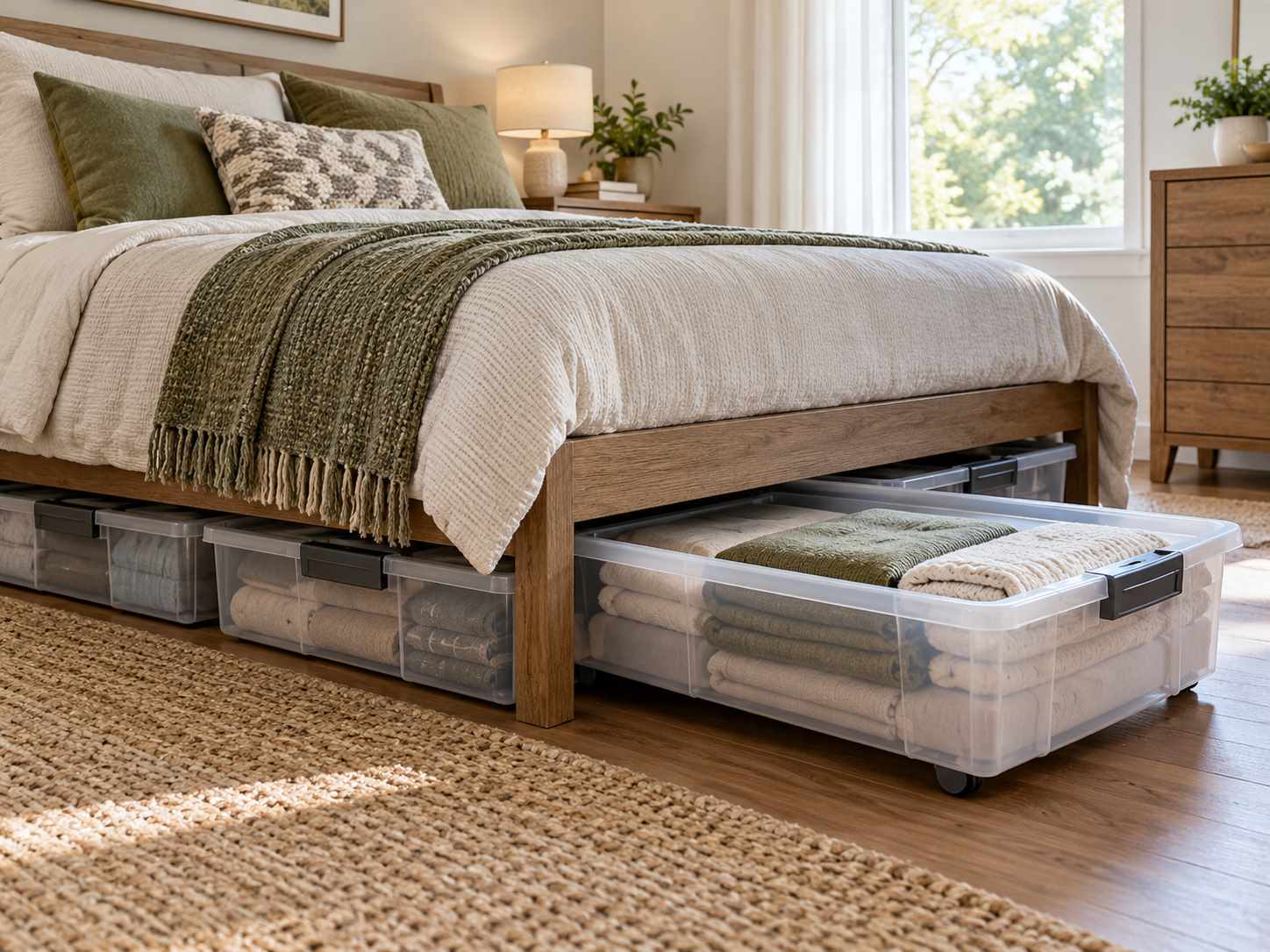
A measured box can use existing clearance without changing the frame. Check the full route for removing it and choose suitable protection for the contents. Keep the floor accessible for cleaning and do not store items where heat or ventilation requirements make it unsuitable.
4. Add a Narrow Wardrobe for a Defined Category

A slim wardrobe can help when it serves a specific need, such as coats or longer clothing. Measure hanging depth and door movement before buying. Anchor the unit appropriately and keep the interior simple enough that the additional furniture provides real usable capacity.
5. Use the Top Closet Shelf for Light Occasional Items
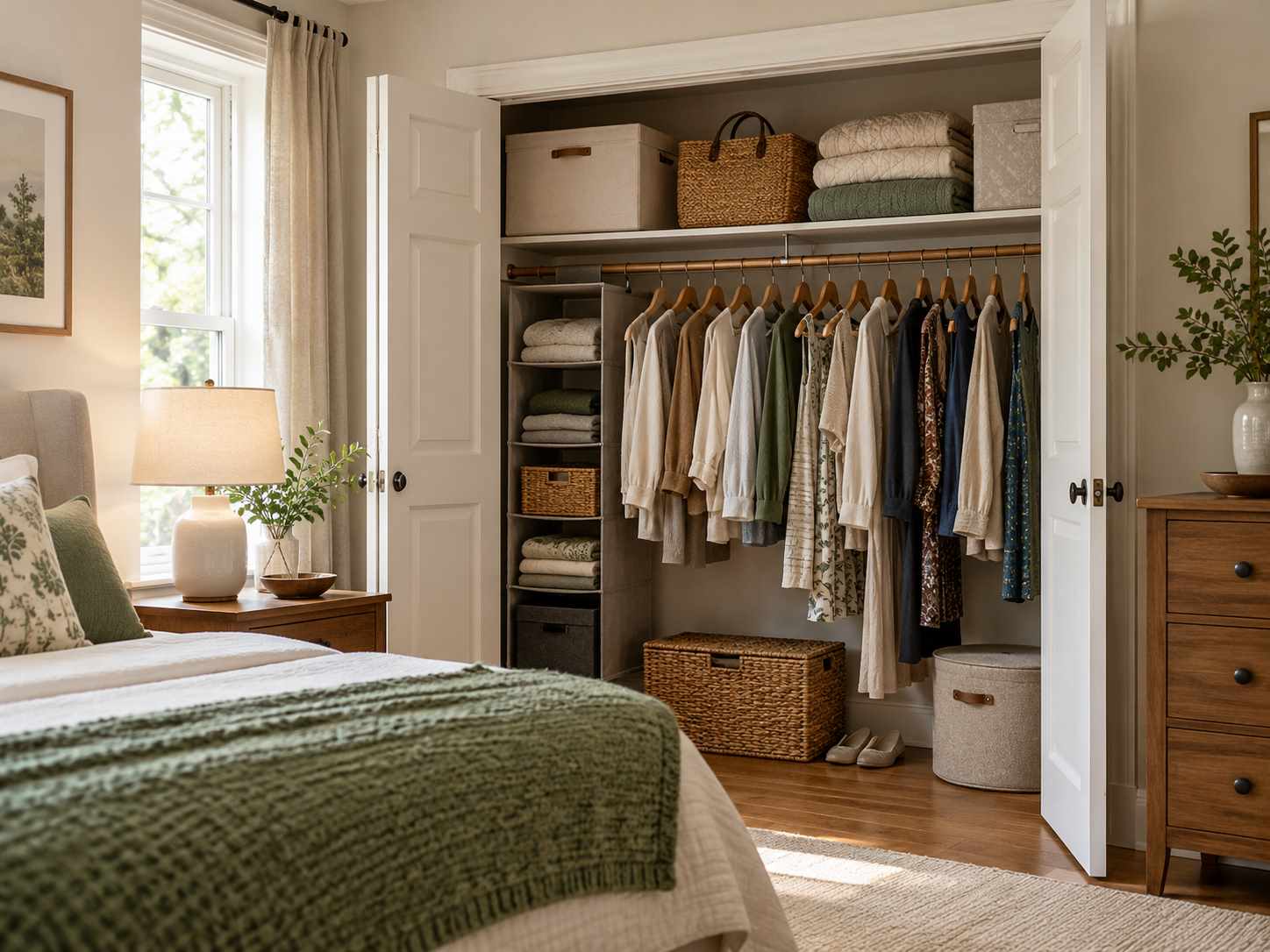
A higher shelf can hold lightweight bags or spare textiles that are not needed daily. Use containers that can be handled safely and avoid heavy awkward boxes. If access requires unsafe climbing, choose another storage location.
6. Give Bedside Drawers a Limited Role
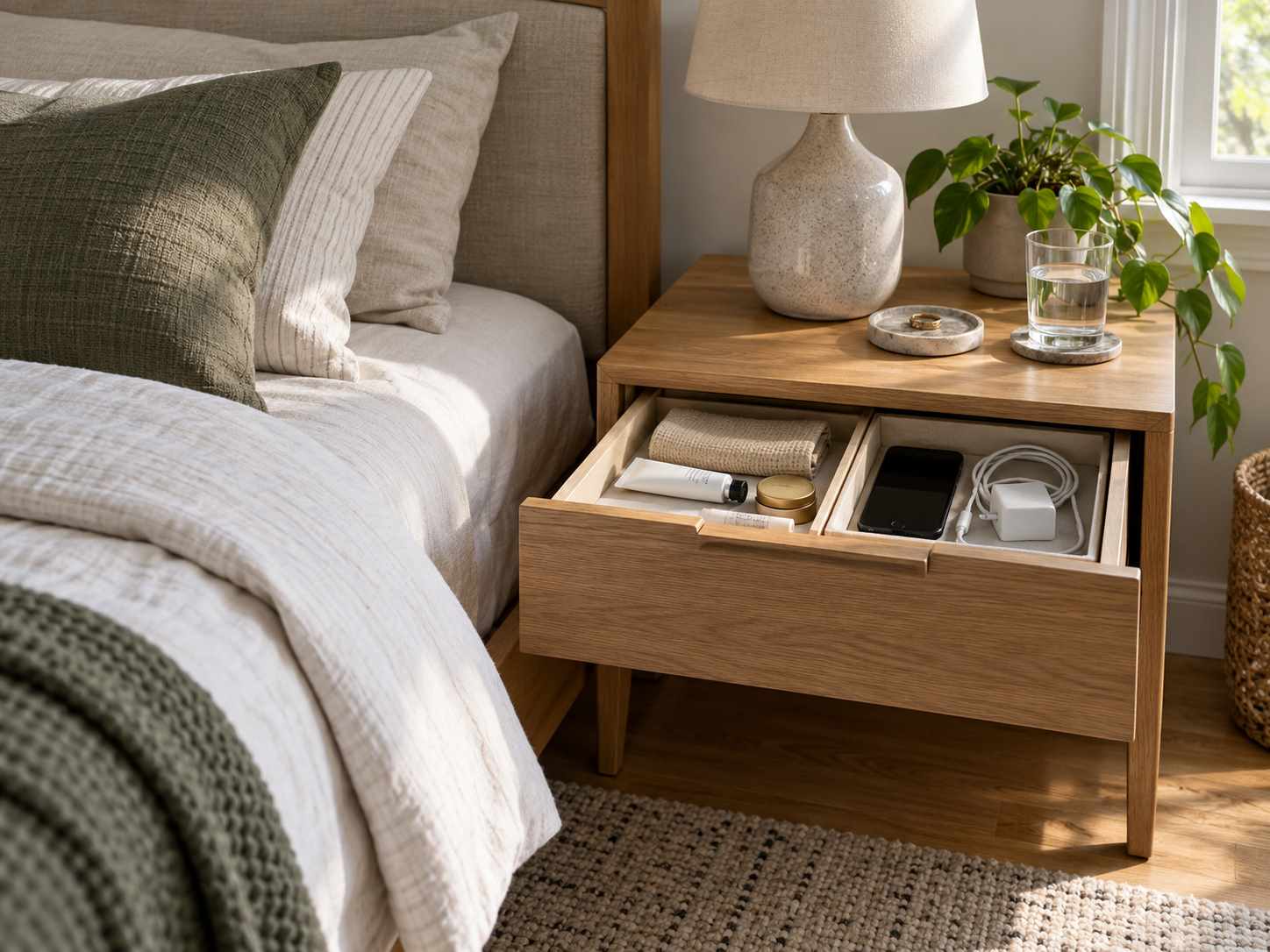
A small drawer can contain night-time essentials without becoming a collection of unrelated objects. Use one or two measured sections if needed and review the contents regularly. Keep charging equipment ventilated and follow product guidance rather than closing it into an unsuitable space.
For a practical foundation for the bedding, see our guide to layering a comfortable bed.
7. Use a Bench with Appropriate Internal Storage
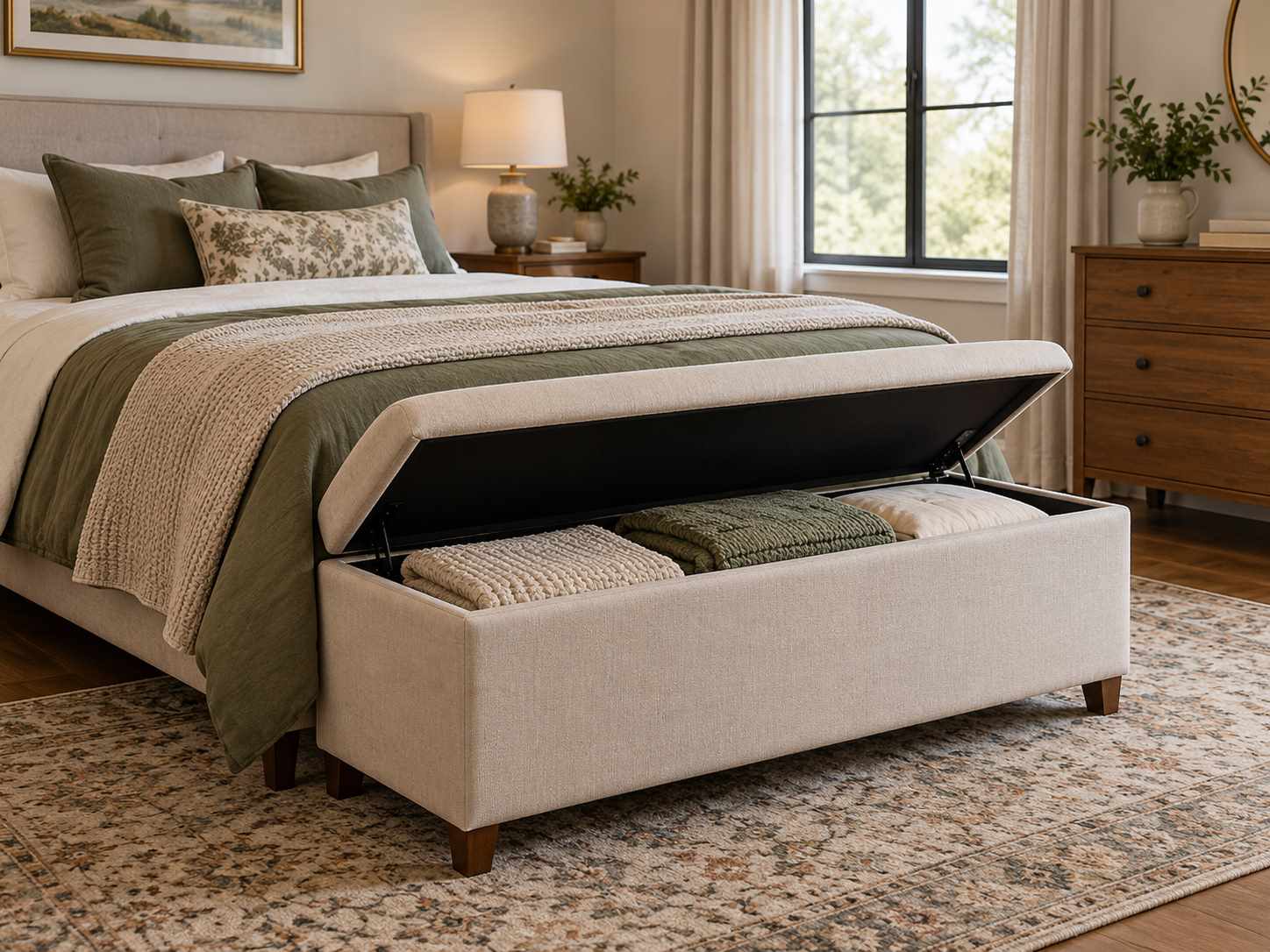
A storage bench can combine a seat with a place for suitable textiles. Check the lid or opening mechanism and the product’s suitability for your household. Preserve the route around the bed and avoid choosing a large bench solely for its hidden capacity.
8. Store Shoes Where They Can Be Seen
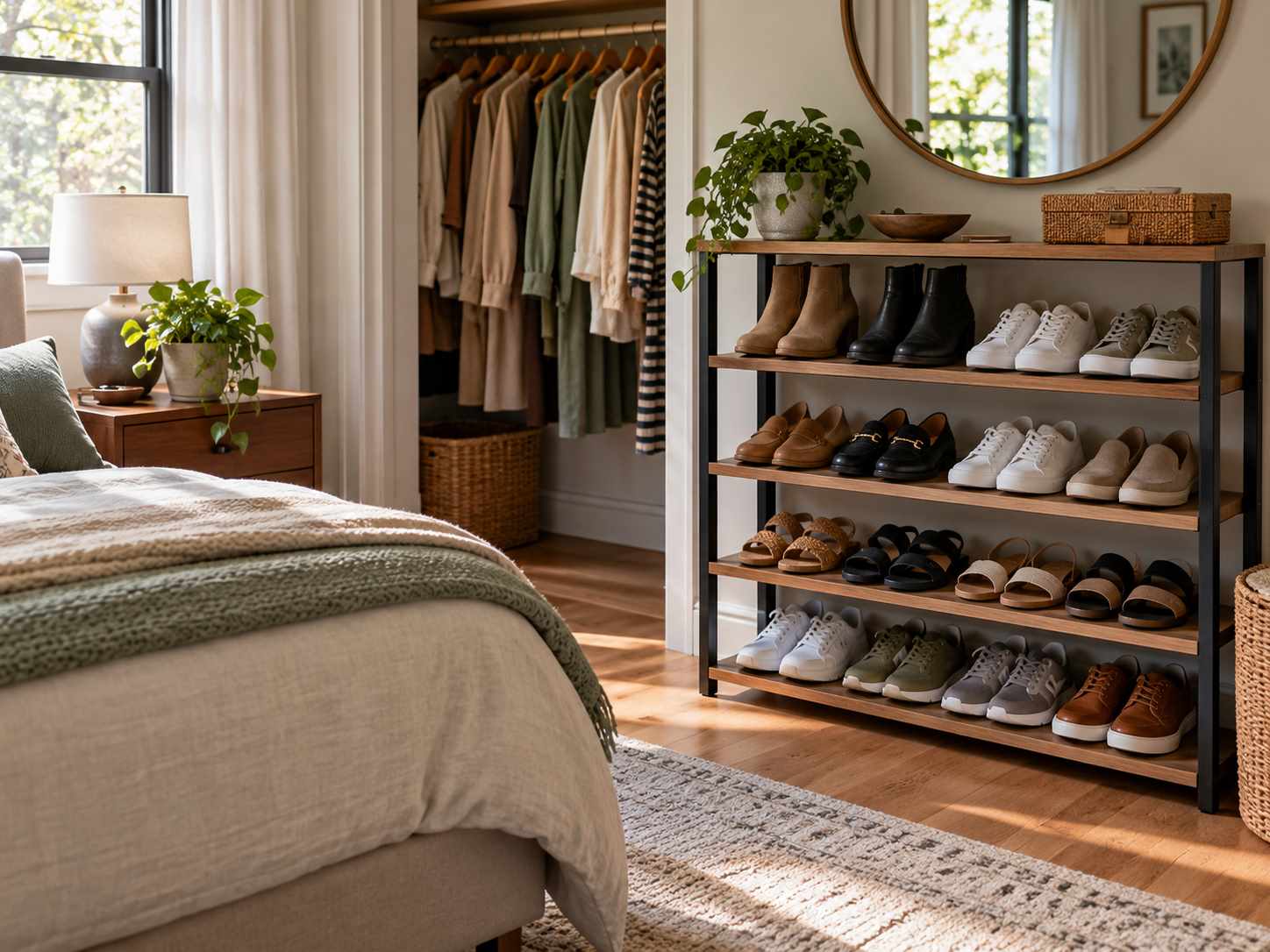
A defined shoe section can prevent pairs from spreading around the floor. Choose shelves or boxes that fit the actual footwear and allow appropriate drying before storage. Keep frequently worn pairs reachable without having to unpack the whole collection.
9. Create a Small Accessories Drawer
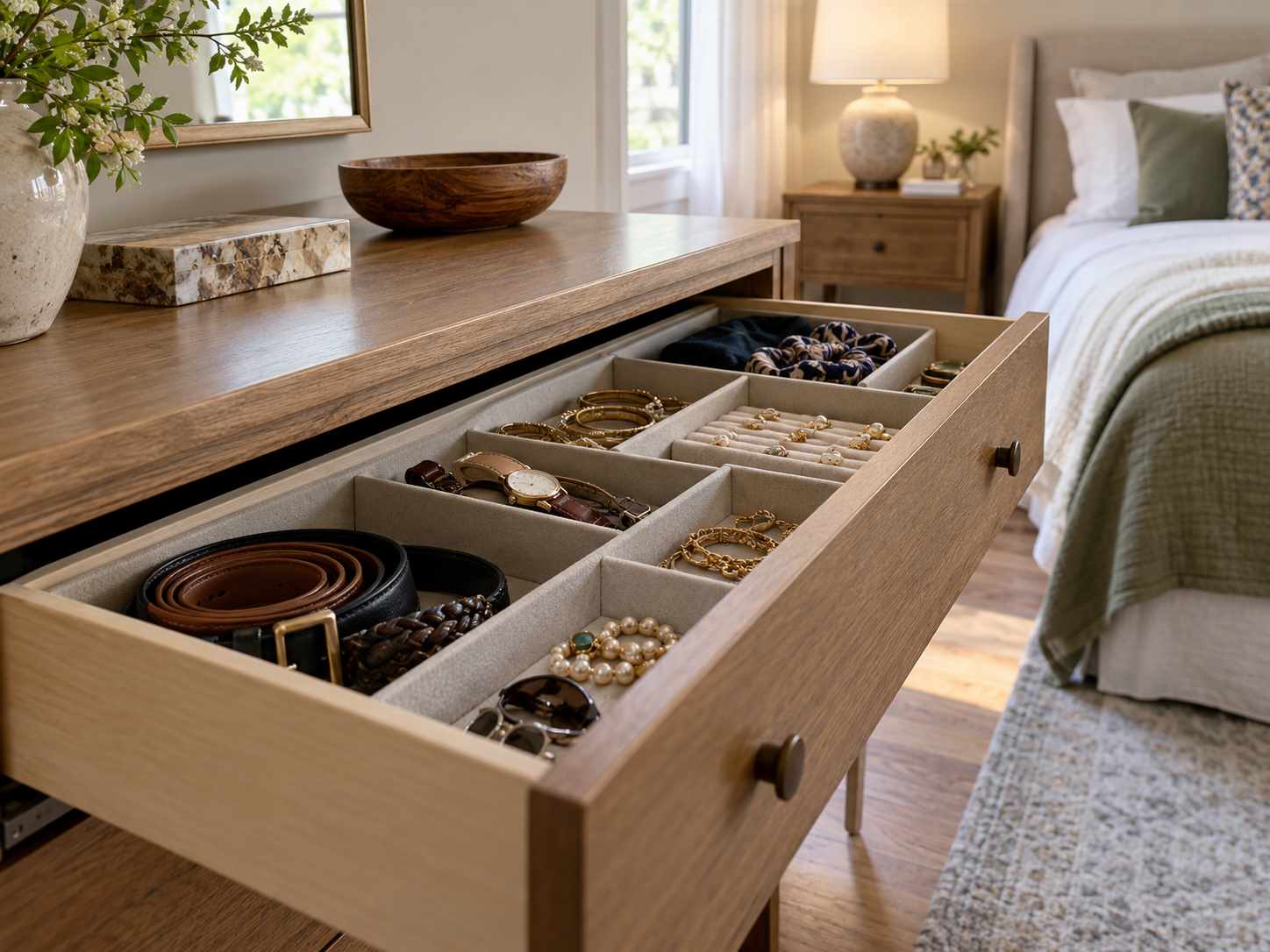
A shallow drawer can hold belts, jewelry, or similar items in manageable groups. Choose smooth dividers that do not snag delicate pieces. Store valuables according to their security needs rather than assuming a decorative organizer is appropriate protection.
10. Use a Freestanding Rail for a Limited Capsule
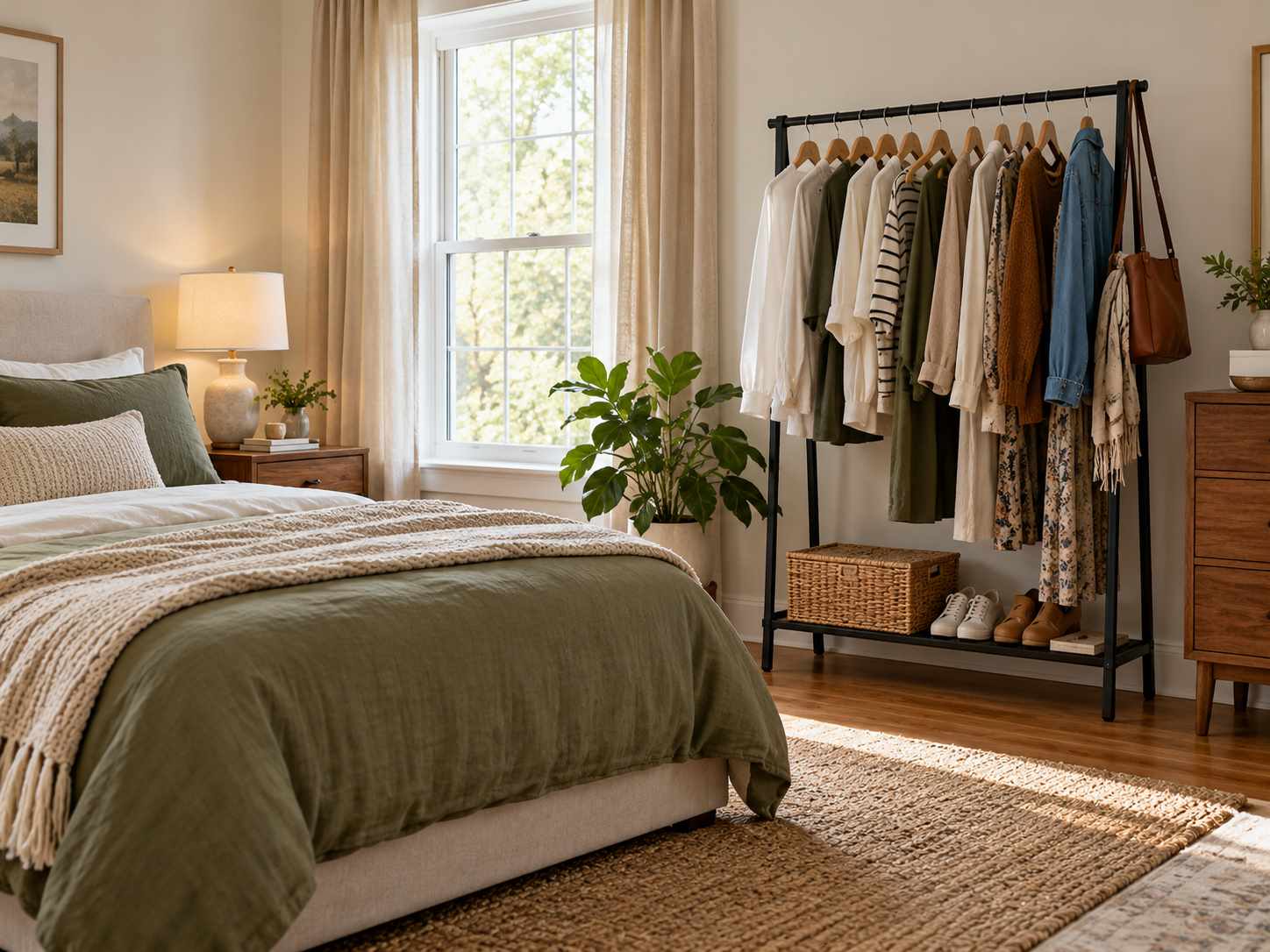
An open rail can support a small current clothing selection when there is room for it. Check stability and load guidance and keep the main route clear. It works less well when every garment is added until the room becomes an overflow closet.
11. Keep Laundry Storage Near the Changing Area
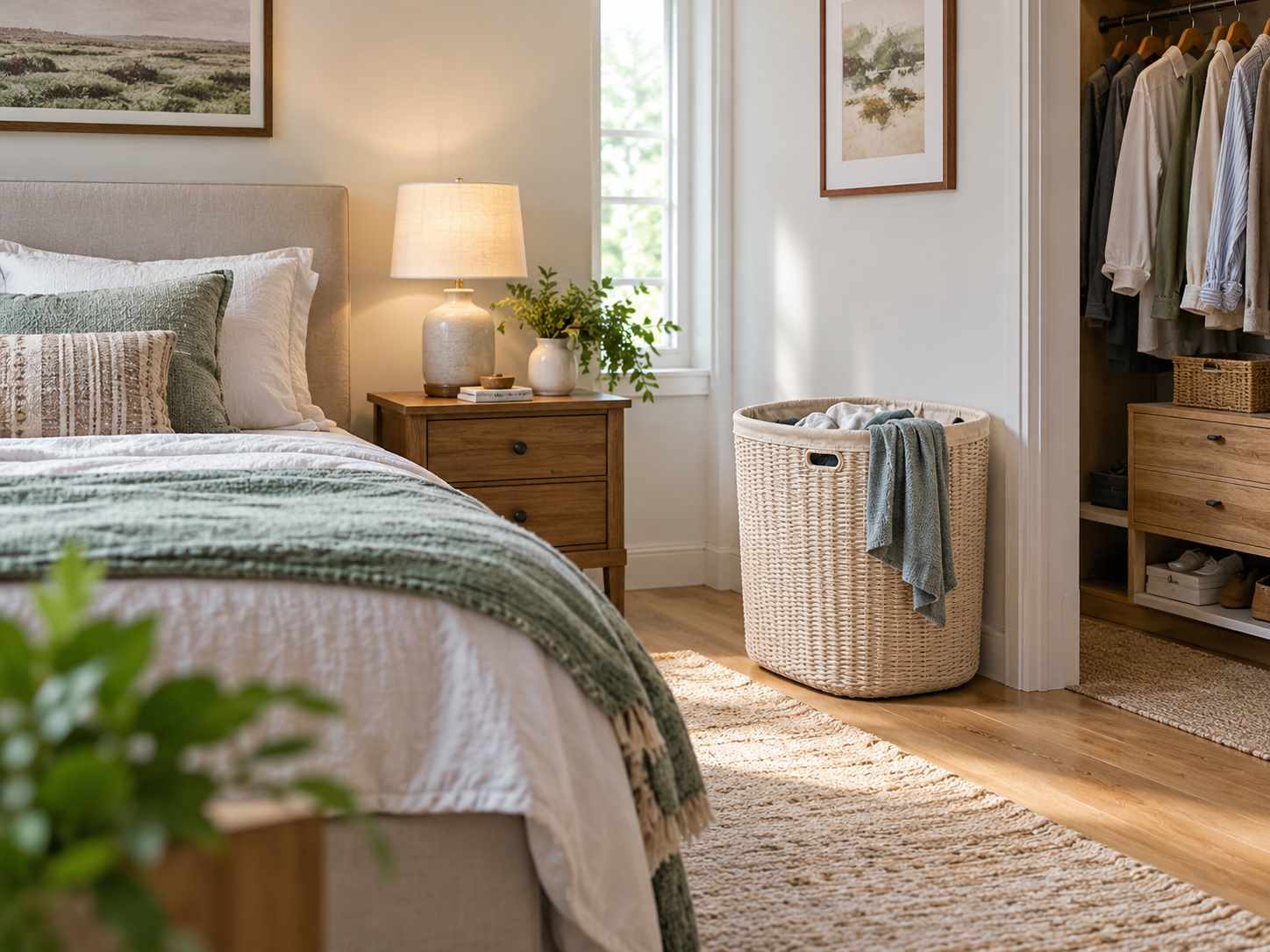
A hamper close to where clothing is removed can reduce piles on chairs or the bed. Choose a capacity that suits the washing routine and a product that can ventilate and be cleaned. Keep damp items handled appropriately rather than sealing them into a crowded container.
12. Use Shelf Dividers for Folded Knits
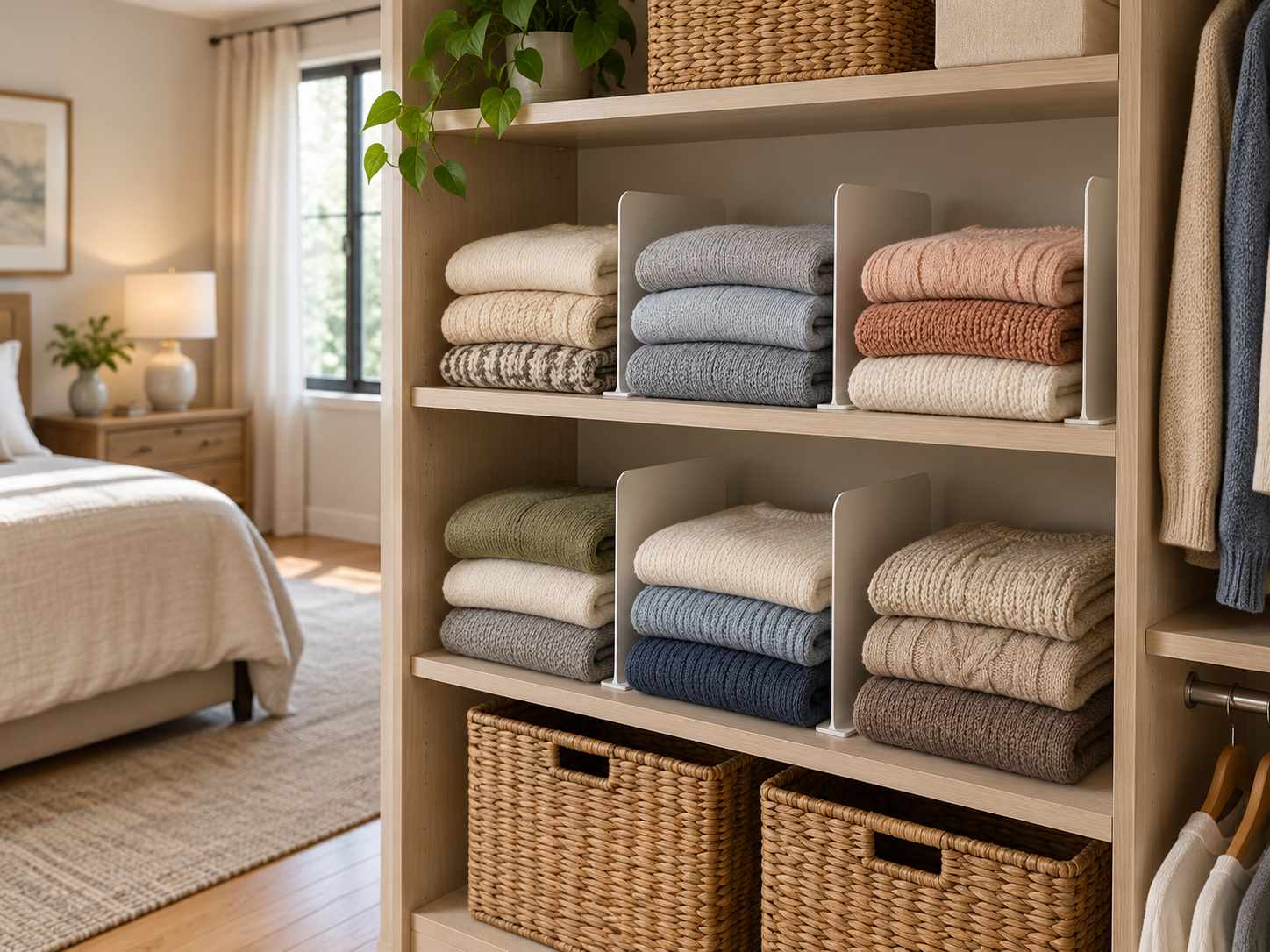
Dividers can keep folded groups from leaning into each other. Choose a product suitable to the shelf and clothing. Avoid high compressed stacks that make the bottom item difficult to remove and can distort the way delicate garments are stored.
For ideas that support a compact layout, explore our small-space decorating guides.
13. Add a Small Bookcase for Reading Material
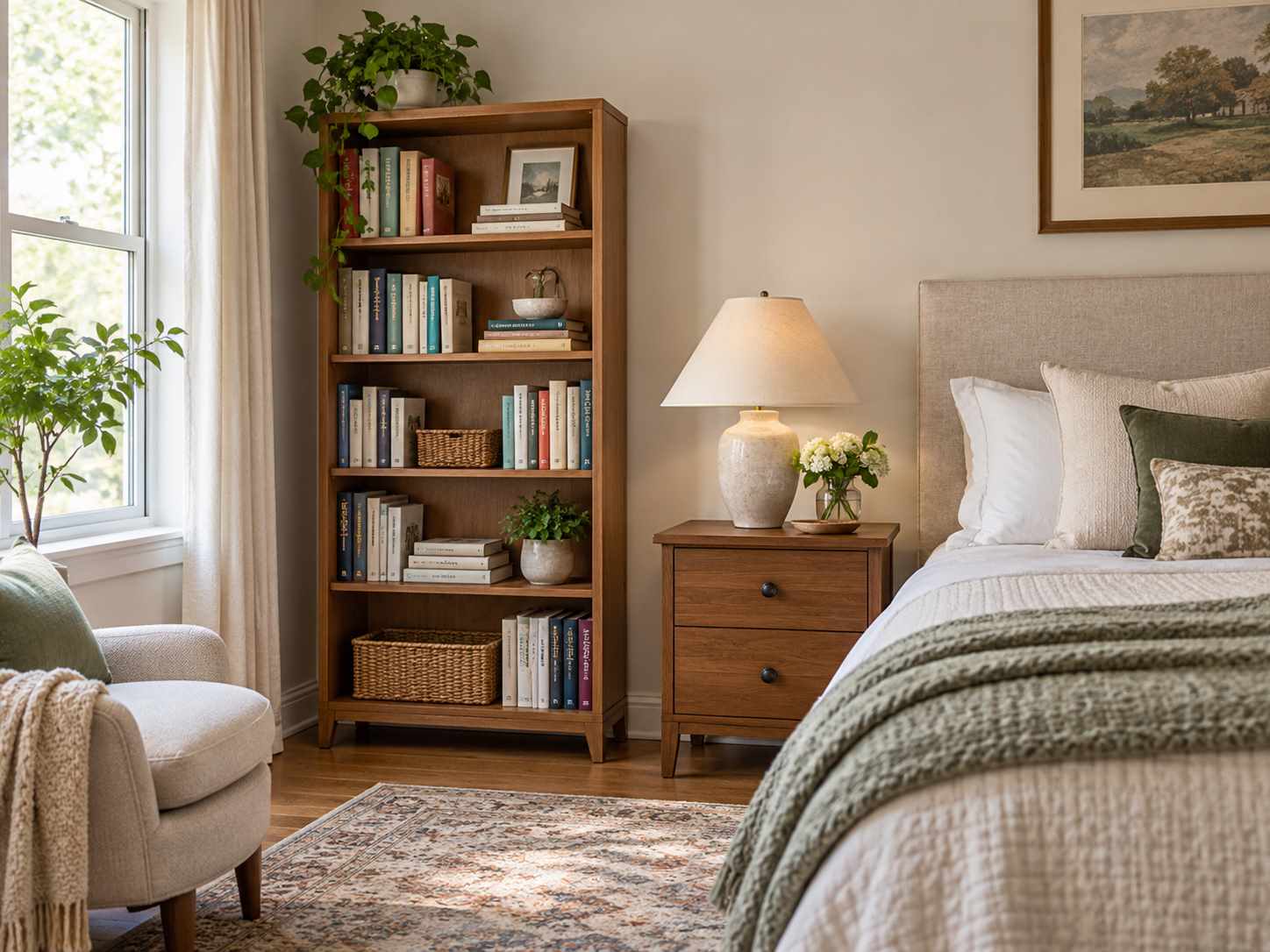
A dedicated bookcase can free the nightstand from growing stacks. Check load capacity and anchor the unit as instructed. Keep the titles you read most accessible and avoid filling a high shelf with heavy books simply to use every opening.
14. Group Bags Without Crushing Them
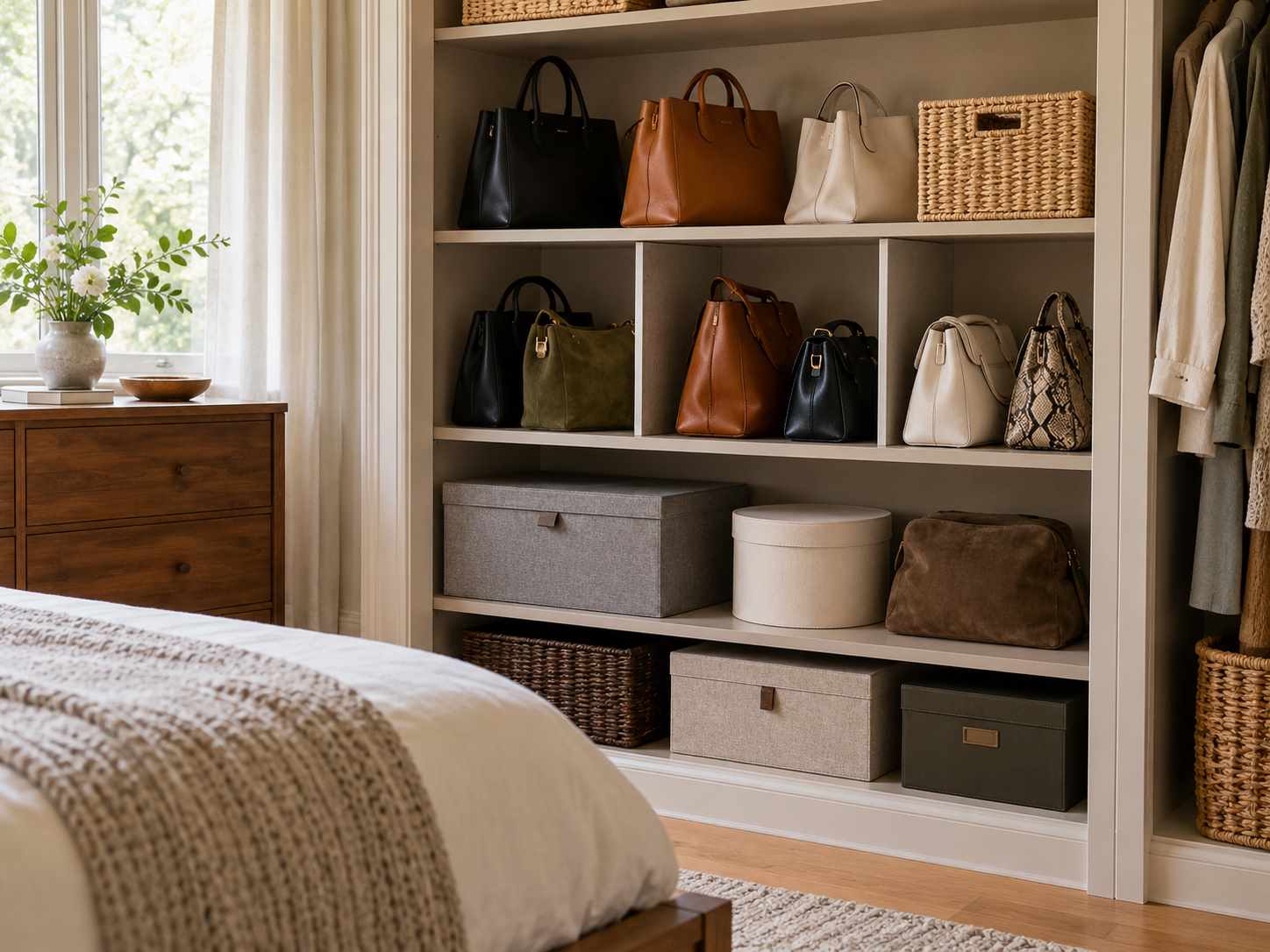
Give bags enough room to keep their shape and follow material-specific care guidance. A shelf divider or suitable box may help. Choose the arrangement around the actual collection rather than buying several identical containers that fit poorly.
15. Use an Existing Alcove for Measured Shelving
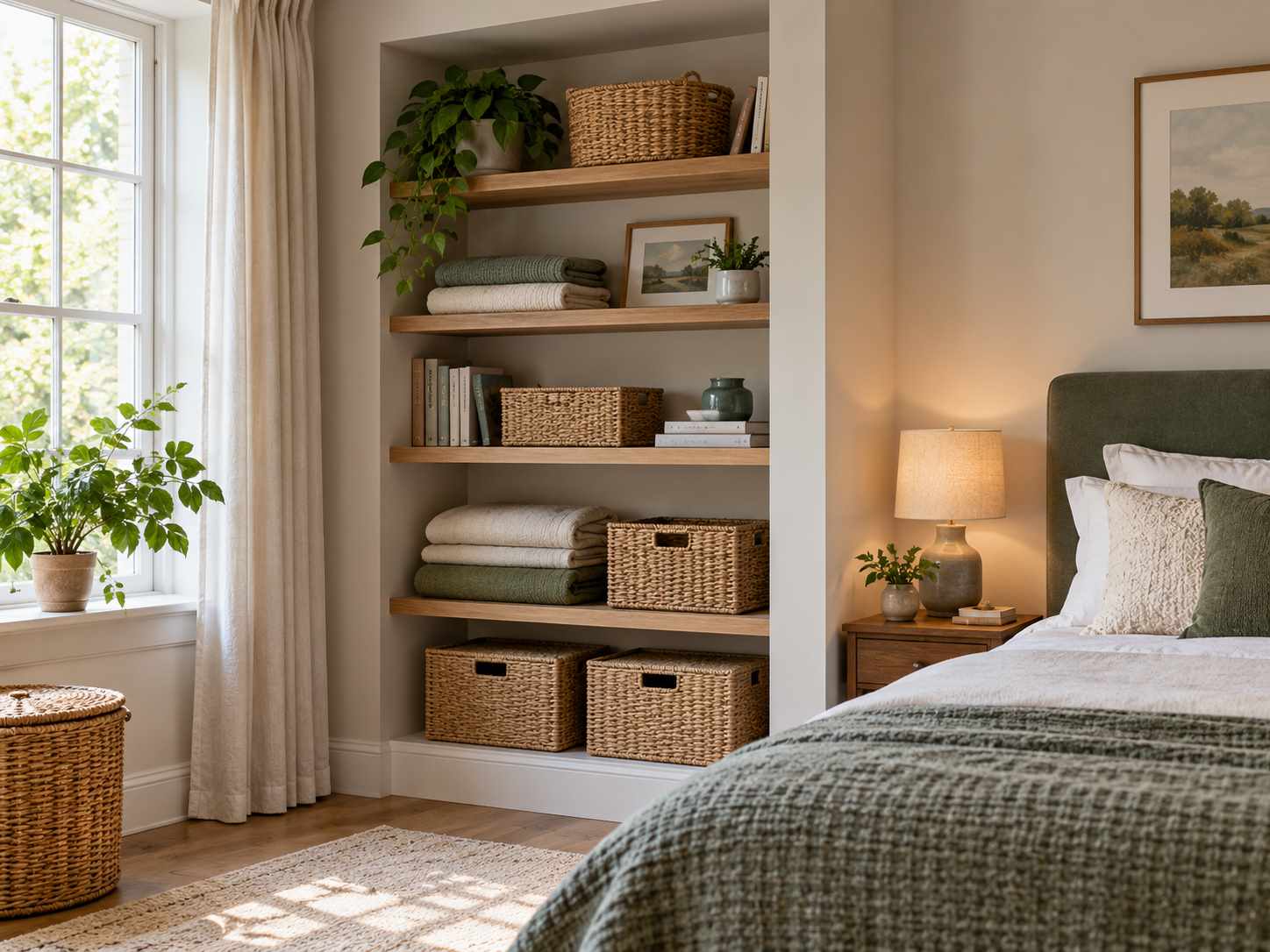
An alcove can provide useful storage when the wall and dimensions allow it. Check hidden services, fixing requirements, and access before installation. Keep shelf depth appropriate to the contents so items do not disappear into an awkward dark cavity.
16. Keep Seasonal Textiles in Clearly Defined Storage
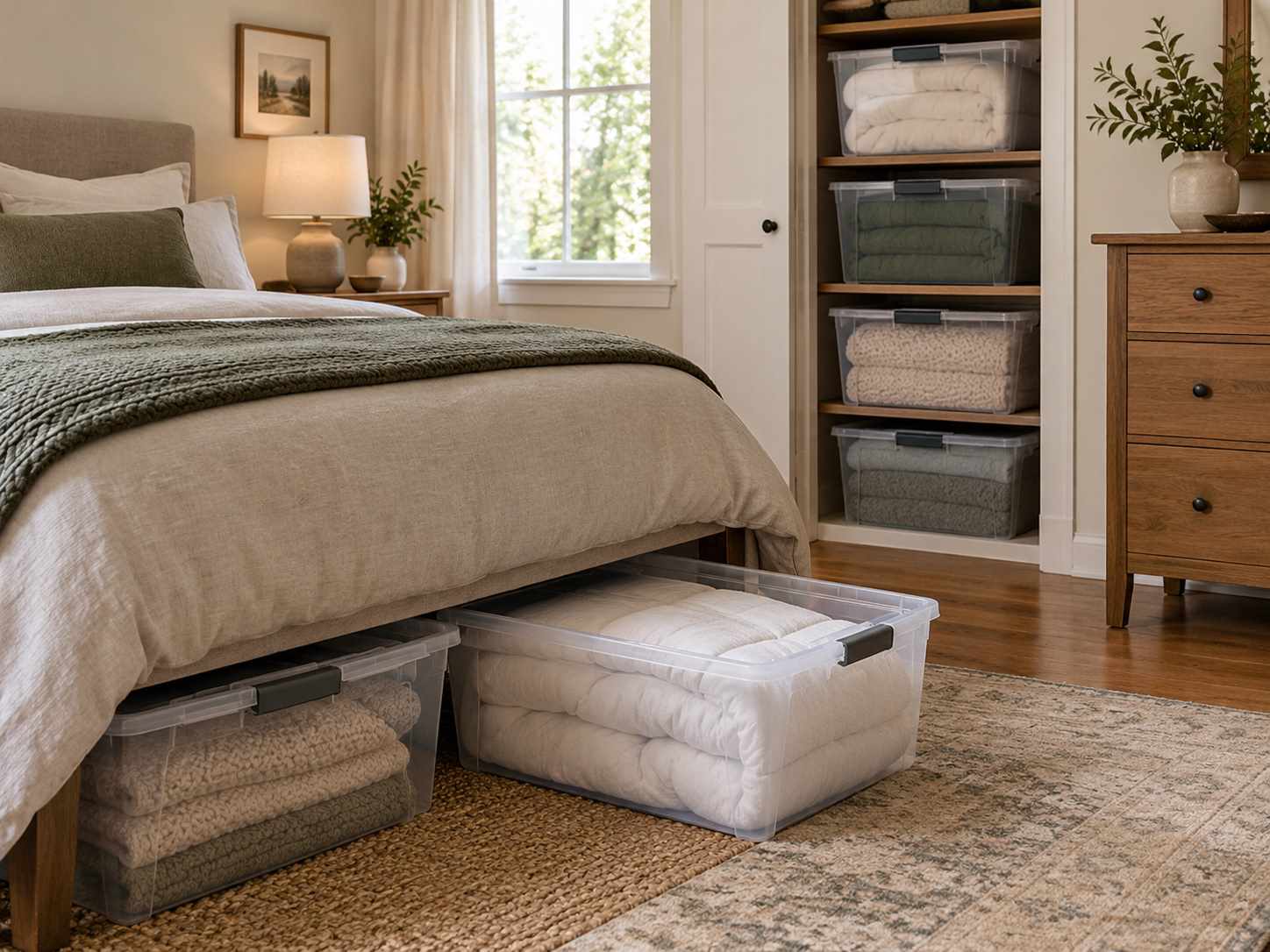
Store clean, dry seasonal bedding in containers suited to the material and conditions. Review what is genuinely needed before packing. A clearly defined location prevents occasional textiles from occupying drawers used every day.
17. Leave One Section Available for Change
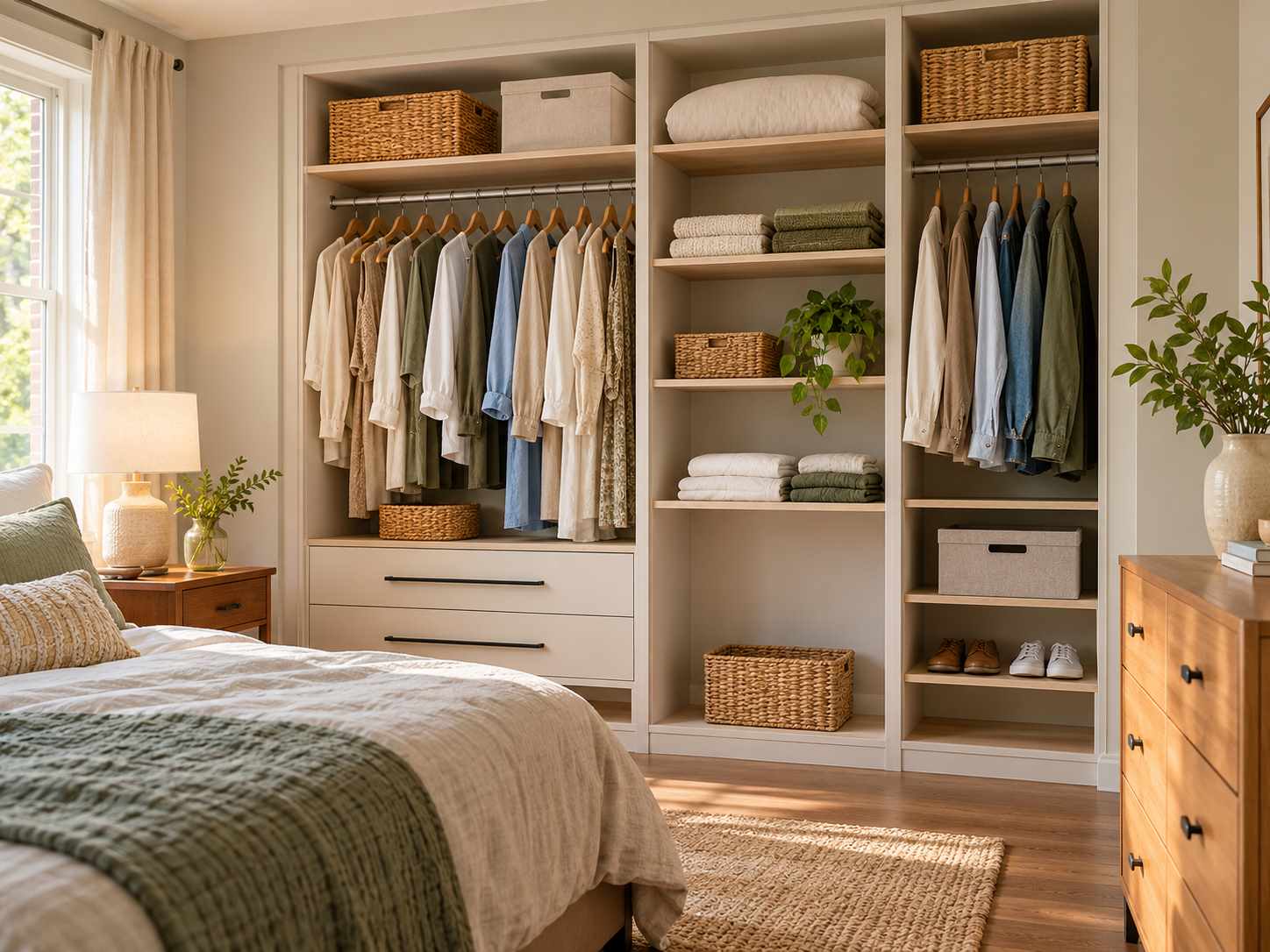
A little spare capacity helps a storage system absorb clean laundry, a new item, or a changing routine. Do not fill every empty space with another organizer. Review the collection regularly and move or remove things that no longer belong in the room.
Frequently Asked Questions
What should I measure before buying storage?
Measure both the belongings and the furniture’s usable interior, plus the space needed to open doors, drawers, or lids. External dimensions alone can be misleading.
Is under-bed storage suitable for everything?
No. Choose contents and containers appropriate to the conditions, access, and product guidance. Keep the area clean and respect any ventilation or heat requirements.
How do I organize a small closet?
Group by actual use, keep daily clothing reachable, and avoid using every inch for tightly packed storage. Adjustable sections can help when needs change.
Should I add more furniture or better organizers?
Review existing capacity and contents first. Add furniture only when a defined category cannot be stored usefully in what you already have.
How can I maintain the arrangement?
Use simple categories, leave return space, and review overflow early. A system that requires exact packing every day is difficult to keep useful.
Related Decorating Guides
- 17 Bedroom Ideas for Small Rooms That Keep Space Useful
- 17 Bedroom Decor Ideas on a Budget Using What You Have
- 17 Chic Bookshelf Ideas That Keep Books Easy to Reach
Conclusion
Plan storage around the collection and the room’s operating space. Measured drawers, a defined bedding area, and some spare capacity can make a bedroom easier to use without filling it with furniture. Save the ideas that solve your most persistent storage problem.
Browse more palettes and furnishings in our bedroom collection.