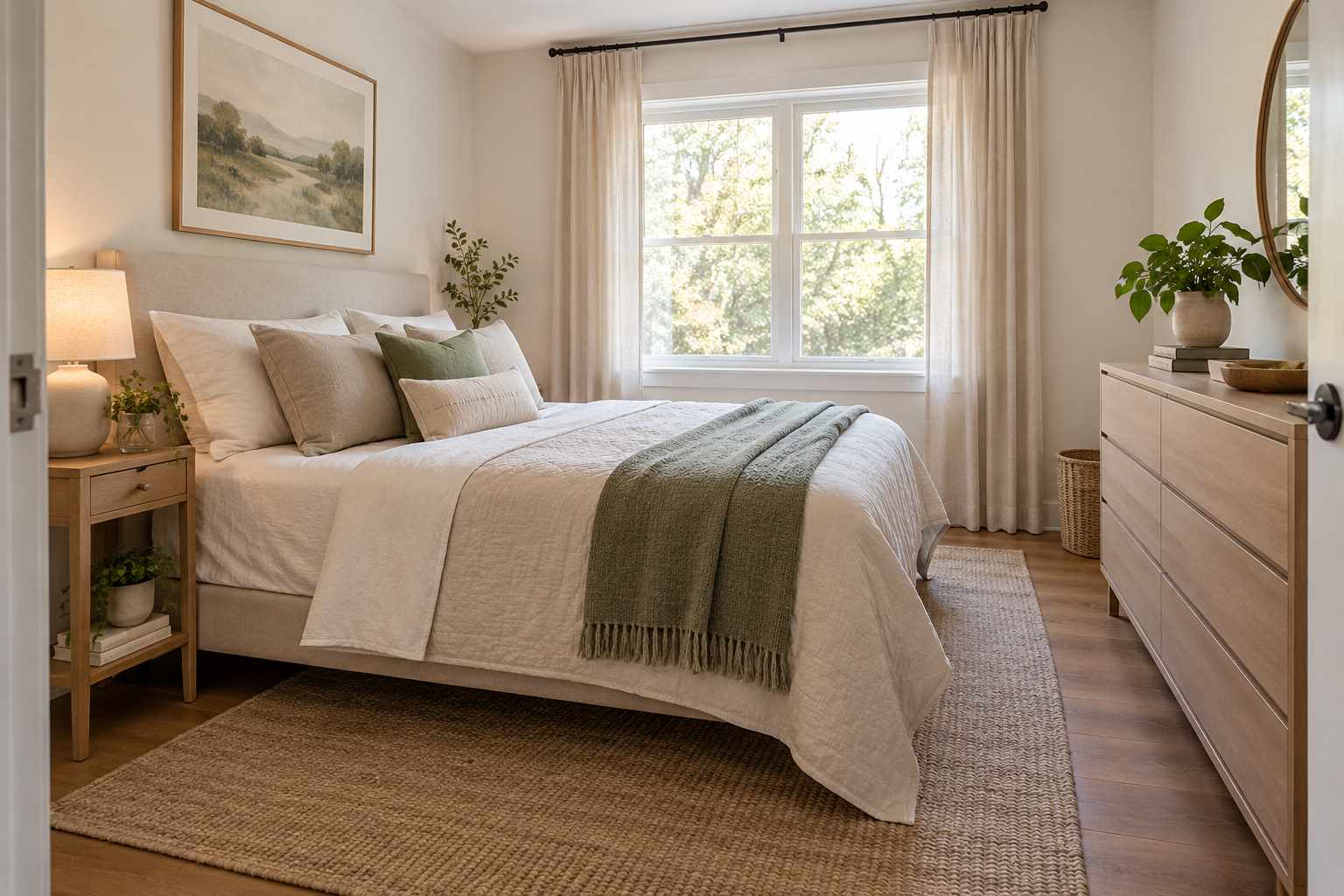
A small bedroom needs to make space for sleeping, storage, and getting ready before it can take on extra decoration. Start with a measured plan that includes doors, drawers, windows, and the route around the bed. These bedroom ideas for small rooms focus on proportion and useful choices rather than trying to fit in a full-size bedroom set. Keep the pieces that support your routine, and let one clear palette connect them. A little open space can be more useful than another compact item of furniture.
Key Takeaways
- Measure furniture in use, including open drawers and doors.
- Choose a few useful pieces rather than many small ones.
- Preserve light, ventilation, and a clear route around the bed.
1. Choose the Bed Position Before Extra Furniture
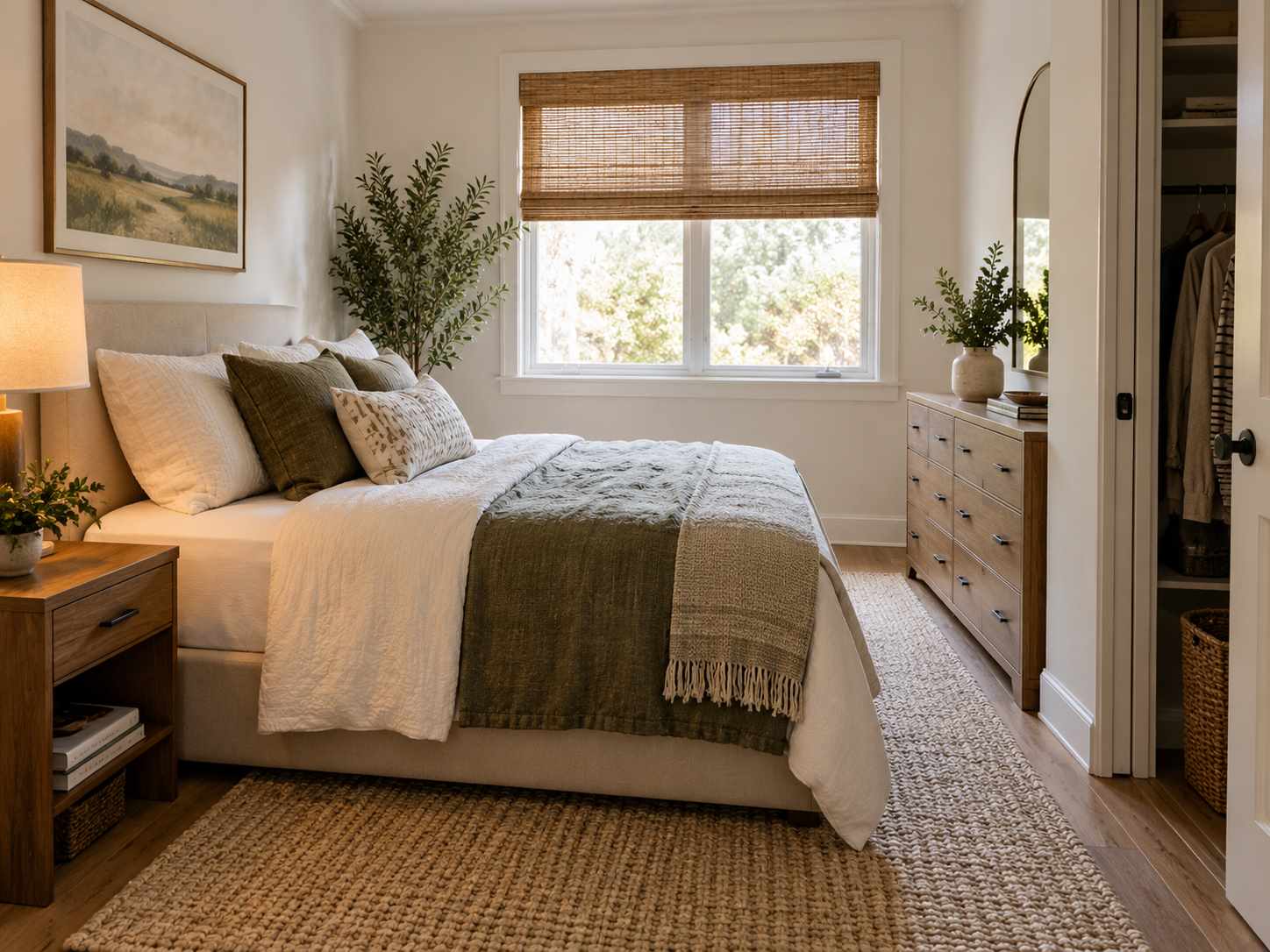
The bed usually determines how the rest of a small room works. Test its footprint against storage access and window use before adding tables or a chair. A visually centered bed is not automatically the best arrangement if it blocks the only comfortable route.
2. Use a Narrow Bedside Shelf Where Appropriate
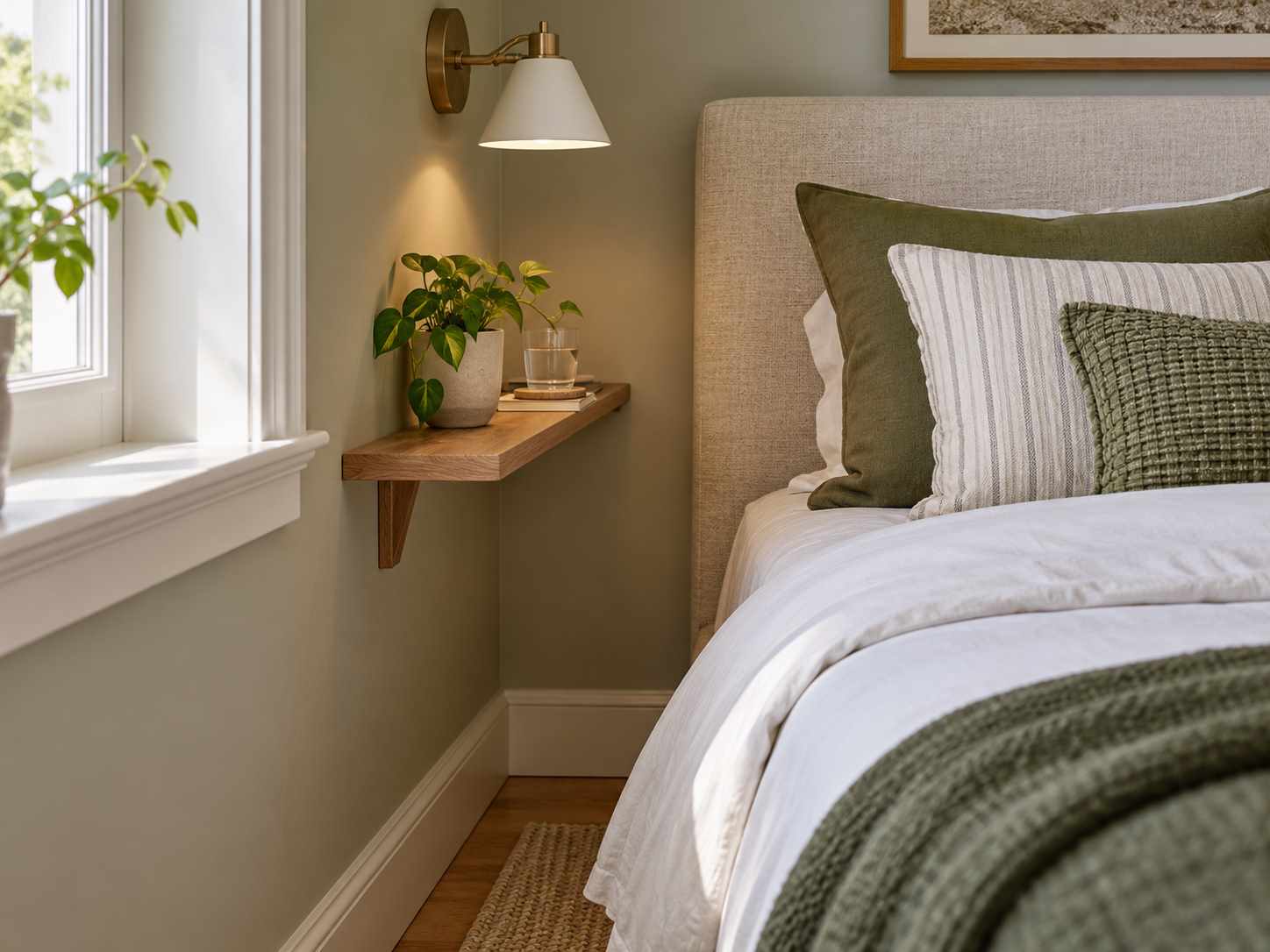
A shallow shelf can provide a landing spot when a table will not fit. Check the wall, fixings, and load, and keep it clear of the sleeping area where objects could fall. Leave enough surface for essentials without adding a second decorative display.
3. Choose a Dresser That Opens Comfortably
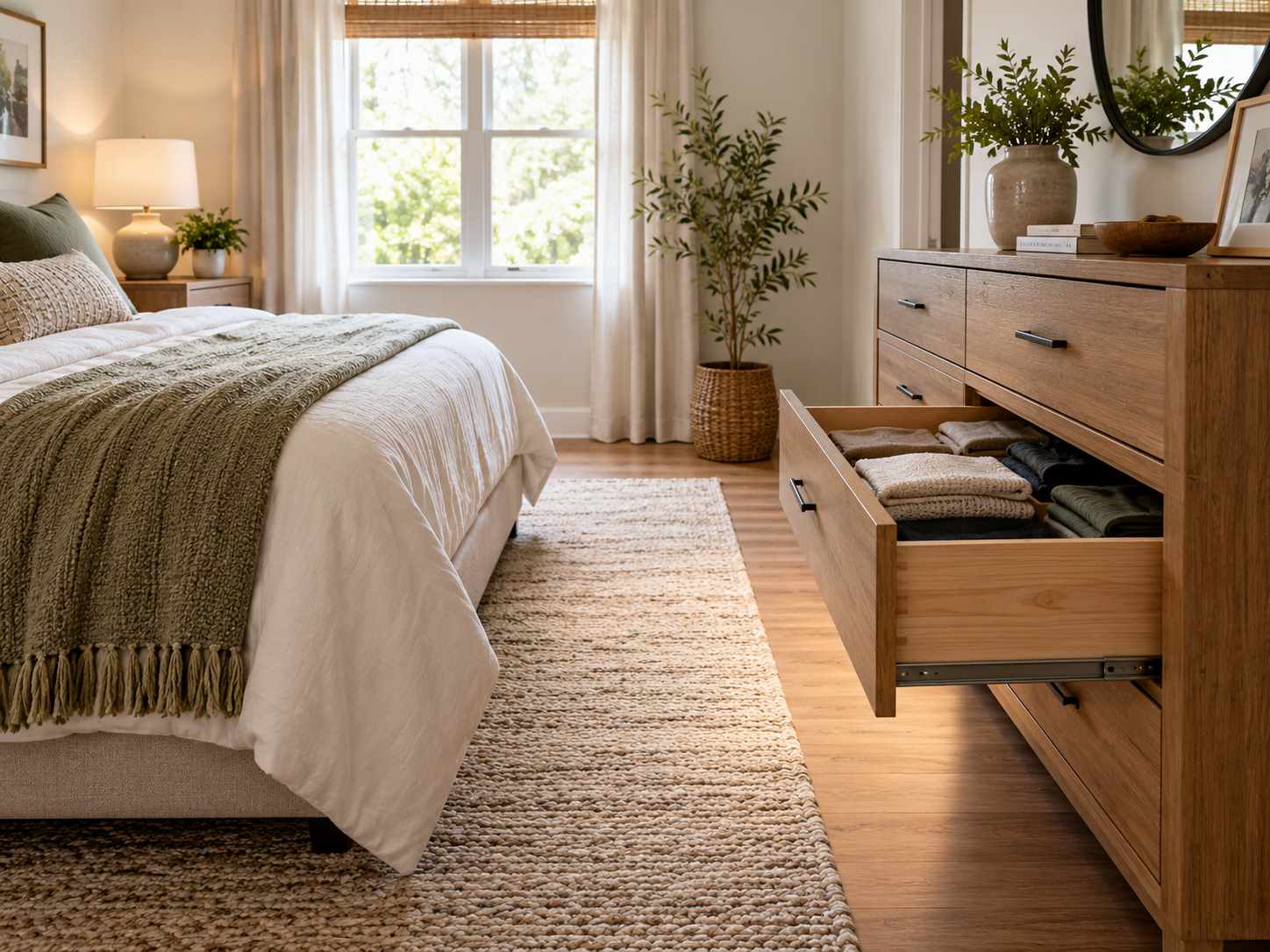
A dresser needs space in front for both the drawers and the person using them. Mark the open footprint before buying. A shallower but better-organized unit may work more comfortably than a deep cabinet that technically fits the wall.
4. Keep the Main Bedding Pattern Quiet
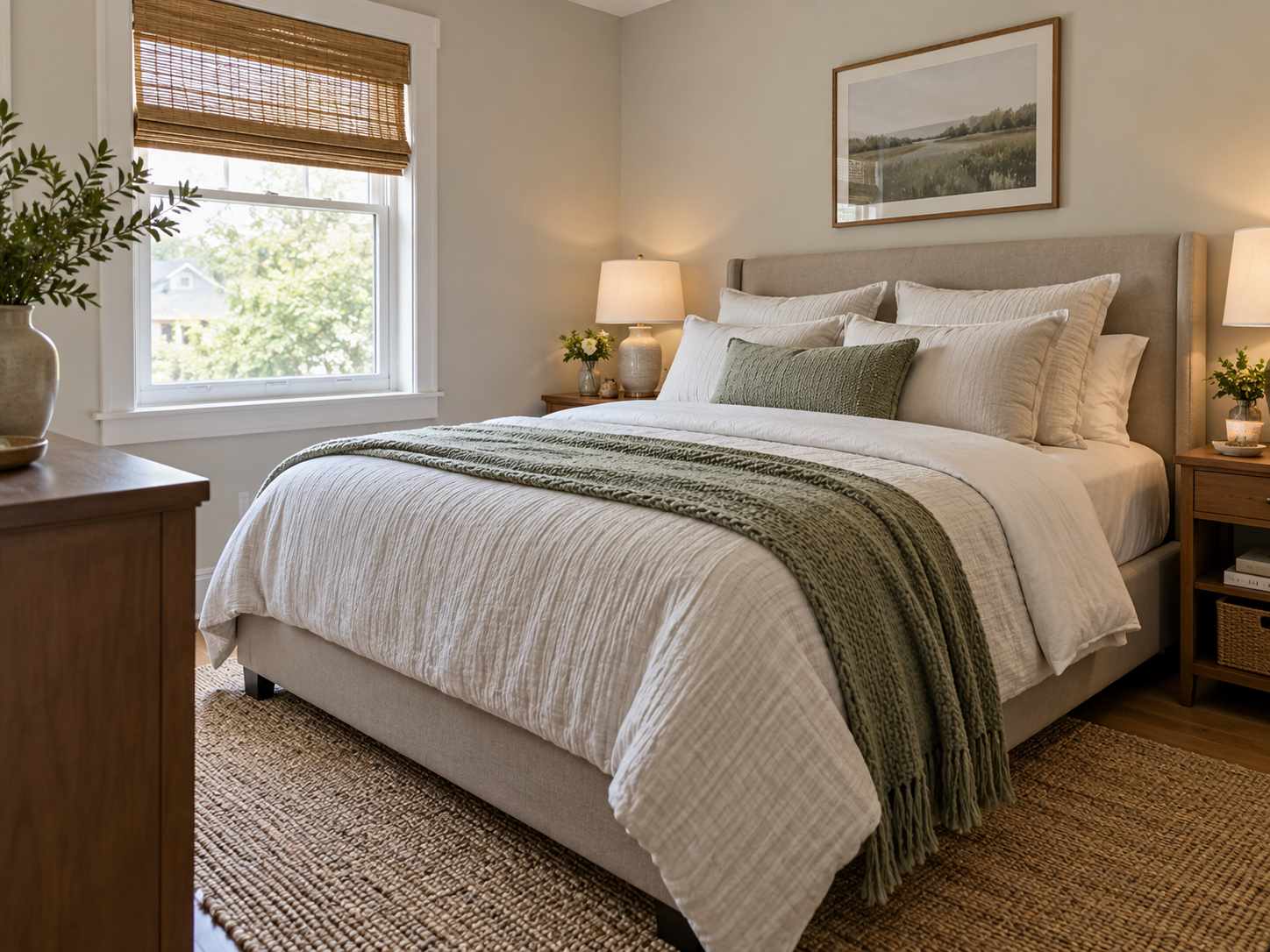
Plain or softly patterned bedding can help a compact room feel coherent. Use texture to distinguish sheets, cover, and throw rather than several competing prints. Choose layers for comfort and keep extra decorative pillows to a manageable number.
5. Use a Mirror Where It Serves a Routine
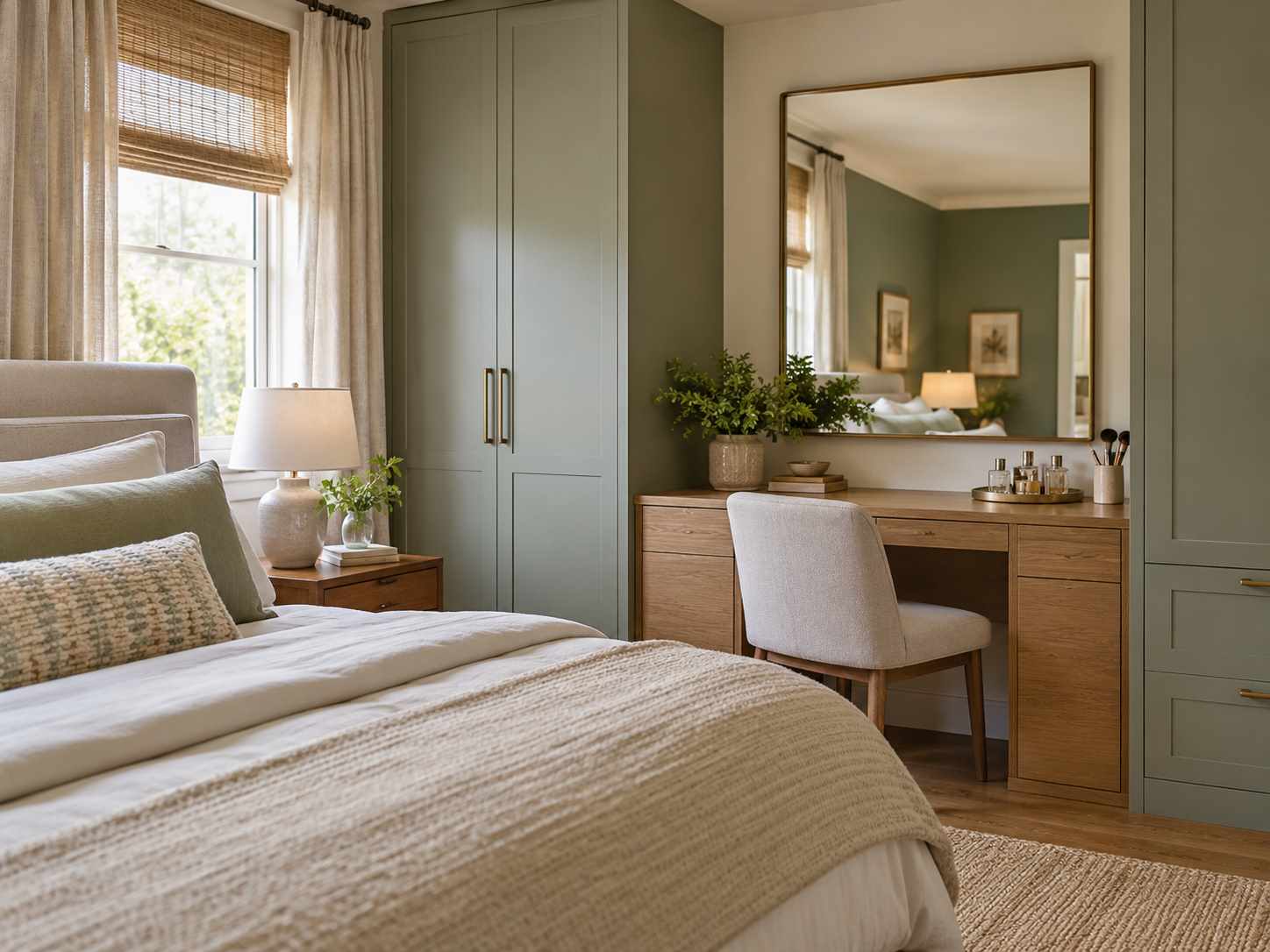
A mirror near a dressing area can be useful without requiring a large freestanding piece. Check the reflected view and secure the mirror appropriately. Avoid placing a heavy leaning mirror where it narrows a route or can be knocked.
6. Keep Window Treatments Clear of Furniture
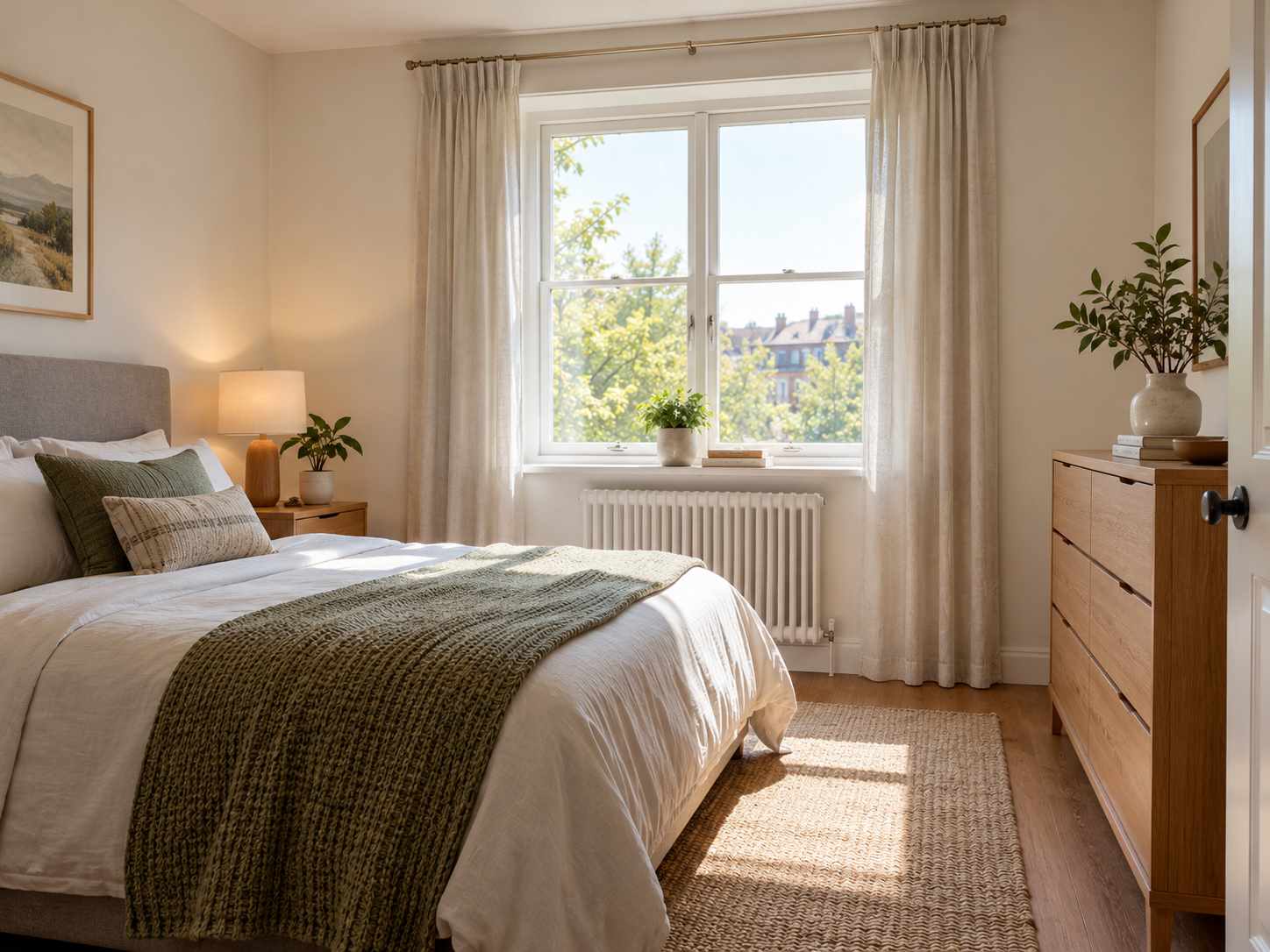
Curtains should move freely without being trapped behind a cabinet or bedside unit. Choose a treatment around the actual window and heating arrangement. Preserving usable daylight and window operation can be more valuable than adding a visually elaborate curtain design.
For a practical foundation for the bedding, see our guide to layering a comfortable bed.
7. Try a Bed with Appropriate Built-In Storage
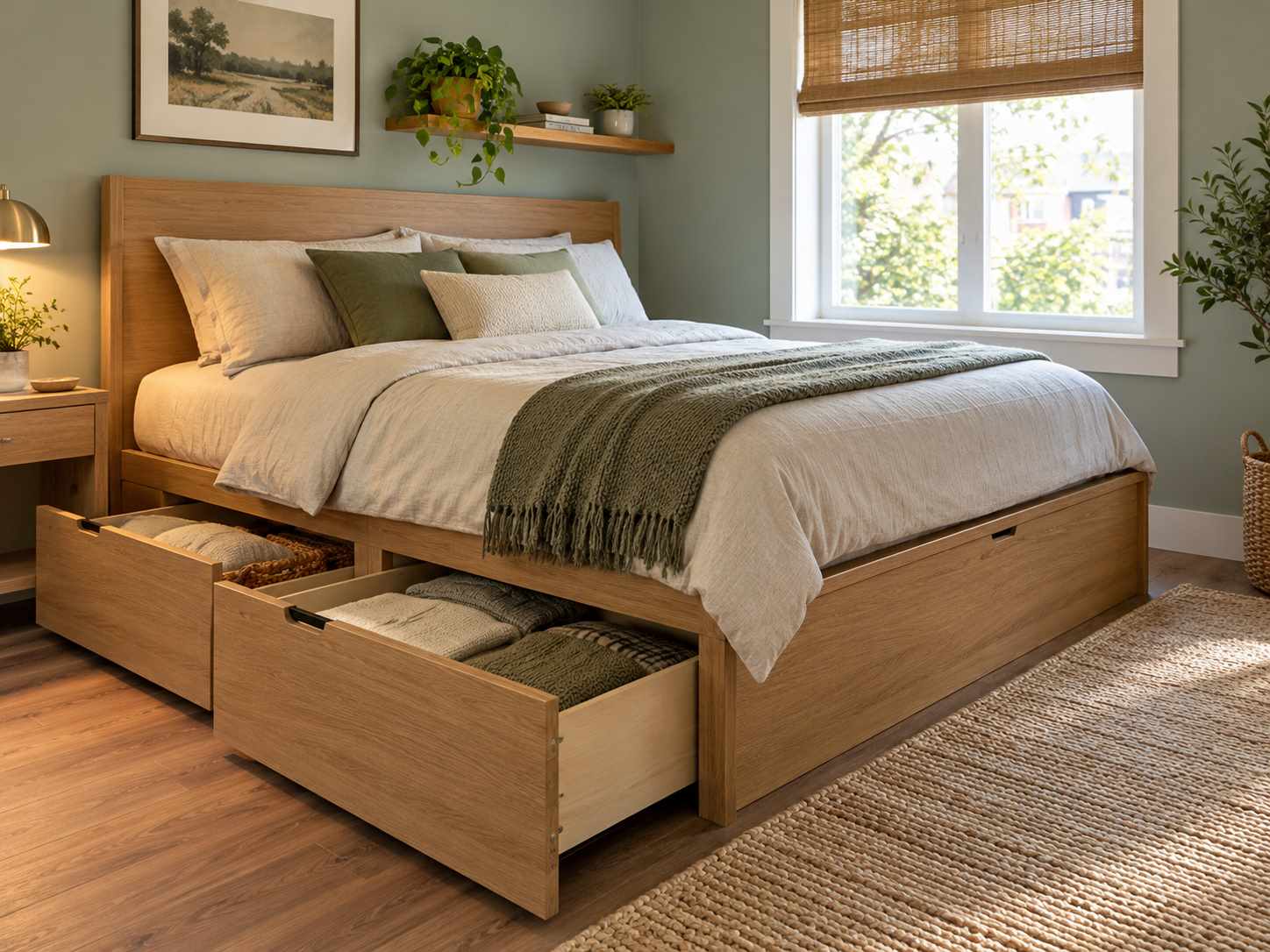
Bed storage can replace a separate piece when the mechanism and access suit the room. Check drawers or lifting clearances and follow the product guidance. Store items according to their needs and avoid overfilling a space that then becomes difficult to use.
8. Use a Compact Desk for One Defined Task
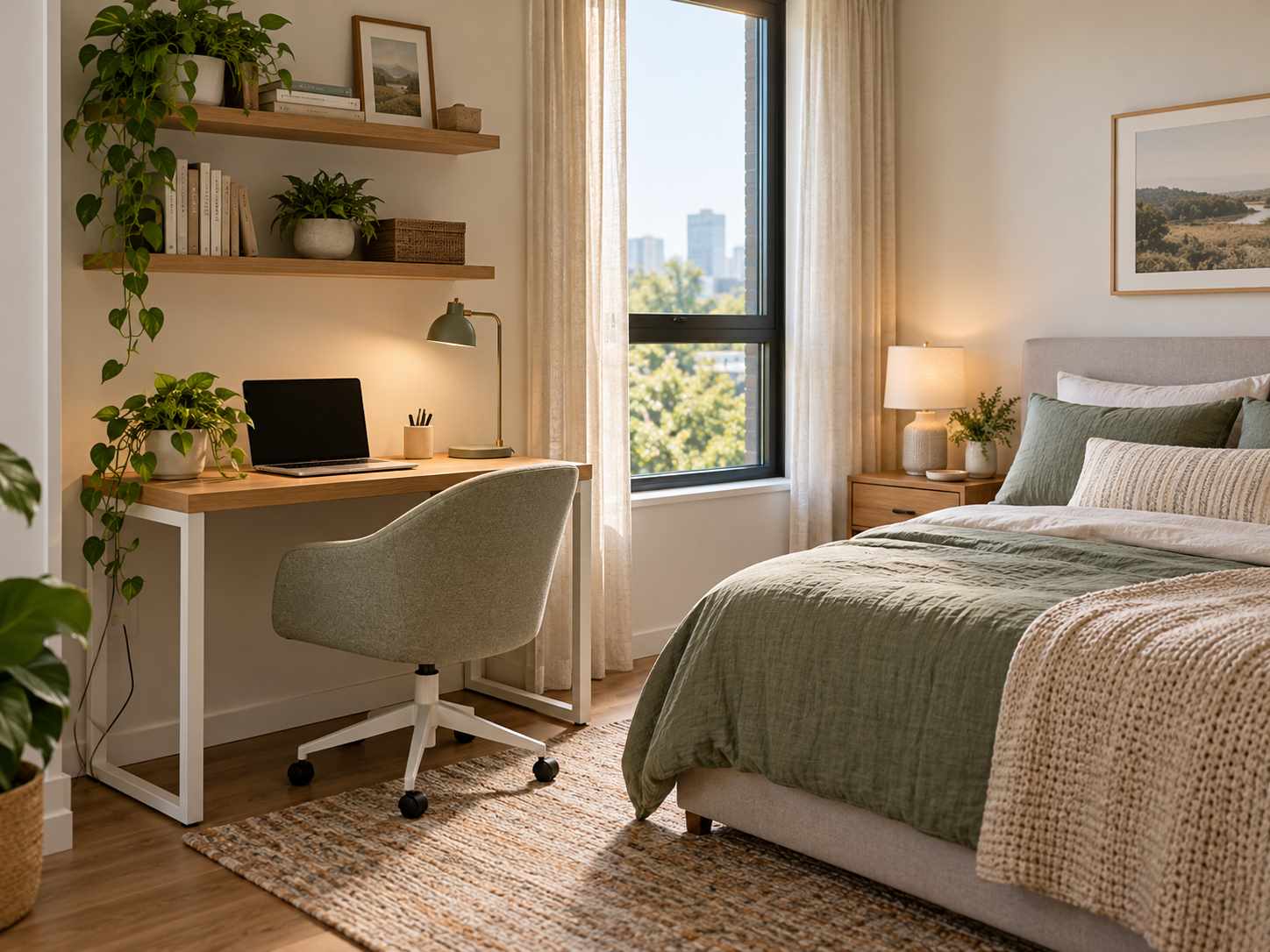
A small desk can work when its purpose is clear and the equipment fits. Check chair movement and cable access before choosing its size. A surface that is too shallow for the actual task is not a useful space-saving solution.
9. Choose Lamps with a Small Practical Footprint
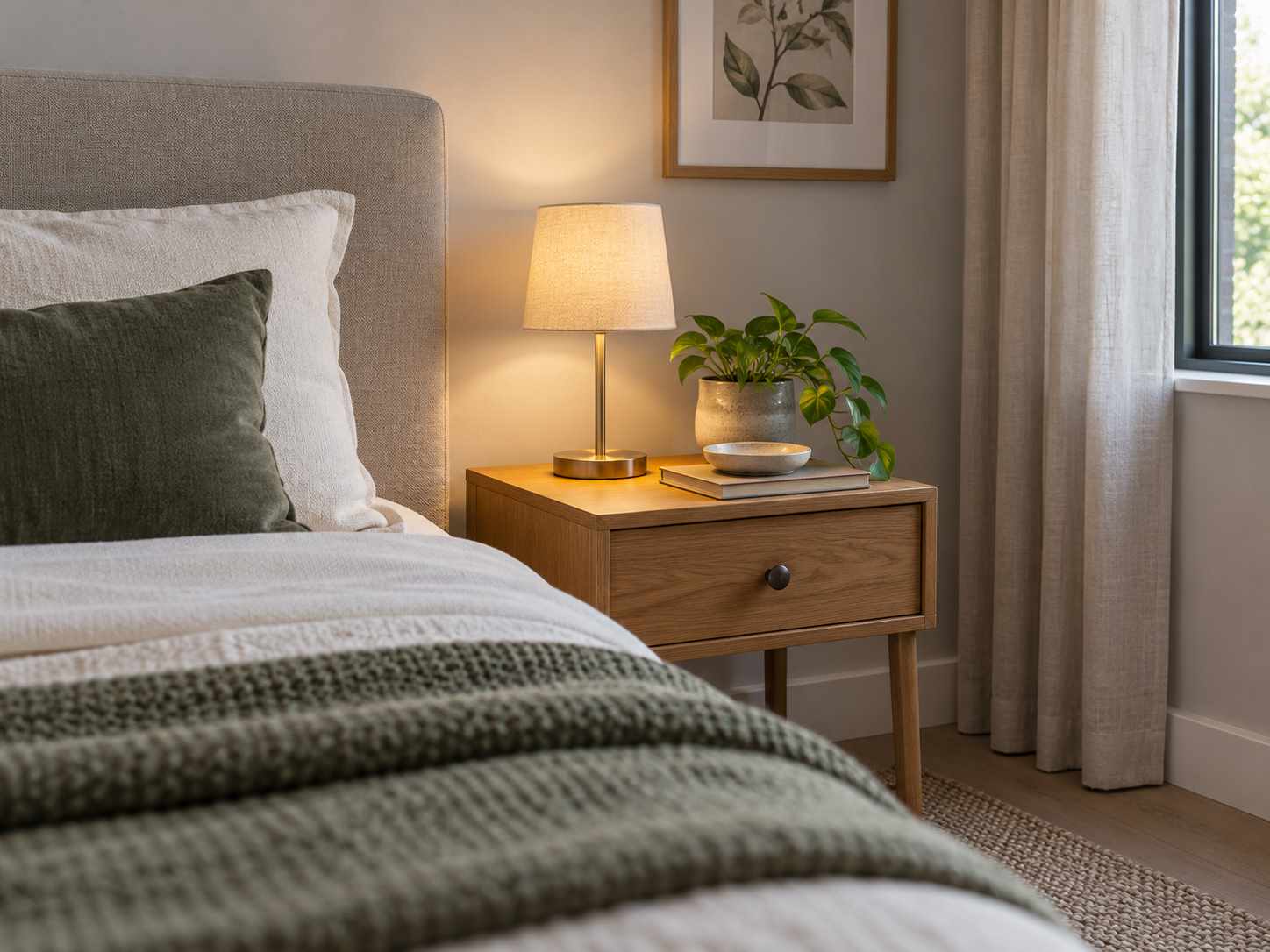
A compact lamp can leave more bedside surface available. Check shade glare, switch reach, and stability rather than selecting only the smallest base. Have appropriate help with any wall-mounted electrical fitting and route cables clear of feet.
10. Keep a Limited Color Thread Across the Room
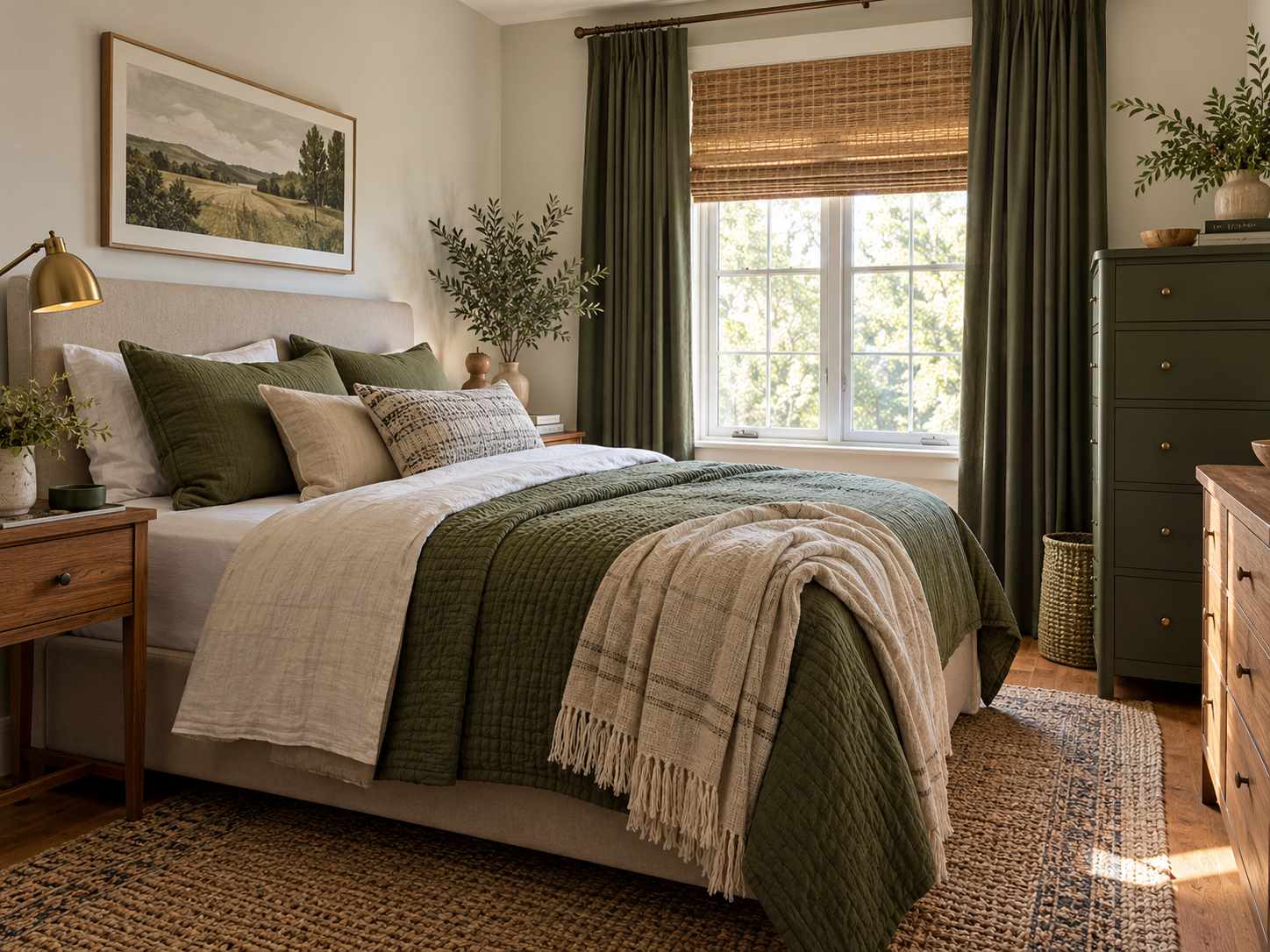
Repeat two or three related tones in bedding, curtains, and storage. The pieces do not need to match exactly. A clear palette can connect mixed furniture and reduce visual fragmentation without requiring every surface to be pale.
11. Use Vertical Storage Within Safe Reach
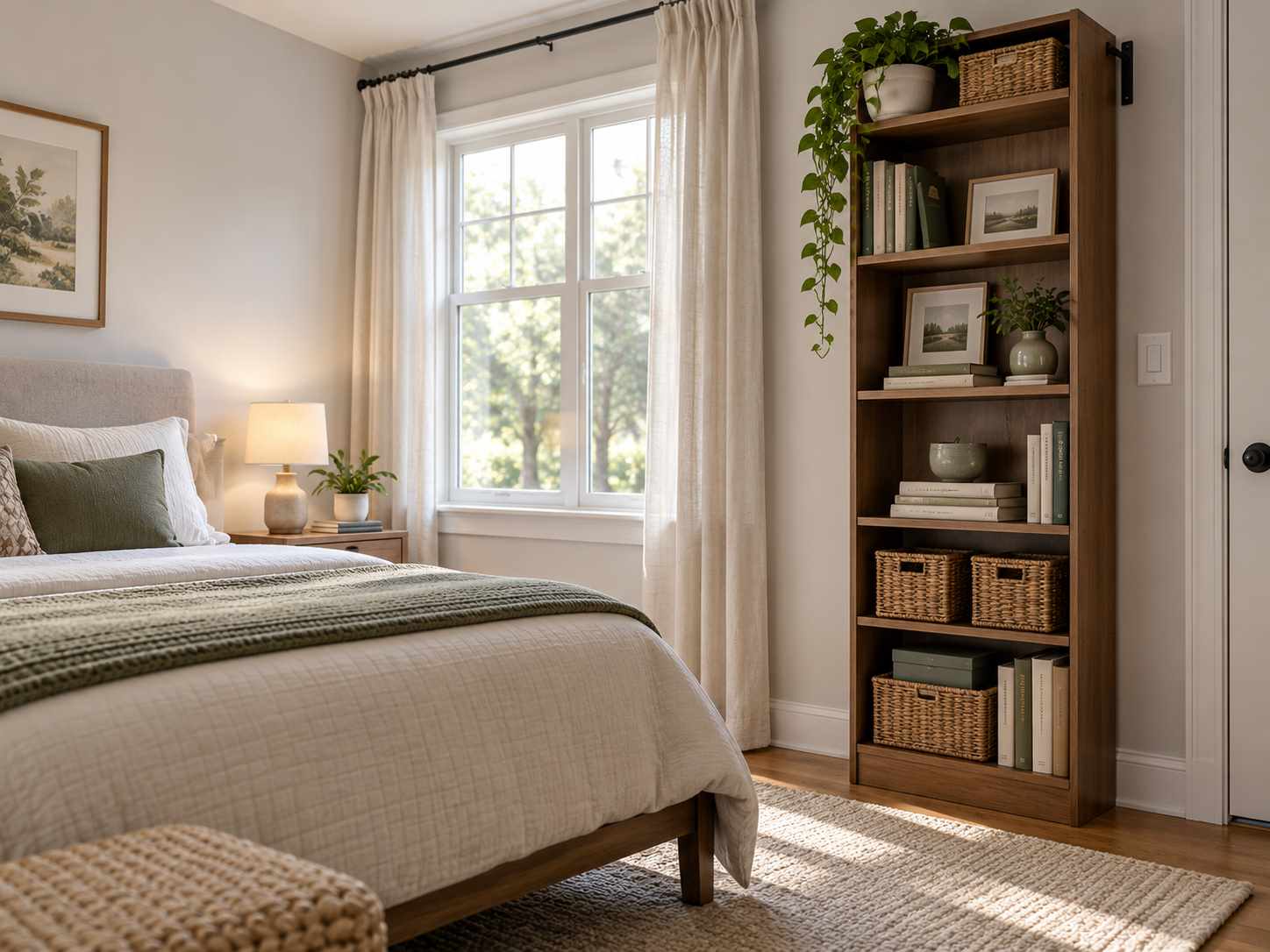
A taller unit can provide capacity in a smaller footprint, but it needs suitable anchoring and usable shelf heights. Keep heavy items low and avoid arrangements that encourage climbing. Check that the unit does not block light, ventilation, or switches.
12. Give Laundry a Defined Small Location
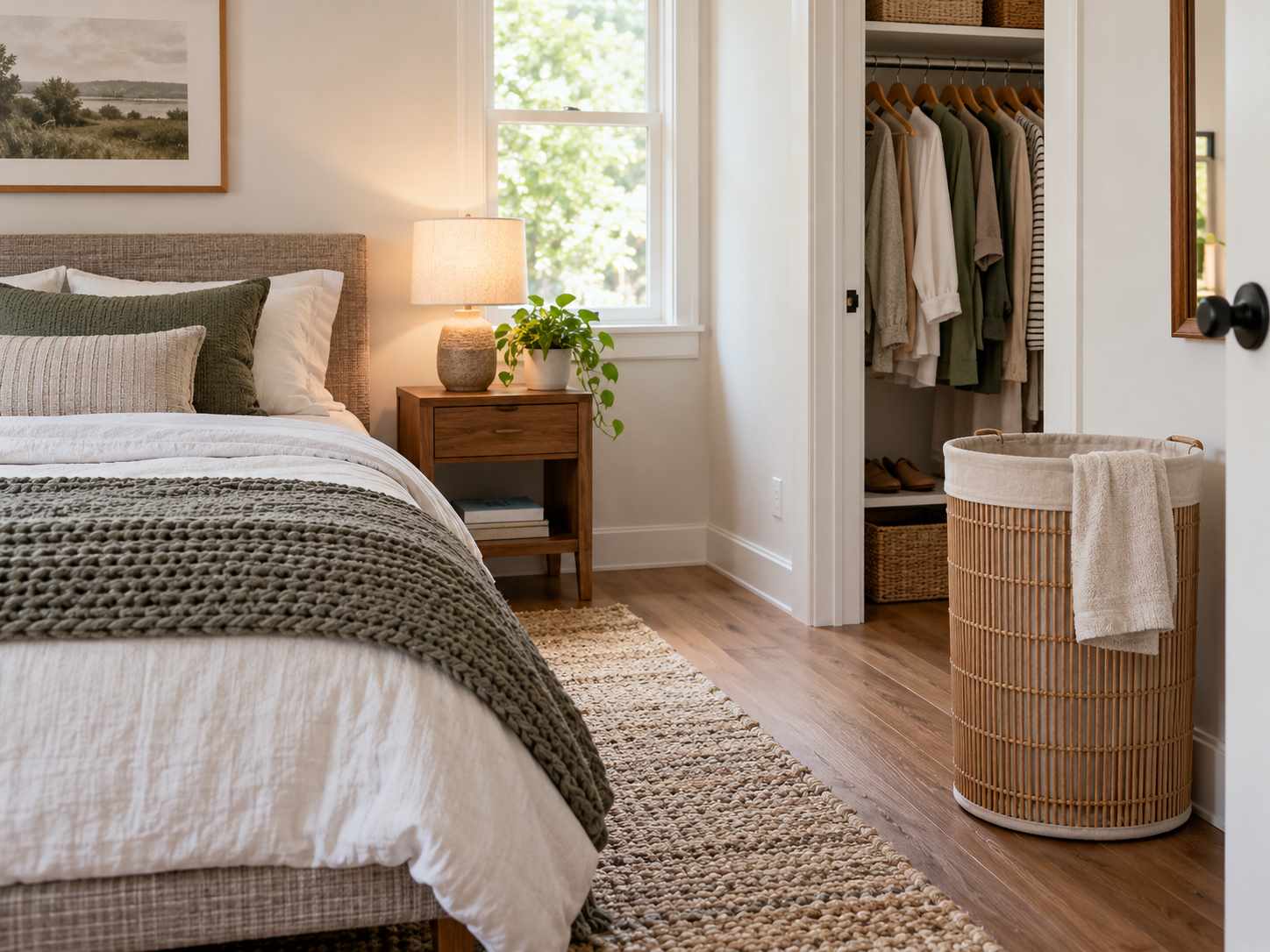
A suitably sized hamper can prevent clothes from spreading across the bed or floor. Put it where changing happens while preserving the route. Choose a capacity that fits the washing routine and a product that can ventilate and be cleaned appropriately.
For ideas that support a compact layout, explore our small-space decorating guides.
13. Use One Artwork Instead of Several Tiny Pieces

A single appropriately scaled artwork can make a small wall feel deliberate. Choose original or licensed work and use secure mounting. Keep the surrounding area simpler rather than scattering small frames into every narrow gap.
14. Choose a Light-Looking Chair Only if Needed
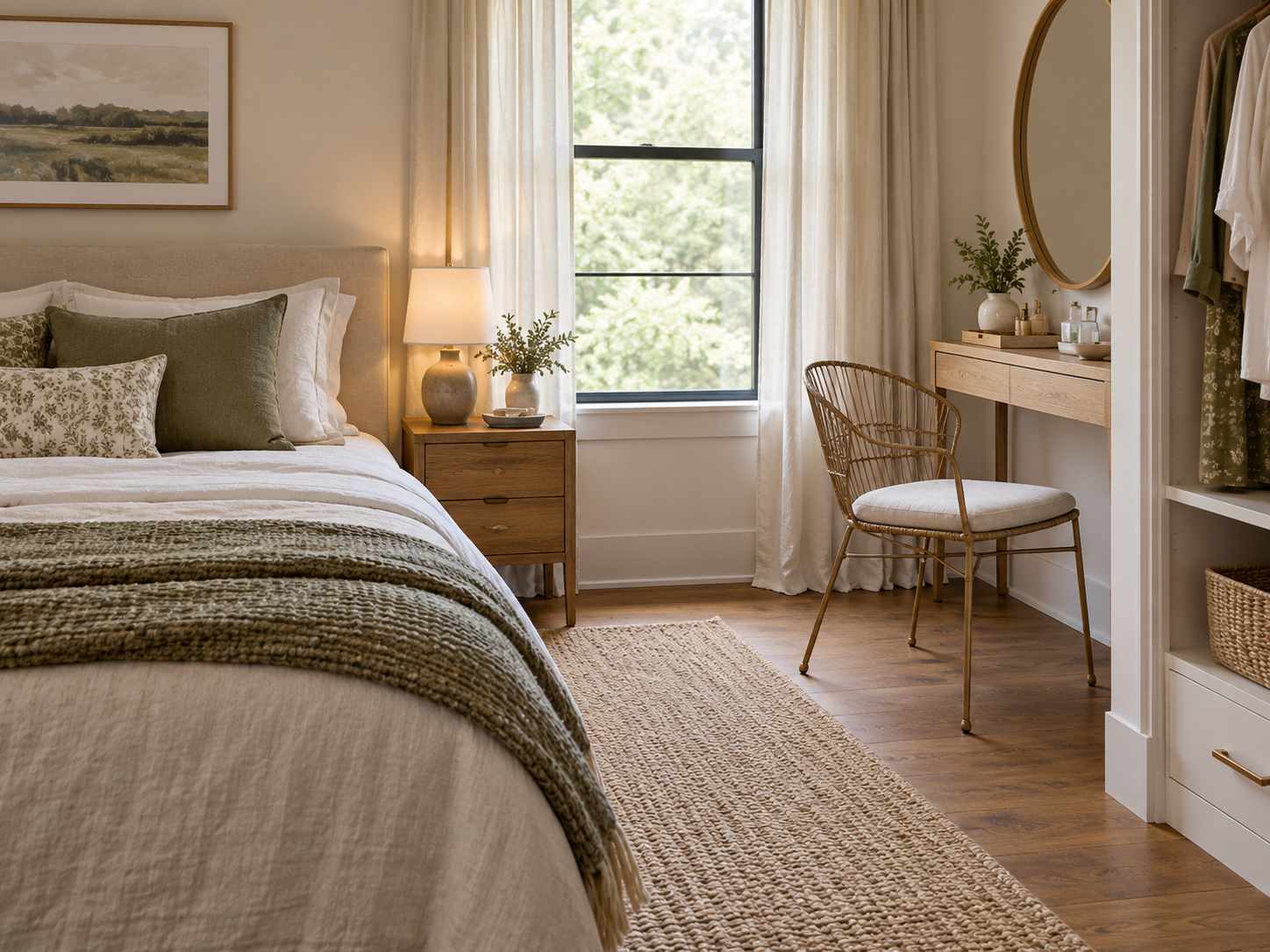
An open-frame chair can provide a useful dressing seat without a large visual block. Check comfort and the route around it. If a chair simply collects clothes, a better laundry arrangement may solve more than keeping another piece of furniture.
15. Keep the Top of Storage Furniture Useful
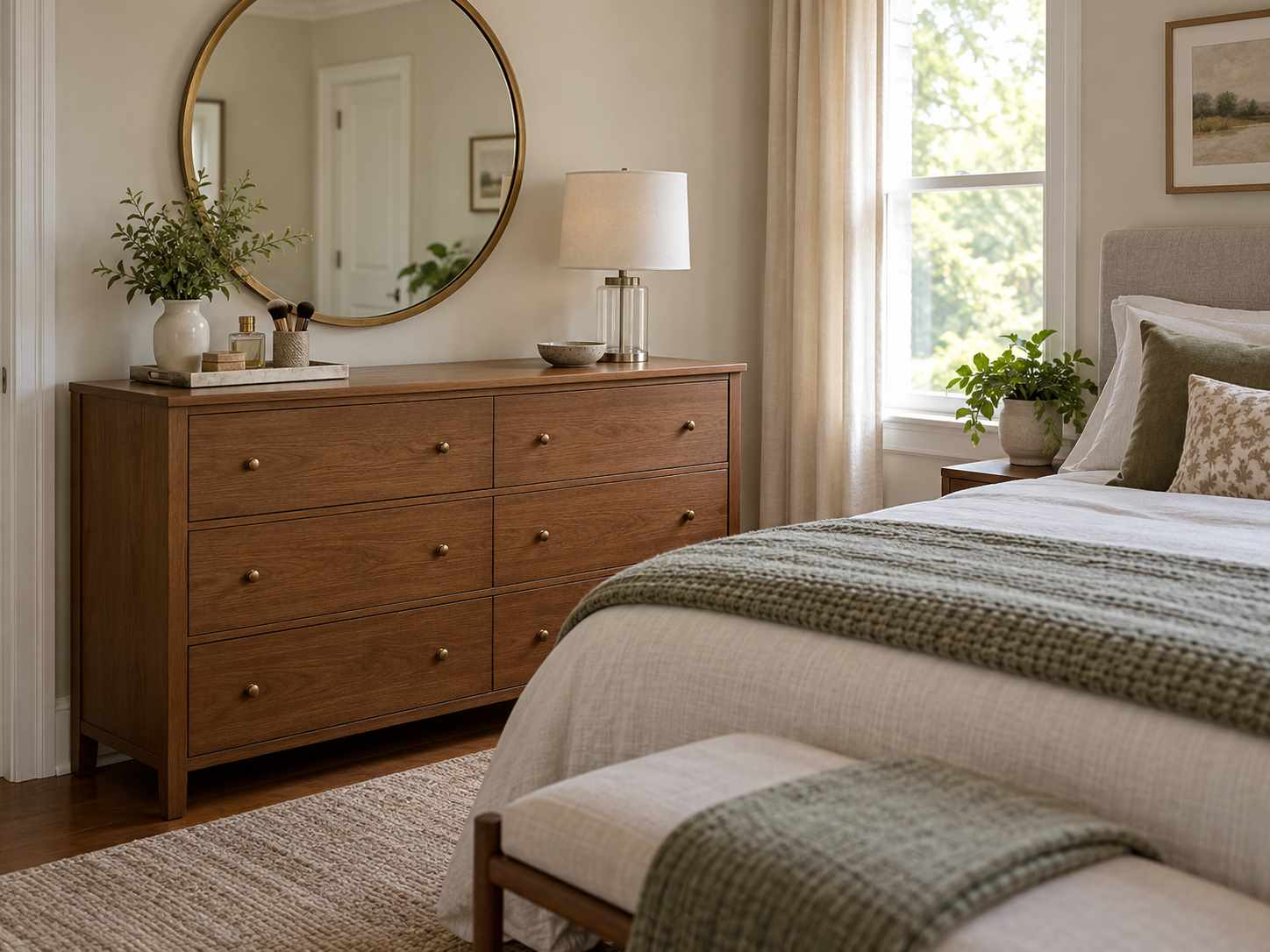
A dresser top can hold a small tray and mirror without a full decorative collection. Leave a clear area for everyday tasks. Objects that repeatedly need moving before you get ready may belong elsewhere.
16. Make Use of an Existing Alcove
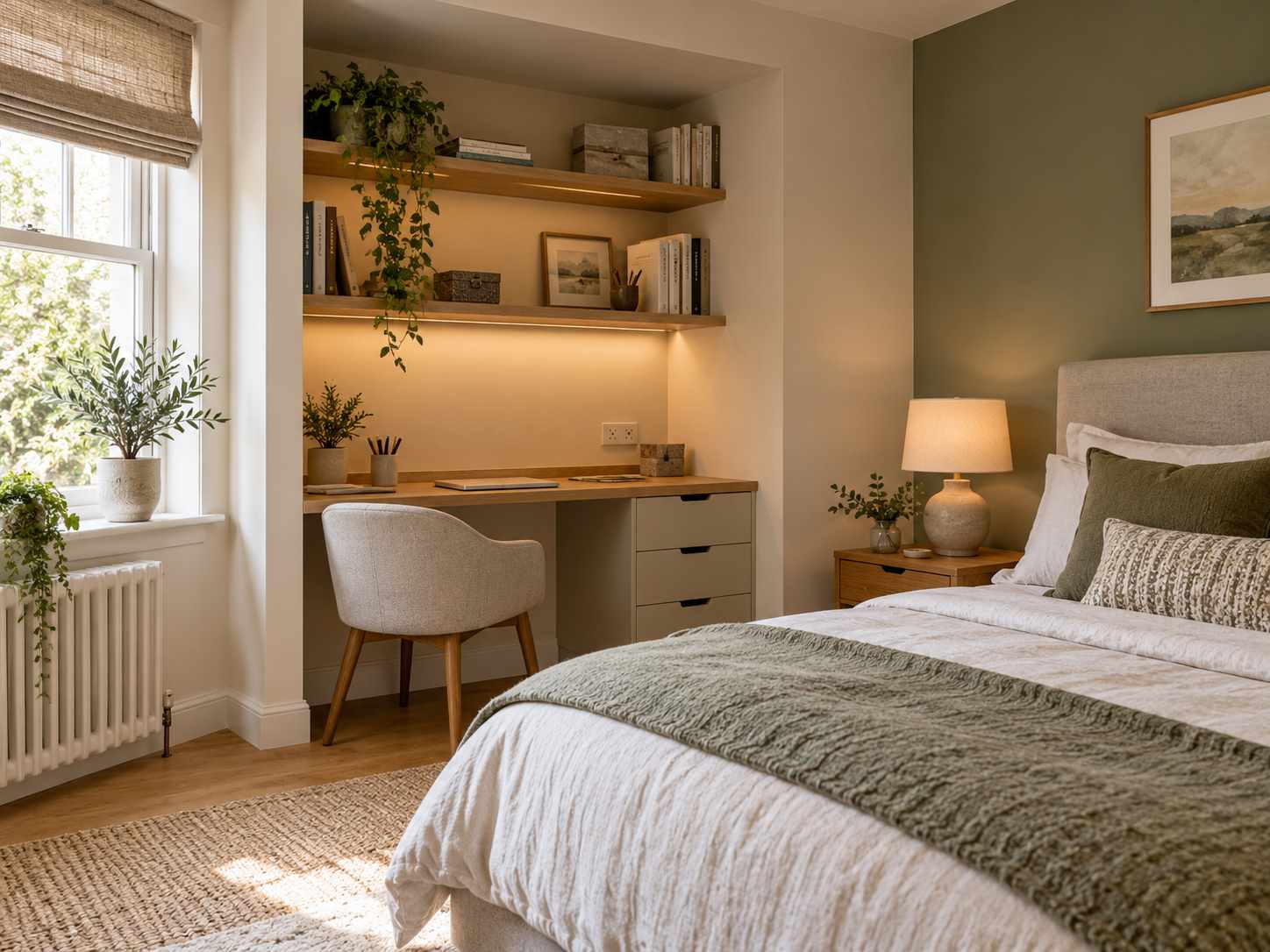
An alcove can hold measured storage or a small desk if its dimensions and services allow. Check access, ventilation, and wall fixing requirements before fitting furniture. A custom-looking arrangement only helps when it supports the way the room is used.
17. Leave One Clear Patch of Floor
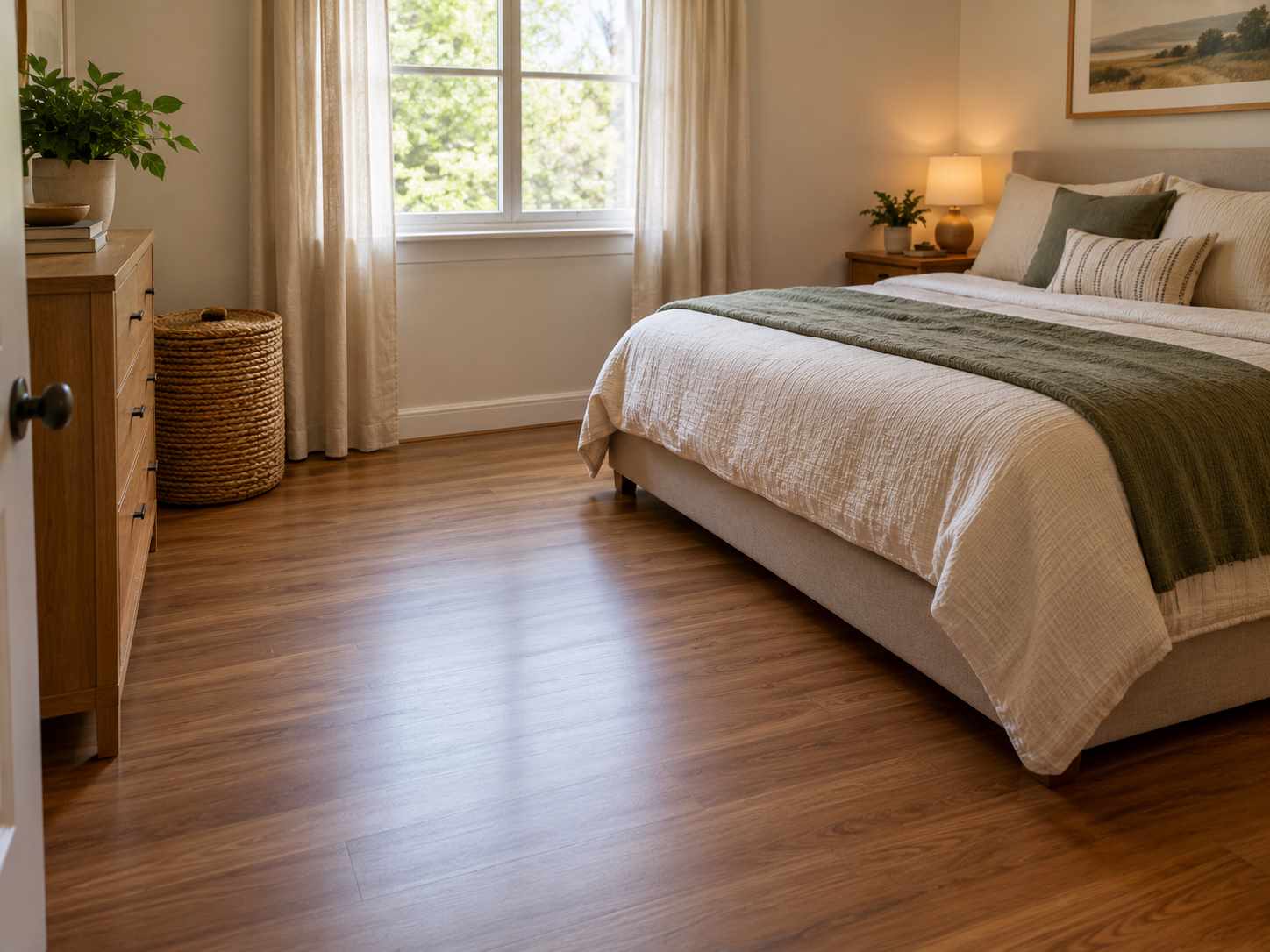
An open patch helps with dressing, cleaning, and changing bedding. Remove furniture that duplicates another function rather than squeezing it into the last gap. A small room often feels more workable when it has a little capacity left unused.
Frequently Asked Questions
What should I buy first for a small bedroom?
Start with a measured layout and the bed you need. Decide what storage is missing only after checking how the main pieces fit in use.
Can a small bedroom use dark colors?
Yes, if the palette and lighting suit your preferences. Test a limited surface or textile before committing to a larger change.
Is built-in bed storage always better?
Only when the opening mechanism, capacity, and access suit the room. Check the full operating footprint before buying.
How do I fit a desk without crowding the room?
Define the task and equipment first, then measure the surface and chair space required. Avoid a desk that is too small to be useful.
What should I remove from a crowded bedroom?
Look for duplicated functions, unused seating, and decorative pieces that interrupt movement. Keep the items that support daily routines.
Related Decorating Guides
- 17 Bedroom Storage Ideas for Clothes, Bedding, and Daily Life
- 17 Bedroom Curtain Ideas for Light, Privacy, and Texture
- 17 Bedroom Decor Ideas on a Budget Using What You Have
Conclusion
Let the measured layout guide the room, then choose furniture and decoration that support it. Useful storage, manageable bedding, and a clear route matter more than fitting in a complete set. Save the ideas that solve your room’s most awkward corner or daily task.
Browse more palettes and furnishings in our bedroom collection.