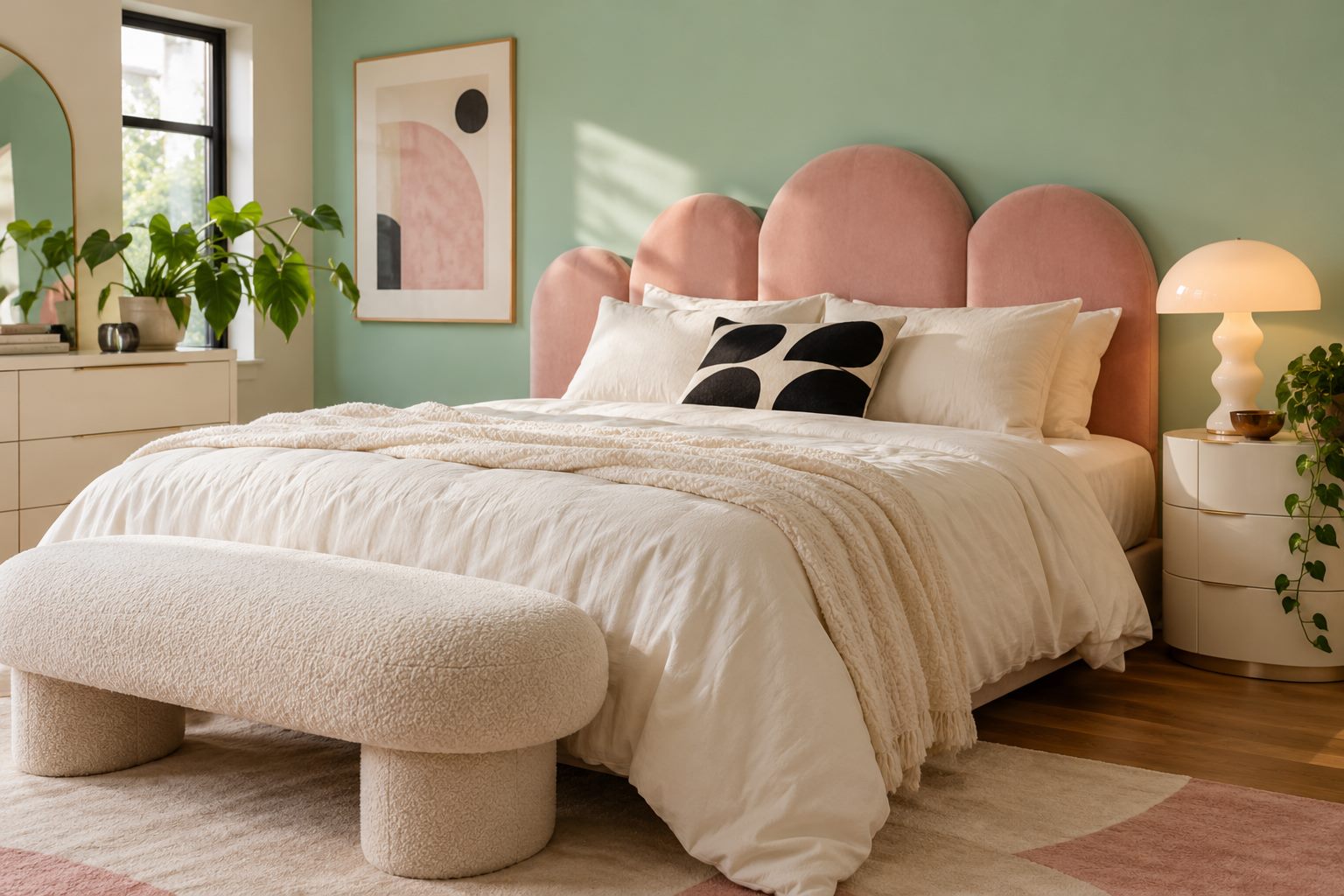
An 80s bedroom does not need every bright color and bold shape at once. A few playful forms, a pastel pairing, or a graphic textile can give the room a clear direction while the bed remains restful. These 80s bedroom decor ideas cover softer and more expressive approaches, from curved headboards to simple color blocking. Choose a main palette before shopping, then decide whether pattern, furniture shape, or lighting will lead. Treat the ideas as separate options you can adapt, rather than a checklist to fit into one room.
Key Takeaways
- Let either color or shape lead instead of making every object a statement.
- Use a plain bedding layer to separate competing patterns.
- Keep mirrors, lighting, and furniture securely installed.
1. Choose a Curved Blush Headboard
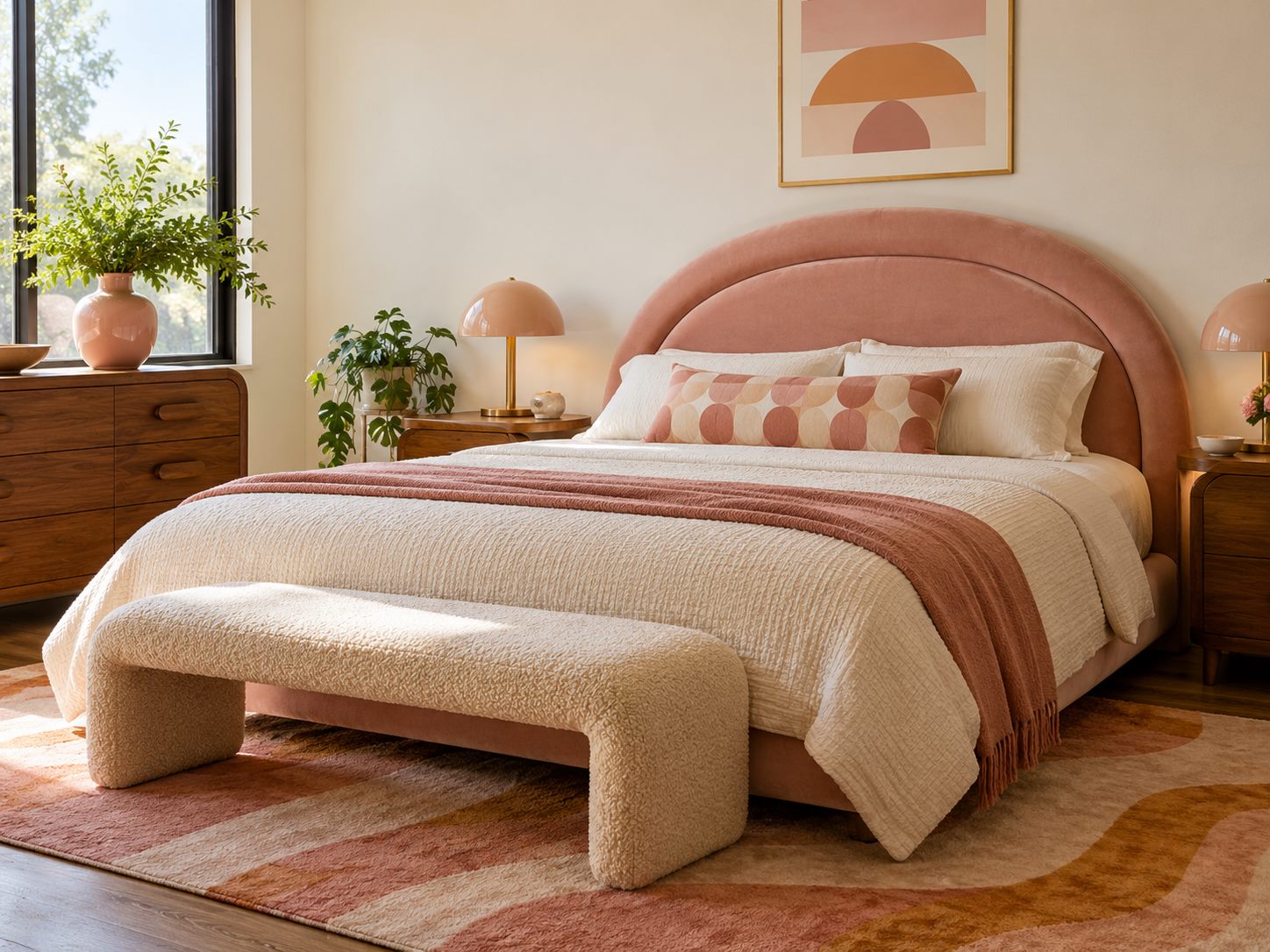
A curved blush headboard gives the bed a clear outline without relying on several decorative pillows. Keep the wall behind it simple and repeat the color once in a print or small accessory. Check the upholstered surface can be cleaned in a way that suits your household.
2. Pair Mint Walls with Warm White Bedding
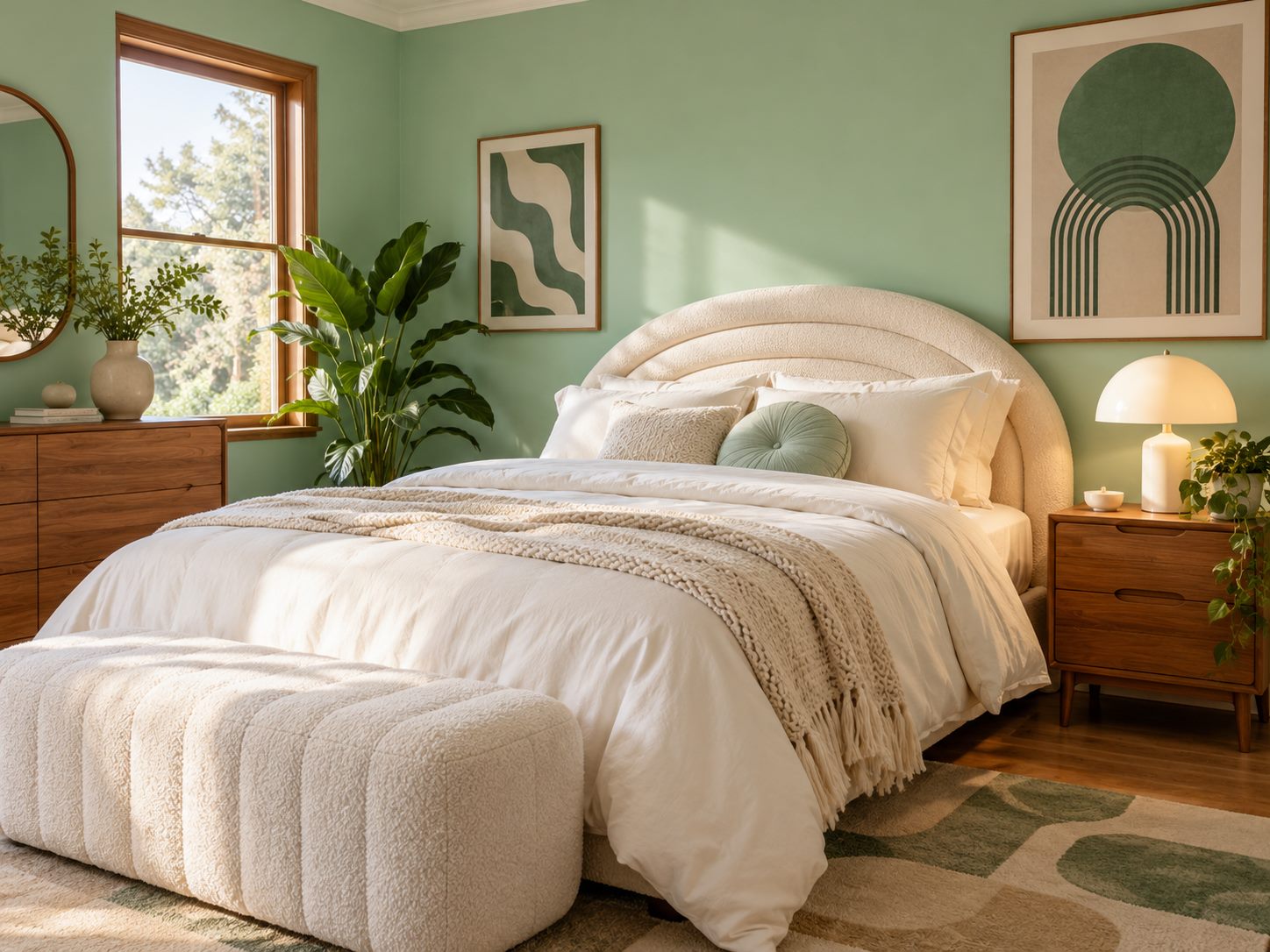
Mint can provide a gentle colored background when the textiles remain quiet. Test it beside your actual floor and furniture because green undertones change with surrounding materials. Warm white bedding prevents the combination from feeling overly cool, while a wood nightstand adds a different texture.
3. Use a Black-and-White Graphic Cushion
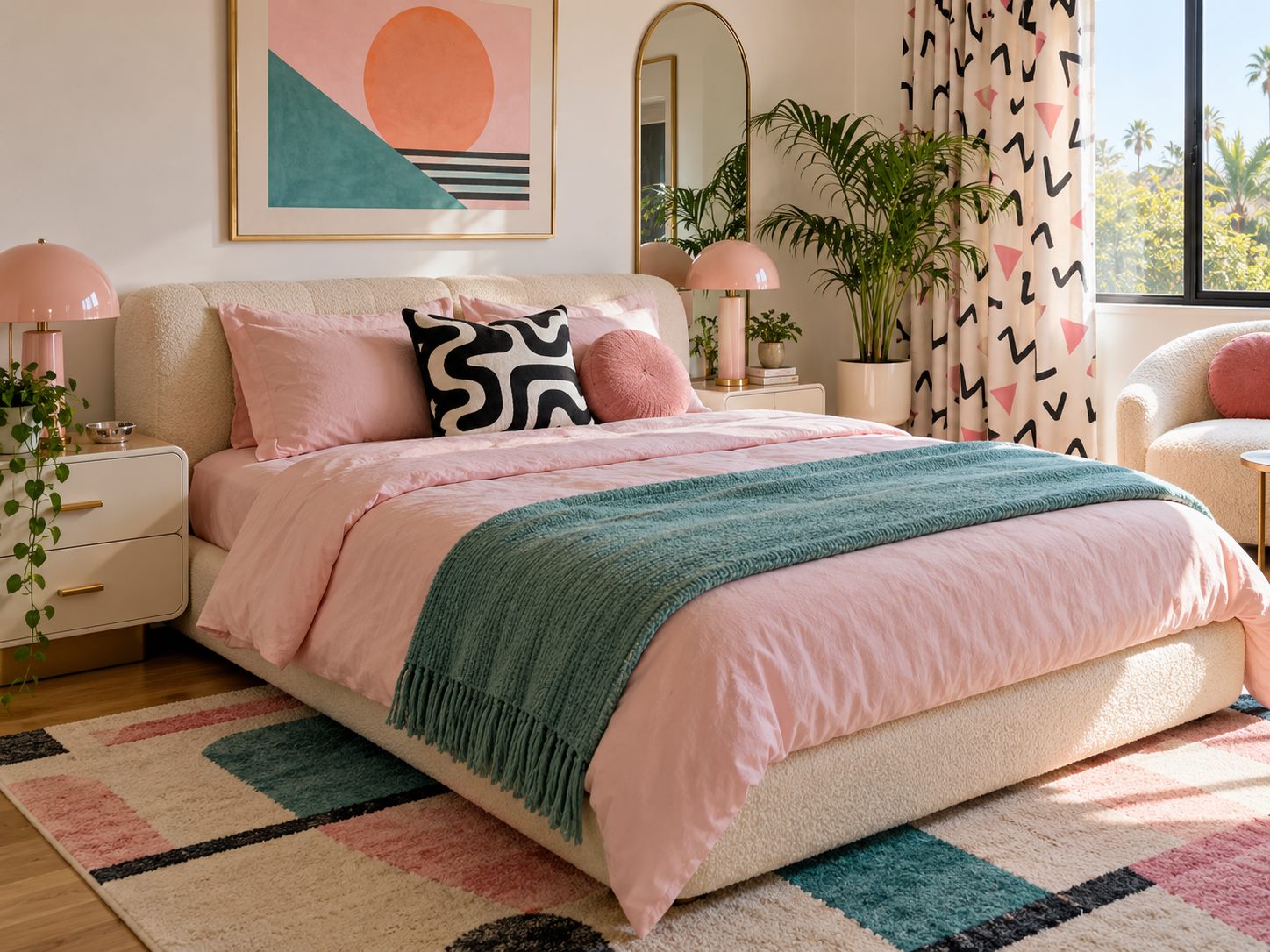
A graphic cushion can introduce contrast to pastel bedding. Choose one pattern with a clear scale, then keep adjacent cushions plain. A removable cover is useful for cleaning. Compare the print with existing curtains or rugs so the room has one dominant pattern rather than several equally demanding ones.
4. Place a Lacquered Nightstand Beside the Bed
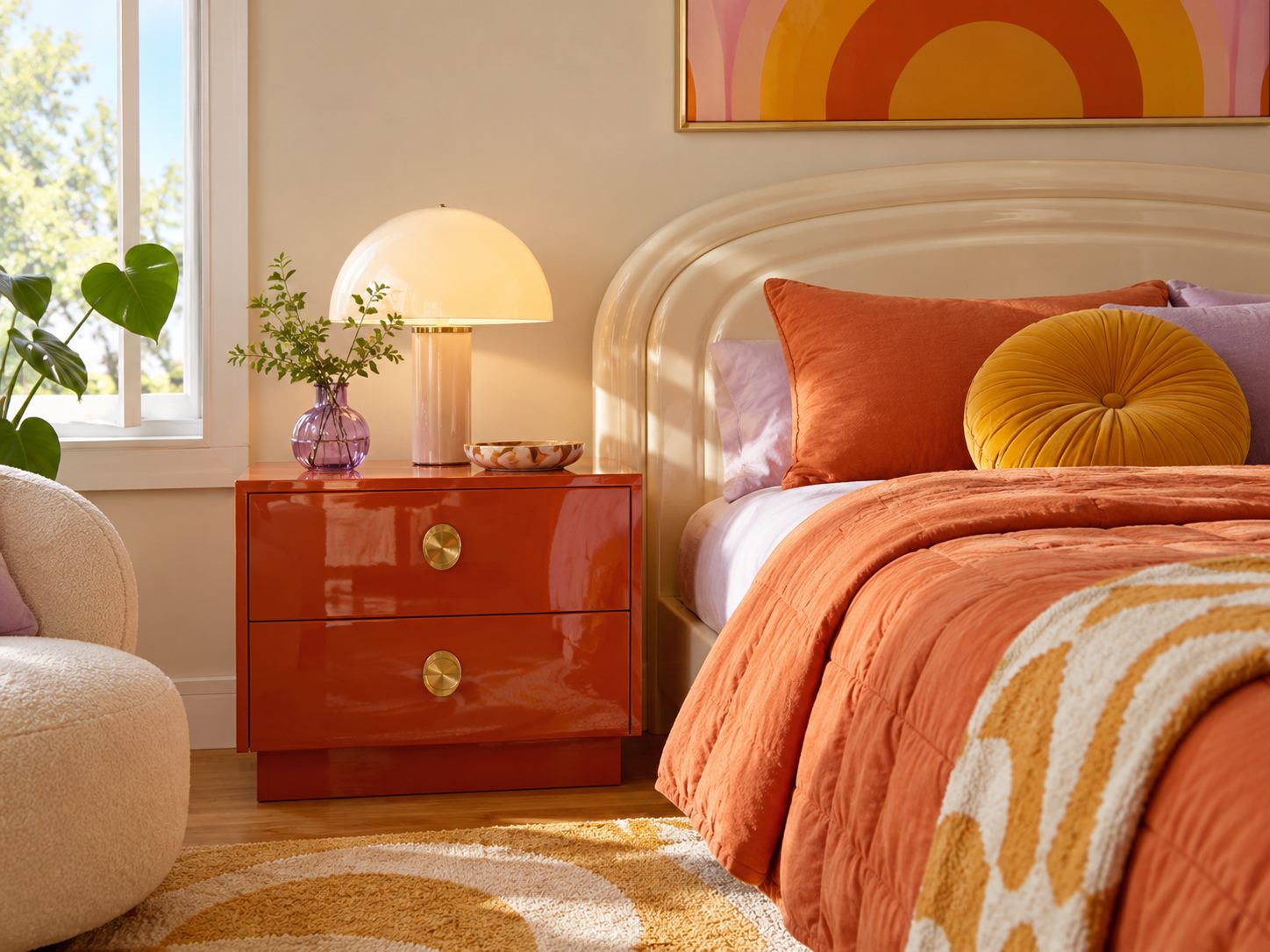
A glossy nightstand changes how light moves around the bed. Choose one with enough usable surface for your essentials and drawers if you need them. Keep the top lightly styled to show the finish. Check cleaning instructions, since some glossy coatings show scratches and react poorly to unsuitable cleaners.
5. Add a Sculptural Table Lamp
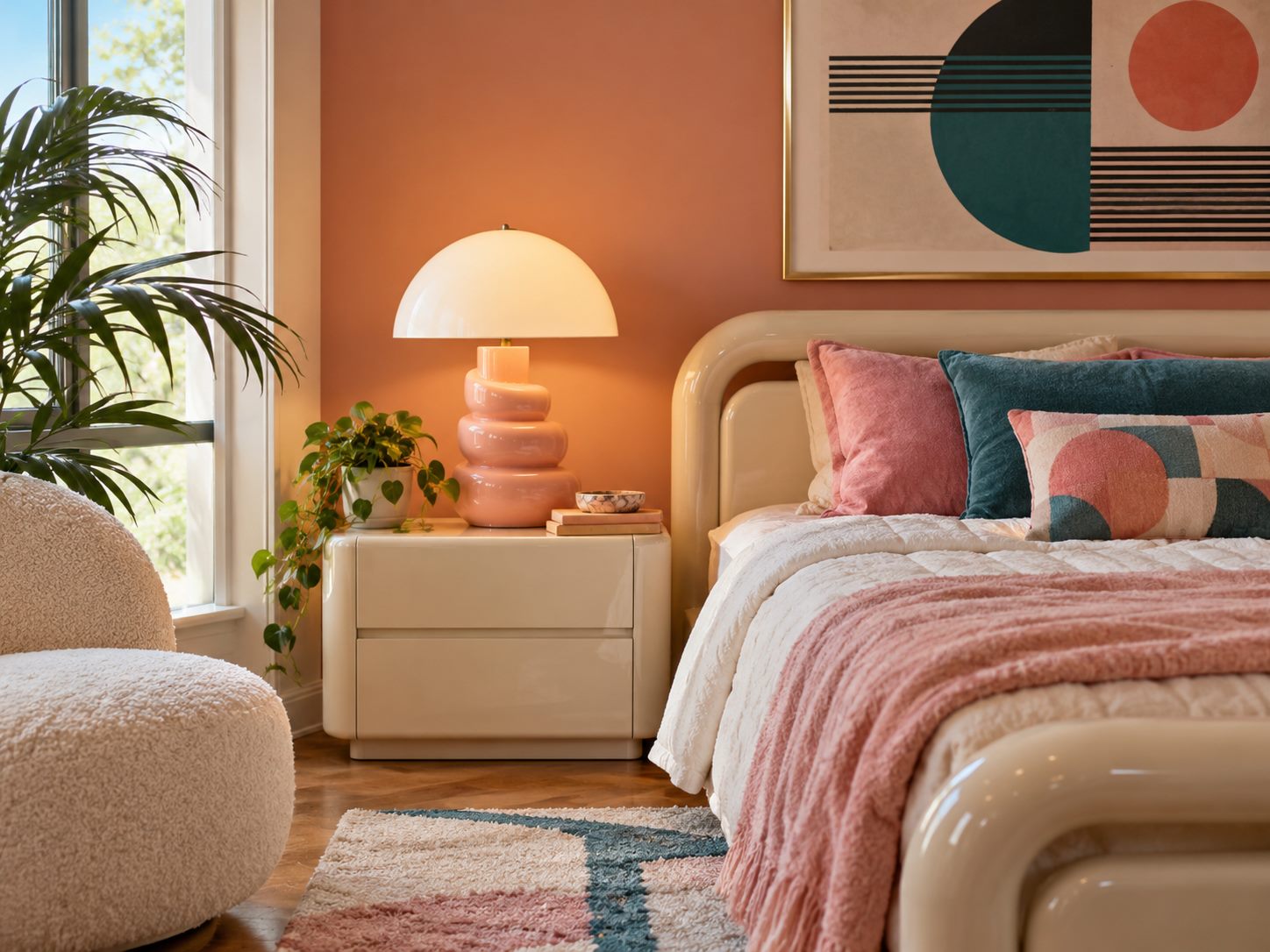
A lamp with a stepped or curved base makes a practical object part of the decoration. Check the shade hides the bulb from the bed and that the switch is easy to reach. Keep nearby fabrics clear and select a fitting that supports the light level you actually need.
6. Try a Narrow Peach Color Block
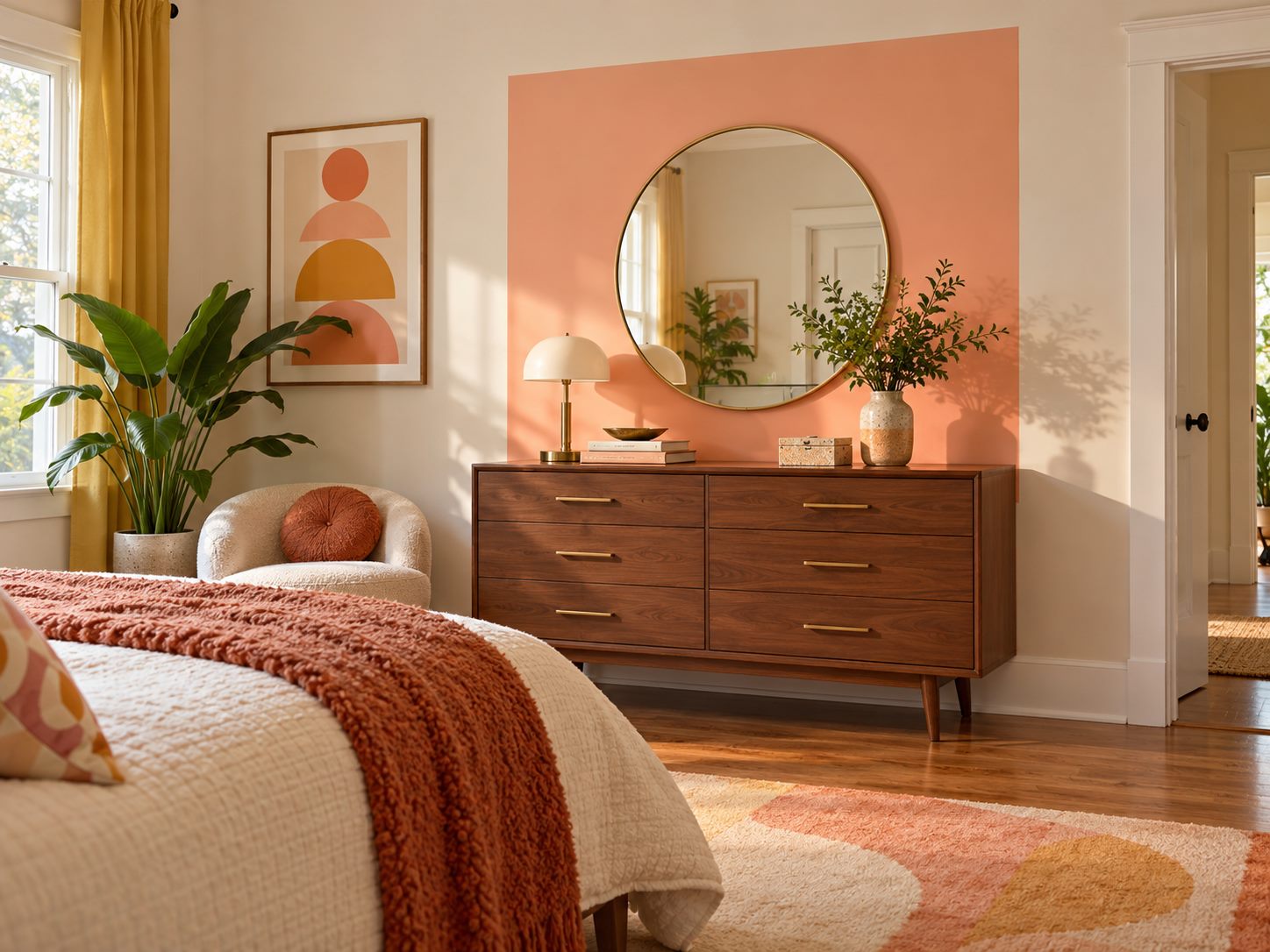
A peach rectangle behind a dresser can define the furniture without repainting the whole room. Use the dresser width and nearby trim to decide its size. Sample the color before committing and make the edges crisp. In a rental, use the same idea in a removable artwork instead.
For a practical foundation for the bedding, see our guide to layering a comfortable bed.
7. Use a Rounded Mirror Over a Dressing Table
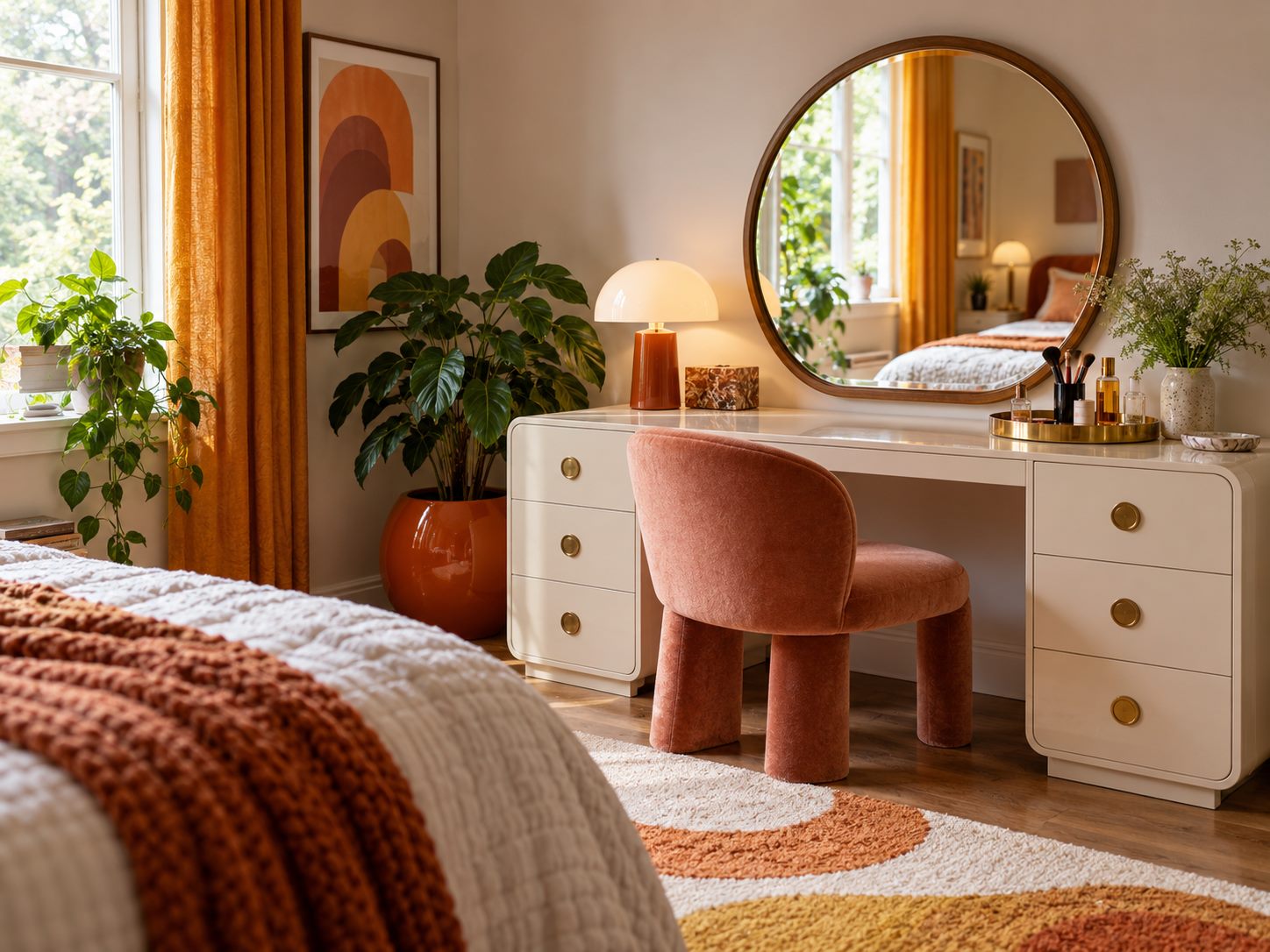
A rounded mirror softens a desk or dressing table with straight lines. Position it for a useful view while seated rather than centering it only for a photograph. Secure it according to its weight and the wall type, and keep makeup or everyday items contained in one washable tray.
8. Introduce a Checkerboard Rug at the Foot of the Bed
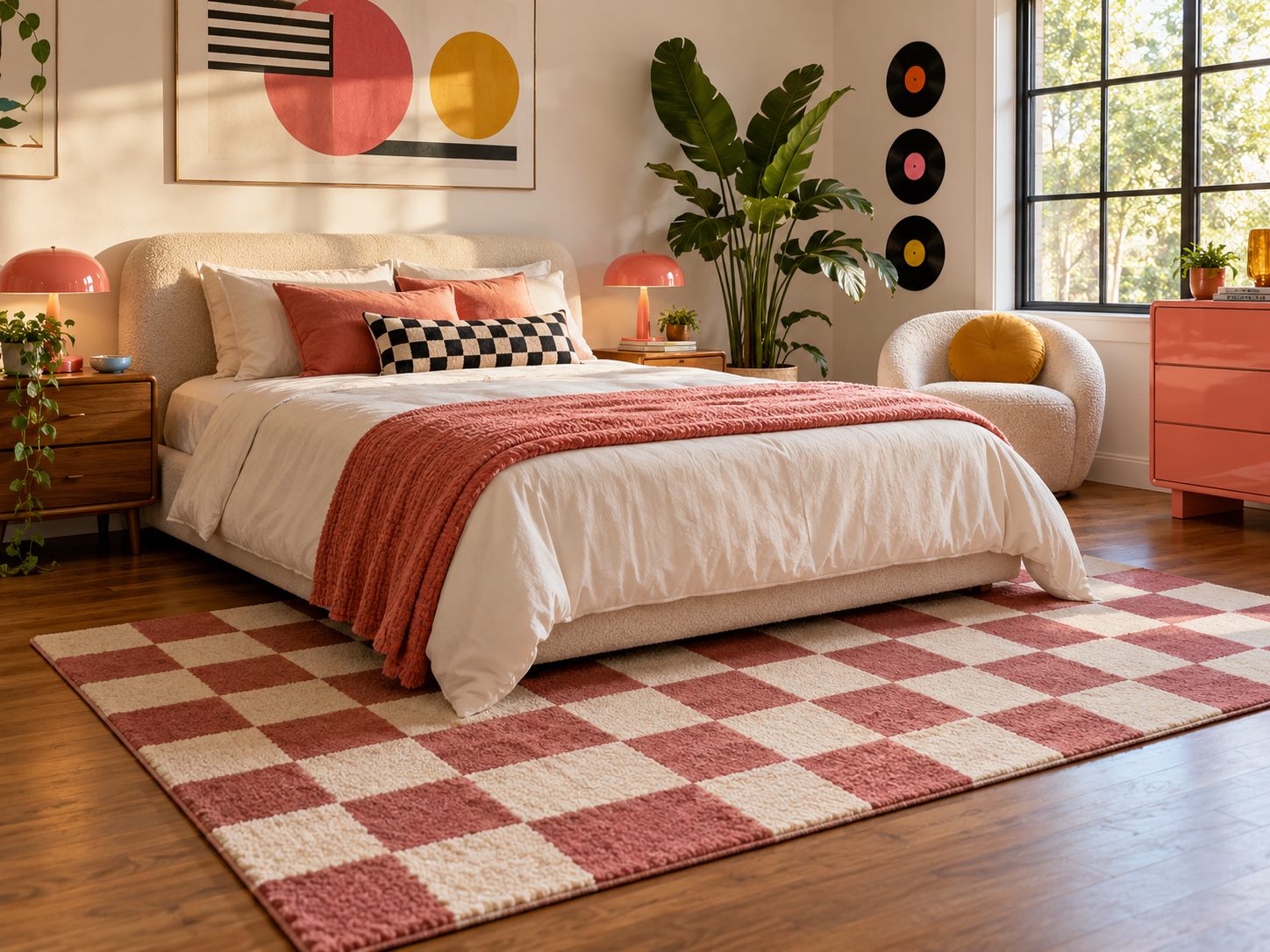
A checkerboard rug adds strong rhythm below otherwise simple bedding. Choose two colors already present in the room so the pattern feels connected. Check that its edges will not catch a door or interrupt the route around the bed, and use an appropriate nonslip underlay.
9. Make a Reading Nook with a Tub Chair

A compact tub chair gives rounded upholstery a role away from the headboard. Choose a size that leaves the window and storage accessible. A single floor lamp may be more practical than adding another table. If the bedroom is tight, keep the idea to the chair shape when replacing an existing seat.
10. Use a Clear Acrylic Tray on a Dresser
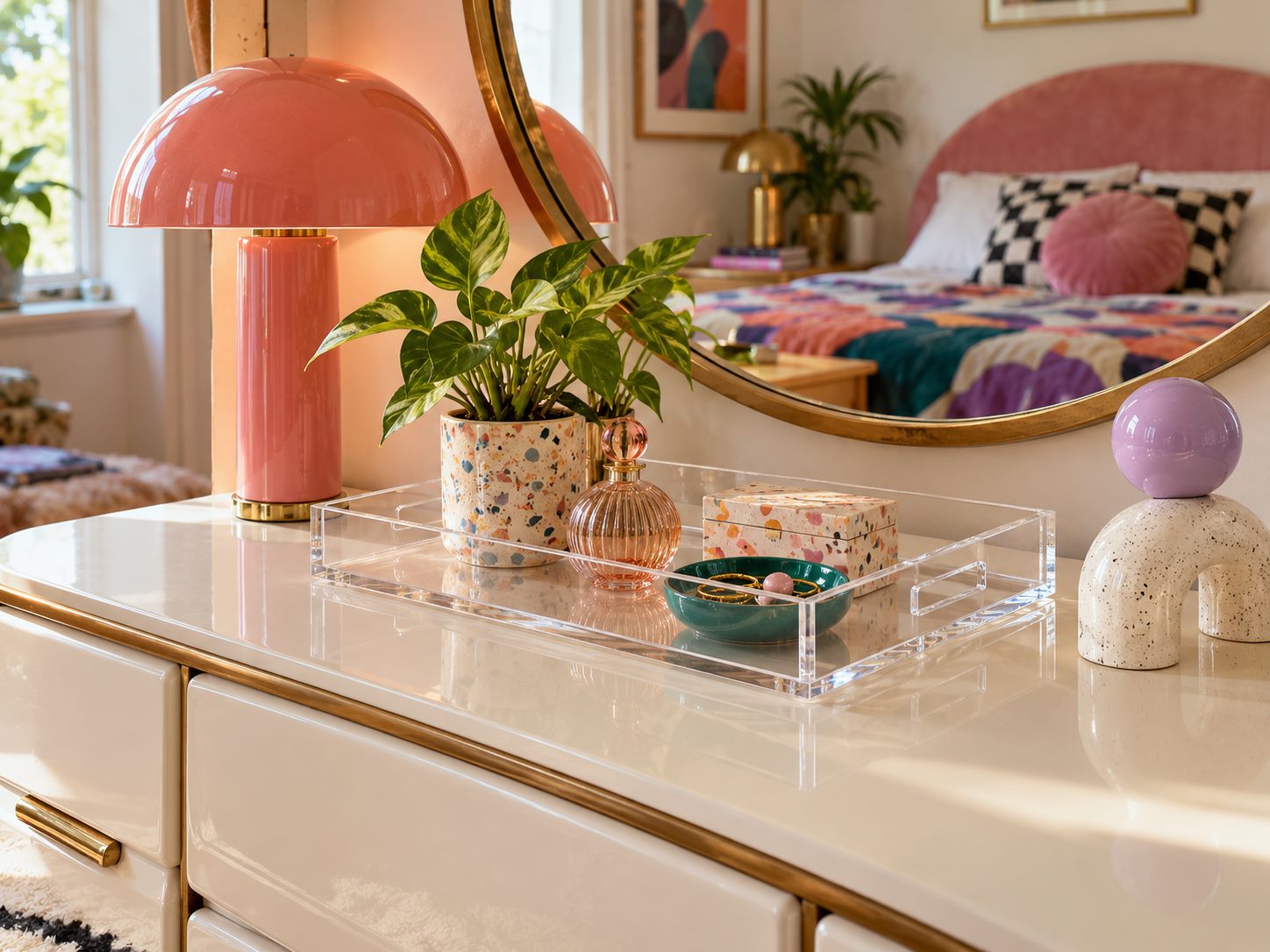
A clear tray can group small essentials without another opaque block of color. Keep the contents selective so the tray does not simply frame a pile. Check the material’s cleaning instructions and avoid placing it where strong heat could affect it.
11. Hang One Large Geometric Print
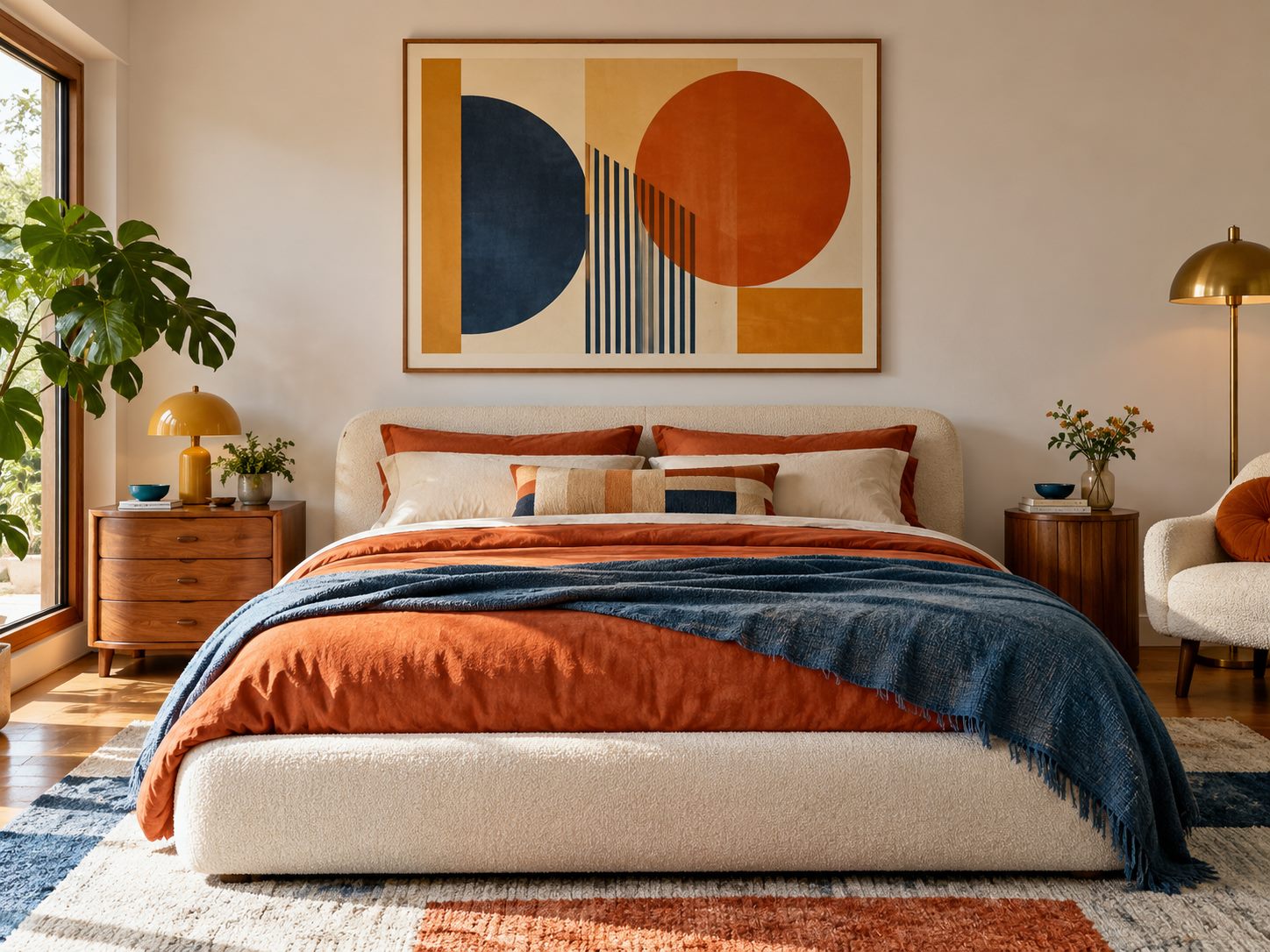
A large print can provide a focal point in a bedroom with plain walls. Choose an original or properly licensed design and pull one of its colors into the bedding. Leave enough surrounding wall for the graphic shape to stand out, and use suitable fixings for the frame.
12. Choose a Pale Blue Bedspread with a Simple Edge
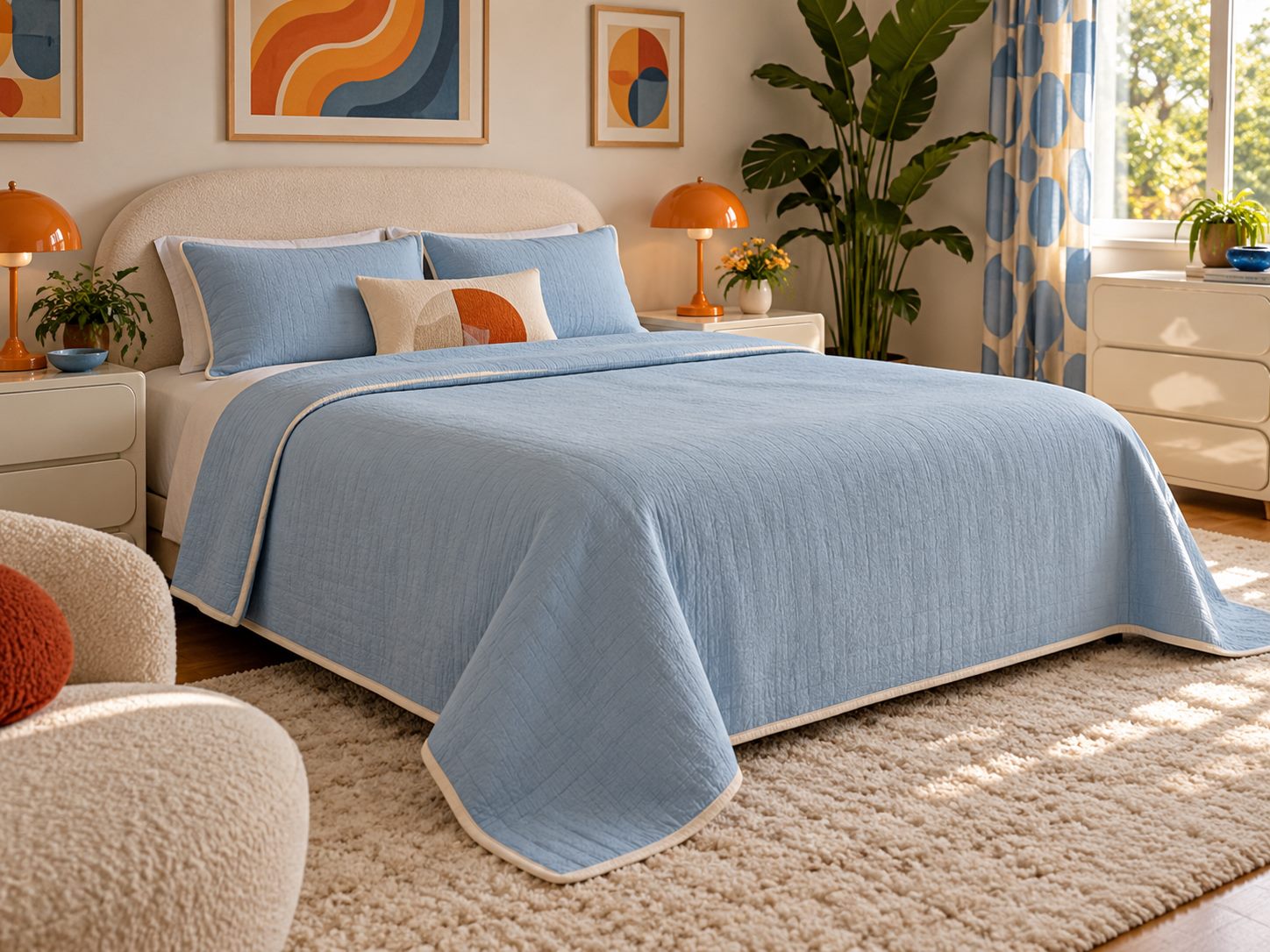
A pale blue cover offers color across the largest soft surface in the room. A contrasting bound edge can add definition without another printed pattern. Check the fabric weight and care instructions before buying. Keep the pillow arrangement simple so the clean outline remains visible.
For ideas that support a compact layout, explore our small-space decorating guides.
13. Use a Ribbed Glass Vase on a Stable Shelf
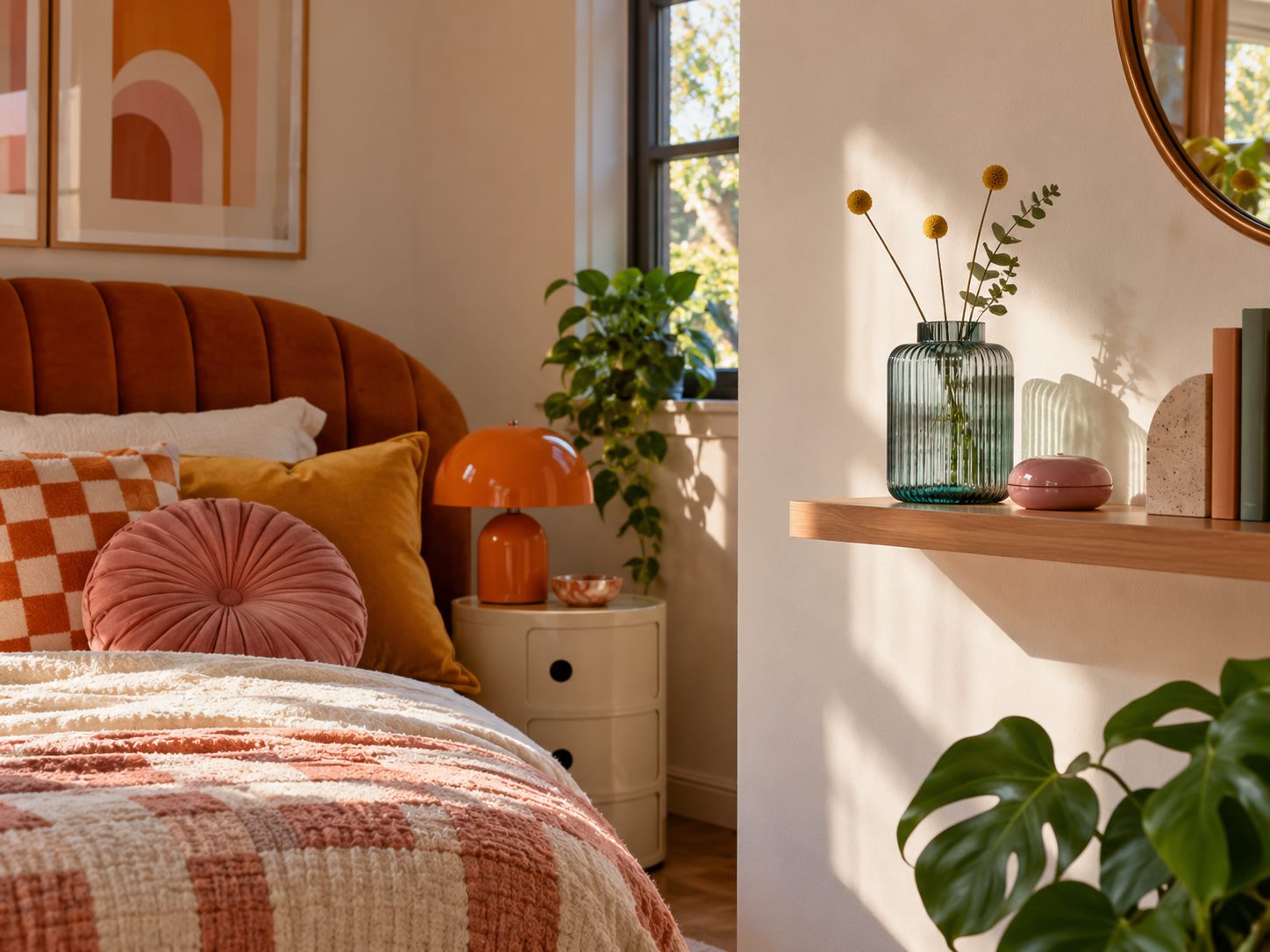
Ribbed glass adds a subtle pattern through texture. Place one vessel where light can reveal its surface, away from the bed’s active edge. Keep the shelf securely fixed and avoid overloading it. A few lightweight stems are enough; the vase does not need a full arrangement.
14. Bring a Chrome Detail into a Warm Palette
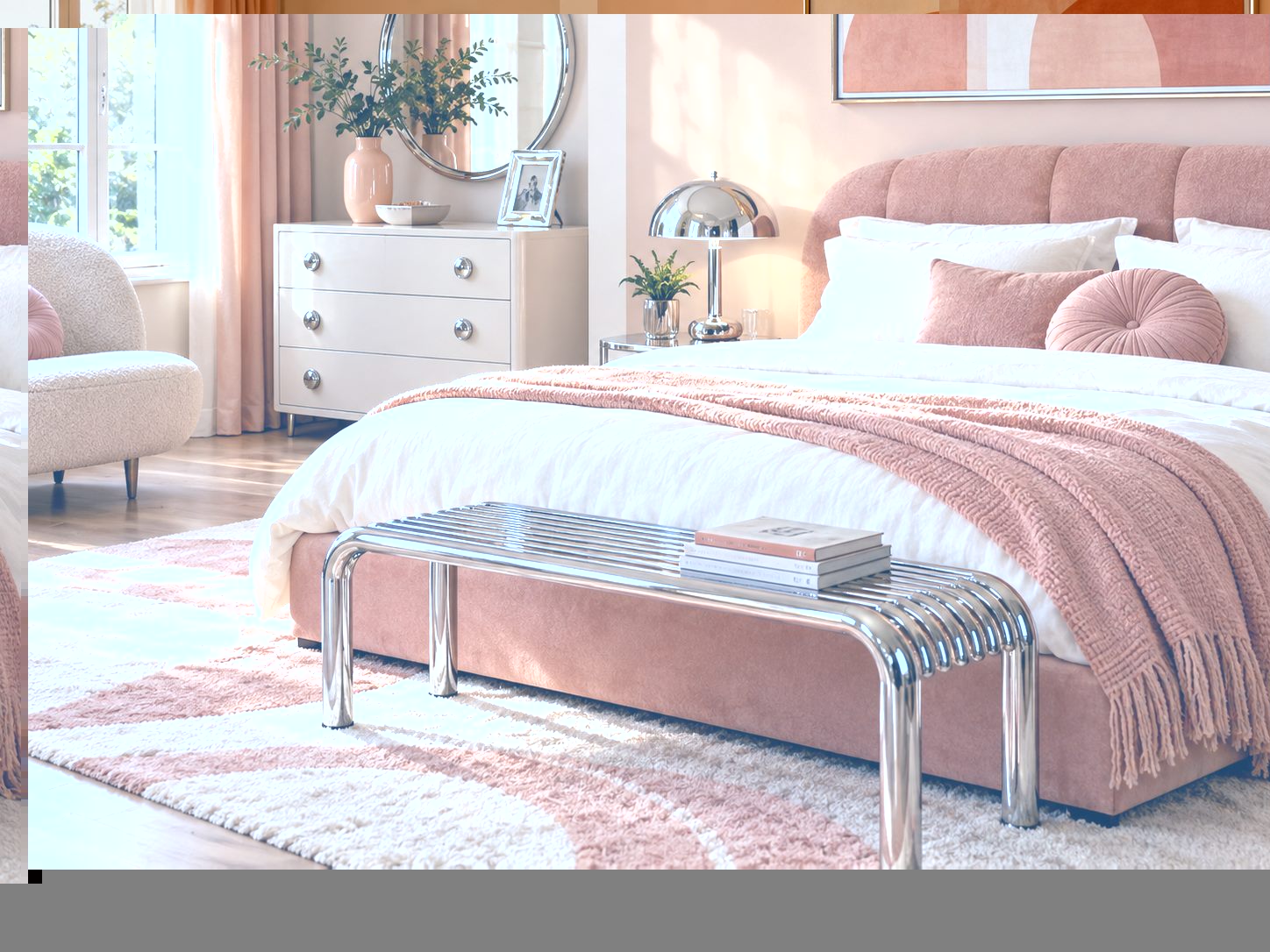
A small chrome lamp or frame can sharpen peach and cream tones. Repeat it sparingly, especially if the room already has several shiny surfaces. Choose a useful object rather than an extra ornament, and check that reflections do not create glare from the bed.
15. Use a Low Upholstered Bench
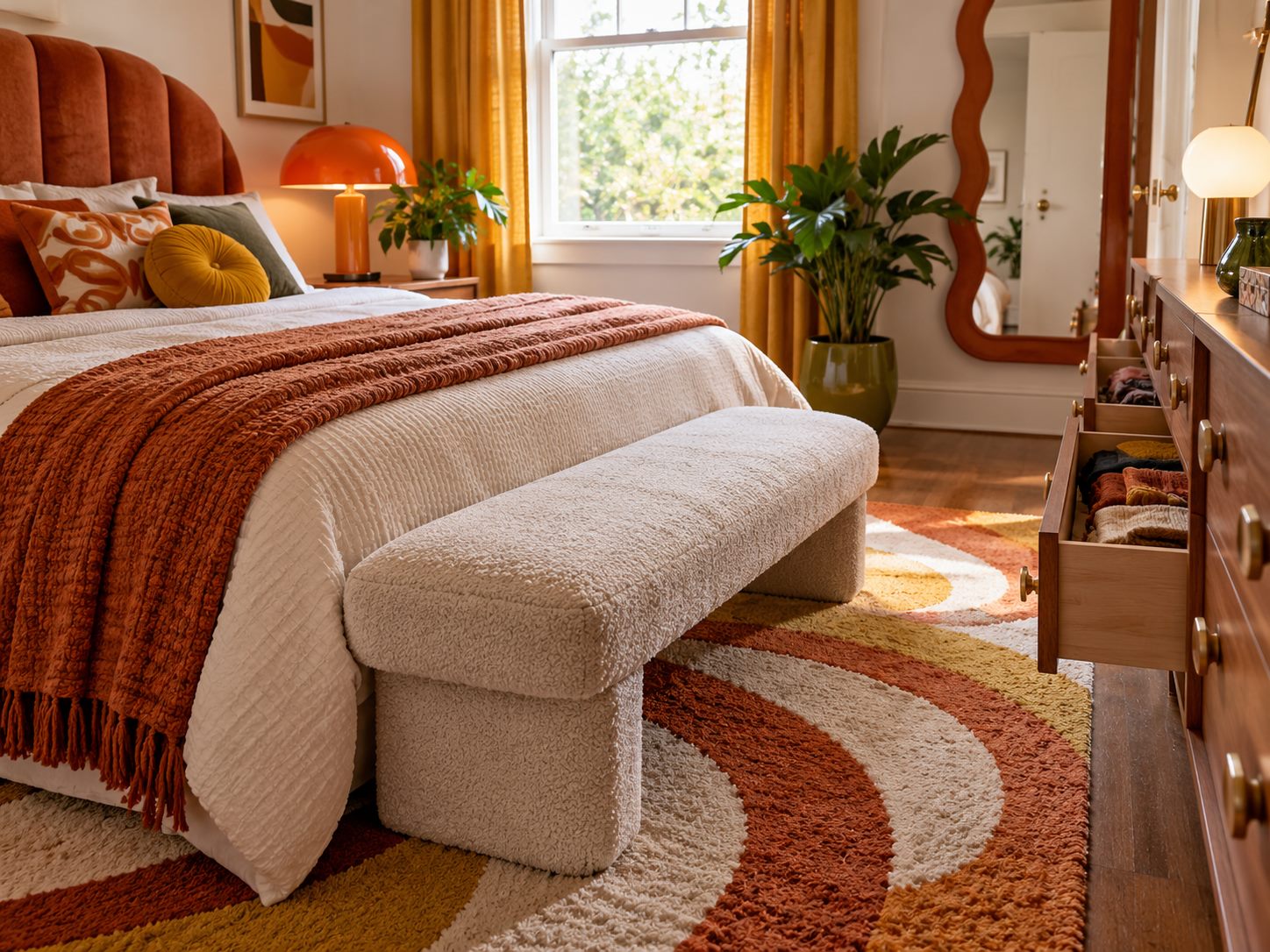
An upholstered bench gives you a place to sit while dressing and repeats the bed’s softness. Measure the route between it and nearby storage with drawers open. Choose a durable fabric and a stable base. In a small room, a shorter bench to one side may work better than a full-width piece.
16. Balance Floral Curtains with Plain Furniture
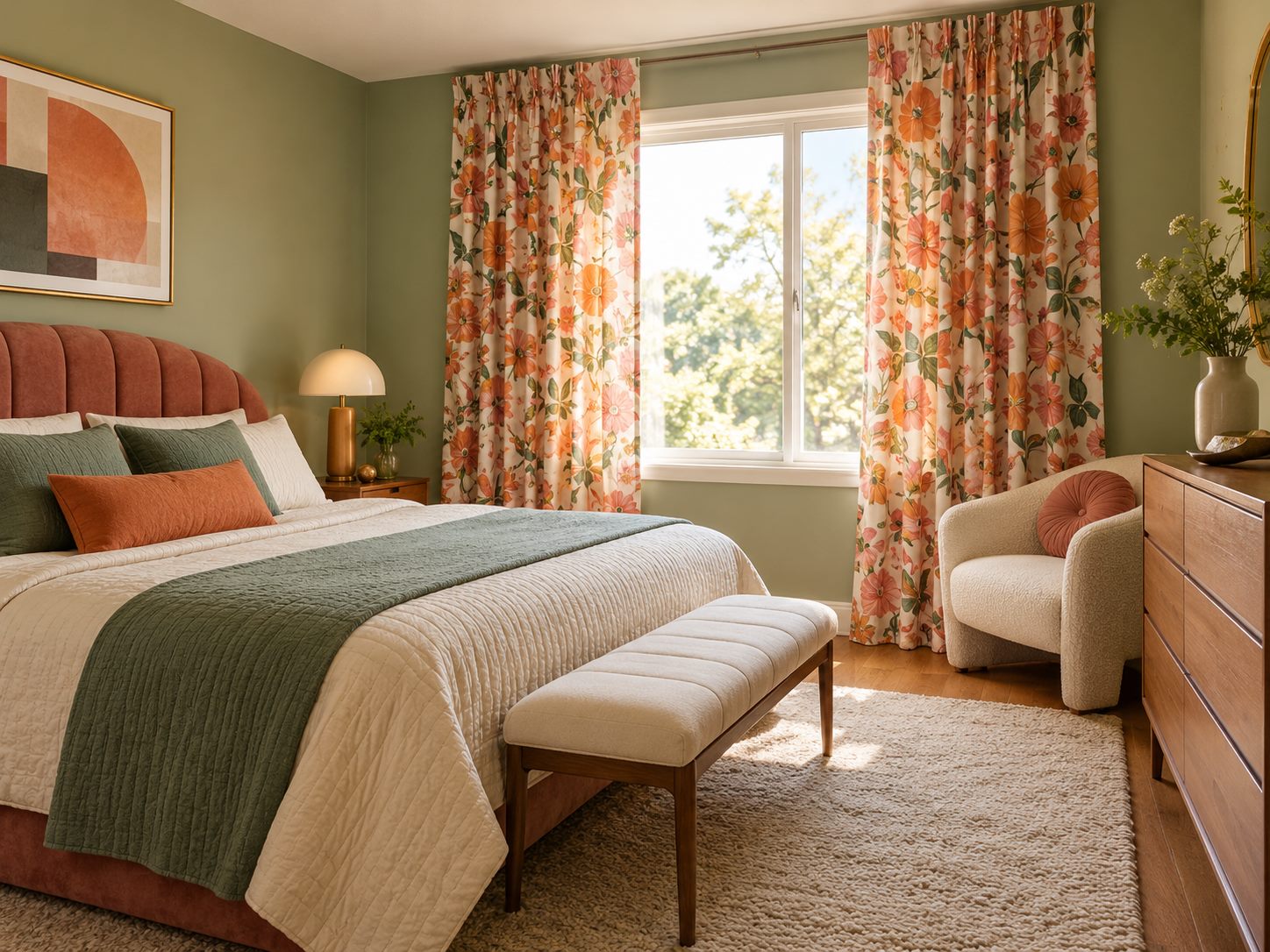
A floral window treatment offers a softer version of an expressive bedroom. Let the background color connect with the walls or bedding, then keep furniture finishes simple. Consider how the print looks when the curtains are both open and closed, since the amount of visible pattern changes.
17. Give the Desk a Colorful Pegboard
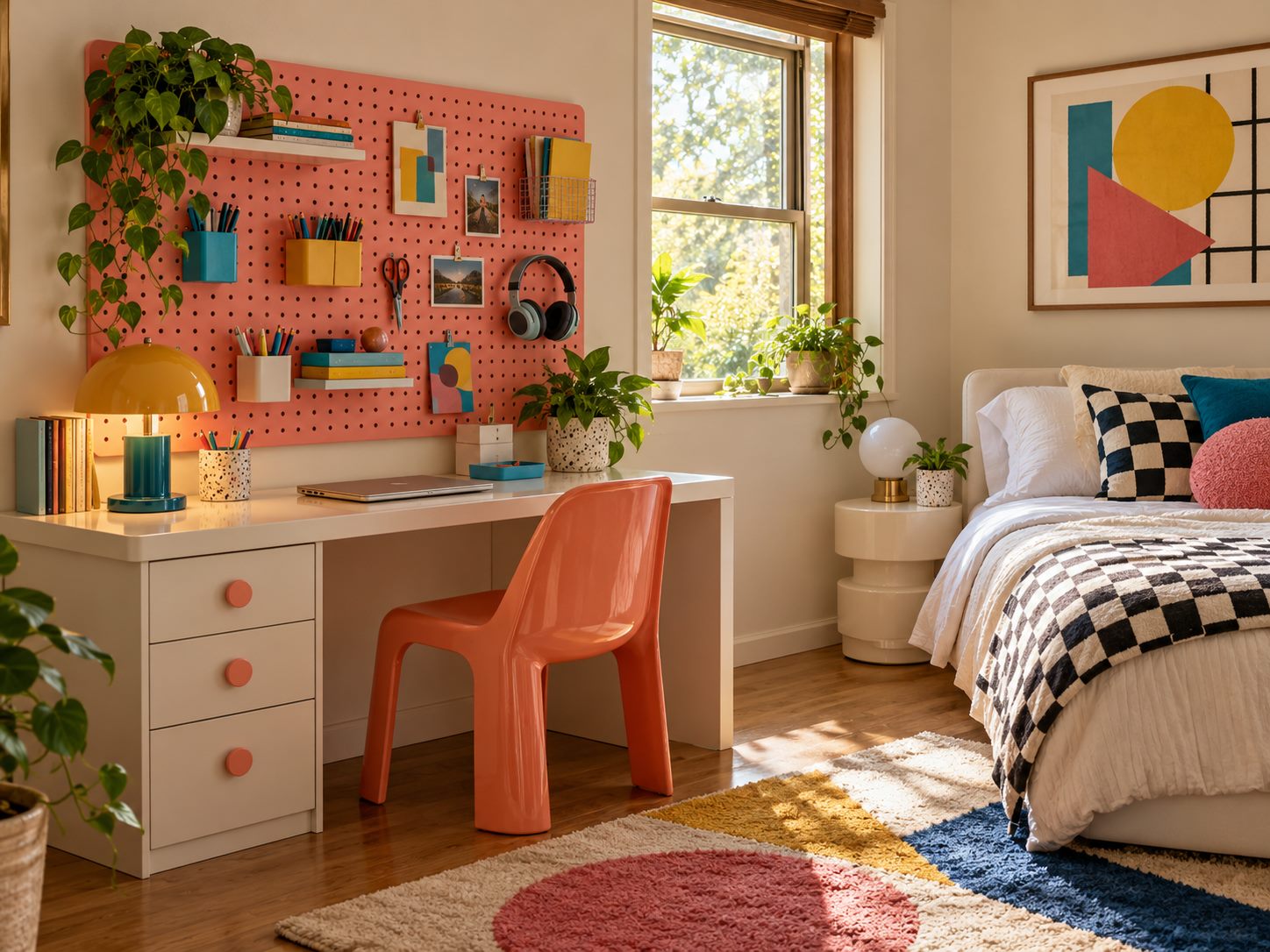
A painted pegboard can organize lightweight stationery while introducing a controlled block of color. Use compatible fittings and observe the board’s load guidance. Keep frequently used items within reach, and avoid turning the whole wall into a display if the bedroom also needs to feel calm at night.
Frequently Asked Questions
What is the easiest 80s bedroom update?
Try one curved lamp, a pastel textile, or a bold print. Choose something that works with your current furniture before adding a second feature.
Can an 80s bedroom still feel calm?
Yes. Keep the main surfaces plain and use a limited palette. A room can suggest the style through shape without relying on intense color.
Do I need neon lighting?
No. Sculptural lamps and graphic fabrics can provide a playful mood with ordinary task lighting. Choose fixtures for comfort and safe use.
Which pastel colors go together?
Peach with cream, mint with warm white, or pale blue with blush are possible starting points. Test samples together under your room’s lighting.
How do I mix graphic and floral patterns?
Give one pattern more space and let the other appear in a small amount. A shared color and a plain layer between them can help the combination settle.
Related Decorating Guides
- 17 70s Bedroom Decor Ideas for Warm, Relaxed Rooms
- 17 90s Bedroom Decor Ideas with a Softer Finish
- 17 Bedroom Color Combos with Clear Ways to Use Them
Conclusion
Pick one playful shape or color combination and give it enough space to work. The strongest scheme is often a comfortable bed, useful storage, and two or three expressive details. Save a few options, compare them with your room, and build from the piece you like most.
Browse more palettes and furnishings in our bedroom collection.