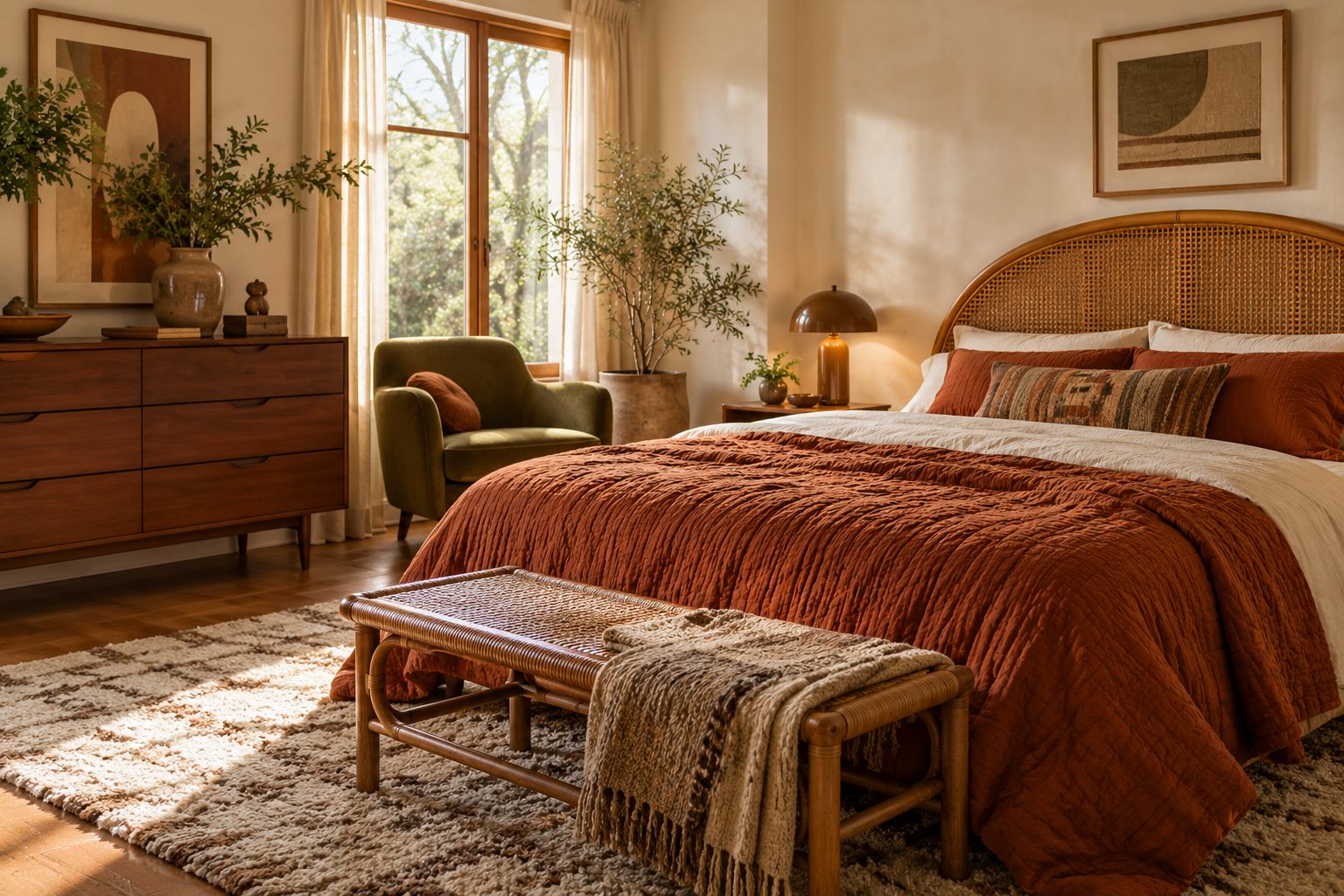
A 70s-style bedroom works best when earthy color and tactile materials support a room that is easy to live in. You can explore the look through a rattan headboard, a patterned cover, or one warm wooden cabinet without replacing every piece. These 70s bedroom decor ideas range from small textile changes to stronger furniture choices. Start with the element you already own that feels closest to the mood, then add one contrasting texture. Keep your sleeping surface, storage access, and nighttime lighting practical as the scheme develops.
Key Takeaways
- Let a warm wood tone connect furniture that does not match.
- Use one strong retro print rather than several equally busy patterns.
- Choose washable layers and useful lighting before decorative extras.
1. Make a Rattan Headboard the Main Feature
The open weave of a rattan headboard brings texture without a solid block of furniture. Place it against a quiet wall and use plain pillowcases so the woven detail remains visible. Check the mounting method and bed fit before ordering; some designs attach to a frame while others require wall support.
2. Use Rust Bedding with Cream Sheets
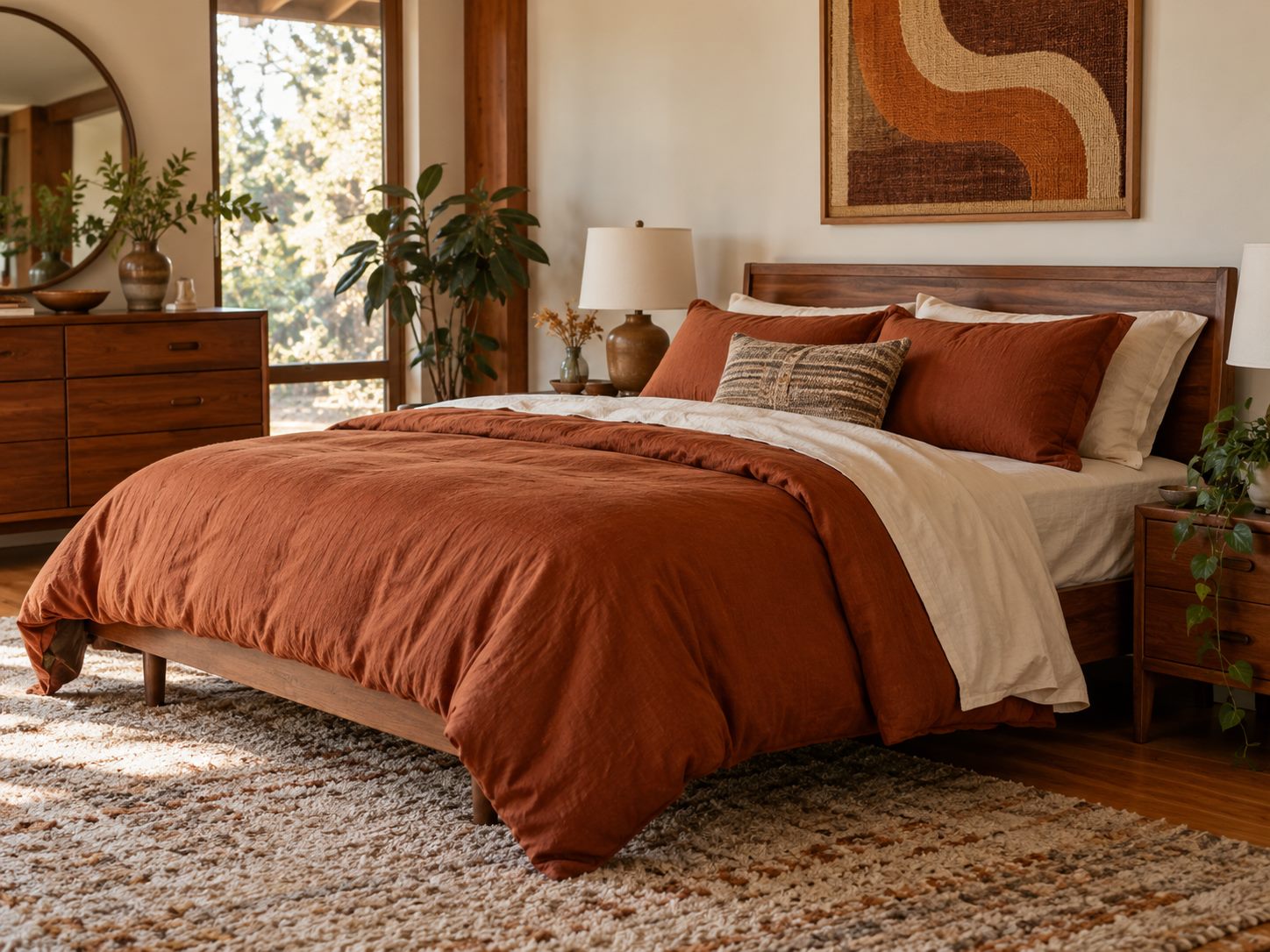
Rust gives the bed a warm center while cream keeps the palette from becoming too dense. Choose the rust layer in a fabric weight appropriate to your climate. Fold it back to show the lighter sheets, and keep additional cushions restrained so the color combination stays clear.
3. Place a Low Walnut Dresser Along One Wall
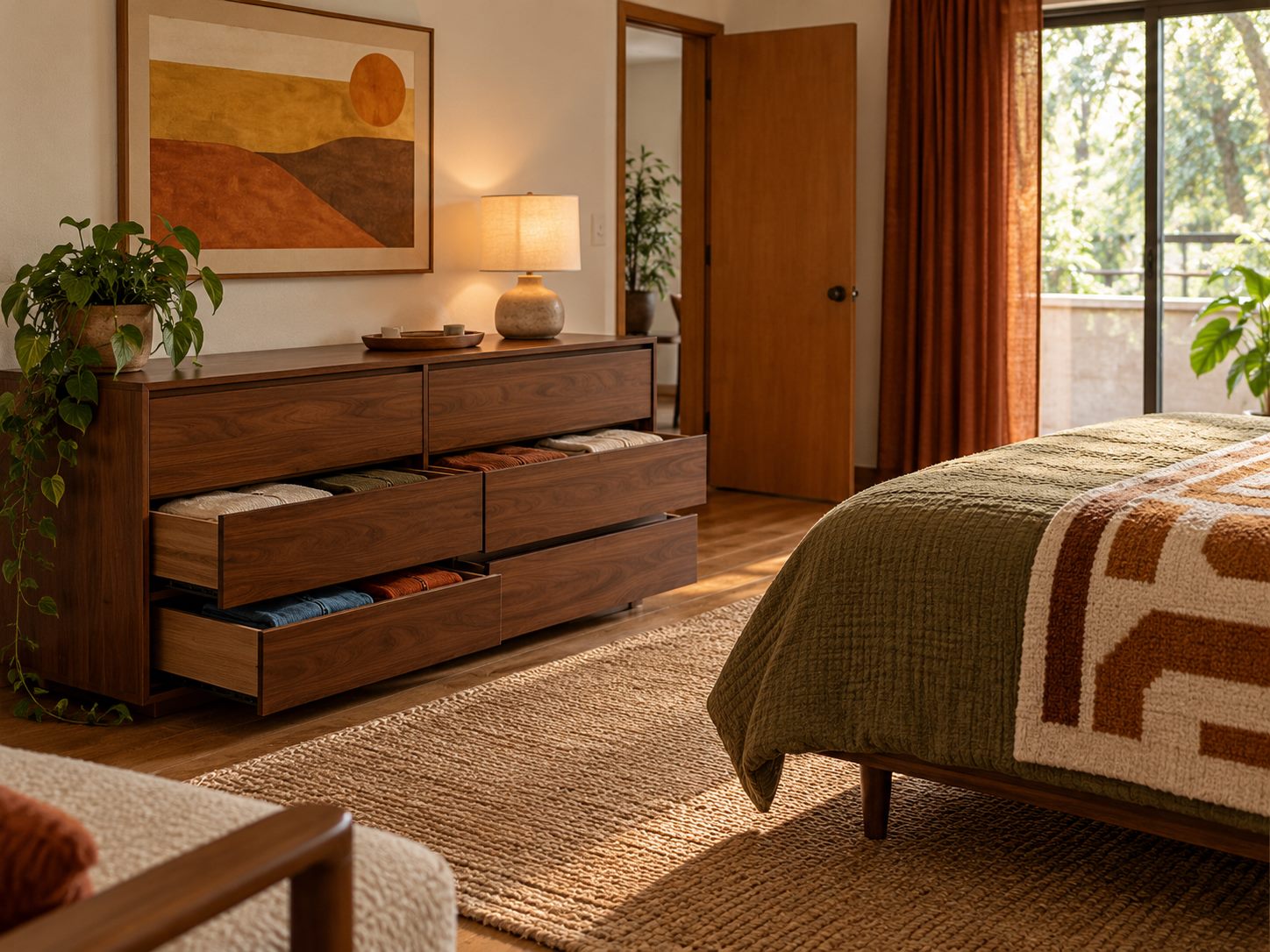
A low dresser gives folded clothes a home while providing a long horizontal line. Check the footprint with its drawers open and keep nearby circulation clear. Anchor storage furniture according to its instructions. One lamp and a small tray are enough to finish the top without covering usable space.
4. Hang a Woven Textile Beside the Bed
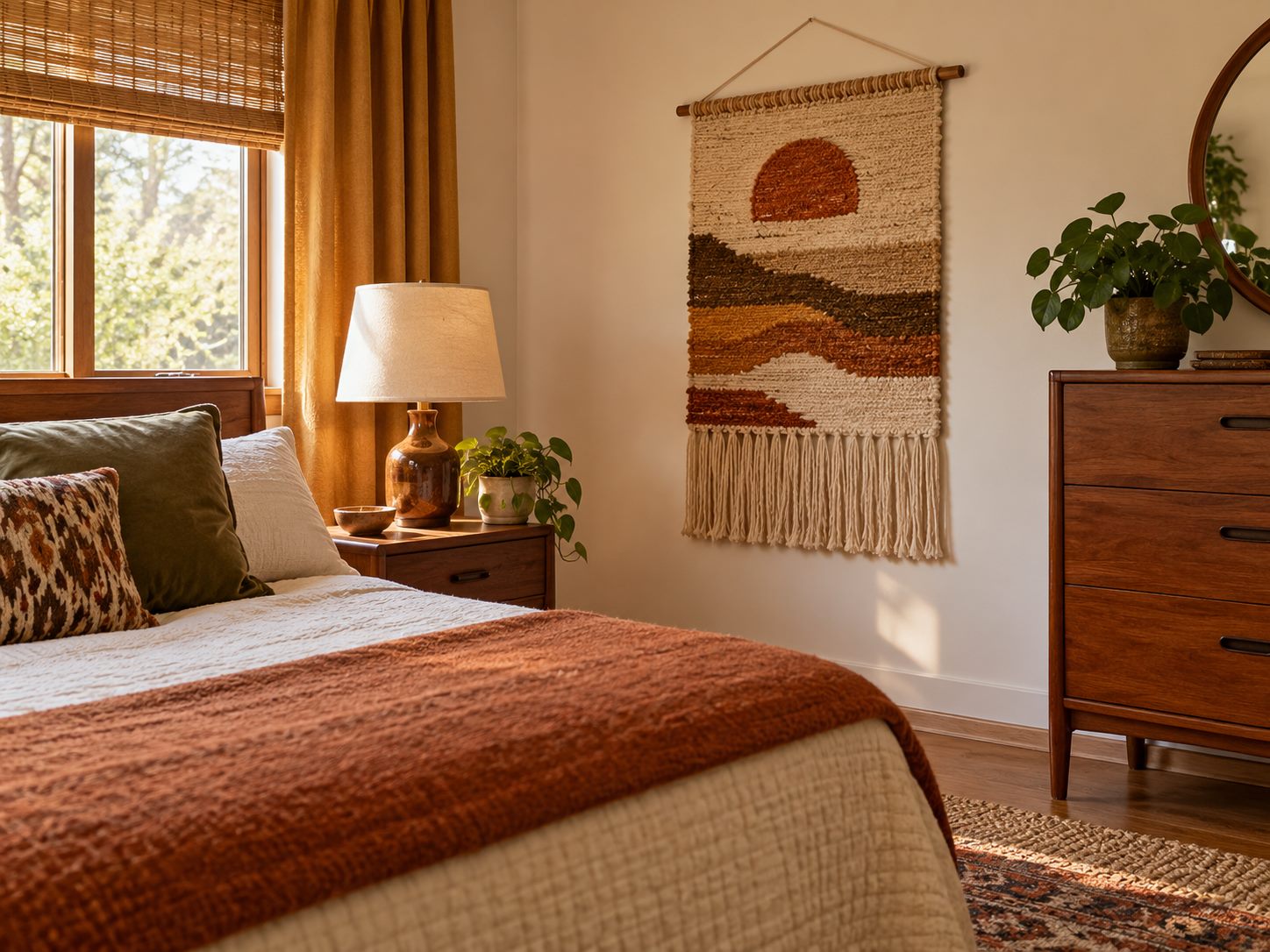
A woven wall piece can soften a blank side wall without introducing more framed artwork. Choose a size that fits between furniture and trim rather than filling the entire wall. Keep loose fibers clear of lamps and heaters, and use a secure hanging method suited to the textile’s weight.
5. Try an Olive Reading Chair
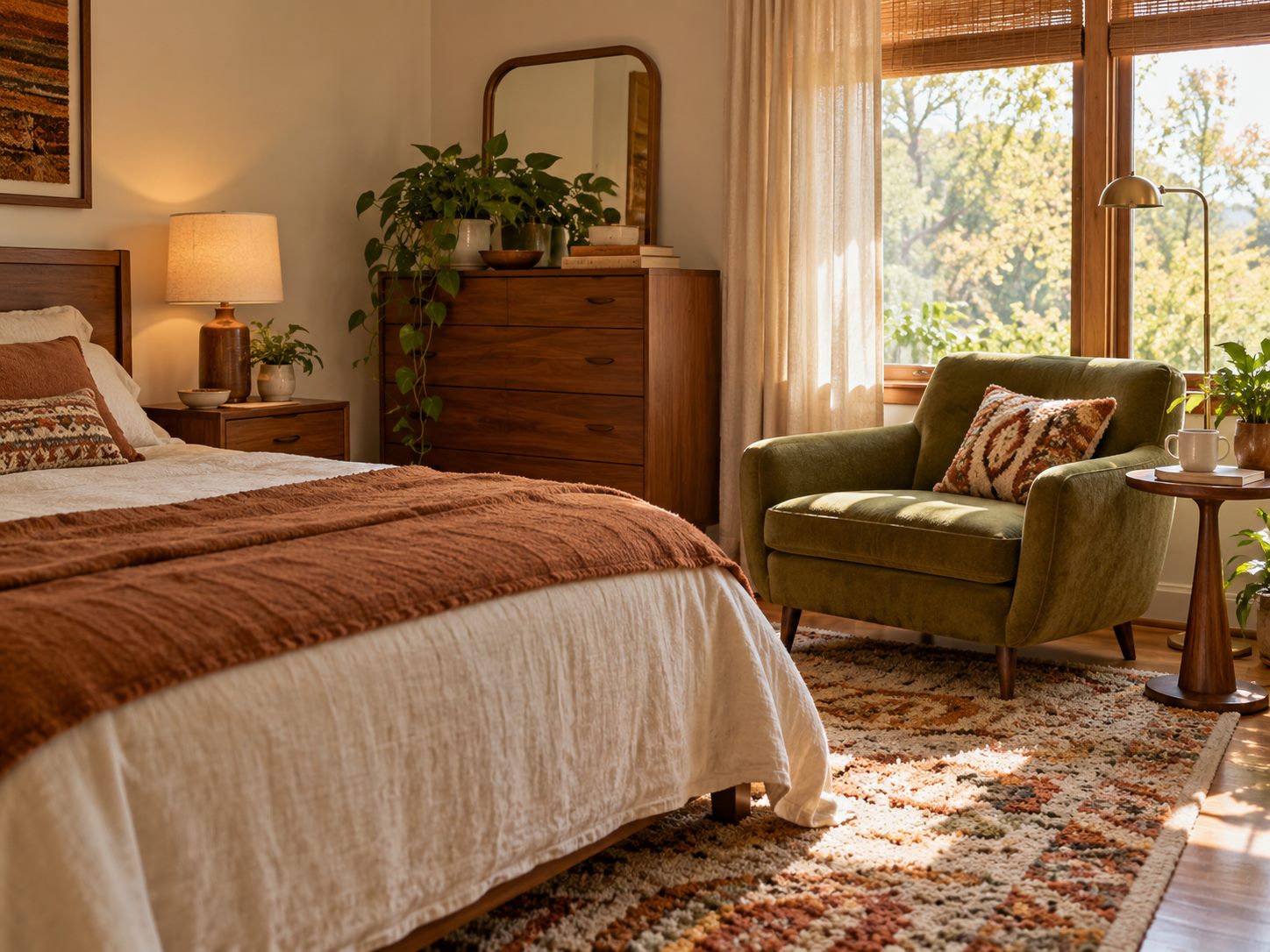
A small olive chair creates a second place to sit without turning the bedroom into another living room. Put it where it receives useful light and add a stable side table only if there is space. If it becomes a clothes pile, move laundry storage closer to the place you change.
6. Bring in an Amber Glass Vase
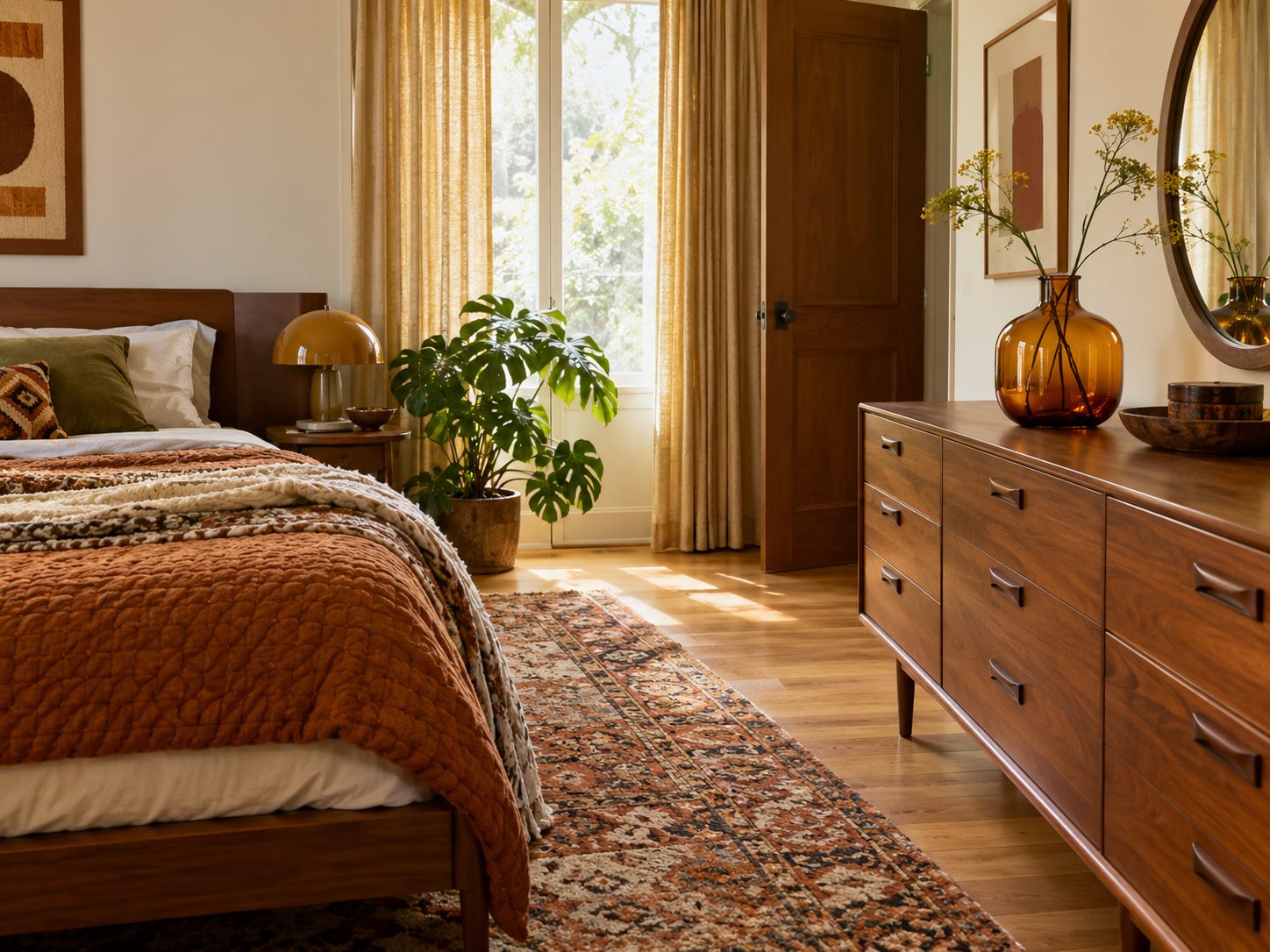
An amber vessel adds warmth to a dresser or shelf even when it is empty. Keep it away from edges and use only a few stems so its shape remains legible. A closed cabinet is a better location than a narrow bedside ledge if the room has an active route around the bed.
For a practical foundation for the bedding, see our guide to layering a comfortable bed.
7. Choose a Broad Stripe for a Single Pillow
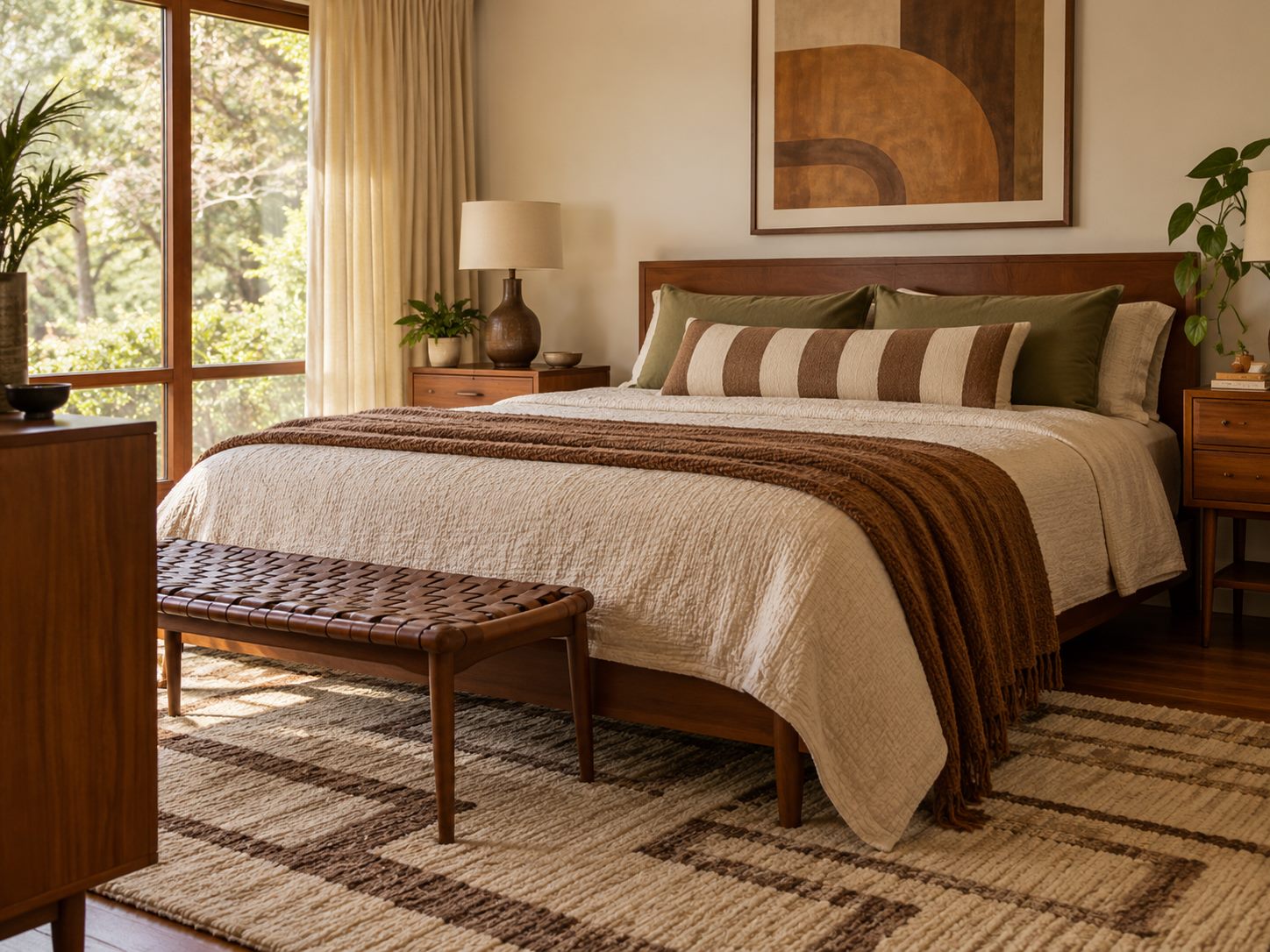
A broad cream-and-brown stripe can suggest the era without overwhelming the bed. Use one long pillow instead of a stack of small patterned cushions. Compare the stripe with any existing rug, and choose a different scale so the two patterns do not appear to compete.
8. Replace a Busy Bedside Table with a Wooden Stool
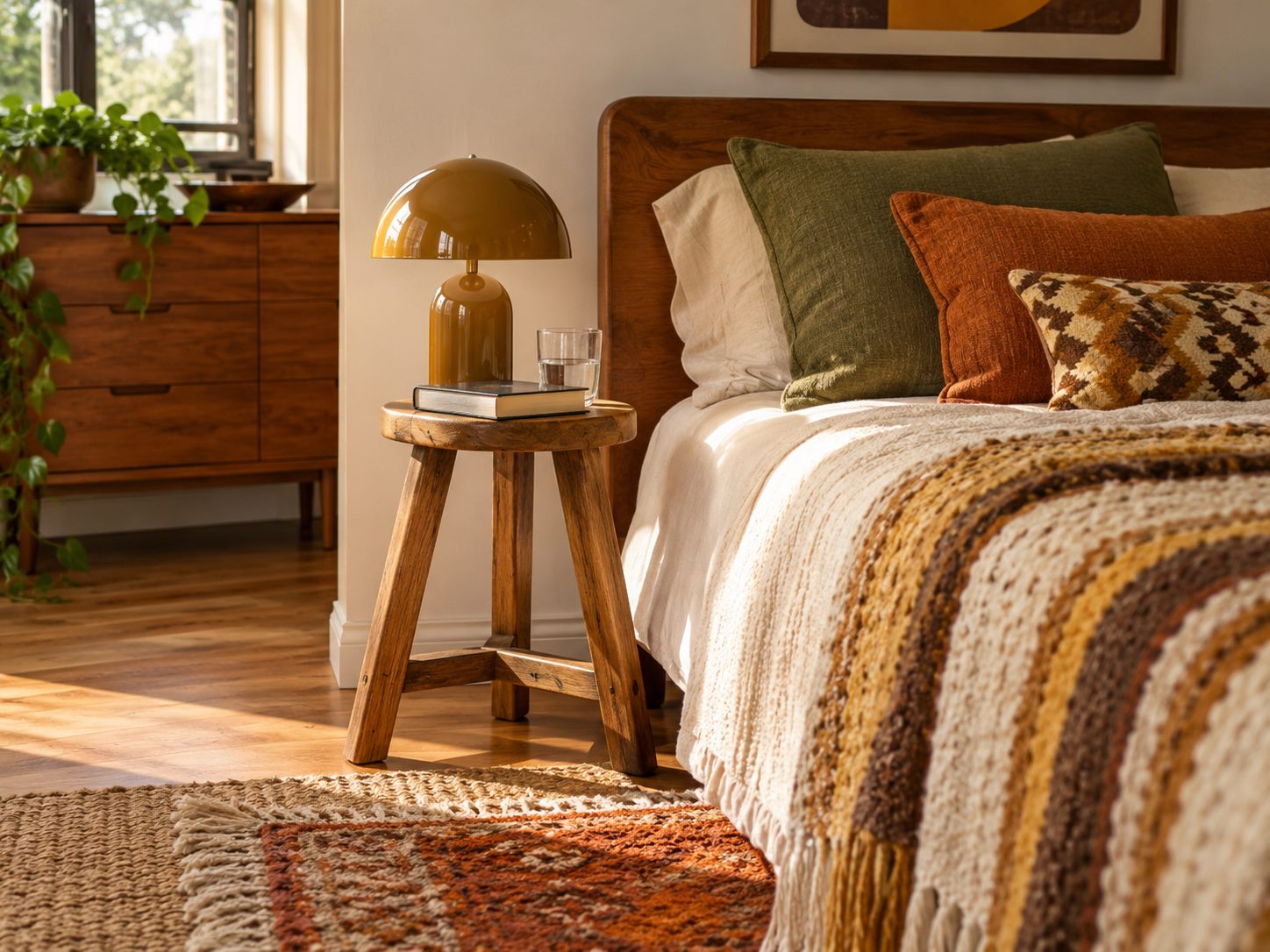
A stable wooden stool can hold a book and water when storage is provided elsewhere. Check its top is level and large enough for your real essentials. Do not rely on a decorative stool with a narrow or uneven surface for a fragile lamp.
9. Use a Mushroom-Shaped Bedside Lamp
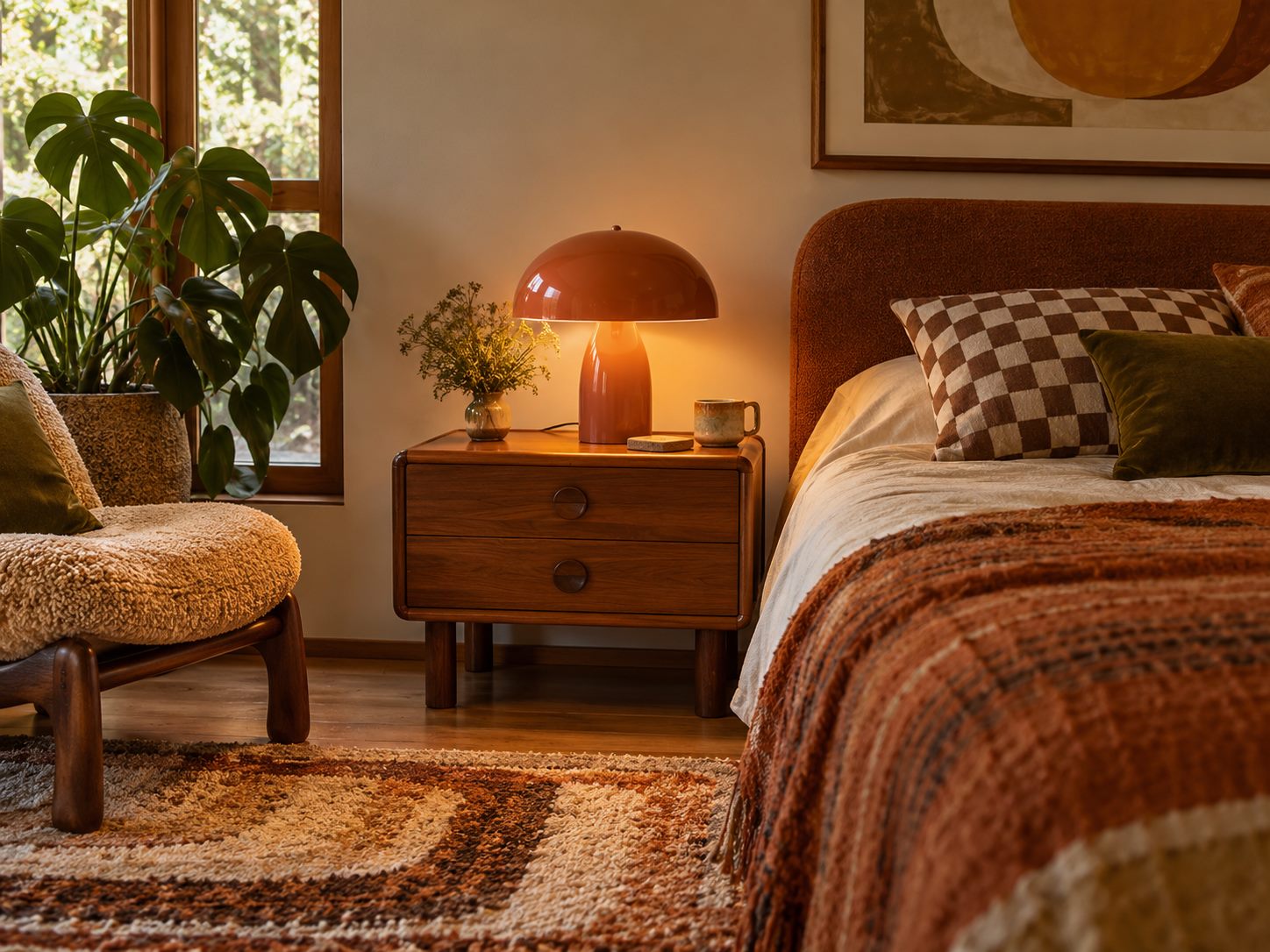
A rounded lamp makes a simple nightstand feel more sculptural. Select a shade that hides the bulb from your usual lying and sitting positions. Keep the switch easy to reach and route the cable away from feet. Follow the fitting’s bulb limits rather than choosing solely by appearance.
10. Add a Small Patterned Rug Beside the Bed
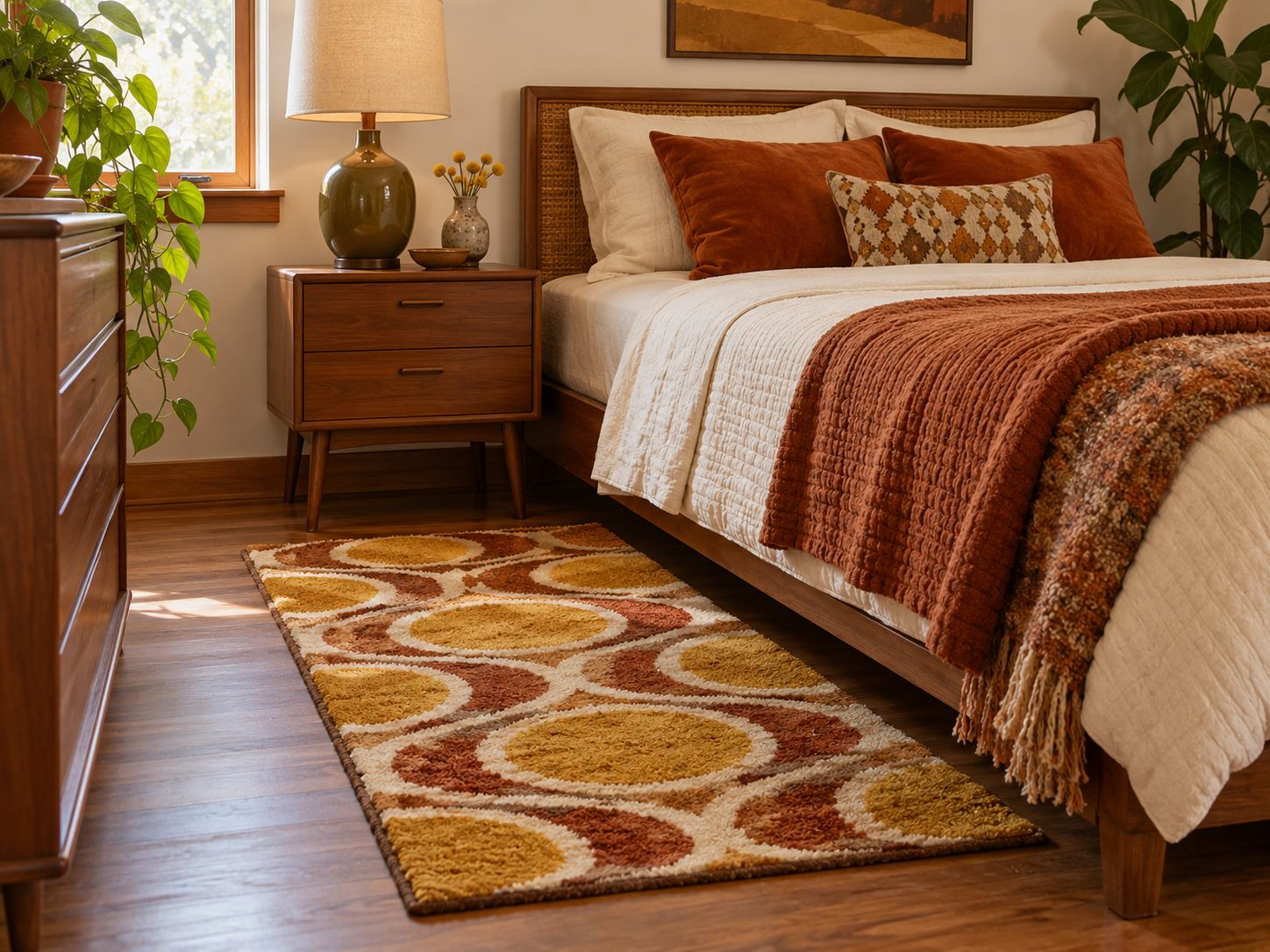
A bedside rug can introduce a retro pattern without committing to wall-to-wall carpet. Check that the edge does not create a trip point where you step out of bed. A suitable rug pad helps keep it in place, and washable or easy-care materials suit a frequently used spot.
11. Create a Terra-Cotta Painted Headboard Shape
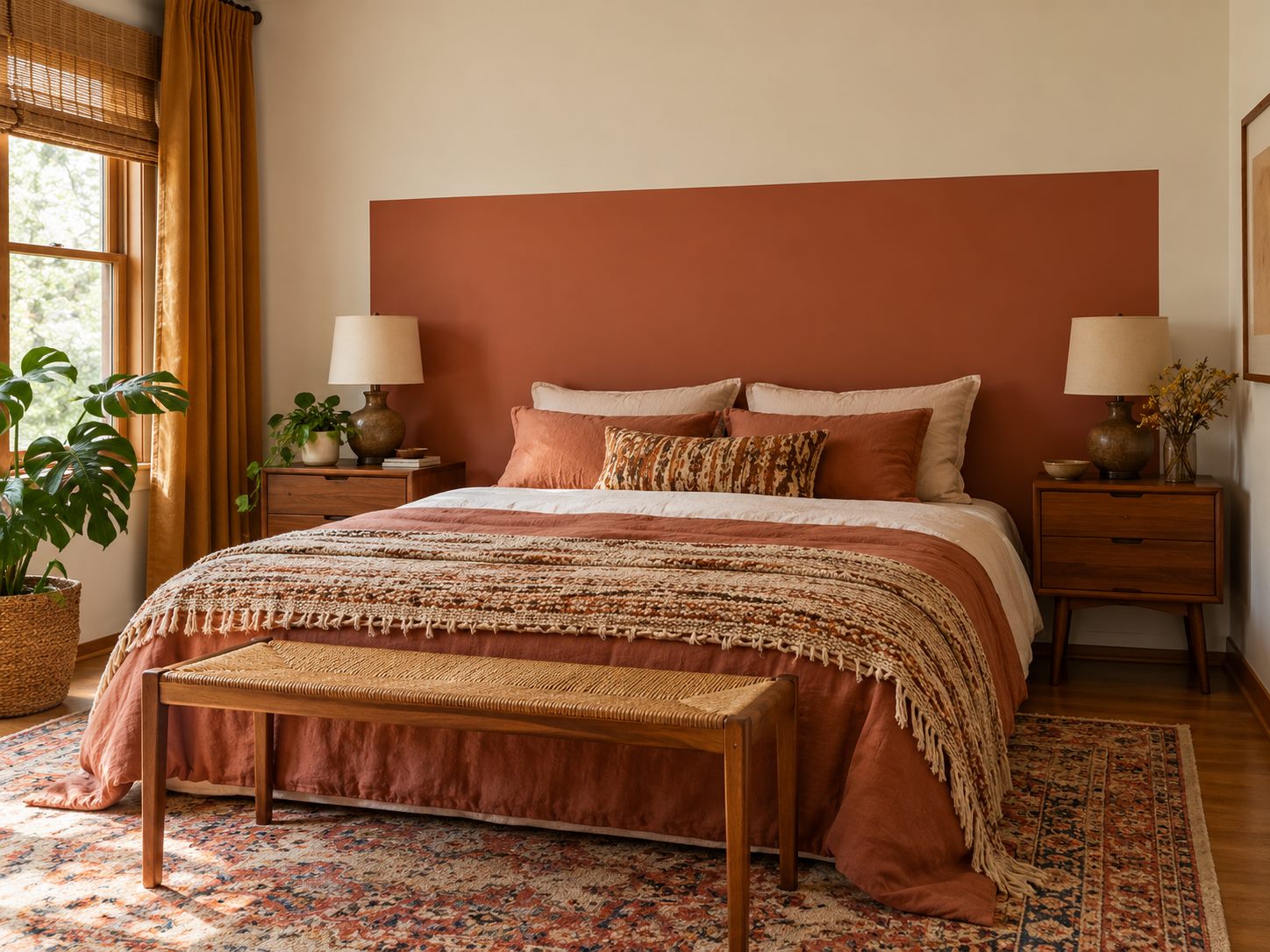
A simple painted rectangle behind the bed can provide definition when the frame has no headboard. Make its width relate to the bed and bedside furniture. Sample the color first and check rental permission before painting. Keep the outline clean so the effect reads as intentional architecture rather than a stray patch.
12. Use Cane-Front Storage Doors
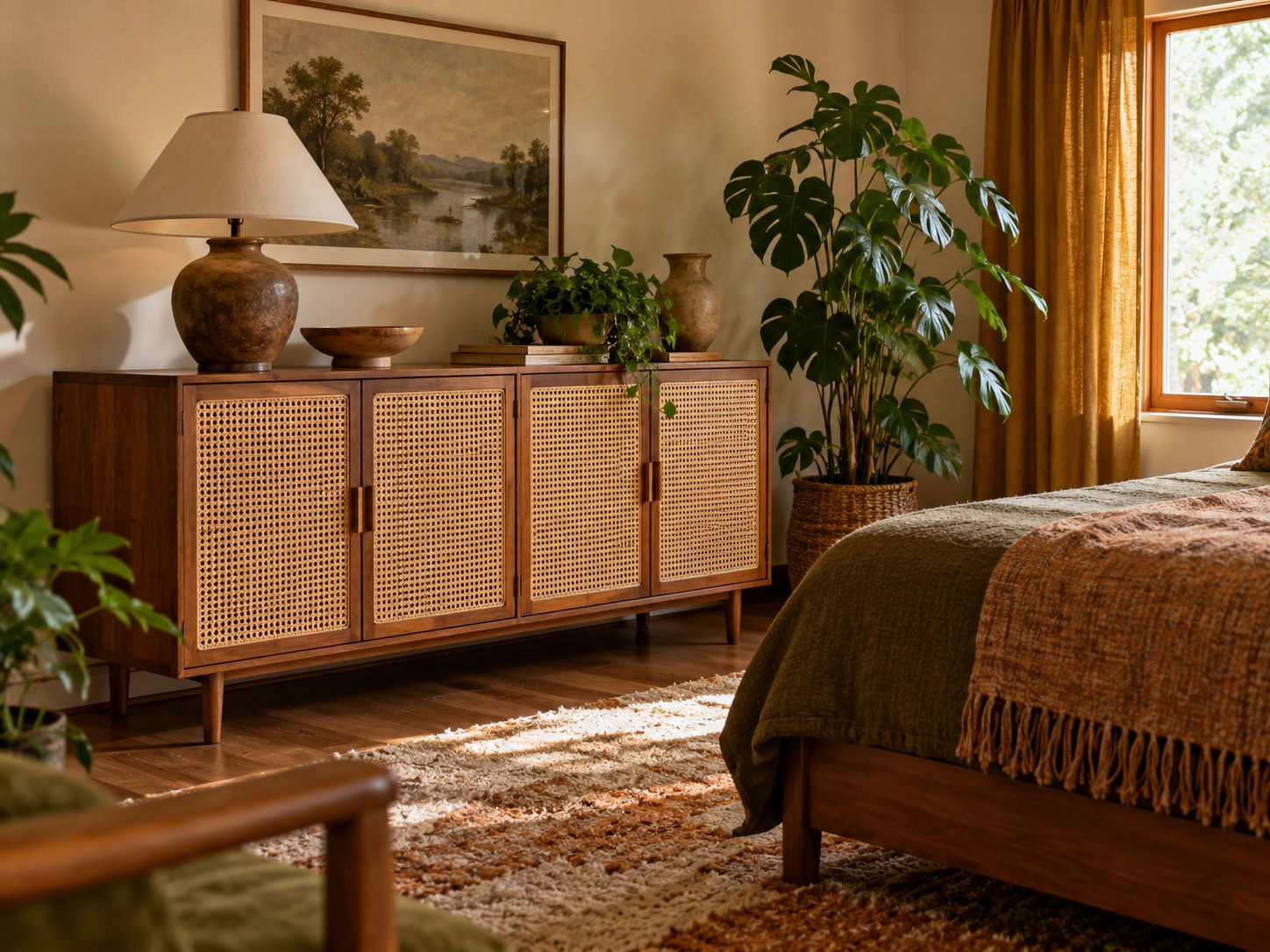
A cane-front cabinet adds texture while concealing everyday clutter. Check the cabinet’s internal dimensions against the items you need to store. Avoid placing it where clothes or handles repeatedly rub against the woven panels, and anchor the furniture as directed.
For ideas that support a compact layout, explore our small-space decorating guides.
13. Introduce a Corduroy Cushion
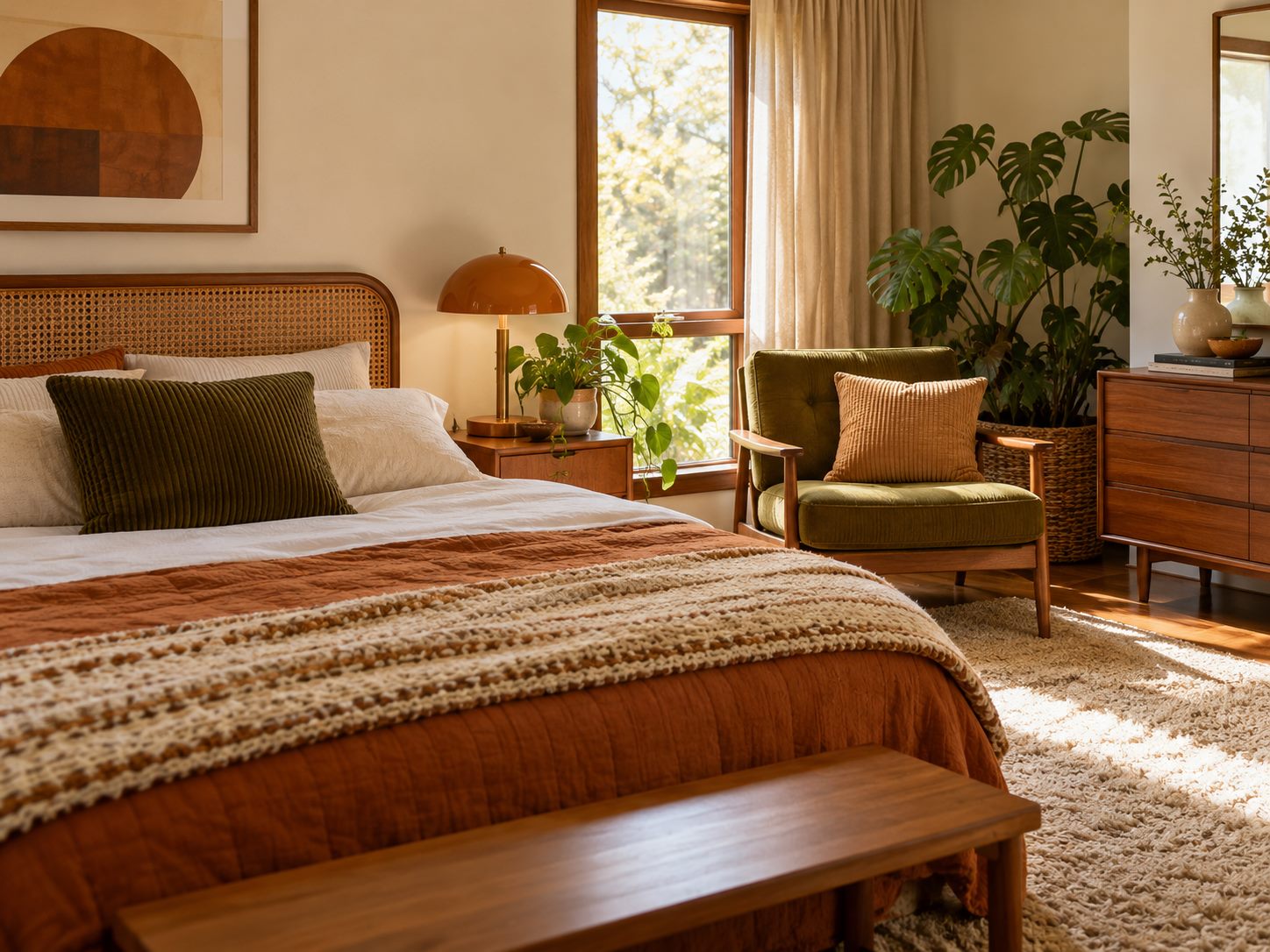
Corduroy offers a different texture from smooth sheets and woven rattan. A single cushion in tan or deep green can connect the bed with another part of the room. Choose a removable, washable cover when possible, especially if the cushion will be used rather than simply displayed.
14. Make a Plant Corner Near the Window
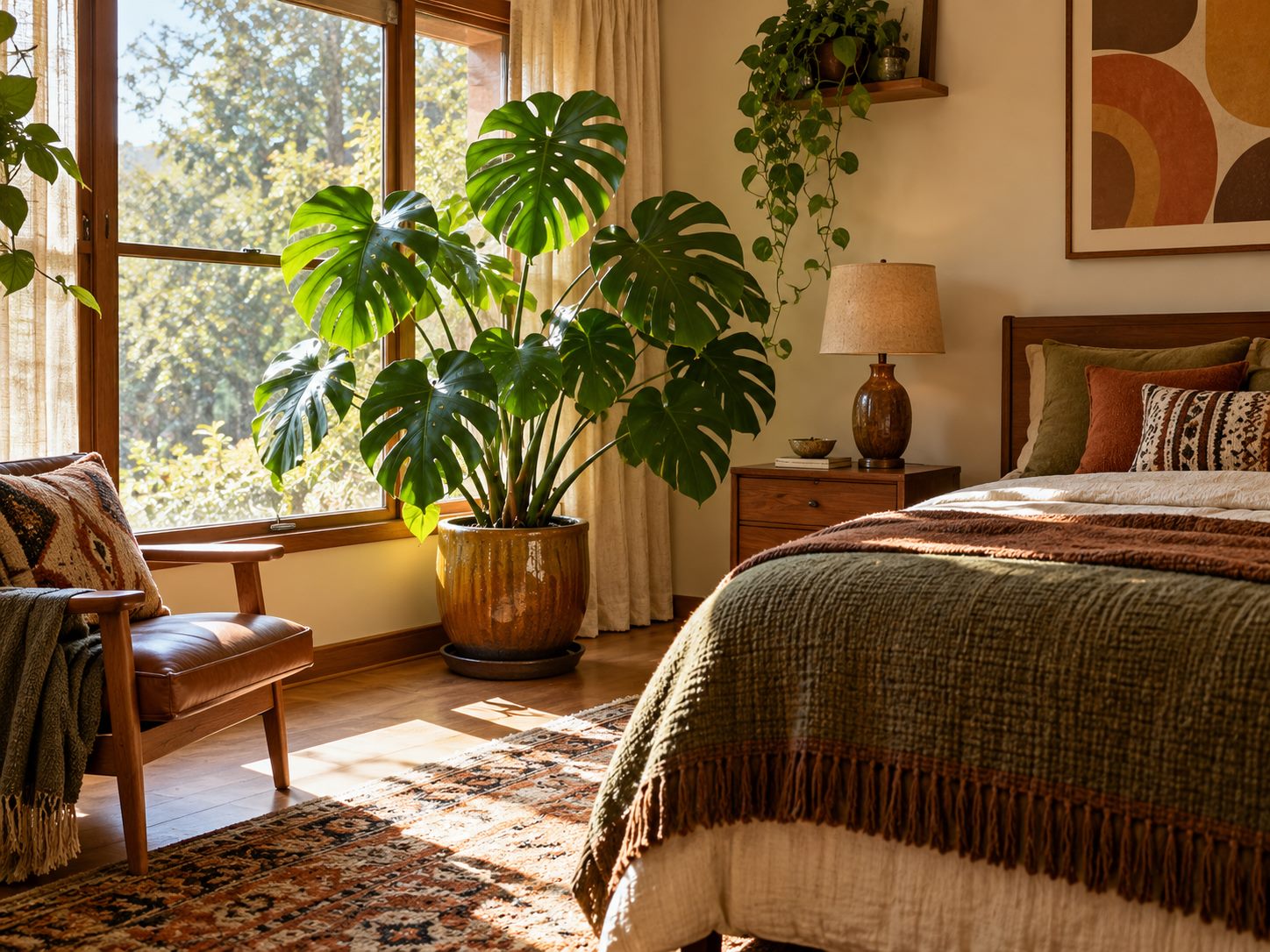
One substantial plant can look calmer than many small pots spread around the bedroom. Choose it for the actual light available and use a stable planter with water protection underneath. Check plant suitability for pets or children before bringing it into the room.
15. Frame a Simple Abstract Landscape
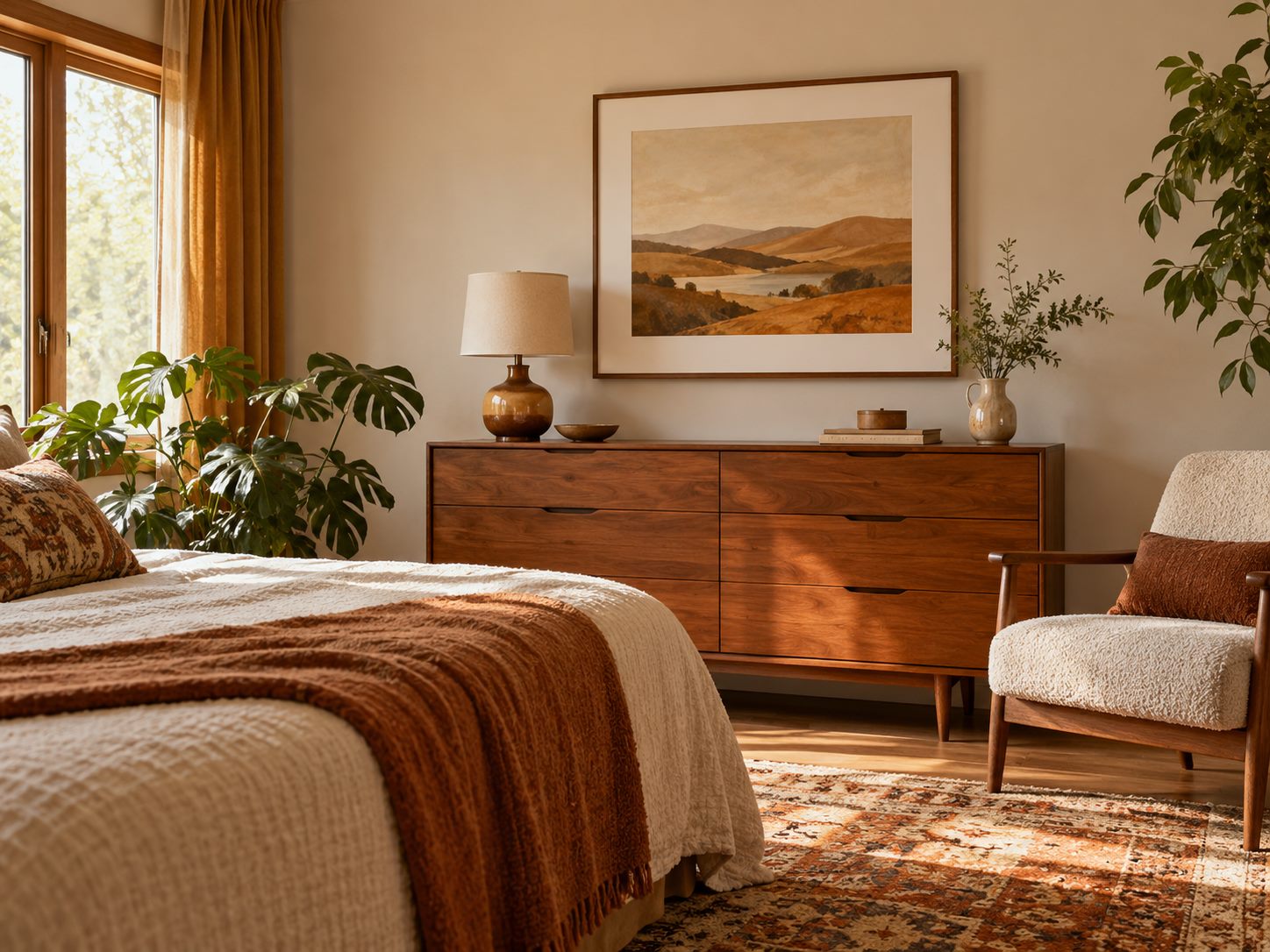
A landscape in warm brown, ochre, and cream can connect a retro palette without literal decade-themed memorabilia. Choose work you have permission to use and leave a generous mat around it. Hang it where it can be securely fixed, with its scale related to the dresser or chair beneath.
16. Layer Sheer Curtains Behind Plain Drapes
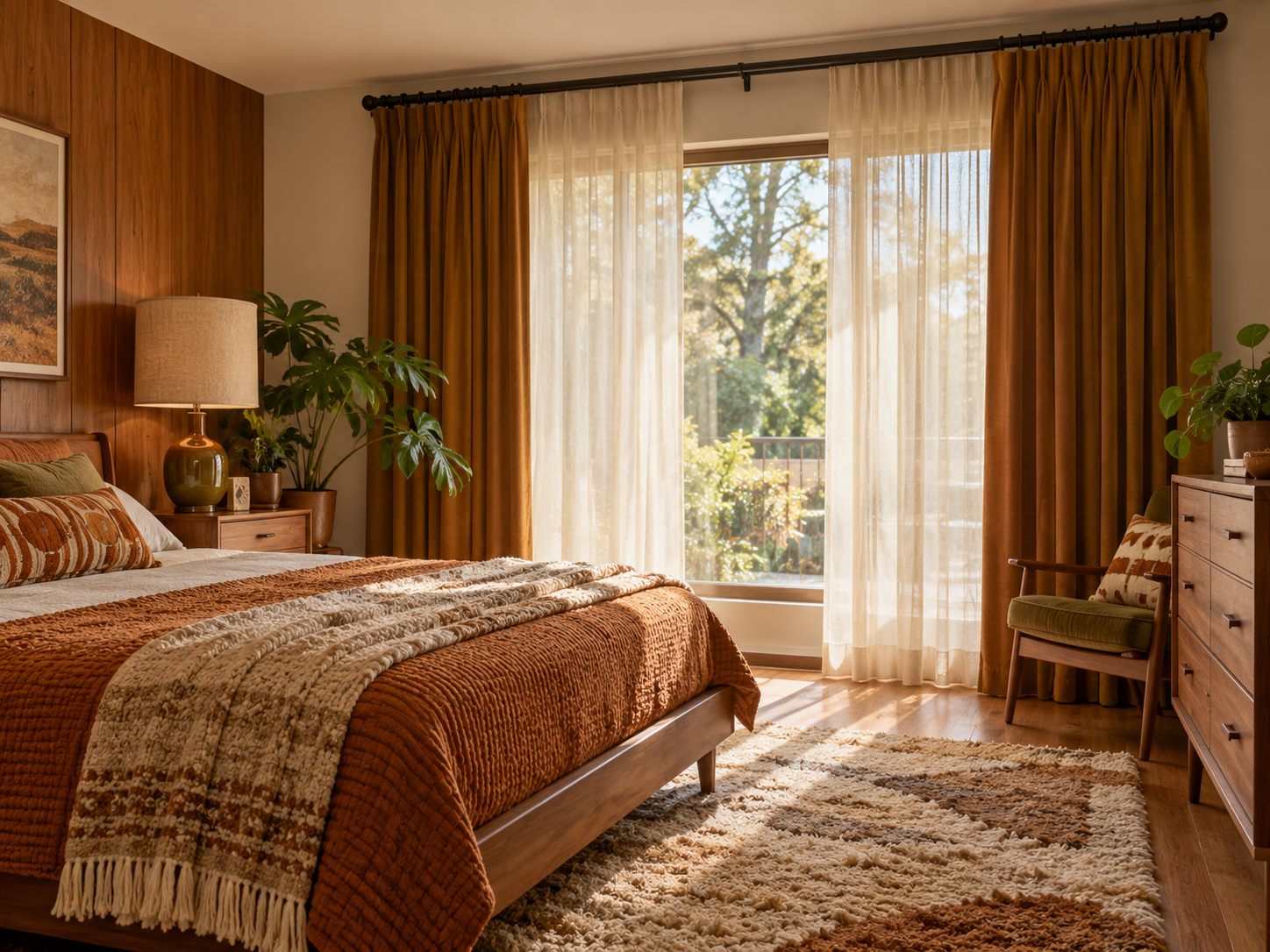
Two curtain layers let you adjust light while keeping the window treatment visually simple. Check that the rod can support both layers and that each can move freely. Keep fabric clear of heaters and choose cordless window coverings where children may be present.
17. Keep a Clear Bench at the Foot of the Bed
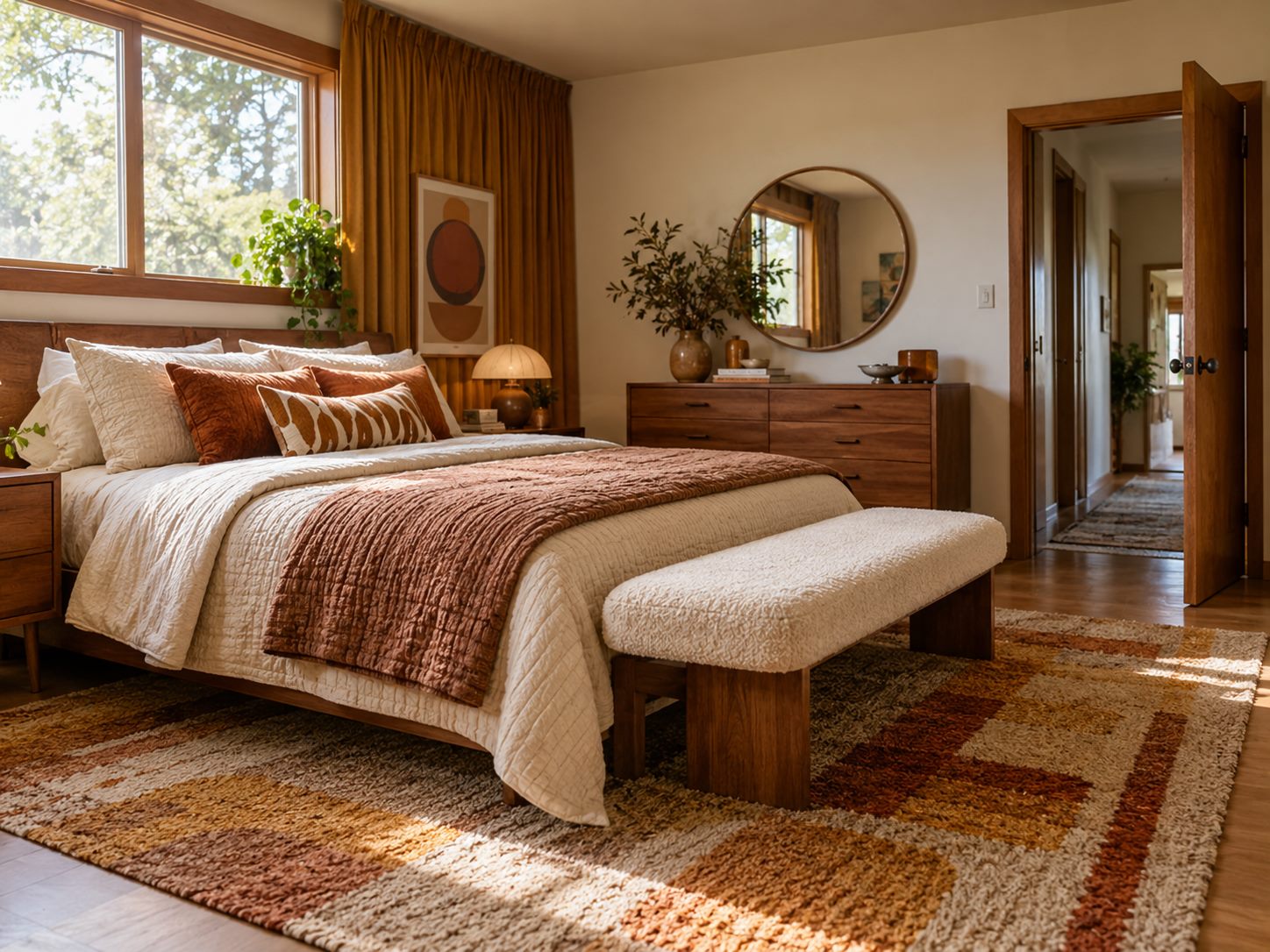
A narrow upholstered bench adds another soft surface and a useful dressing spot. Leave a comfortable route around its ends and check the bedroom door still opens fully. Keep the top mostly clear; if extra furniture makes the room harder to use, choose a small stool instead.
Frequently Asked Questions
What colors suit a 70s bedroom?
Rust, ochre, olive, warm brown, and cream are useful starting points. Choose two main colors and a quieter background rather than trying to include the whole palette.
How can I add the look on a budget?
Keep the furniture you have and change one textile, lamp shape, or framed print. Search secondhand pieces by dimensions as well as style, and check condition before buying.
Do I need shag carpet?
No. A small textured rug or a woven blanket can provide softness with less maintenance. Choose a surface you can clean comfortably.
Can white furniture work with this style?
Yes. Warm textiles, wood accessories, and one woven element can connect white furniture with a retro palette. Repeat the white in bedding or curtains to keep it deliberate.
How do I stop the bedroom feeling too busy?
Use plain bedding around the strongest pattern and leave a few surfaces clear. Remove one accessory at a time until the main shapes are easy to see.
Related Decorating Guides
- 17 90s Bedroom Decor Ideas with a Softer Finish
- 17 Vintage Bedroom Design Ideas with Collected Character
- 17 Bedroom Color Combos with Clear Ways to Use Them
Conclusion
Choose the warm material or color you would enjoy living with every day, then give it a clear role. A woven headboard or a rust cover can be enough to guide the room. Build slowly, keep the bed comfortable, and save the combinations that suit your own furniture.
Browse more palettes and furnishings in our bedroom collection.