
A bedroom refresh works best when it responds to what feels uncomfortable or unfinished in the room you already have. Look at the bedding, light, surfaces, and daily routes before deciding what to replace. These bedroom refresh ideas range from simple edits to focused changes in textiles and furniture arrangement. Choose one direction and complete a small grouping before moving to the next area. The aim is a room that looks considered and supports your routine, not a collection of new pieces added without a plan.
Key Takeaways
- Identify the room’s practical issue before choosing a visual change.
- Refresh one complete area rather than scattering small purchases.
- Use lighting, texture, and clear surfaces to connect existing furniture.
1. Choose a Clear Starting Palette

Gather the textiles and finishes you plan to keep and identify two or three connected tones. Use them to guide any additions. A palette built around existing pieces is easier to maintain than one that requires replacing everything at once.
2. Wash and Rebuild the Bed in Simpler Layers

A clean, deliberate arrangement can change the bed’s appearance without a new frame. Keep the layers you use and remove those that complicate bedtime. Check the care requirements and condition of each piece before deciding what needs replacing.
3. Improve the Bedside Light

A useful lamp can make the room more comfortable in the evening. Check glare, switch reach, and the surface available for the base. Choose appropriate fittings and use qualified help for electrical changes rather than selecting a fixture only for its decorative shape.
4. Clear the Route to the Closet

A bedroom can feel more settled when storage is easy to reach. Move small furniture or baskets that narrow the route and check doors and drawers open fully. An improved layout may remove the need for another organizer.
5. Change One Substantial Textile

A cover, curtain, or rug can provide more direction than several small accessories. Choose the item that affects the room most and compare samples with existing furniture. Check care and practical requirements so the visual change remains useful.
6. Give the Dresser a Purposeful Arrangement
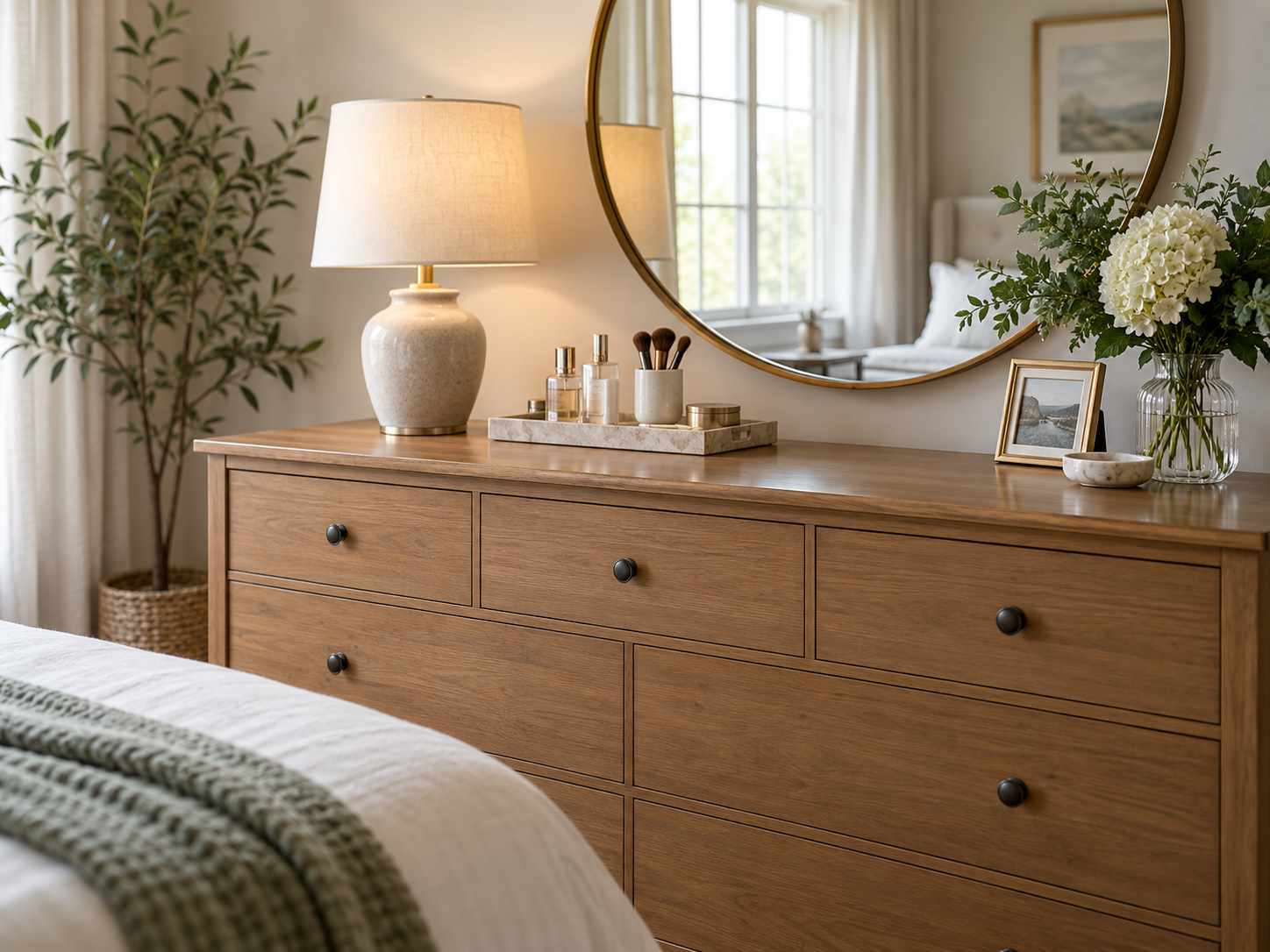
Start with a clear surface and return the items needed for getting ready. Add one small personal detail if space allows. Keep the arrangement easy to wipe and avoid objects that have to be moved every morning.
For a practical foundation for the bedding, see our guide to layering a comfortable bed.
7. Add Texture to a Plain Bed

A woven or quilted layer can distinguish bedding without another strong color. Choose a weight that suits the room and the way you sleep. A texture you use daily is more valuable than a decorative layer that spends every night on the floor.
8. Reposition Artwork Around the Furniture

An artwork may feel more deliberate when its placement relates to the bed or dresser beneath it. Test a template before moving fixings. Choose secure mounting and keep heavy fragile pieces away from the sleeping area when installation is uncertain.
9. Check the Window Treatment’s Movement

Curtains or blinds should open and close without catching on furniture. Review privacy, light control, and any maintenance needed. A practical adjustment can improve the room more than replacing a treatment whose main problem is its installation or obstruction.
10. Make a Small Reading Corner Complete

A chair needs useful light and a reachable surface if it is to become more than decoration. Keep the grouping compact and preserve access to the window or storage. Choose a comfortable position before styling the surrounding objects.
11. Replace a Worn Small Detail

A tired cushion cover, damaged handle, or unsuitable lampshade may be the piece that makes a room feel unfinished. Check fit and compatibility before replacing it. A focused repair or change can help existing furniture look cared for.
12. Use a Personal Image as the Main Artwork

A photograph or print with meaning can give the room a clearer identity than several generic decorations. Use work you own or have rights to display. Choose a scale and frame that relate to the surrounding furniture rather than filling an arbitrary gap.
For ideas that support a compact layout, explore our small-space decorating guides.
13. Edit the Nightstand to Actual Essentials
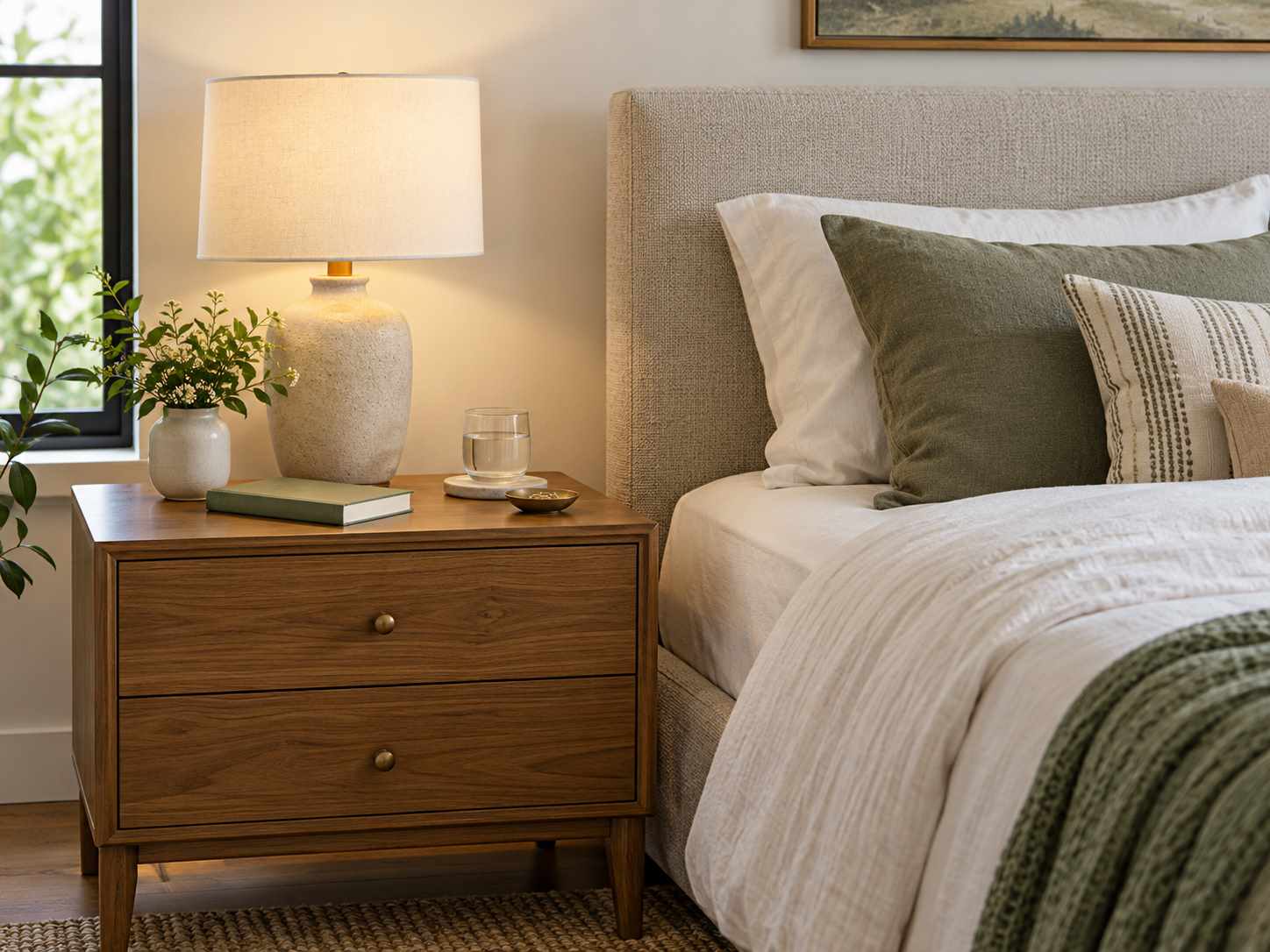
Keep a lamp, a book, and the items you reach for at night within easy access. Move spare products and unrelated objects into appropriate storage. A simpler surface supports the routine and gives the furniture’s shape room to be seen.
14. Try a Muted Accent in One Repeated Pair

A small color repeated in a throw and artwork can connect the room without a full repaint. Compare the actual pieces together. Keep the rest of the palette stable so the accent feels like a clear addition rather than another unrelated choice.
15. Improve Storage Inside an Existing Drawer
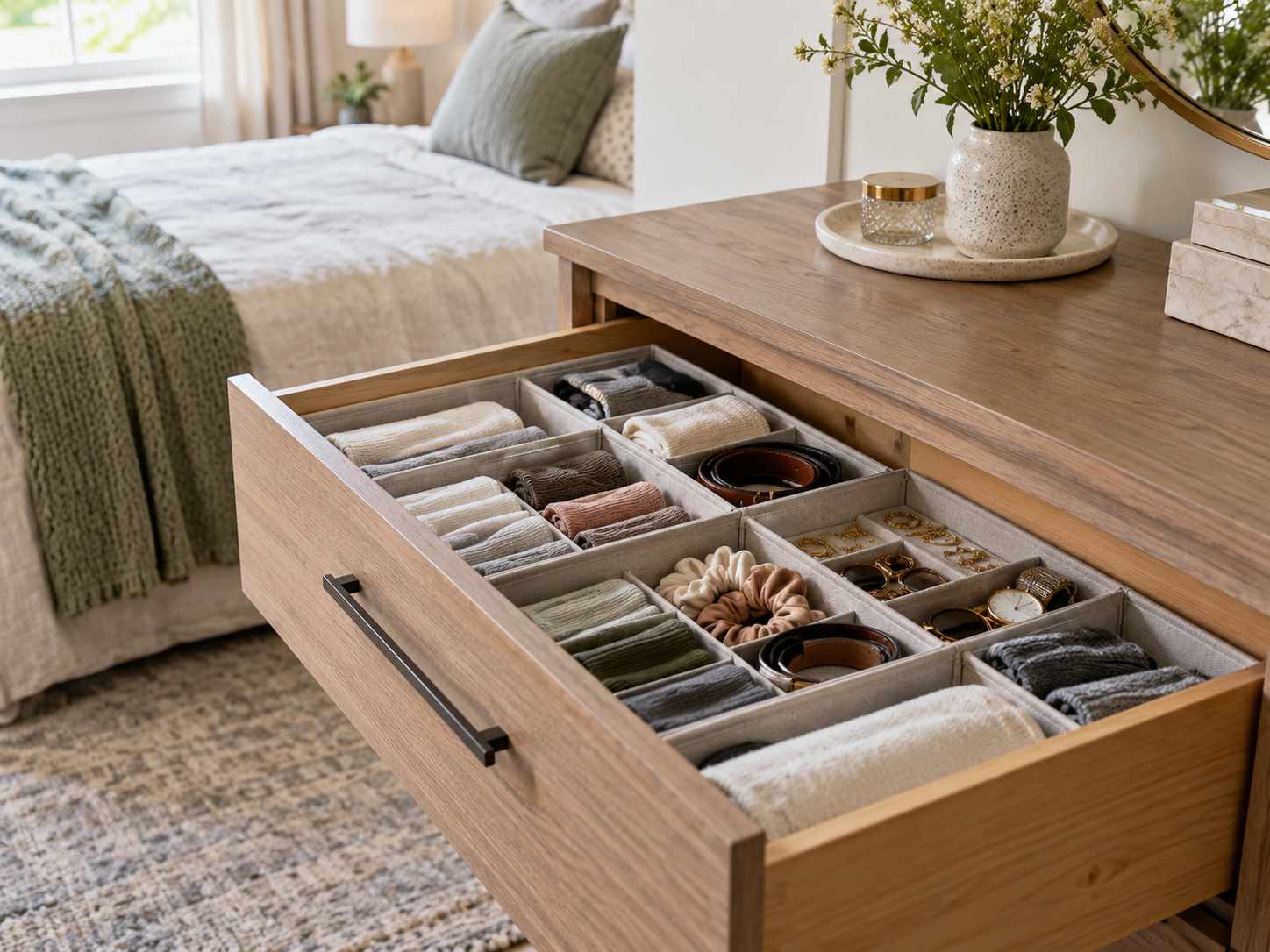
Measured dividers or smaller groups can make a drawer more useful without adding visible furniture. Review the contents first and leave enough space to return items comfortably. Choose organizers for a defined category rather than filling the drawer with compartments.
16. Make the Foot of the Bed Easier to Use

Check whether a bench, chest, or basket is helping the room or narrowing its main route. Keep the piece only if its function justifies the space. A clear foot-of-bed area can make dressing and changing sheets easier.
17. Review the Room in Evening Light

The room may look different at the time you actually use it. Check lamp glare, curtain privacy, and how the colors feel with the main lights on. Make small adjustments before deciding the palette or furniture needs another major change.
Frequently Asked Questions
What is the first step in a bedroom refresh?
Identify what feels impractical or unfinished. A clear problem makes it easier to choose a useful change rather than buying unrelated accessories.
Do I need new furniture?
Not necessarily. Bedding, lighting, layout, and surface editing can improve an existing room. Replace a piece only when its condition or function warrants it.
How can I make mixed furniture feel connected?
Use a limited textile palette and repeat a material or color in small amounts. Related proportions matter more than an exact matching set.
What is a manageable refresh project?
Complete one area, such as the bed and bedside surfaces, before moving on. This lets you judge the effect without changing the whole room at once.
Should I add more decoration to an empty corner?
Only if it serves a purpose or supports the room’s balance. A little open space can make the existing furniture easier to use and appreciate.
Related Decorating Guides
- 17 Bedroom Color Combos with Clear Ways to Use Them
- 17 Bedroom Curtain Ideas for Light, Privacy, and Texture
- 17 Bedroom Wall Art Ideas for a Personal, Balanced Room
Conclusion
Begin with one useful change and give it time to work before adding more. A clearer bedside surface, better light, or a considered textile can guide the whole room. Save the ideas that improve your actual routine as well as the way the bedroom looks.
Browse more palettes and furnishings in our bedroom collection.