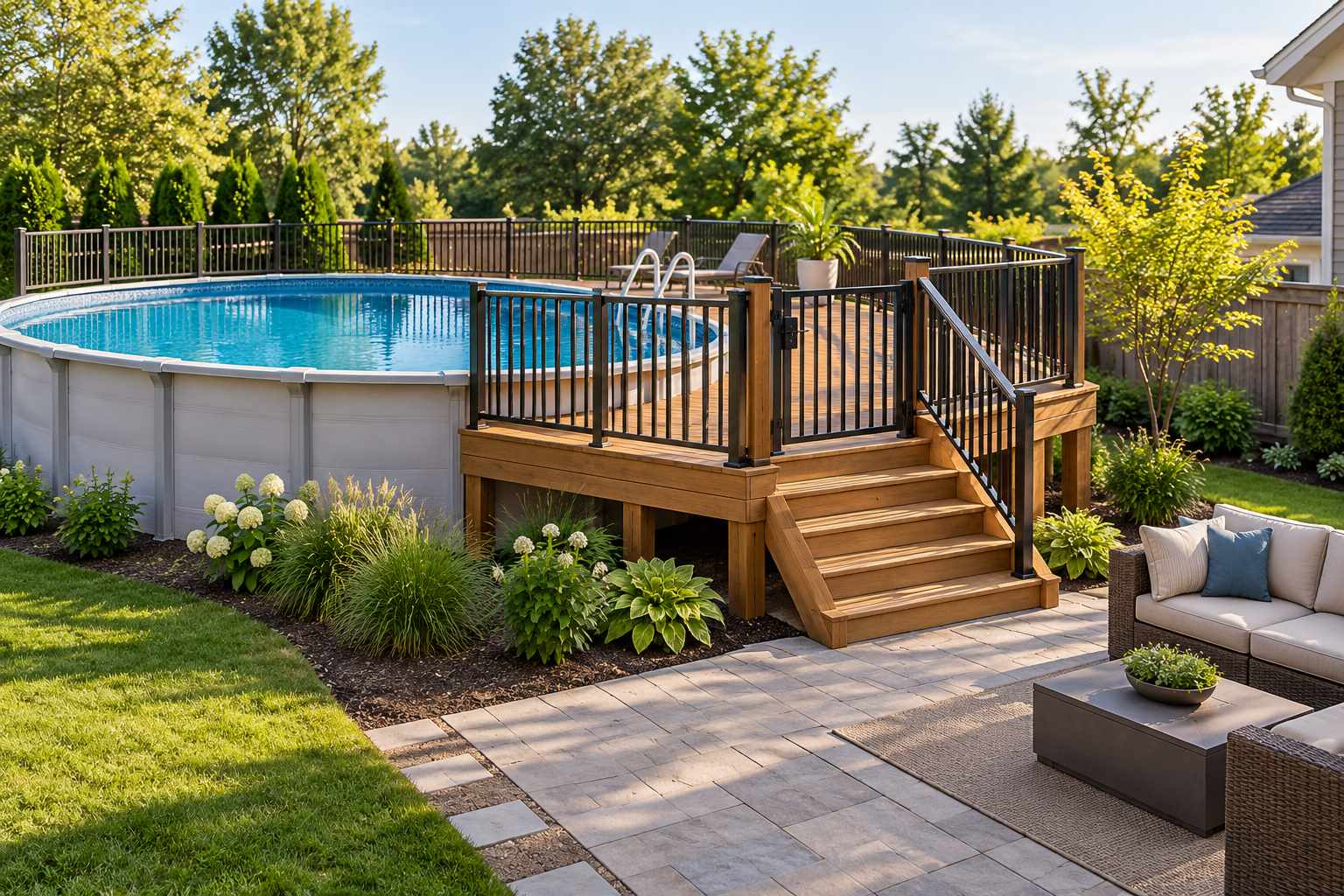
A pool deck should organize the space around the water, not just make the pool look finished. Begin with safe access, barriers, equipment clearance, and a design reviewed for your site and local requirements. These above ground pool deck ideas focus on layout and appearance rather than construction instructions. A qualified contractor can help establish the structure, drainage, guards, and gate arrangement before you select seating or finishes. Keep furniture and planters away from barriers so they do not create climbing aids, and treat decorative choices as the final layer.
Key Takeaways
- Plan access control, barriers, drainage, and maintenance before decoration.
- Keep seating and planters away from barriers and the pool edge.
- Have the structure and material choices checked for the site and local rules.
1. Choose a Compact Access Deck
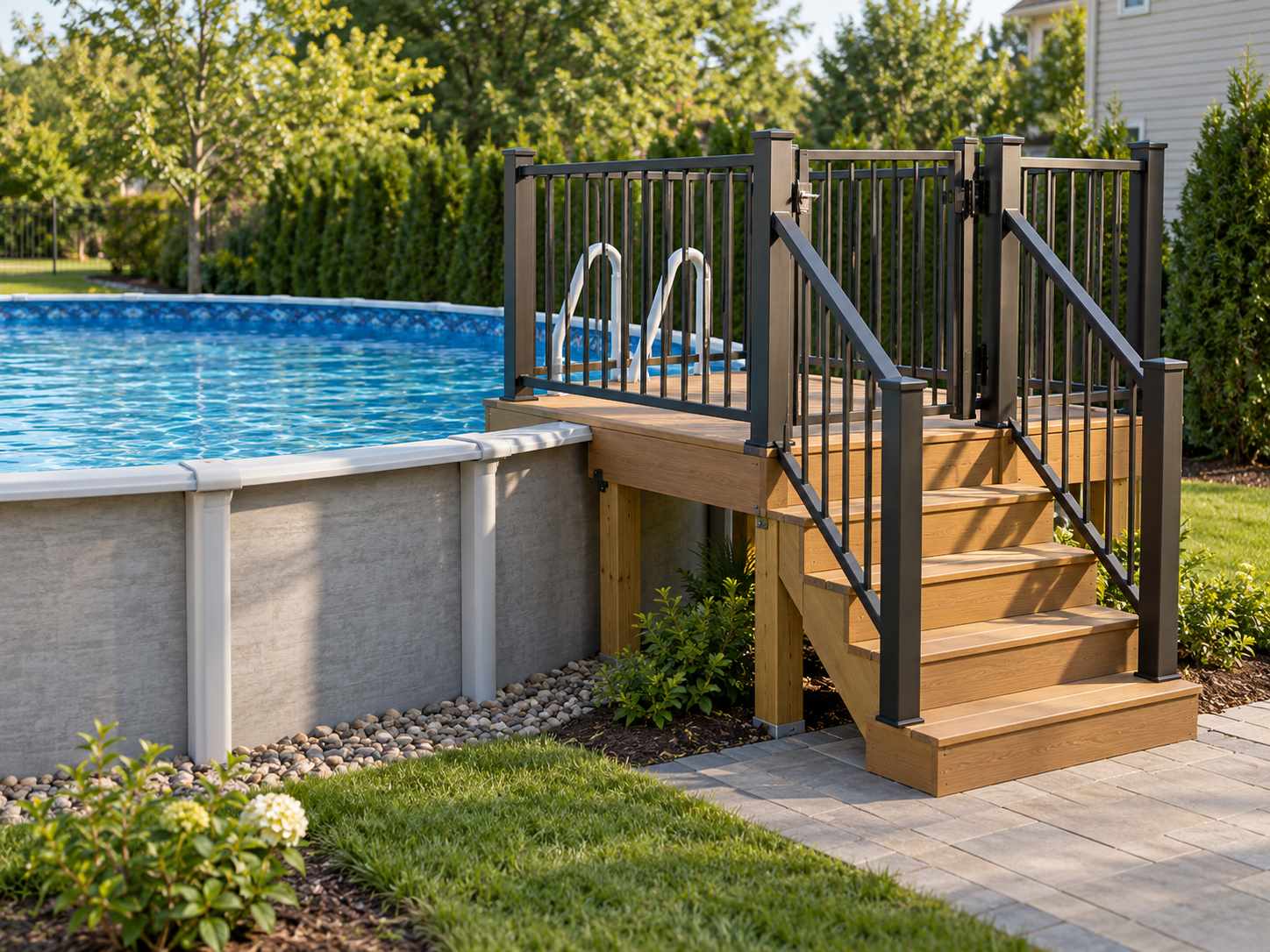
A compact deck can provide an organized entry point without surrounding the entire pool. Plan enough usable space for safe movement and have the gate and barrier arrangement designed appropriately. Keep decoration minimal here; this part of the deck needs to support entry and exit rather than become a lounge area.
2. Create a Separate Ground-Level Lounge
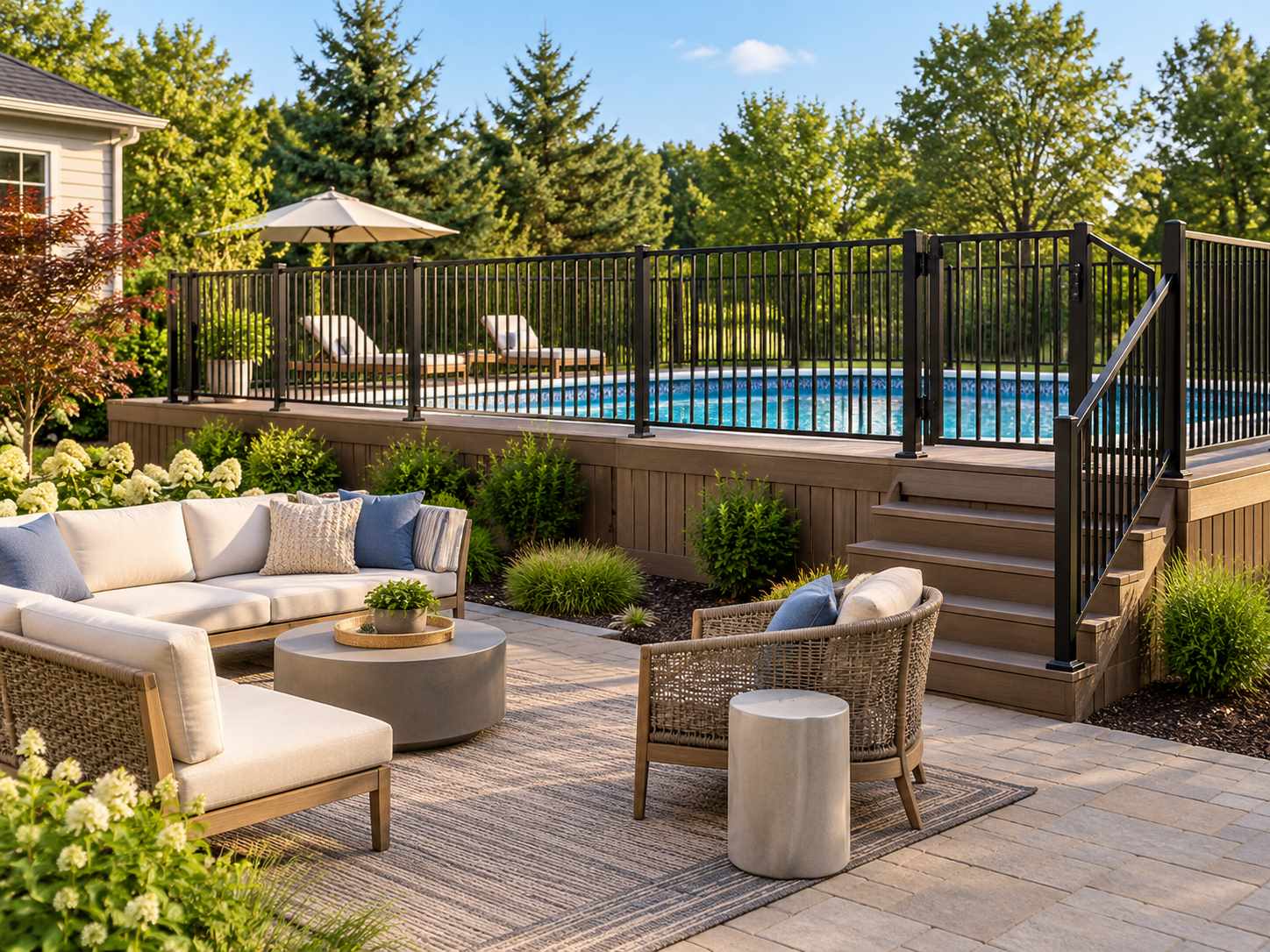
A seating area beside the pool can offer a useful alternative to placing every activity on the raised deck. Connect the spaces visually with related materials while preserving the required access controls. Keep furniture outside the barrier’s non-climbable area and allow a clear route for supervision and maintenance.
3. Use Two Related Decking Tones
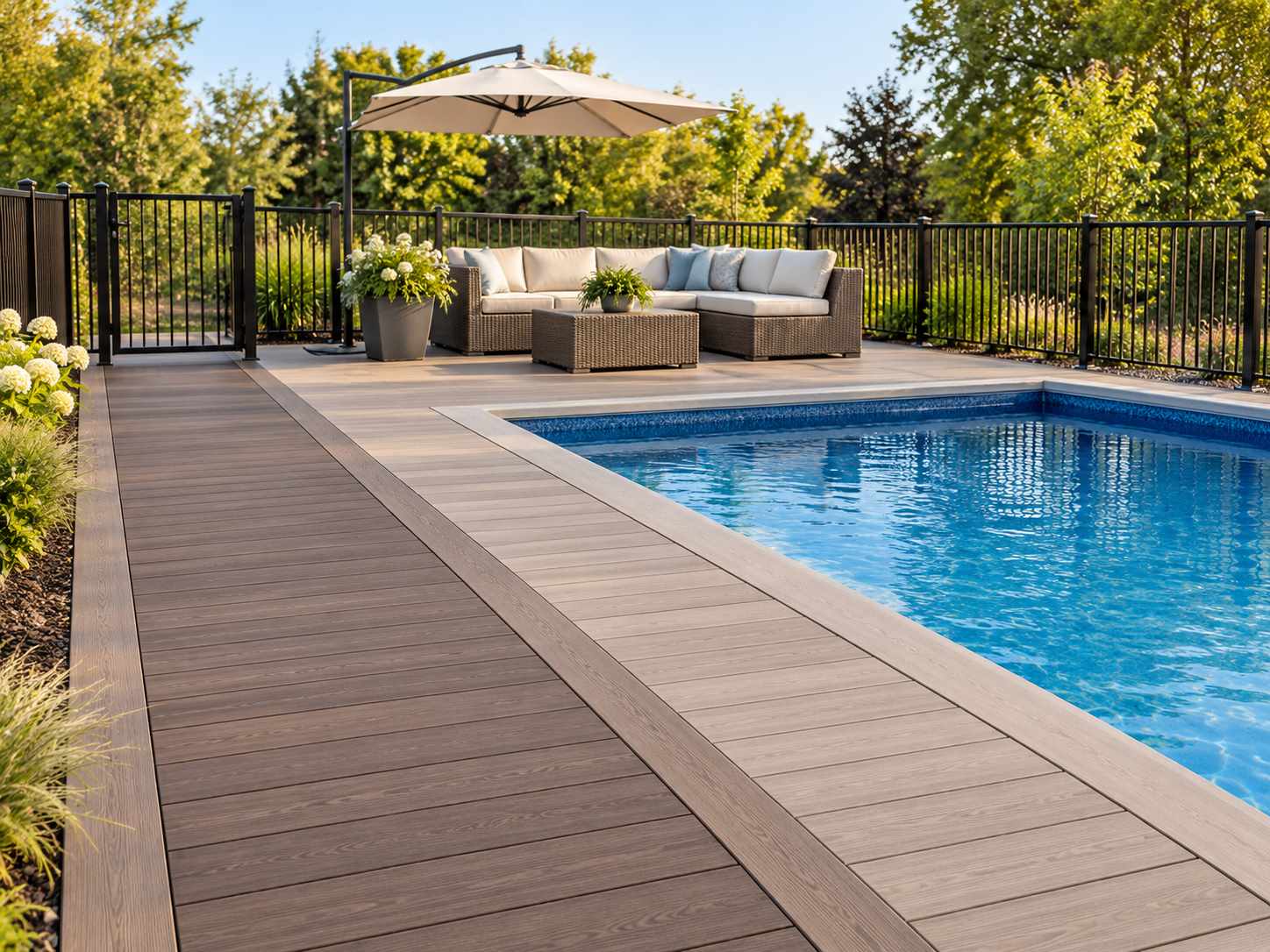
A restrained change in decking tone can distinguish a route from a seating zone. Ask the installer to confirm suitable products and detailing rather than mixing incompatible boards. Choose the contrast in daylight and check the surface characteristics when wet, since appearance alone does not establish suitability around a pool.
4. Place Shade Over the Seating Area
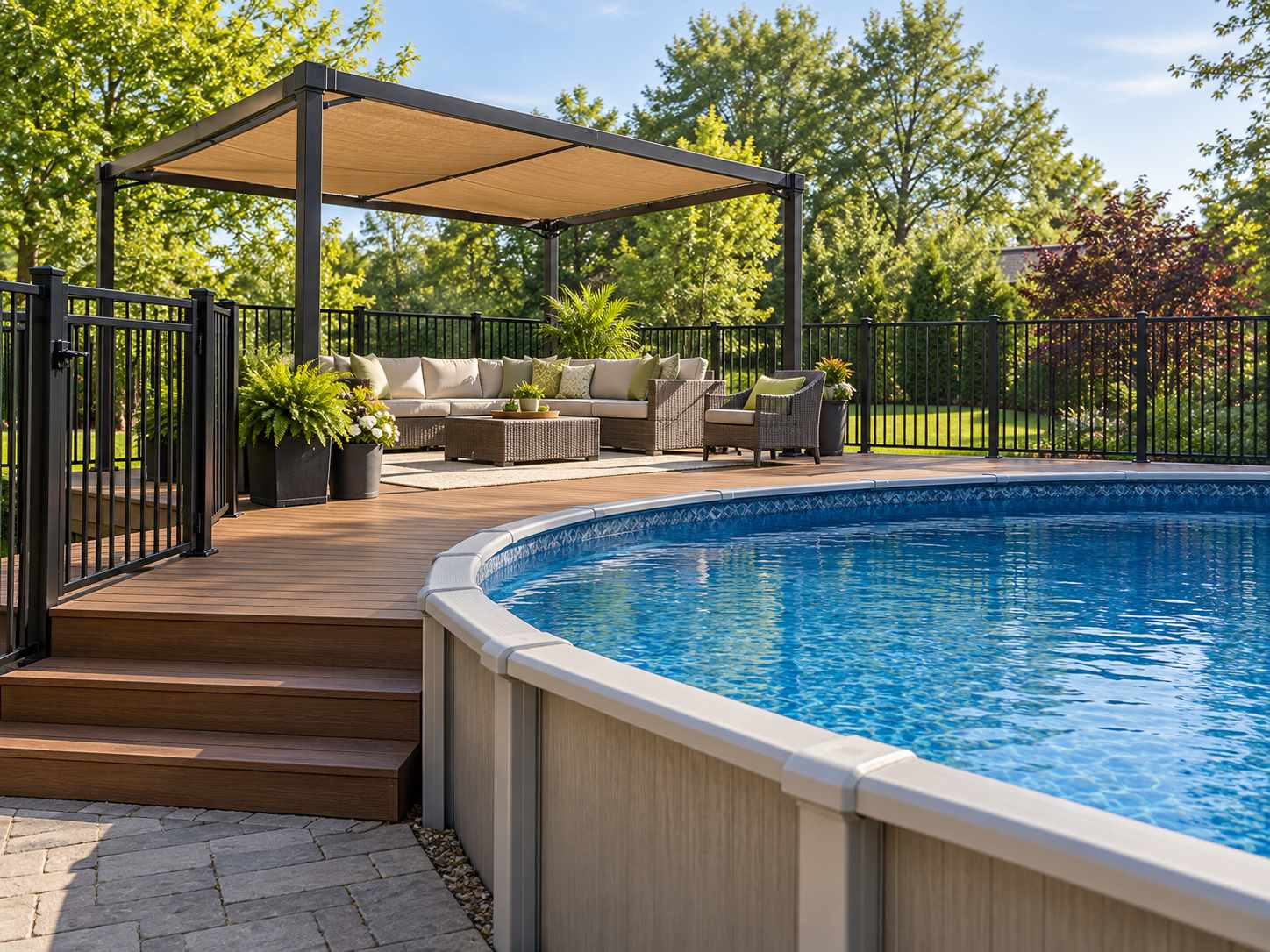
A shade structure can make a separate lounging zone more useful. Have its foundations, wind resistance, and position checked for the site. Keep it clear of barriers, equipment access, and overhead services. Portable umbrellas also need an appropriate base and a plan for closing or storing them in unsuitable weather.
5. Add a Dry Towel Station Beyond the Barrier
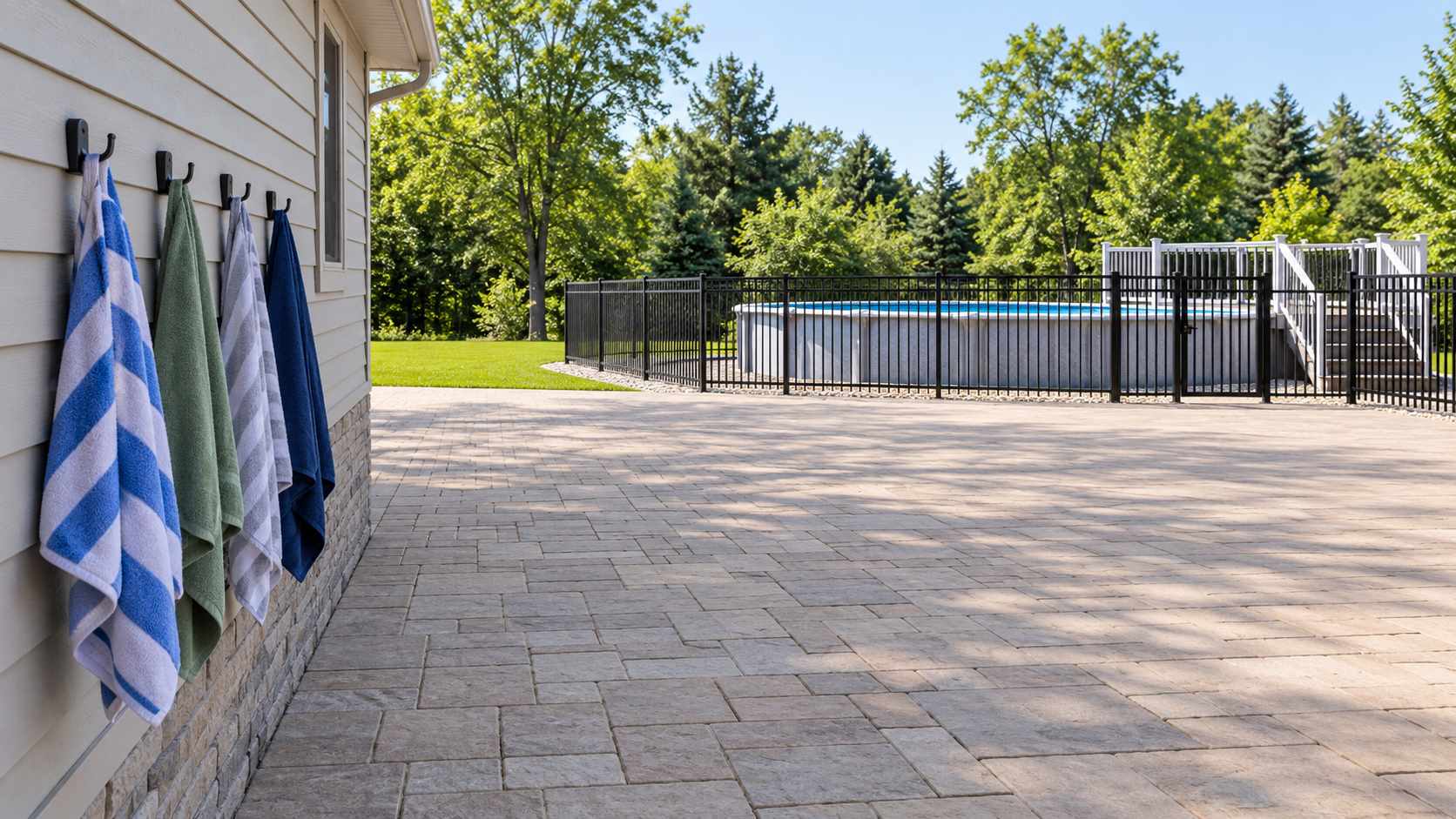
A towel station works best where people can reach it without blocking the pool entrance. Choose outdoor-suitable materials and fixings. Keep hooks and storage outside climbing zones, and let wet items dry before folding them into an enclosed container.
6. Keep Equipment Access Visually Clear
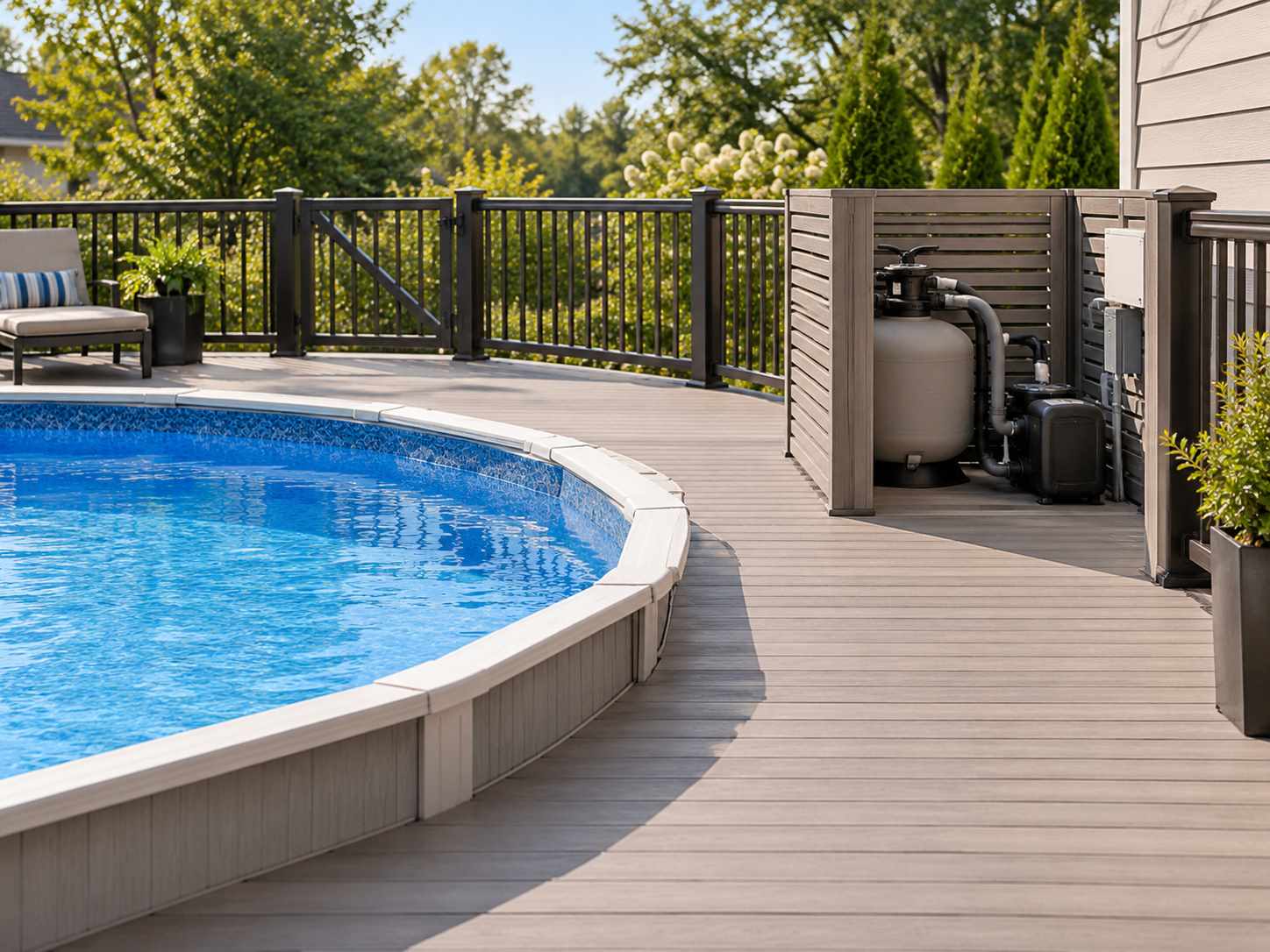
A service route can look tidy without being disguised behind difficult-to-move furniture. Use a consistent finish around it and keep the manufacturer’s required clearances. Any screen should remain removable or accessible as necessary and should not block ventilation, maintenance, or safe use.
For ideas on a restrained seasonal table, see our autumn table decorating guide.
7. Use a Simple Outdoor Color Palette
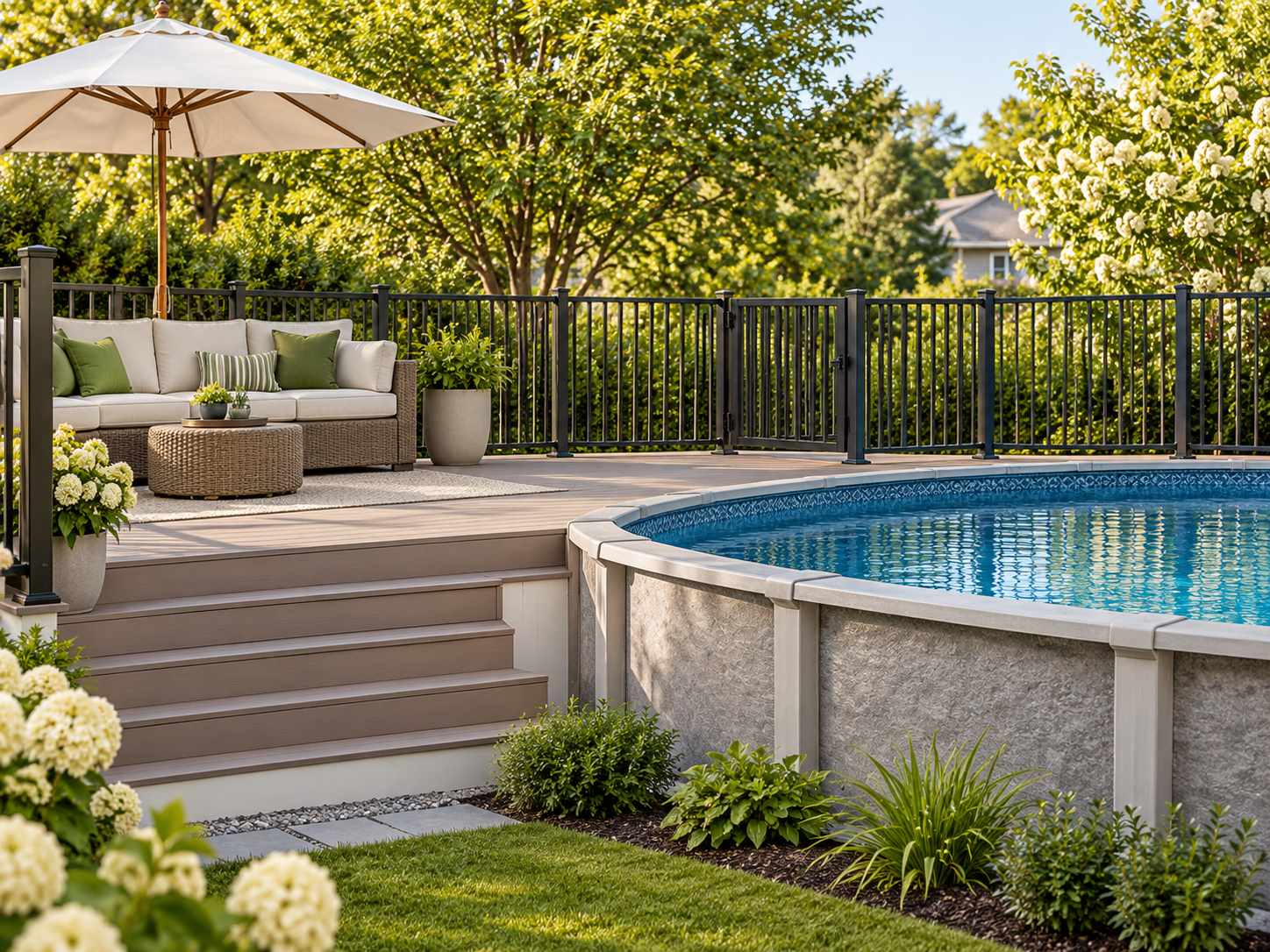
A few connected colors can make the pool and deck feel part of the same garden. Try a neutral decking tone with two textile colors rather than several competing prints. Choose outdoor-rated fabrics and keep loose cushions from drifting into access paths.
8. Define a Dining Area Away from the Water
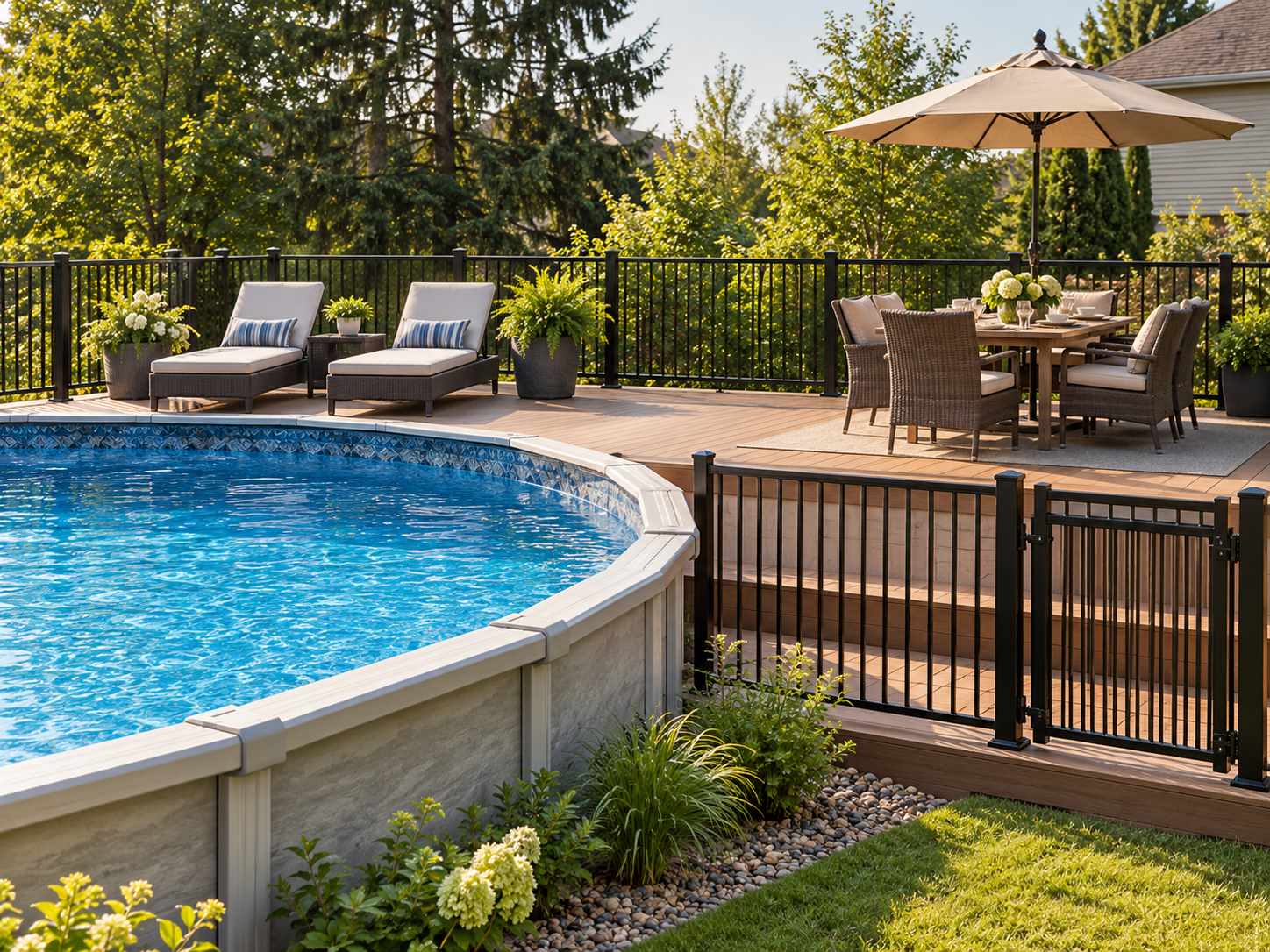
A separate dining zone keeps chairs, dishes, and food preparation out of the main pool circulation area. Check space for pulling chairs out and walking behind them. Use stable furniture on a suitable surface and preserve clear sightlines and barrier requirements.
9. Try a Low-Maintenance Gravel Border Outside the Deck
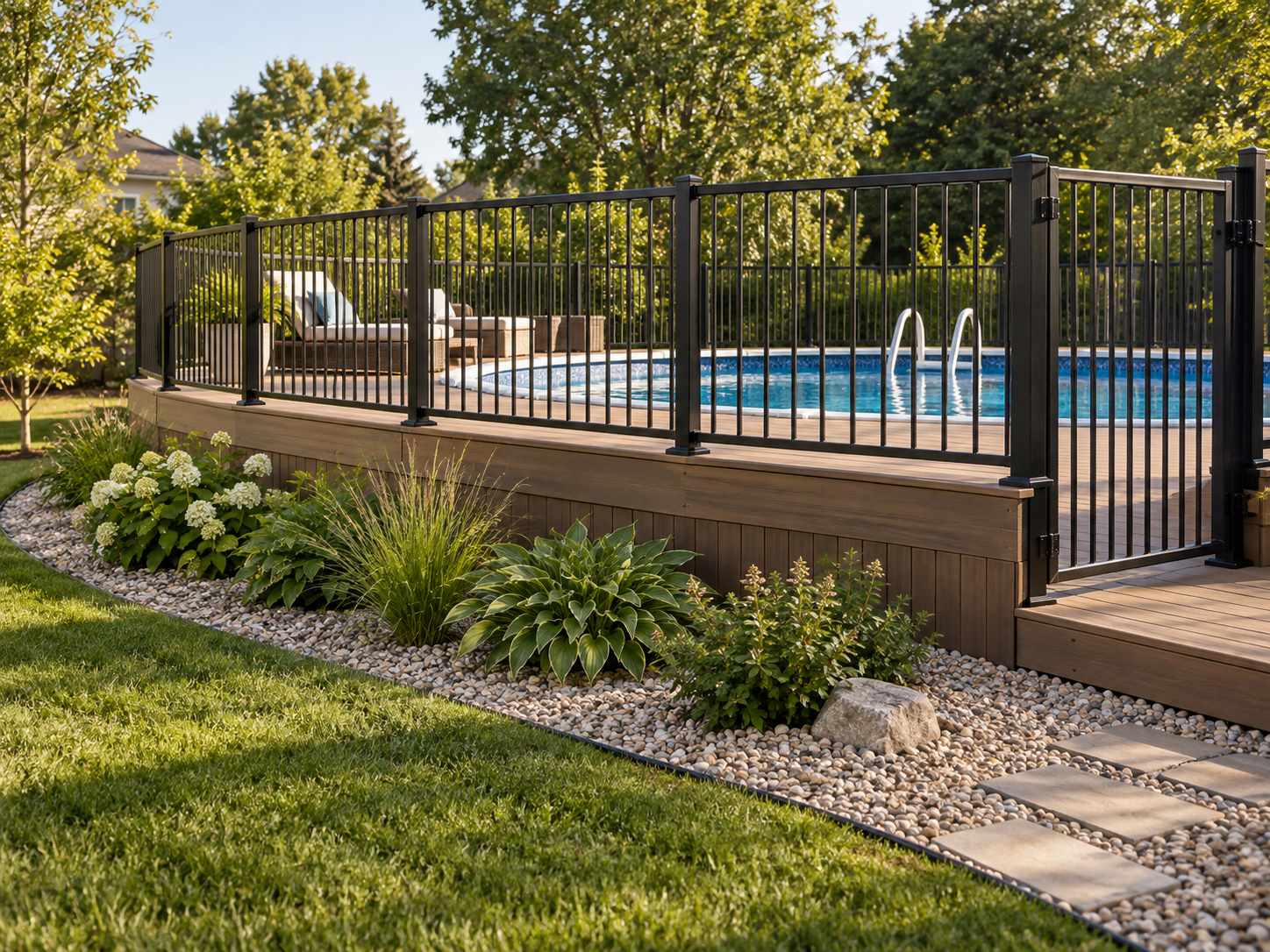
A gravel border can connect a raised structure to surrounding planting, where suitable to the site. Discuss drainage, edging, and access with the installer. Keep loose material away from the pool entrance and choose a design that will not spill into frequently used walking areas.
10. Use Outdoor Lighting to Show Routes
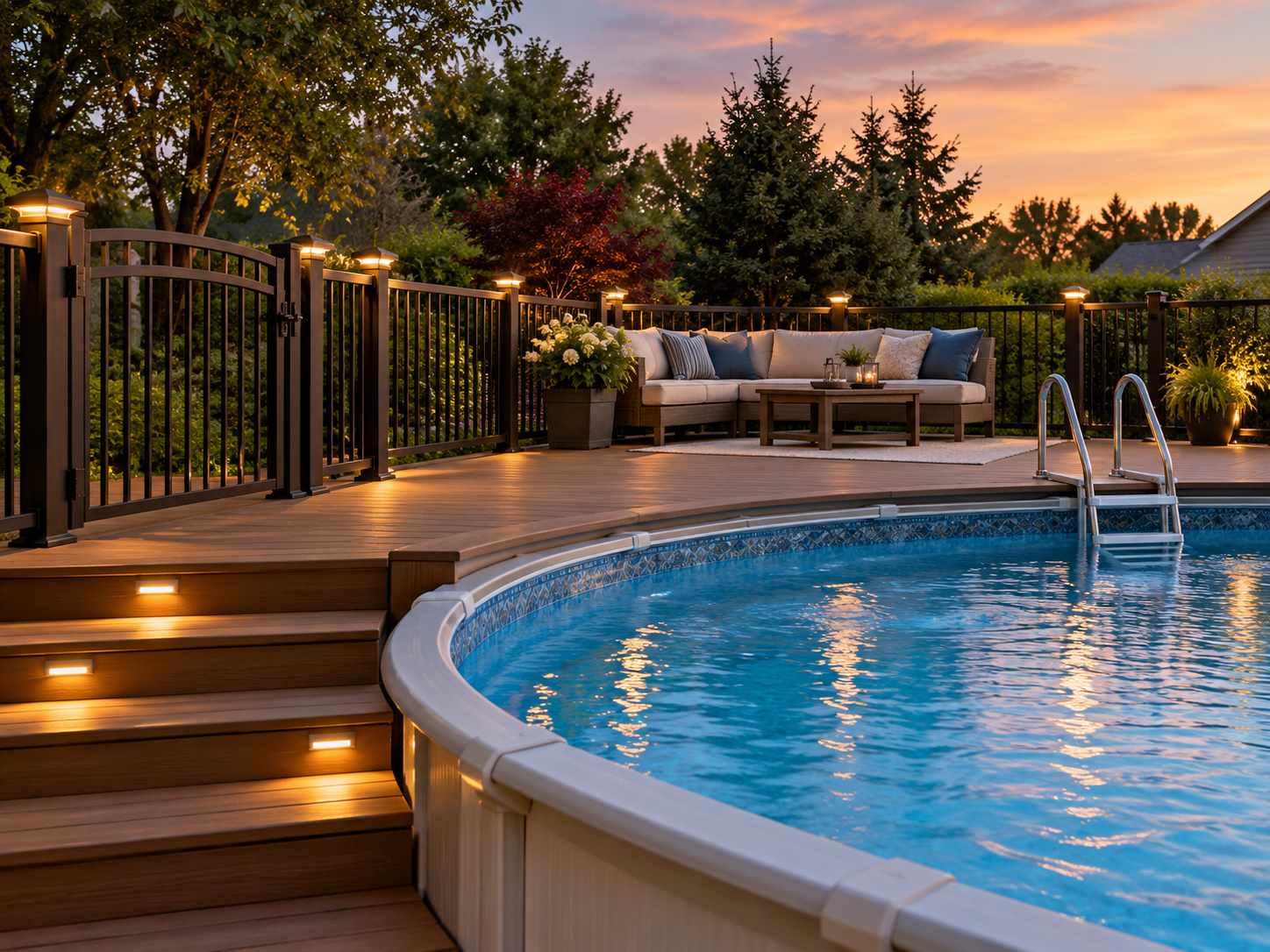
A lighting plan should make steps and walking routes easier to see without glare across the water. Have electrical work designed and installed by a qualified professional for the pool environment. Decorative string lights should not be improvised over the pool or treated as a substitute for appropriate route lighting.
11. Keep Planters in a Separate Garden Zone
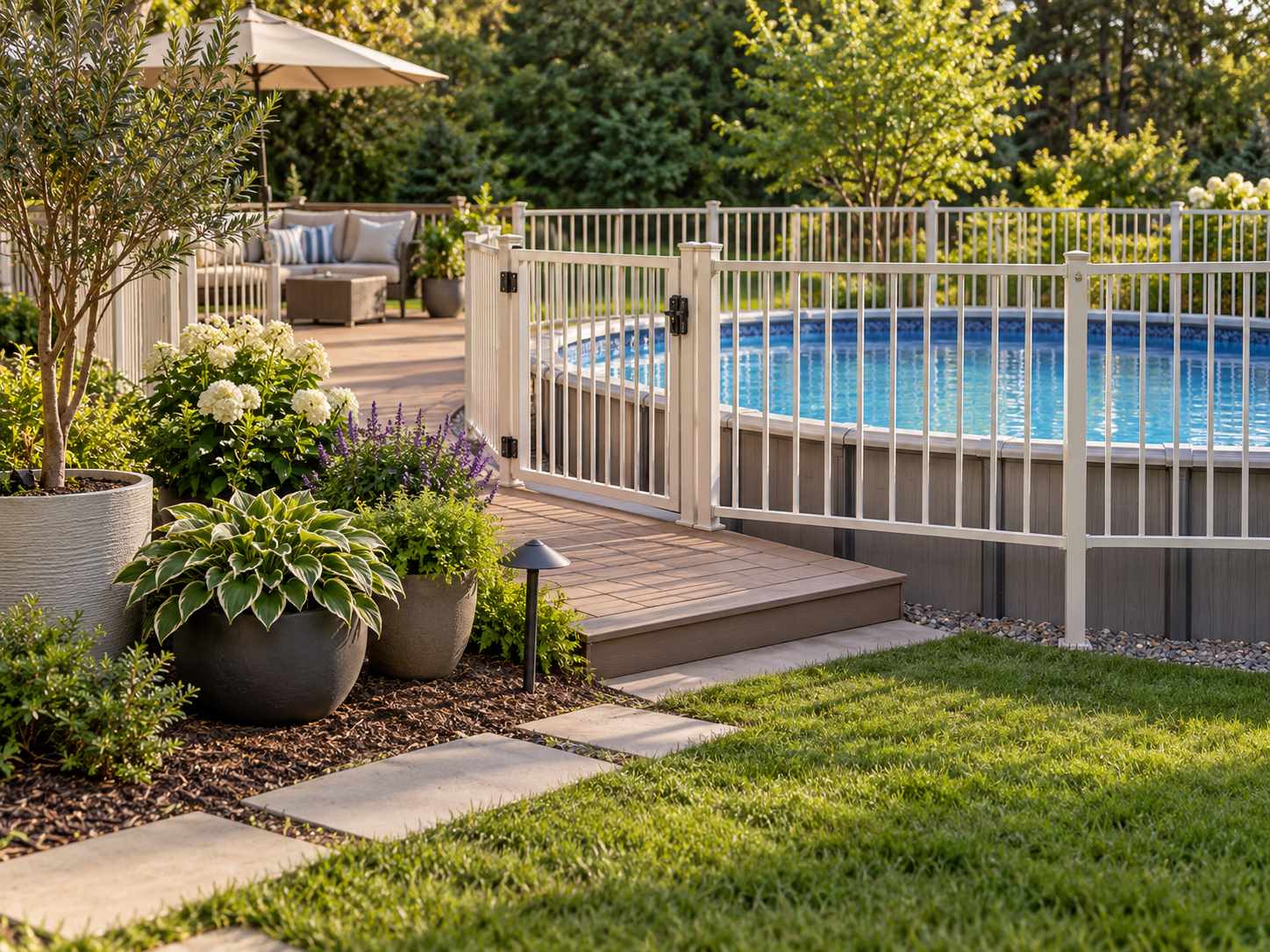
Grouped planters can soften the broader view without cluttering the deck edge. Keep them outside required barrier clearances and choose stable containers suited to the site. Select plants for local conditions and avoid species that create sharp, slippery, or excessive litter near circulation areas.
12. Use an Open View Toward the Pool
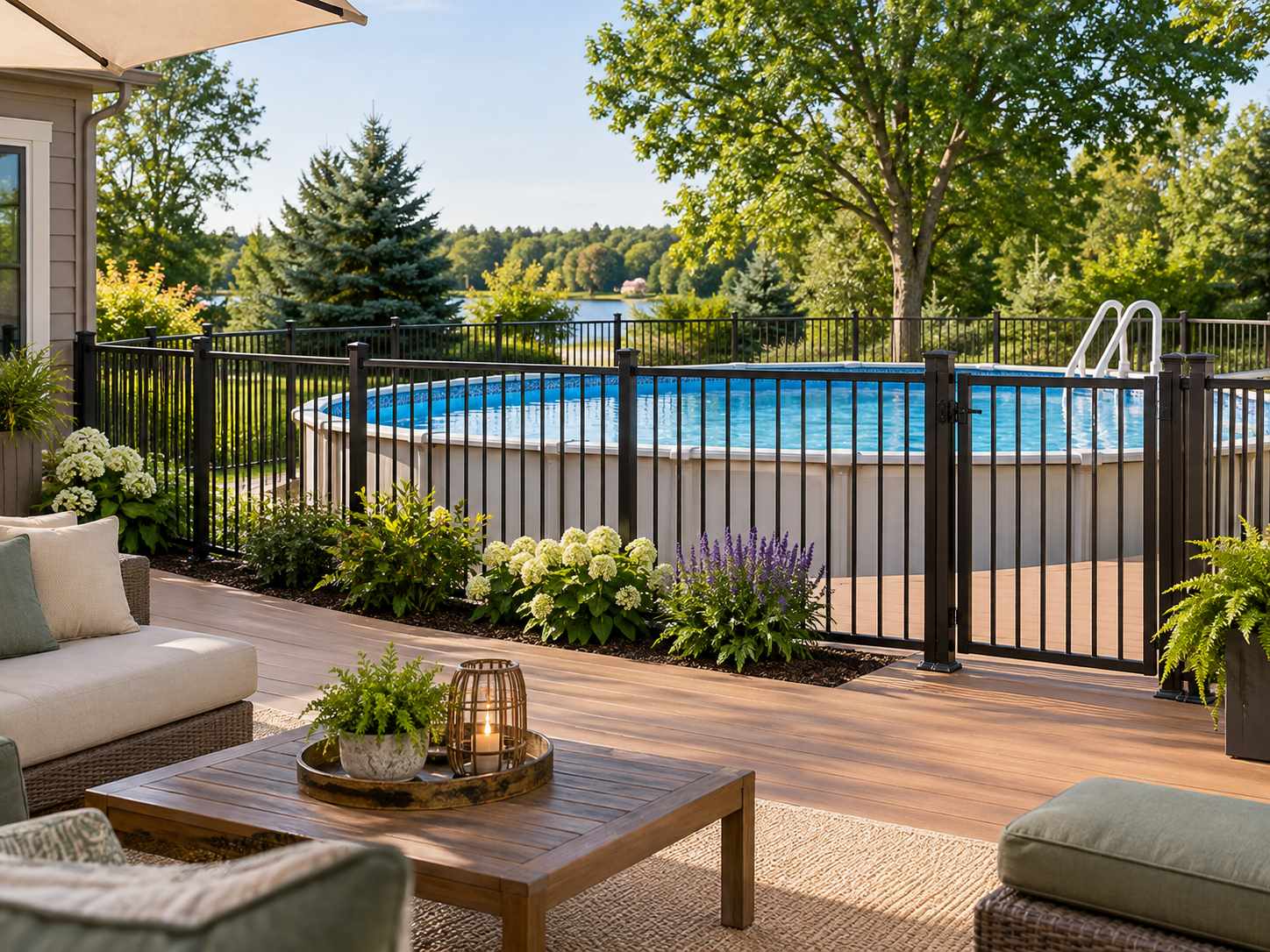
Arrange the surrounding garden so the pool remains visible from the places where adults supervise. Avoid tall decorative screens that hide the water or gate. A clear view supports observation, but it does not replace active supervision or an appropriate barrier system.
For more outdoor layouts and planting concepts, browse our outdoor living collection.
13. Create a Small Changing Area Off the Main Route
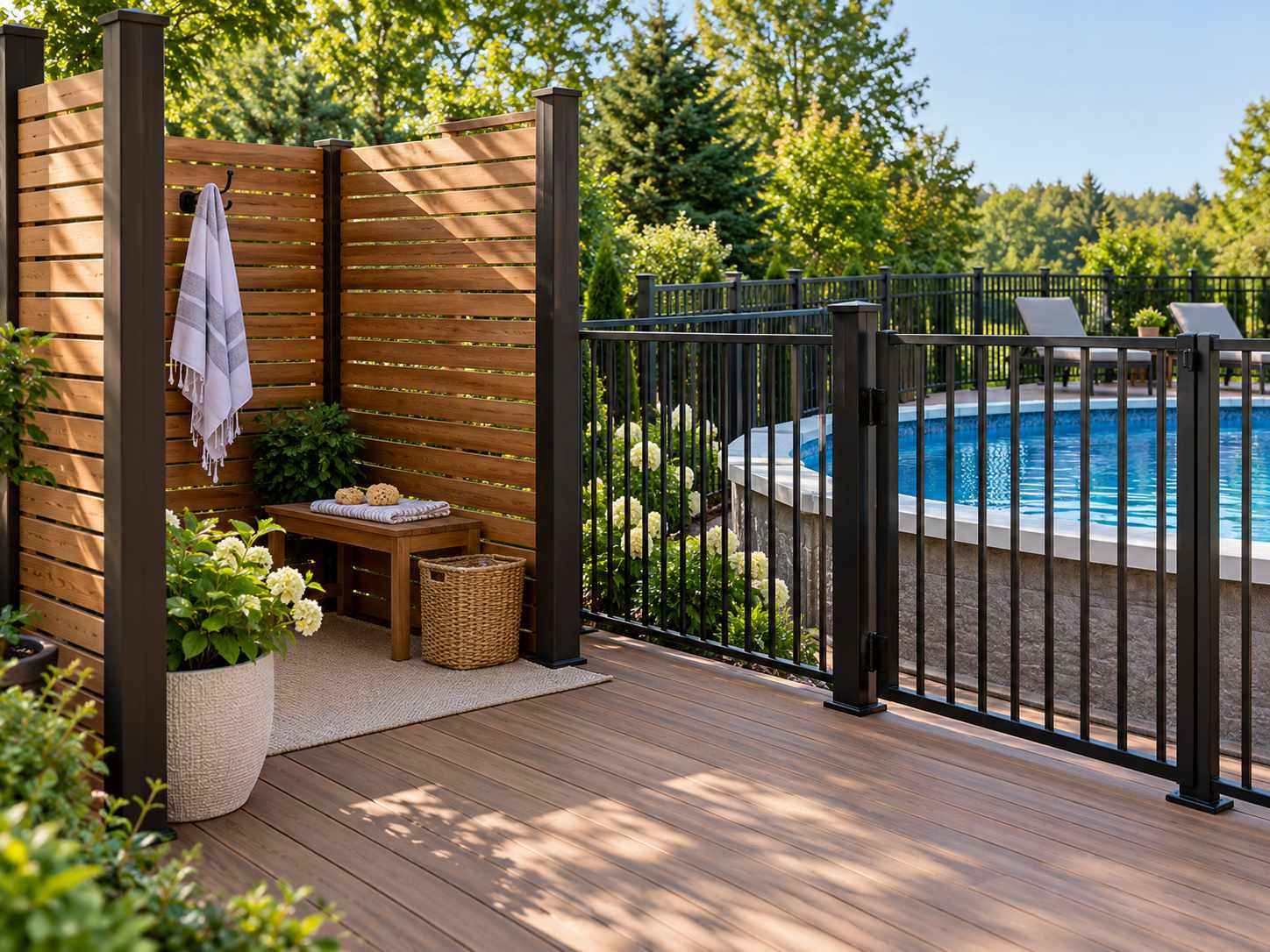
A separate changing corner can keep towels and clothes from collecting around the entrance. Position privacy screens without blocking views of the pool or access controls. Use outdoor-suitable fixings and keep the ground surface easy to clean and drain.
14. Choose Furniture That Can Be Stored
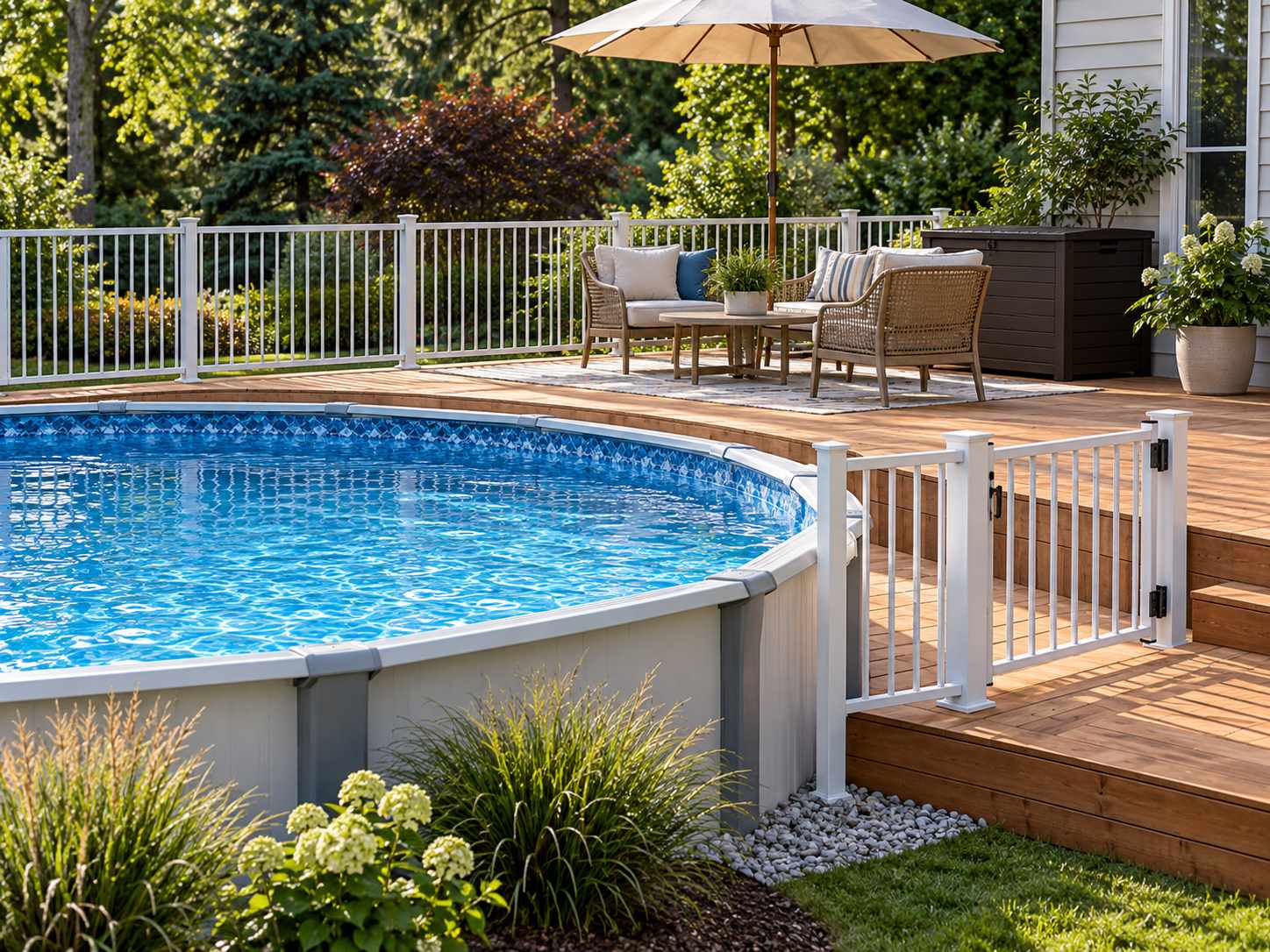
A few lightweight but stable outdoor pieces can be packed away when the area is not in use. Select storage outside the barrier’s climbing zones and keep gate movement unobstructed. Do not crowd a small deck just because furniture can technically fit on it.
15. Connect the Deck with a Clear Garden Path
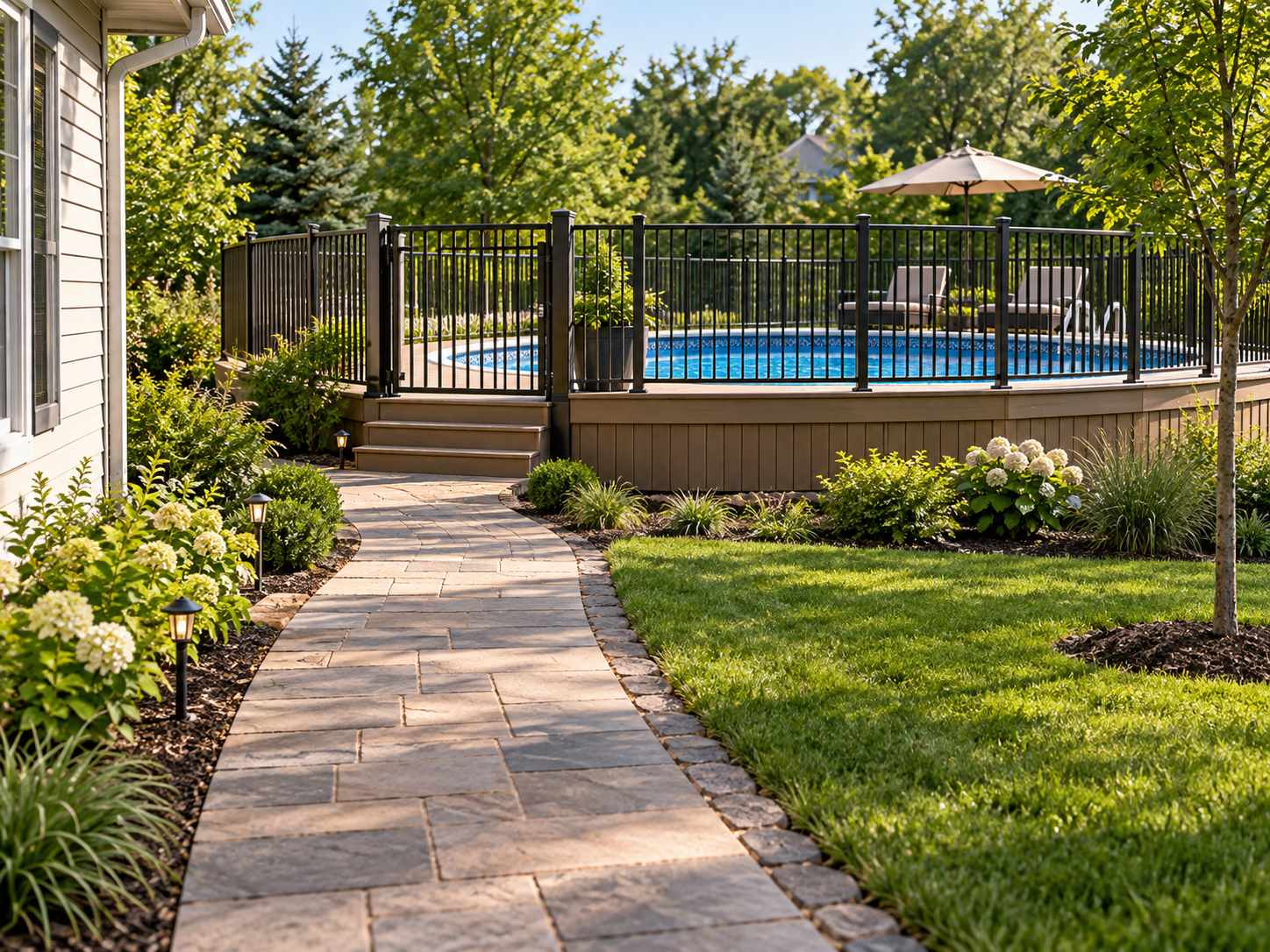
A defined path helps organize movement from the house to the pool area. Have its surface, drainage, lighting, and level changes planned for the site. Keep the route free of hoses and loose objects, and ensure it leads to the intended controlled entrance.
16. Give Cleaning Tools Their Own Enclosed Storage
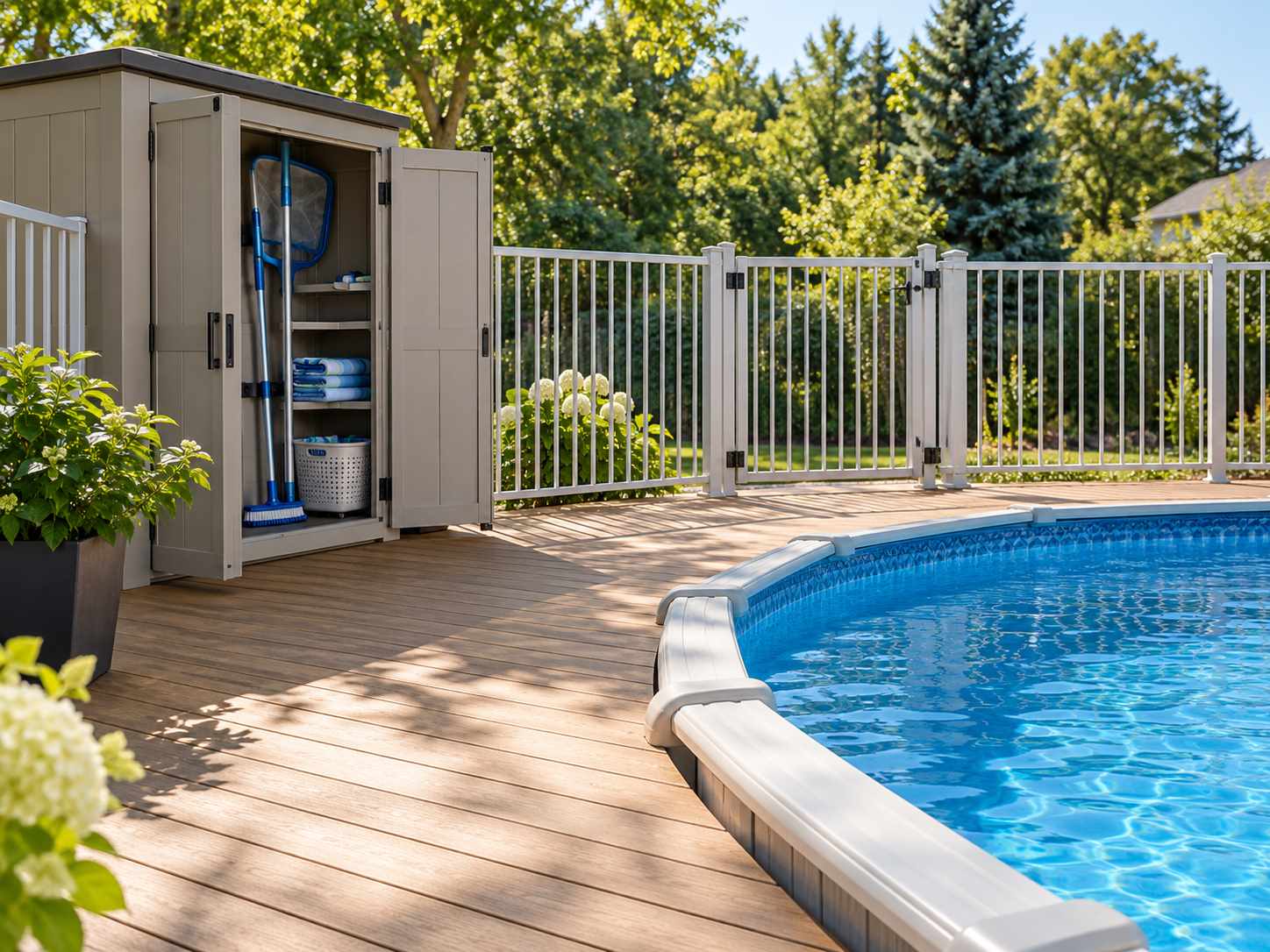
Dedicated storage keeps nets and poles from leaning against barriers or lying across the deck. Choose a location that does not interfere with equipment access. Store pool chemicals separately according to their labels and safety requirements, rather than combining them with towels or general garden supplies.
17. Keep the Surrounding Planting Simple
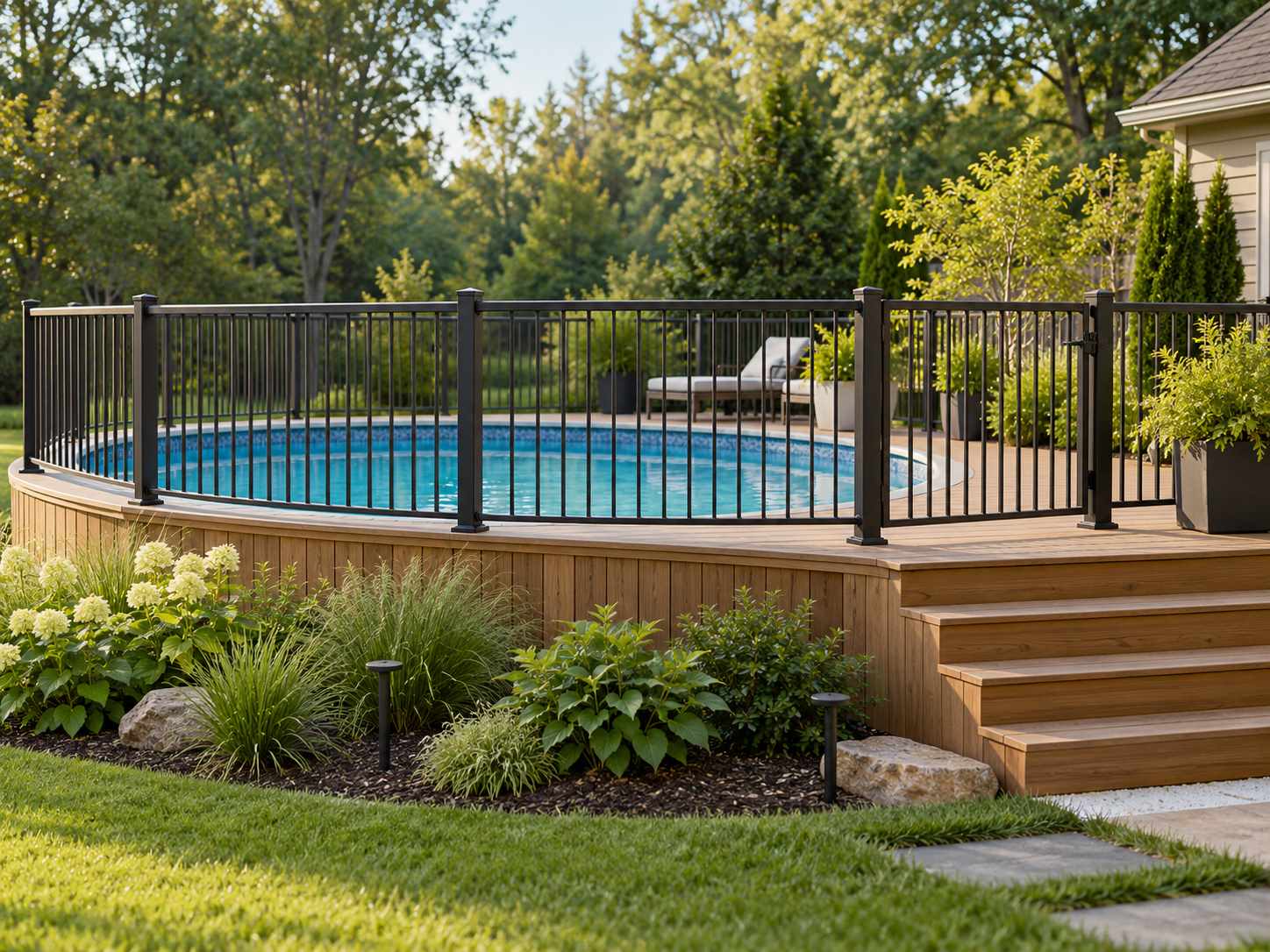
A restrained planting plan can frame the view while reducing visual clutter. Choose plants for your climate, maintenance capacity, and proximity to water. Maintain clearances around access controls and avoid using a decorative hedge as a substitute for a compliant barrier.
Frequently Asked Questions
Does a pool deck need professional design?
The structure, access, barriers, and drainage need to meet the requirements for your location and pool. Use qualified local advice rather than treating a decorative photograph as a construction plan.
Can a deck attach directly to the pool wall?
Do not assume the pool wall can support a deck. Follow the pool manufacturer’s requirements and have the support arrangement designed by a qualified professional.
What is the best decking material?
Suitability depends on the product, wet conditions, maintenance, heat, and local installation requirements. Compare manufacturer guidance and samples with your contractor before choosing.
Where should furniture go?
Place furniture where it does not obstruct gates, routes, or equipment and cannot act as a climbing aid near barriers. A separate ground-level seating zone may be more practical.
Can decorative screens replace a pool barrier?
No. A decorative screen is not automatically an appropriate safety barrier. Check the applicable requirements and use a correctly designed barrier and access-control system.
Before planning the layout, review Pool Safely’s residential barrier guidance.
Related Decorating Guides
Conclusion
Start with the layout, access controls, and maintenance needs, then choose the finishes and furnishings. A simpler deck with a clear route and a separate place to sit can work better than an overfilled structure. Save visual ideas to discuss with a qualified local professional before construction.
Find other practical decorating projects in our home decor library.