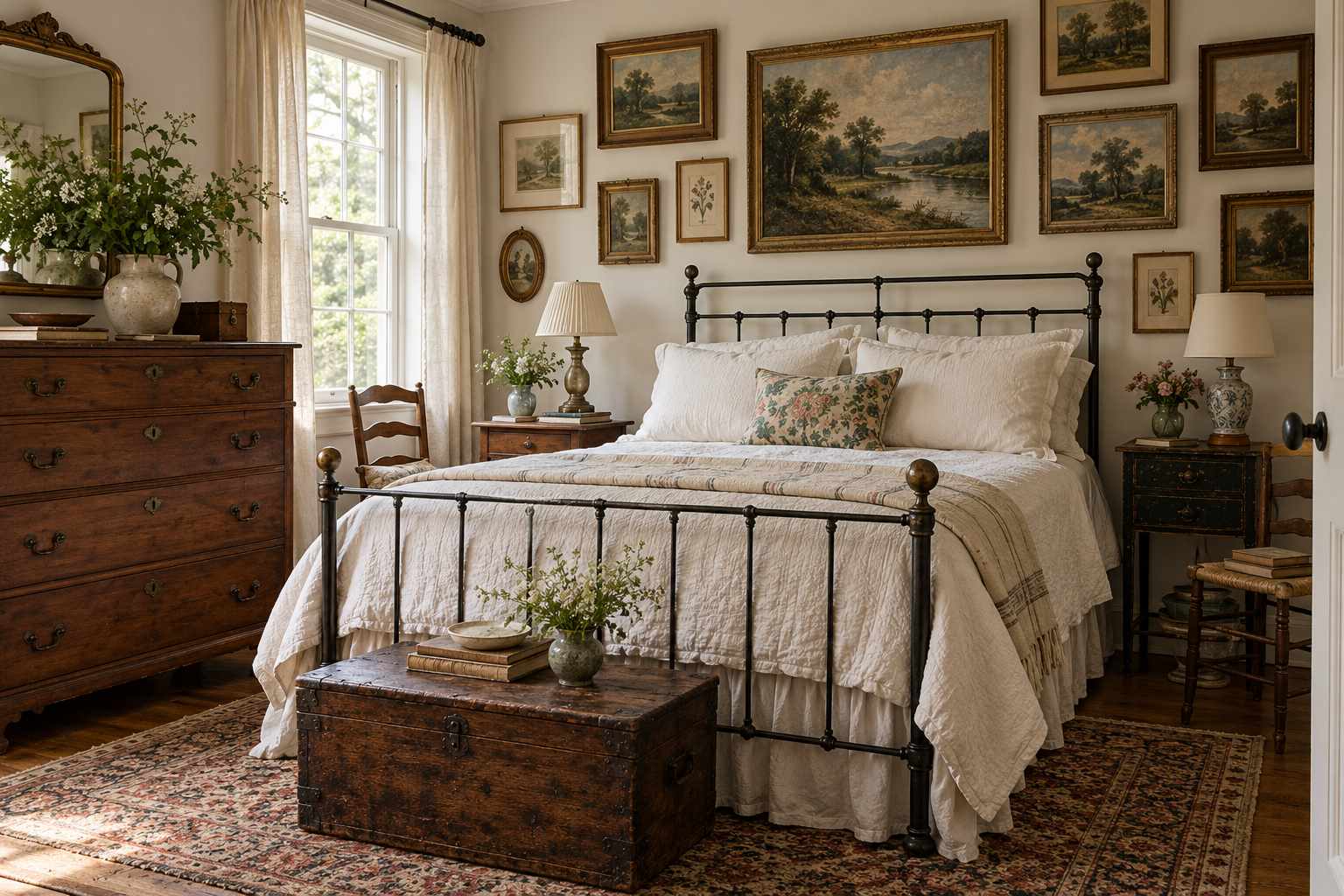
A vintage bedroom can develop around useful pieces with different histories rather than a matching set. A wooden dresser, a small patterned textile, and personal artwork may be enough to give the room character. These vintage bedroom design ideas focus on mixing scale, material, and function so the space still supports everyday routines. Check condition and measurements before buying older furniture, and leave specialist repairs or electrical restoration to qualified people. Keep the bed comfortable and let the collected details build gradually.
Key Takeaways
- Choose older pieces for condition, dimensions, and usefulness.
- Connect mixed furniture with a restrained textile palette.
- Separate decorative patina from damage that needs repair.
1. Pair a Wooden Dresser with a Plain Bed
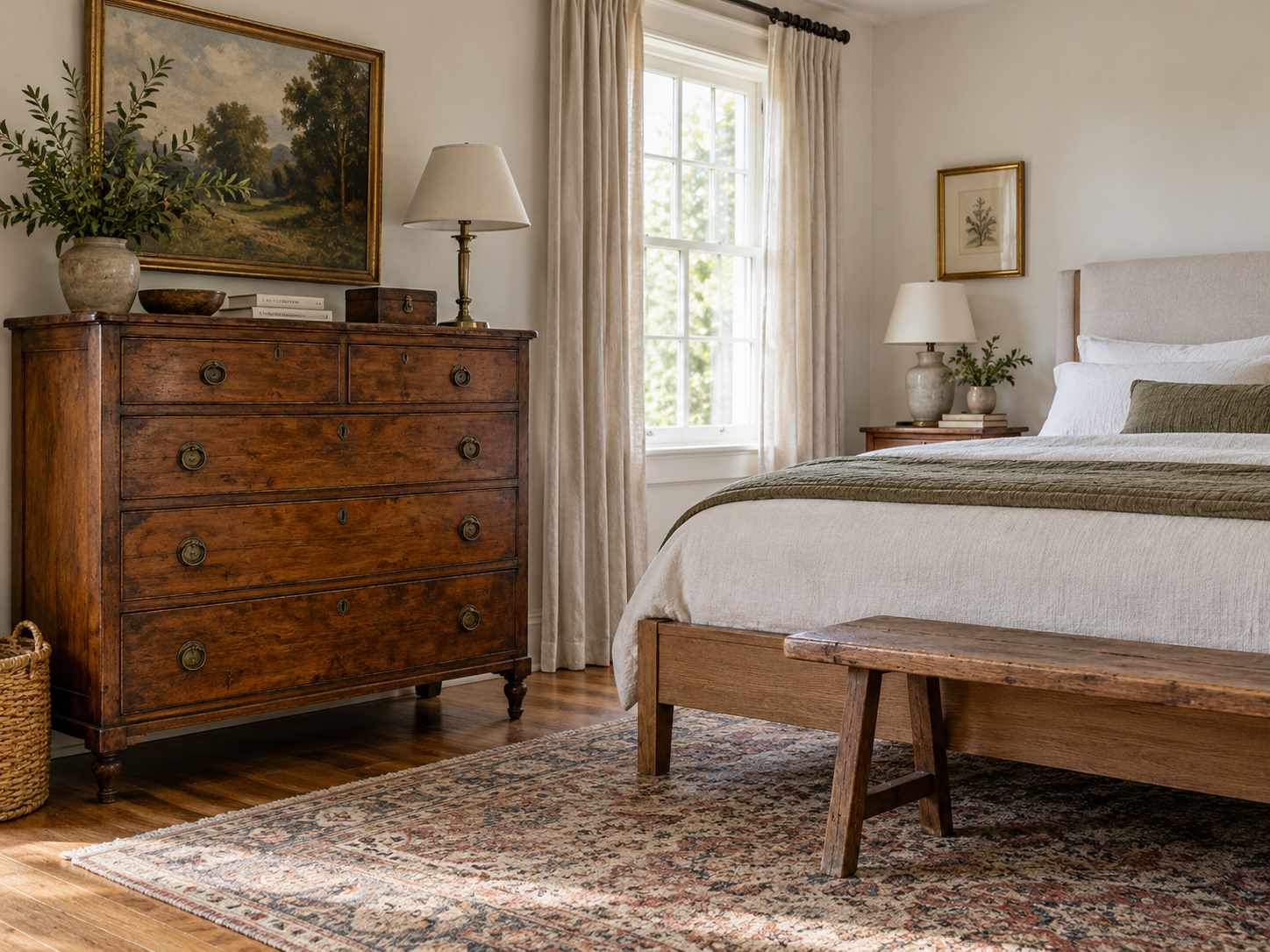
A characterful dresser can be the main older piece in a bedroom. Keep the bed’s shape simple so the furniture does not compete. Check drawer movement, internal space, and the route around it, then anchor the dresser according to appropriate guidance.
2. Use a Small Floral Fabric on One Surface
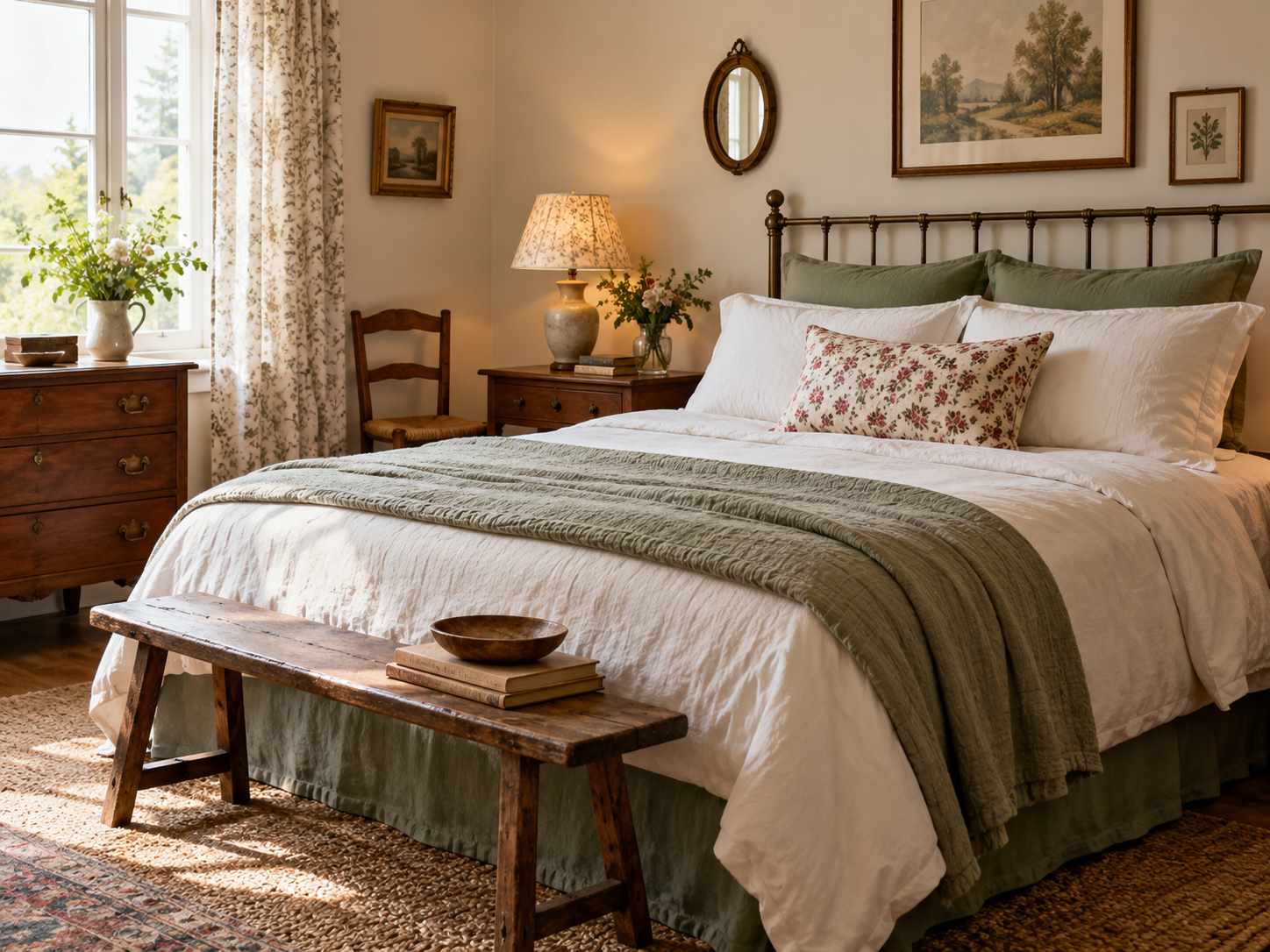
A small floral pattern can add a collected mood without filling the room. Try it on a cushion or a single cover and repeat its background color in plain bedding. Check the care instructions, especially when a secondhand textile may need specialist cleaning.
3. Choose Mismatched Bedside Tables with Similar Height
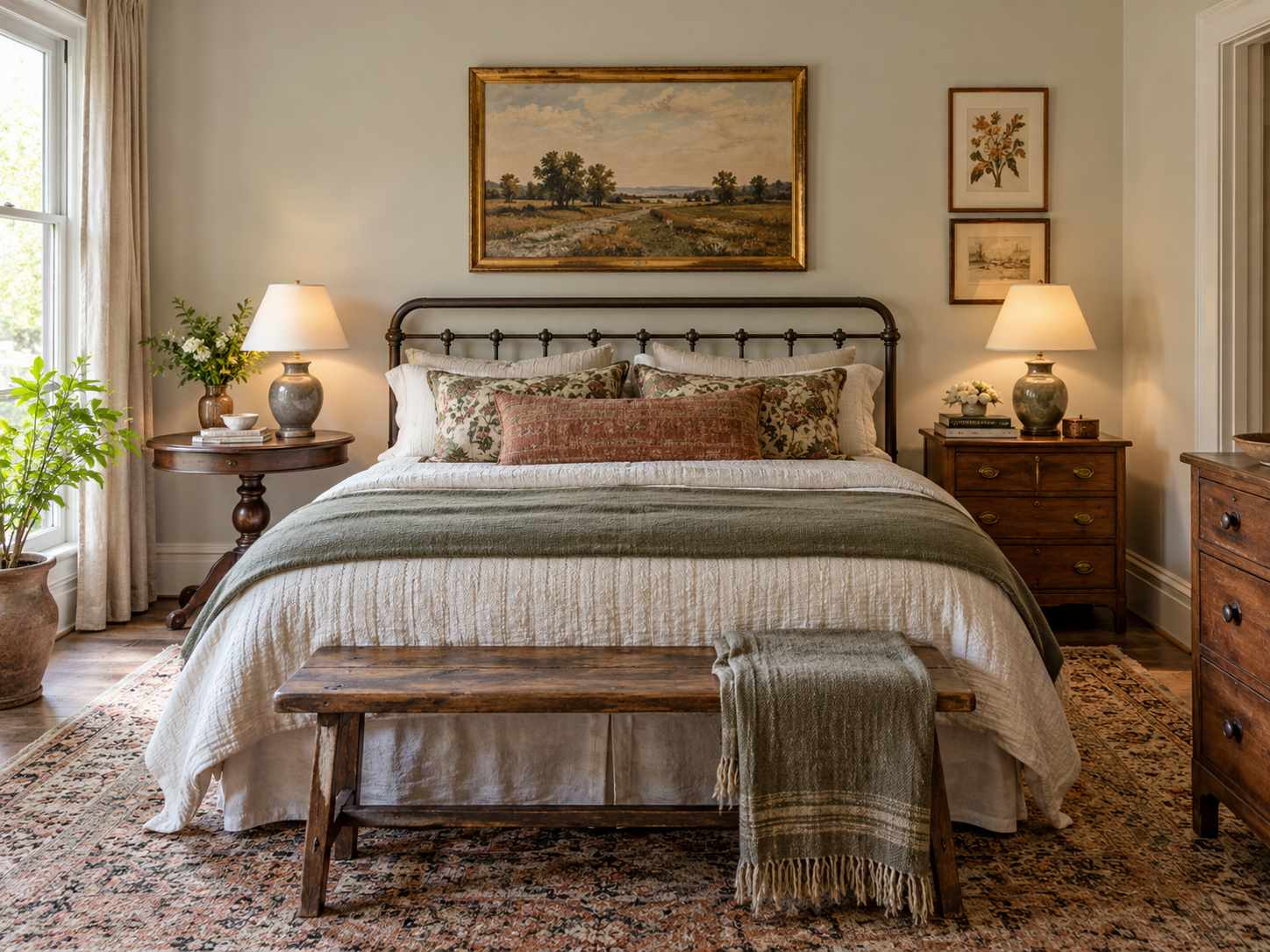
Different tables can work together when their usable surfaces relate to the bed. Check lamp placement and storage needs on both sides. Connect the pieces with related lighting or one shared wood tone instead of trying to disguise their differences.
4. Frame a Collection of Small Landscapes
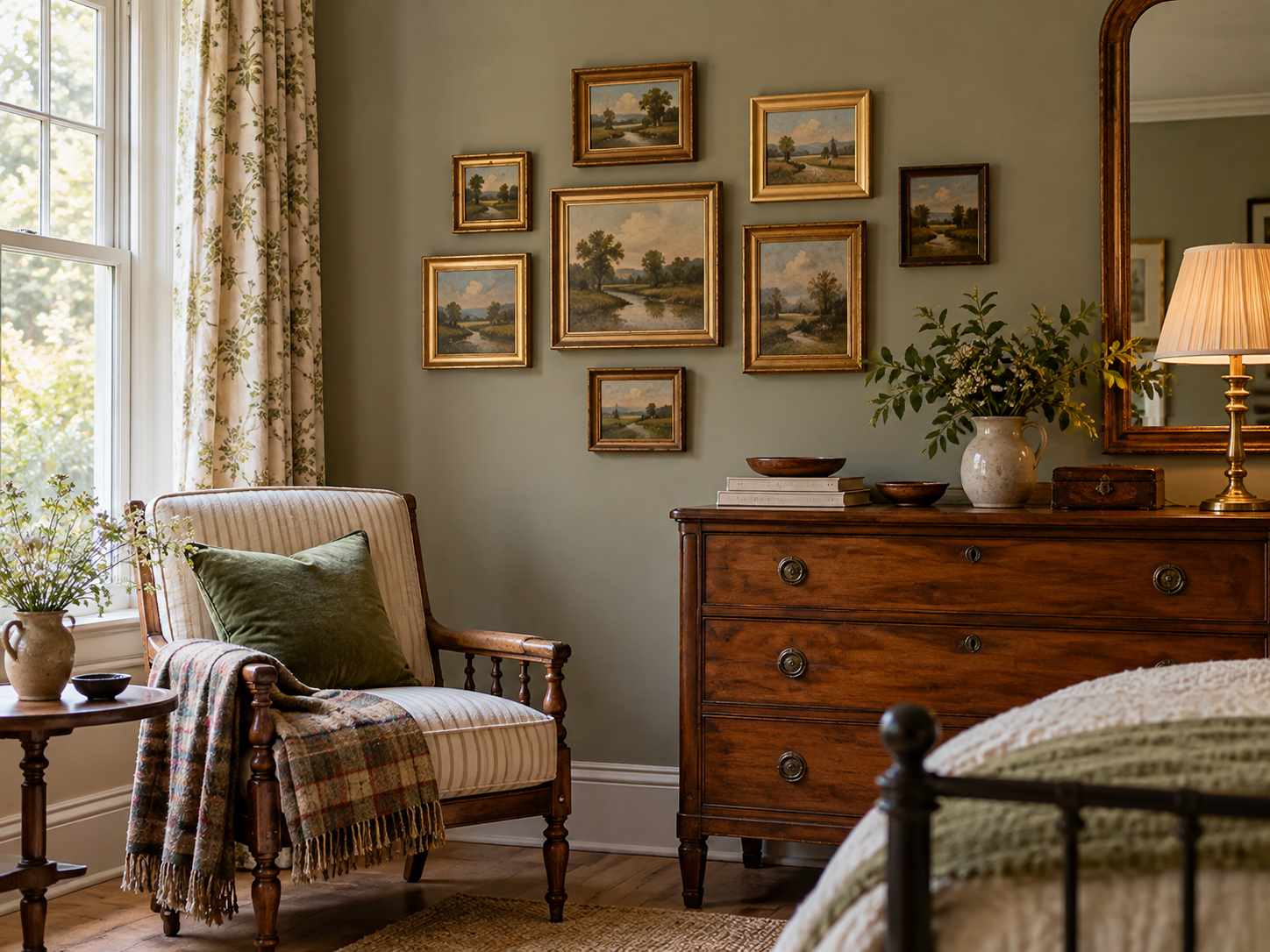
Small landscapes can create a personal wall arrangement beside a dresser or chair. Use work you own or have rights to reproduce and plan the grouping before hanging. A limited range of frame finishes can connect different subjects without making them identical.
5. Add a Woven Stool for Flexible Seating
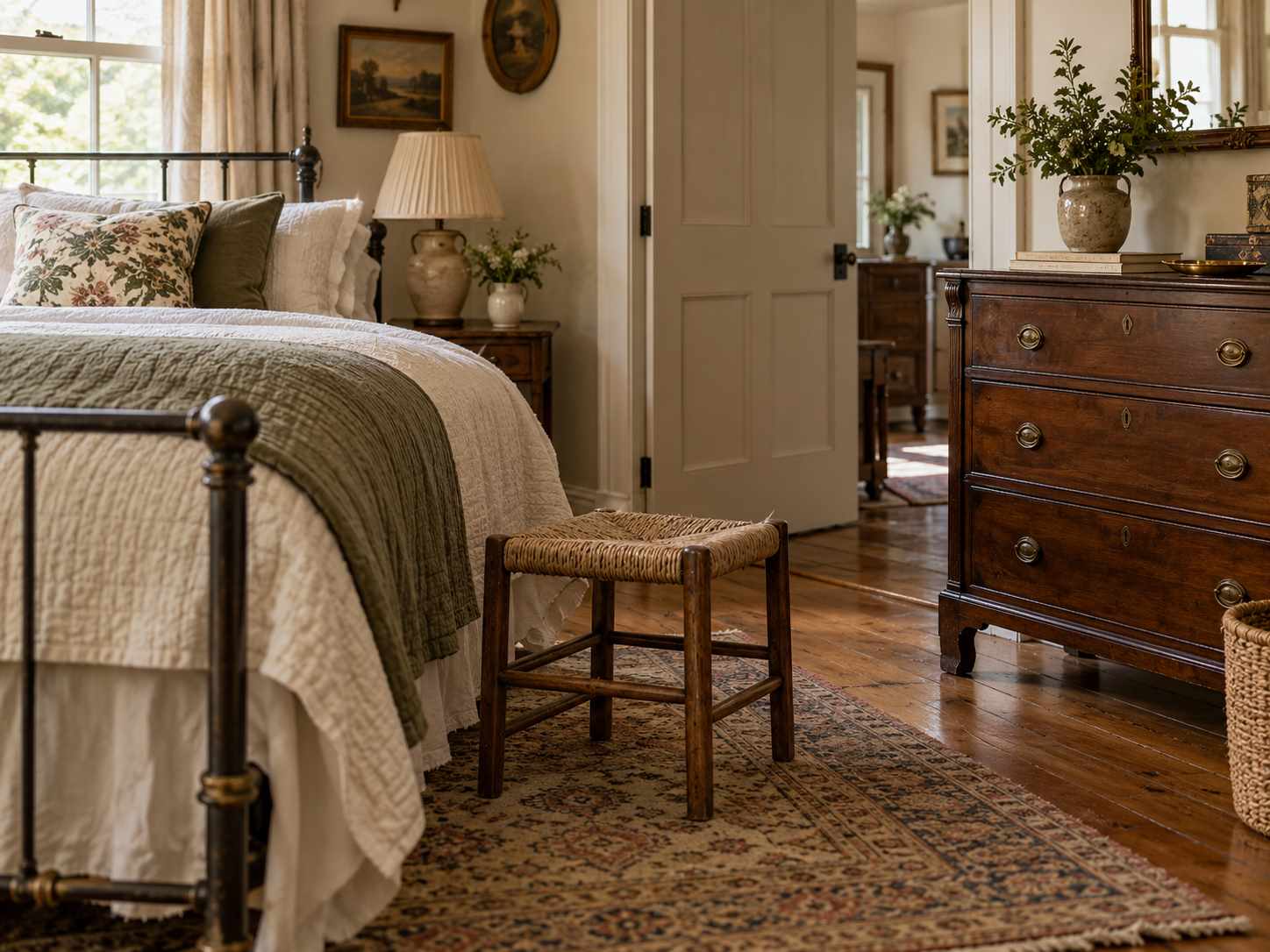
A small woven stool introduces texture and a place to sit briefly while dressing. Check the frame and seat condition before use. Keep it clear of drawers and walkways, and do not use a decorative stool as a step.
6. Use a New Lamp with a Traditional Shape
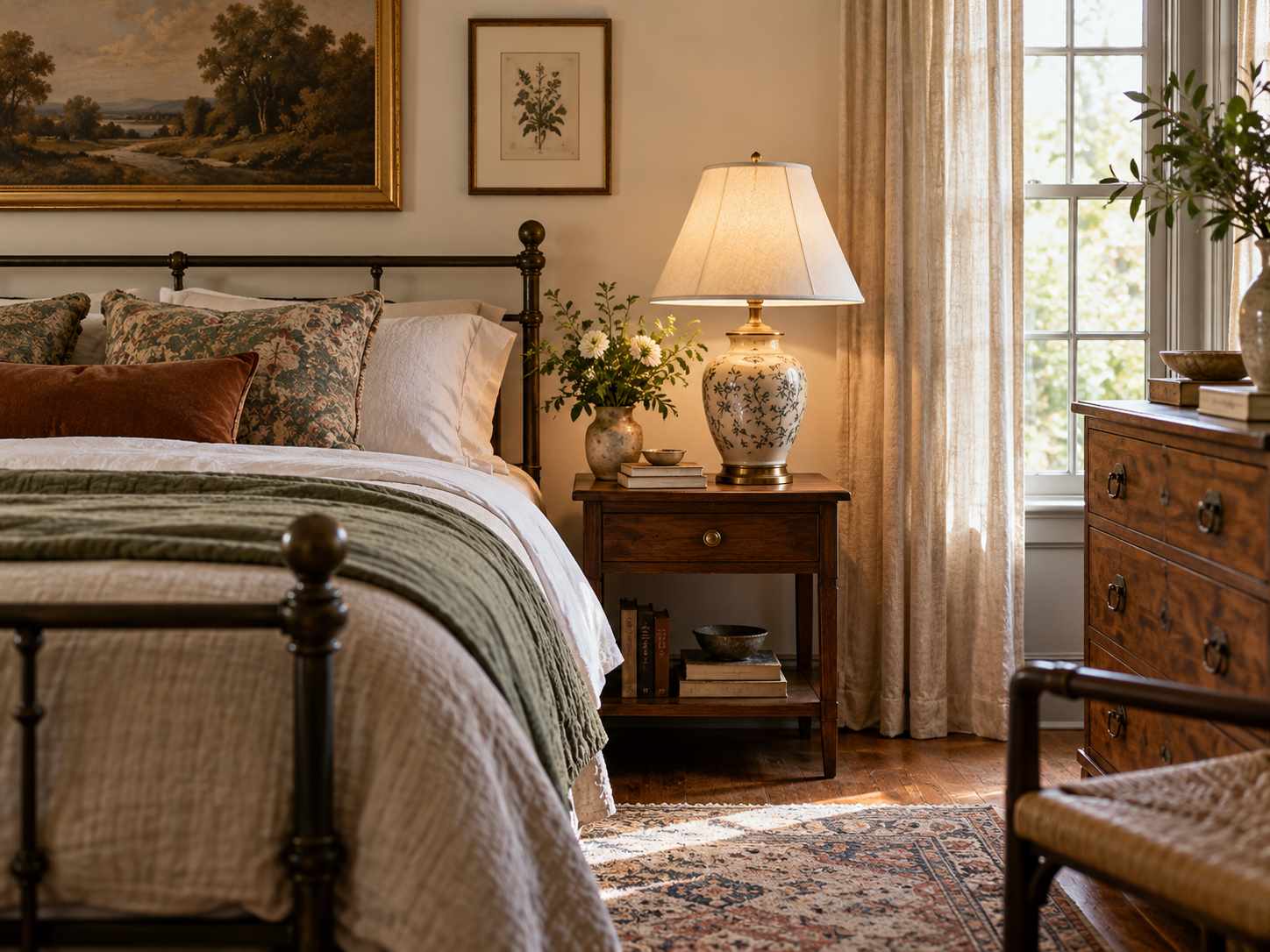
A newly made lamp can supply an older-looking silhouette with current product guidance. Choose it for usable light and a reachable switch. If you buy a vintage electrical fitting, have its condition checked professionally before use rather than assuming it works safely.
For a practical foundation for the bedding, see our guide to layering a comfortable bed.
7. Hang Plain Curtains in a Soft Natural Tone
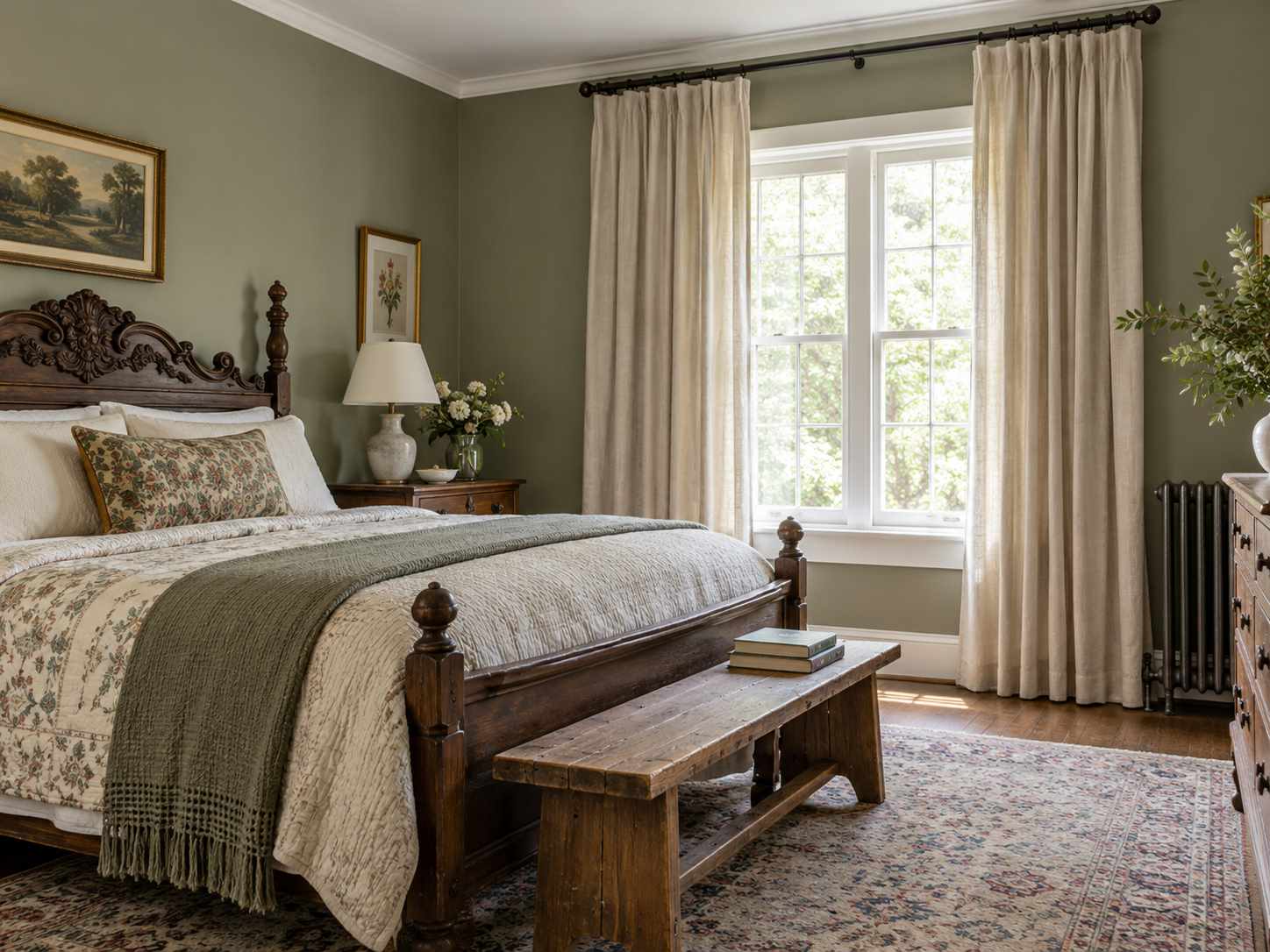
Plain curtains give patterned or carved pieces a quiet background. Compare the fabric with the wall and bedding in daylight. Choose the lining for privacy and light control, and use appropriate hardware with fabric kept clear of heaters.
8. Keep a Small Tray for Everyday Jewelry
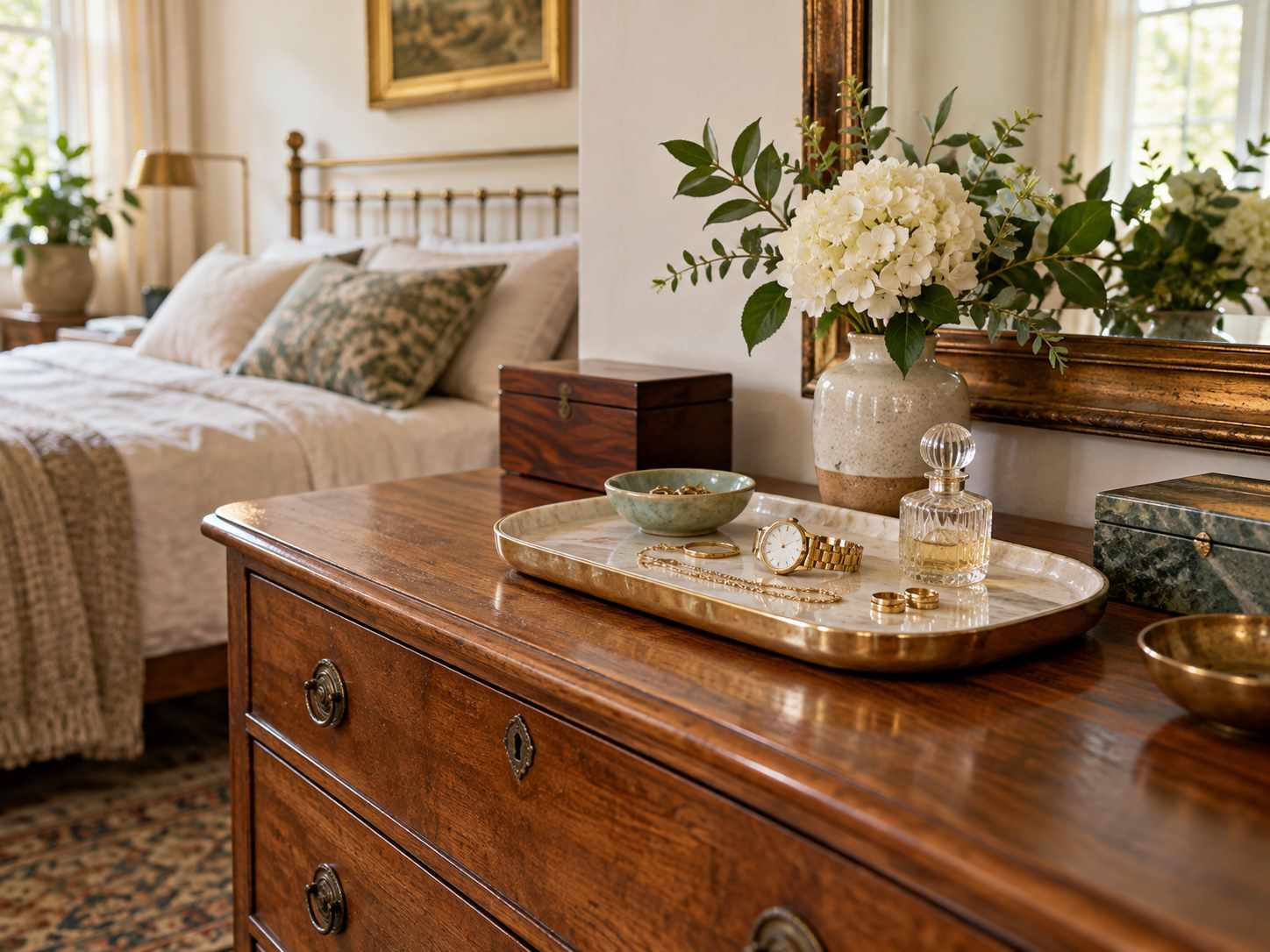
A tray can make a dresser useful while containing visual clutter. Choose a smooth surface that will not catch delicate items and keep it away from edges. Put occasional-use pieces in proper storage so the tray does not become a crowded permanent display.
9. Use a Metal Bed Frame as the Main Outline
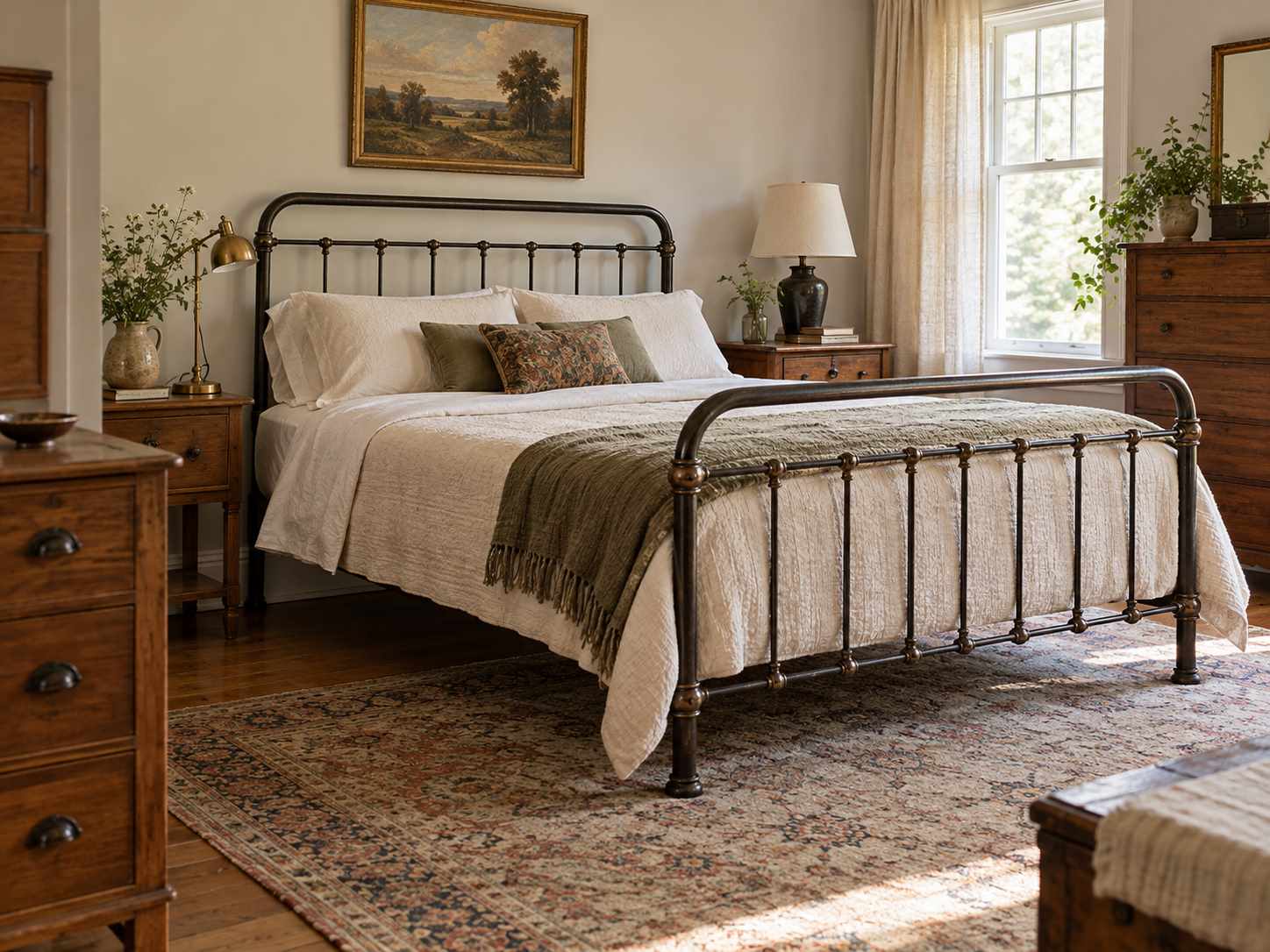
A simple metal bed frame can give mixed wooden furniture a clear counterpart. Check the joints, mattress support, and finish condition, particularly on an older piece. Keep bedding relatively plain so the frame remains visible.
10. Bring in a Quiet Faded-Look Rug
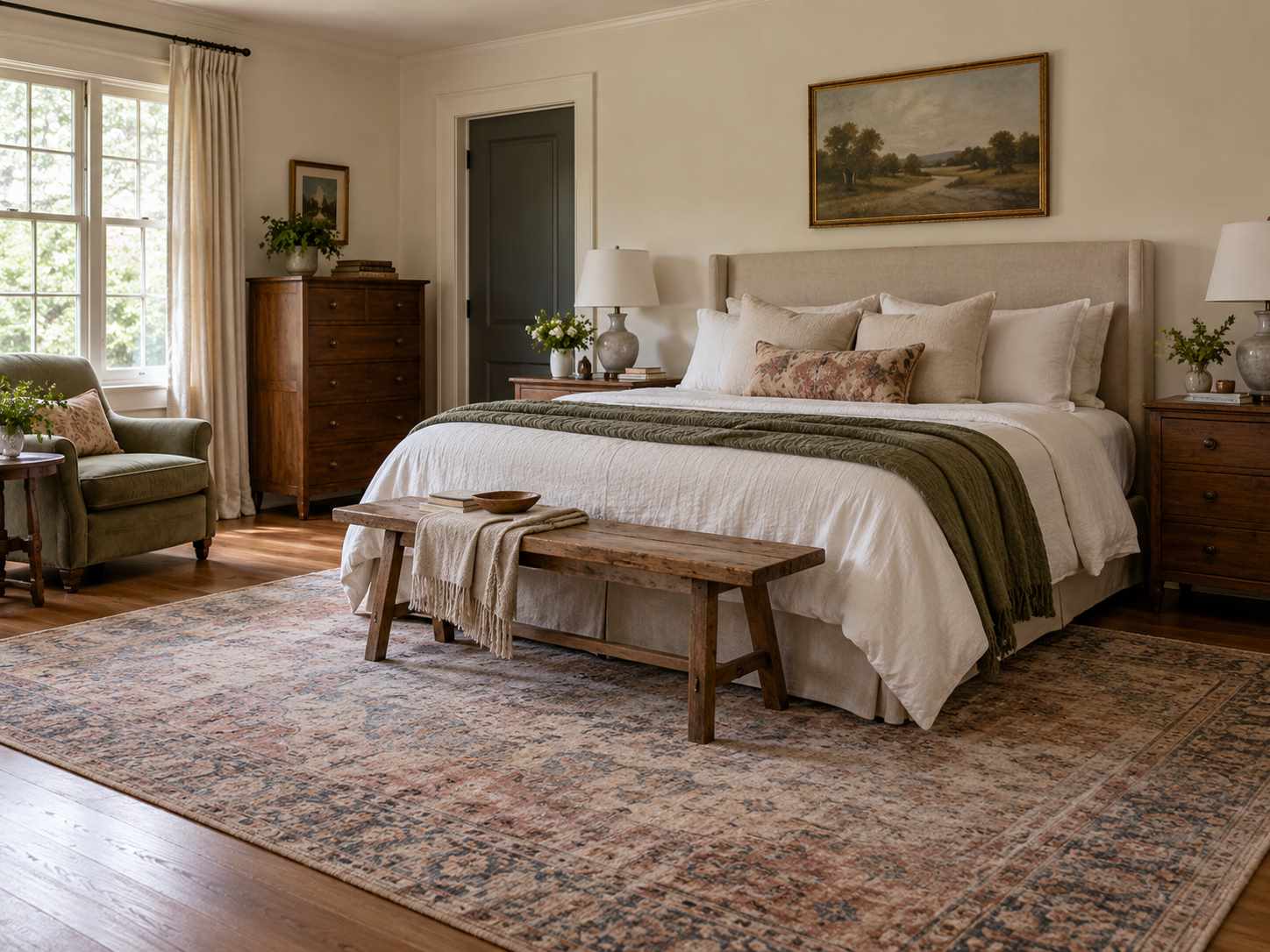
A rug with a softened pattern can connect furniture in different finishes. Choose it for condition and cleaning needs rather than a distressed appearance alone. Check the footprint and use a suitable rug pad where needed to keep the edges stable.
11. Place a Small Chest at the Foot of the Bed
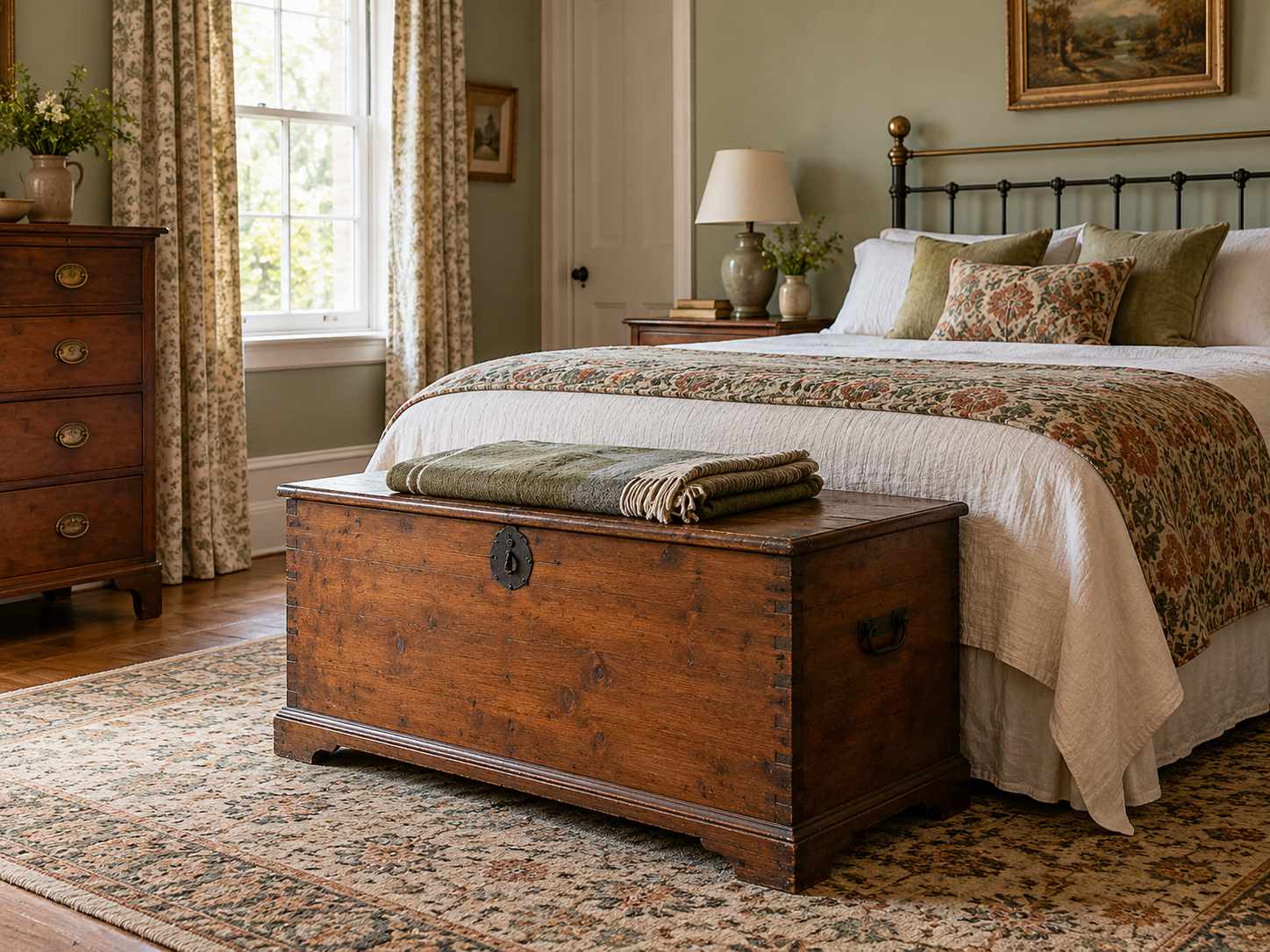
A chest can store spare bedding if its dimensions leave a comfortable route. Check the lid mechanism and suitability for your household, especially around children. Avoid using a damaged or unsuitable trunk merely because it fits the visual style.
12. Use a Wallpaper Panel Behind a Simple Headboard
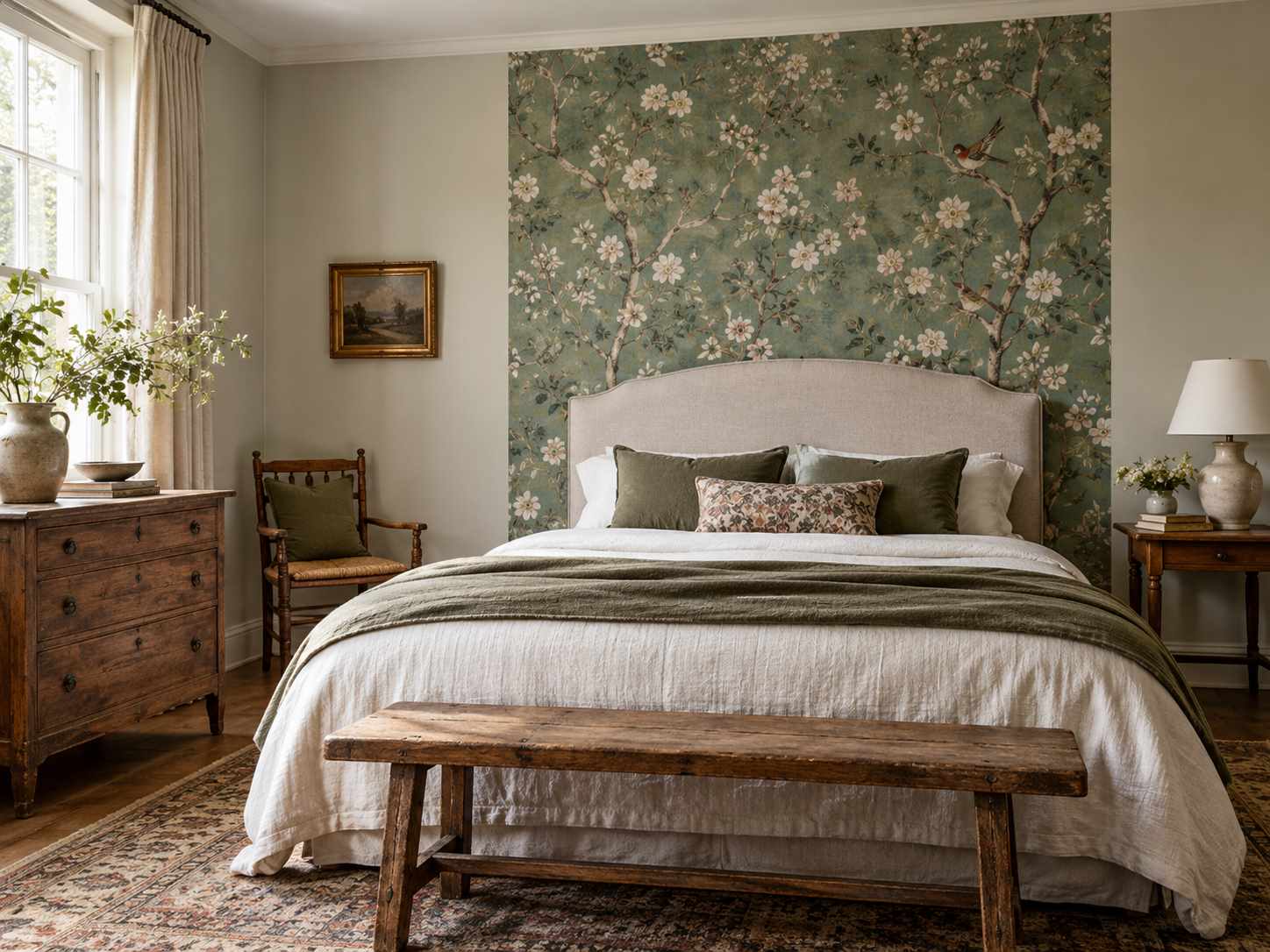
One panel can introduce a decorative pattern while keeping the rest of the room quiet. Plan the pattern placement and check the wallcovering’s installation requirements. In a rental, confirm permission and removal guidance before using an adhesive product.
For ideas that support a compact layout, explore our small-space decorating guides.
13. Display Books You Actually Read
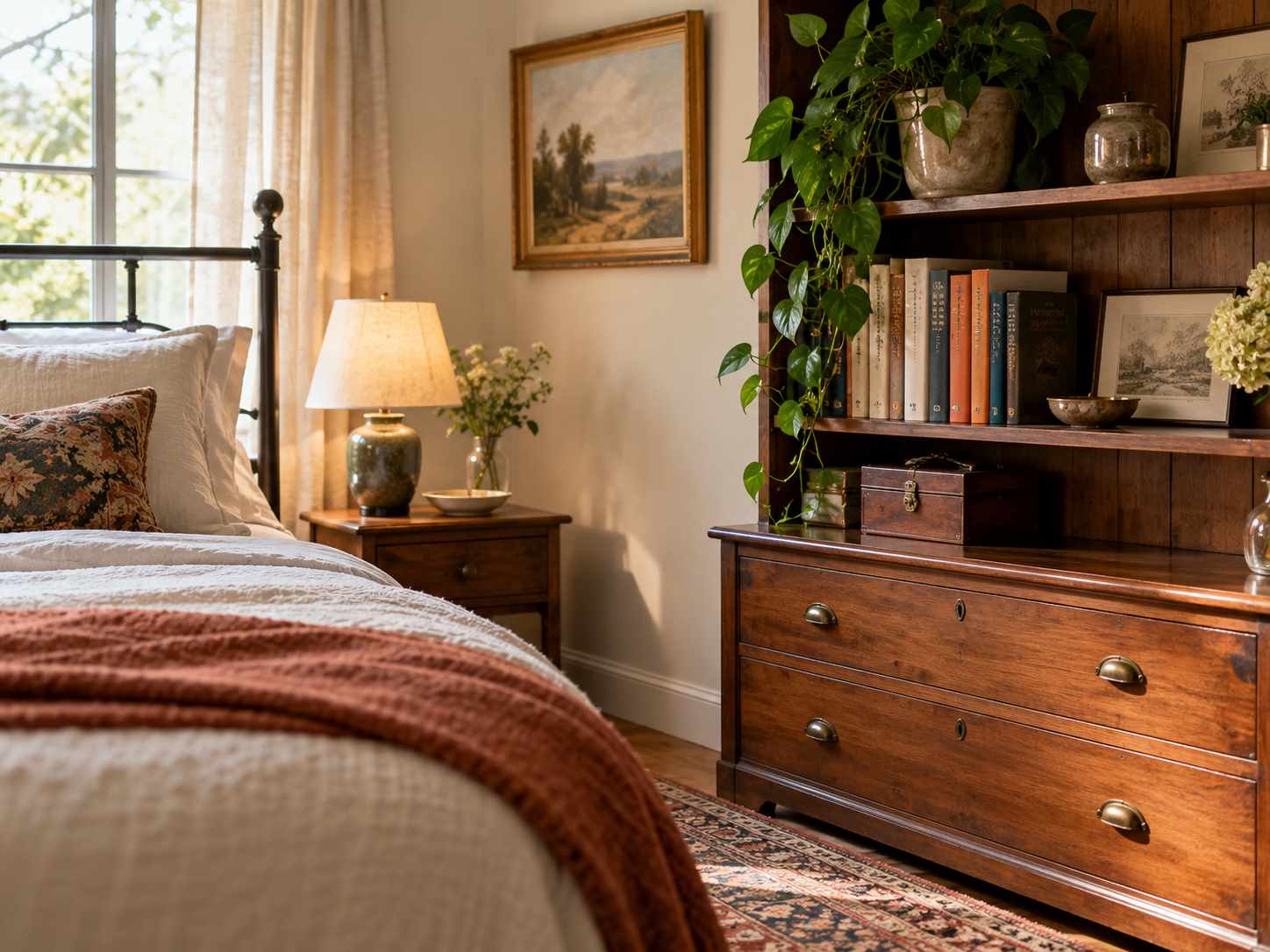
A short book group on a shelf or cabinet can make the room personal without extra ornaments. Keep the books accessible and avoid unstable stacks. Choose a shelf that supports the load and secure furniture according to its instructions.
14. Add a Ceramic Pitcher on a Dry Surface
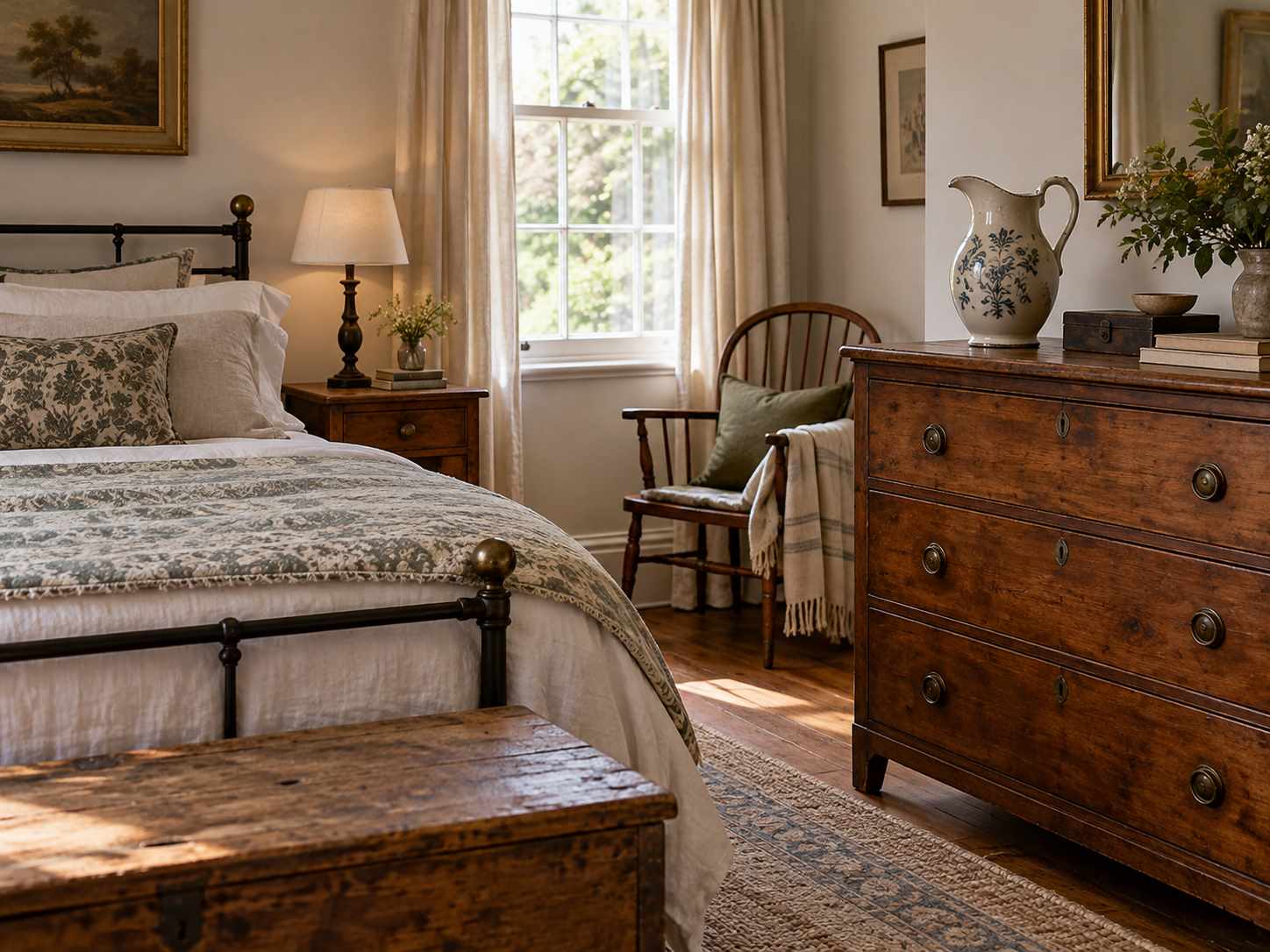
A pitcher or jug can provide a sculptural detail without requiring a full flower arrangement. Check that the base is stable and protect the furniture from moisture. Keep it on a dresser or side unit rather than a narrow ledge over the sleeping area.
15. Use a Reupholstered Chair for a Reading Corner
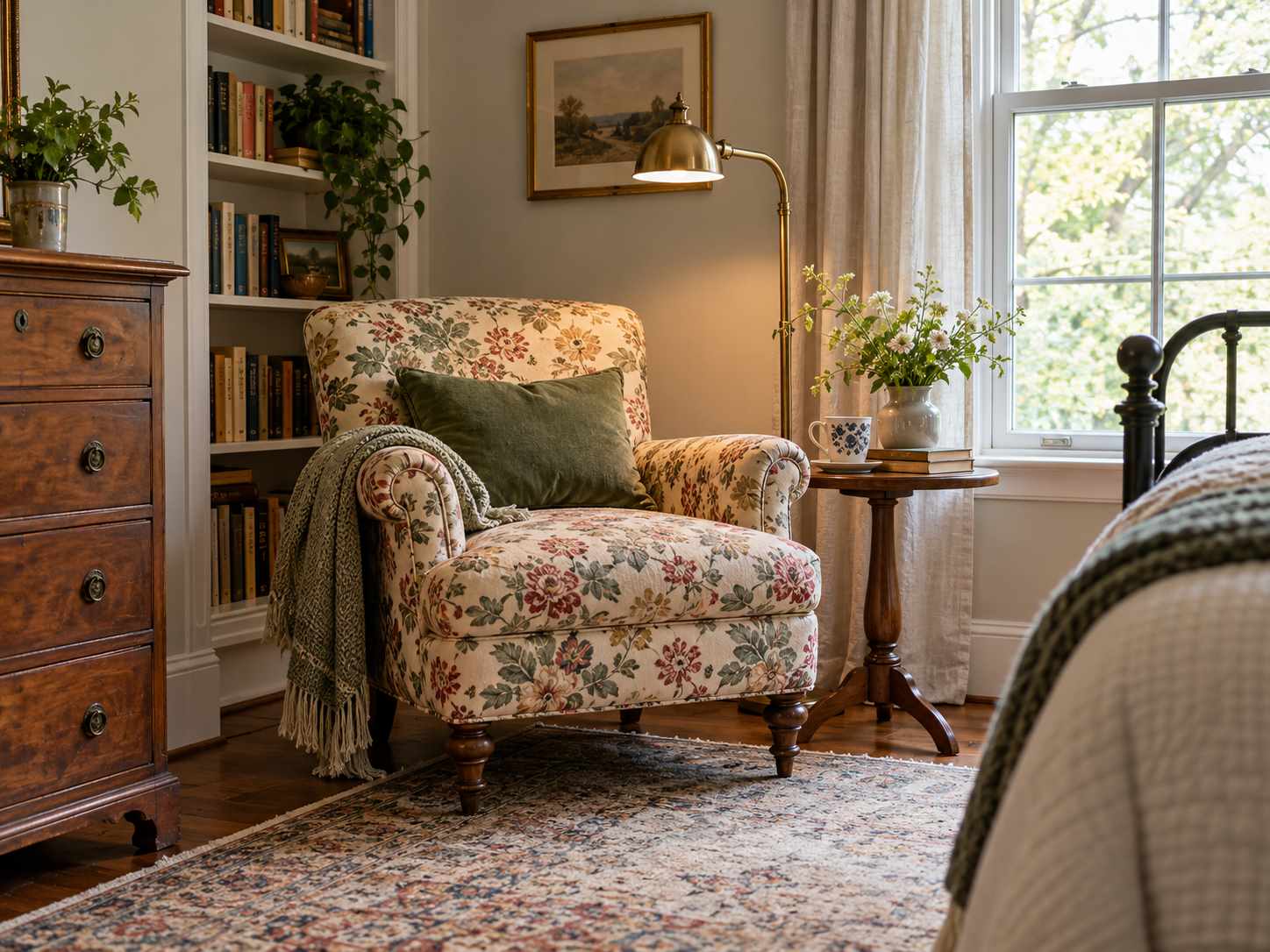
A structurally sound chair can gain a useful place with appropriate upholstery work. Check the frame and repair needs before spending on fabric. Position it for reading light and keep the seat from becoming a substitute for laundry storage.
16. Let One Worn Finish Remain Visible
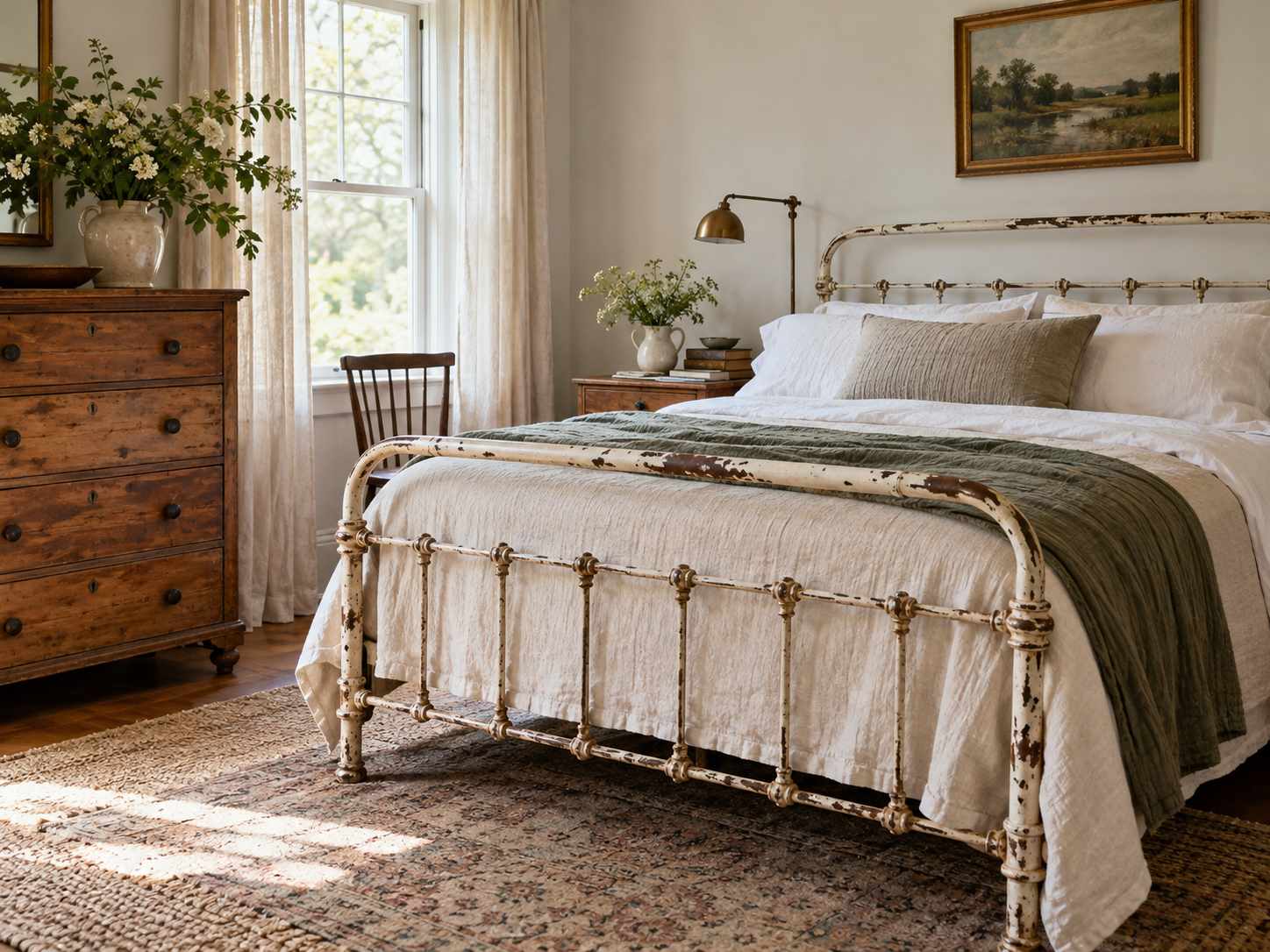
A worn finish can contribute character when the underlying piece is sound and safe to use. Check for loose coatings, damage, or other concerns before keeping it as-is. Balance it with clean plain textiles so the room feels cared for rather than neglected.
17. Leave Room for the Collection to Grow
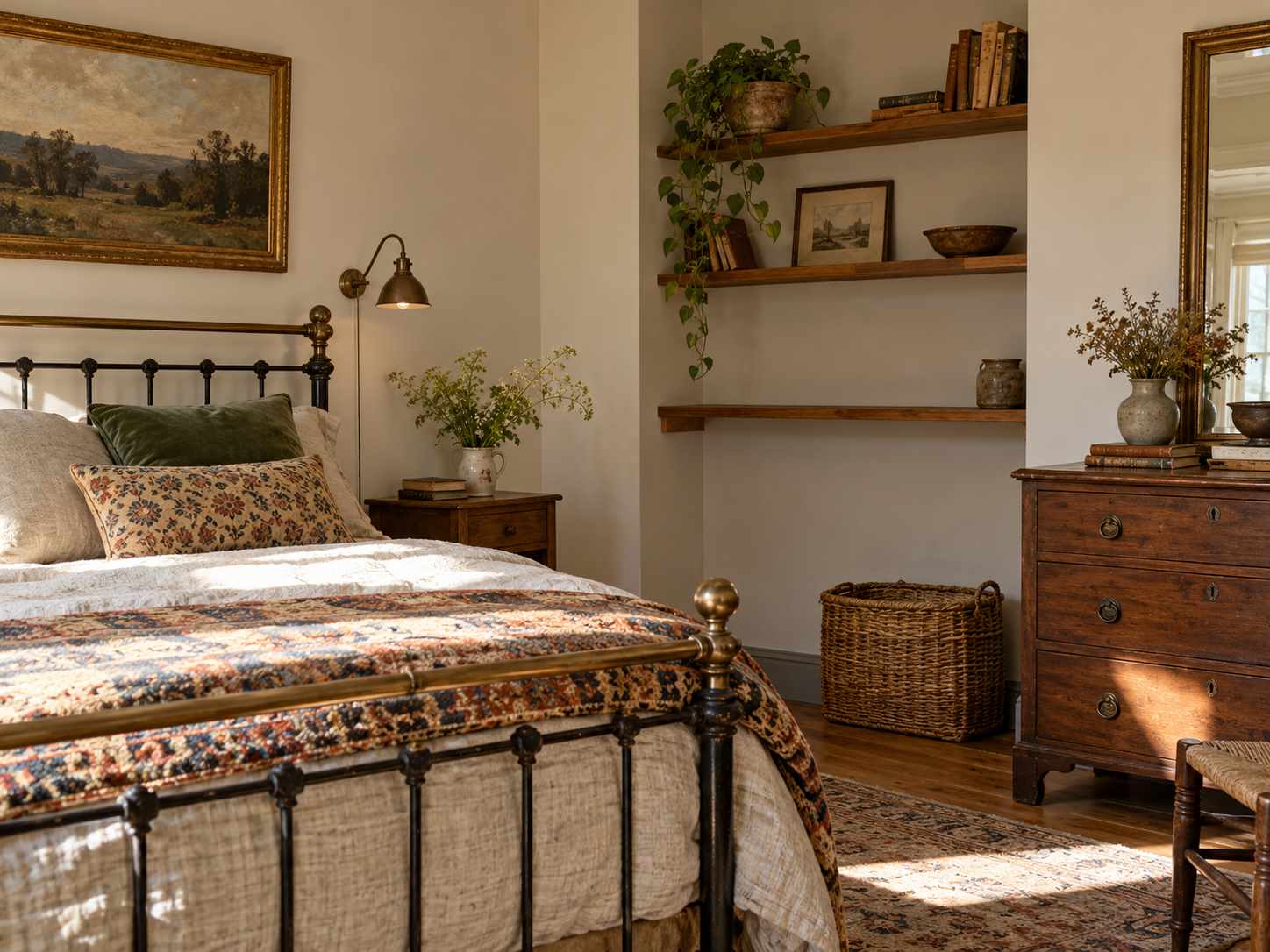
Avoid buying every accessory at once. Keep a wall section or shelf partly empty while you learn how the bedroom functions. A few useful pieces with personal meaning will connect more naturally than a complete set of objects chosen only to look old.
Frequently Asked Questions
Does vintage decor require antique furniture?
No. You can combine older pieces, newer furniture, and traditional shapes. Choose items for how they work together and how you use them.
What should I check before buying secondhand furniture?
Measure the piece, inspect joints and drawers, and assess condition and repair needs. Follow appropriate anchoring guidance once it is in place.
Can I mix different wood finishes?
Yes. Similar warmth, repeated textile colors, or a plain background can connect them. The pieces do not need to match exactly.
Should I use an old electrical lamp?
Have a qualified professional check and restore an older electrical fitting before use. A new lamp with a traditional shape may be a simpler option.
How do I avoid a cluttered bedroom?
Give each collection a defined place and keep useful surfaces partly clear. Let the bed and storage establish the room before adding small decorations.
Related Decorating Guides
- 17 70s Bedroom Decor Ideas for Warm, Relaxed Rooms
- 17 90s Bedroom Decor Ideas with a Softer Finish
- 17 Bedroom Wall Art Ideas for a Personal, Balanced Room
Conclusion
Build around one useful piece you enjoy, then connect it with simple bedding and a clear palette. Check older items carefully and give them enough space to be appreciated. Save ideas that help your bedroom function as well as reflect your taste.
Browse more palettes and furnishings in our bedroom collection.