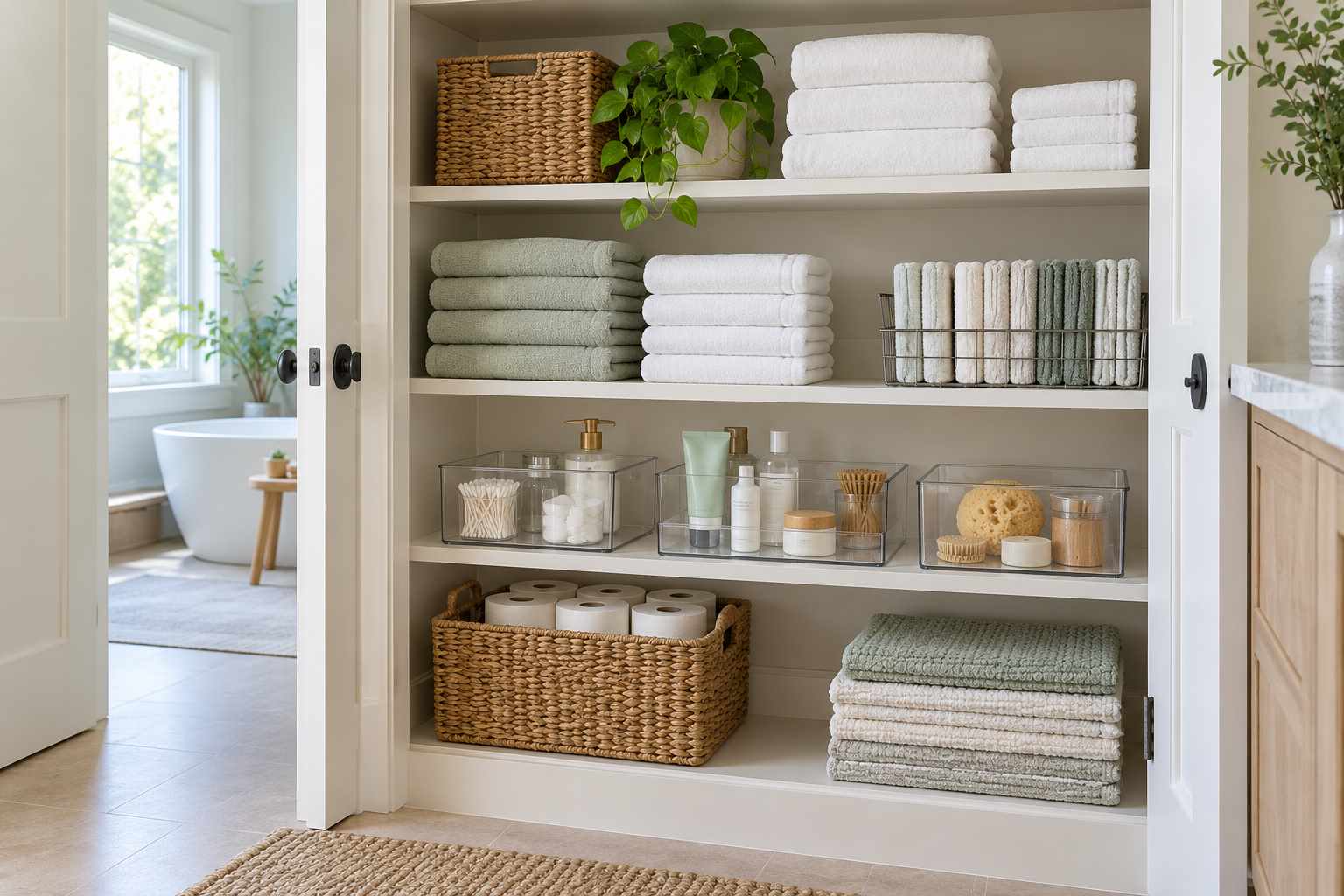
A bathroom closet works better when its contents have clear roles and can be removed without disturbing everything around them. Begin by measuring the shelves and reviewing what you actually need to keep there. These bathroom closet organizer ideas focus on access, grouping, and realistic storage capacity. Keep products in conditions appropriate to their labels, leave maintenance access clear, and avoid treating the closet as a place for every spare item in the home. A simple arrangement you can reset is more useful than a tightly packed display.
Key Takeaways
- Measure shelves and contents before buying containers.
- Group supplies by use and keep everyday items reachable.
- Leave enough space to remove bins and return towels comfortably.
1. Give Everyday Towels a Reachable Shelf
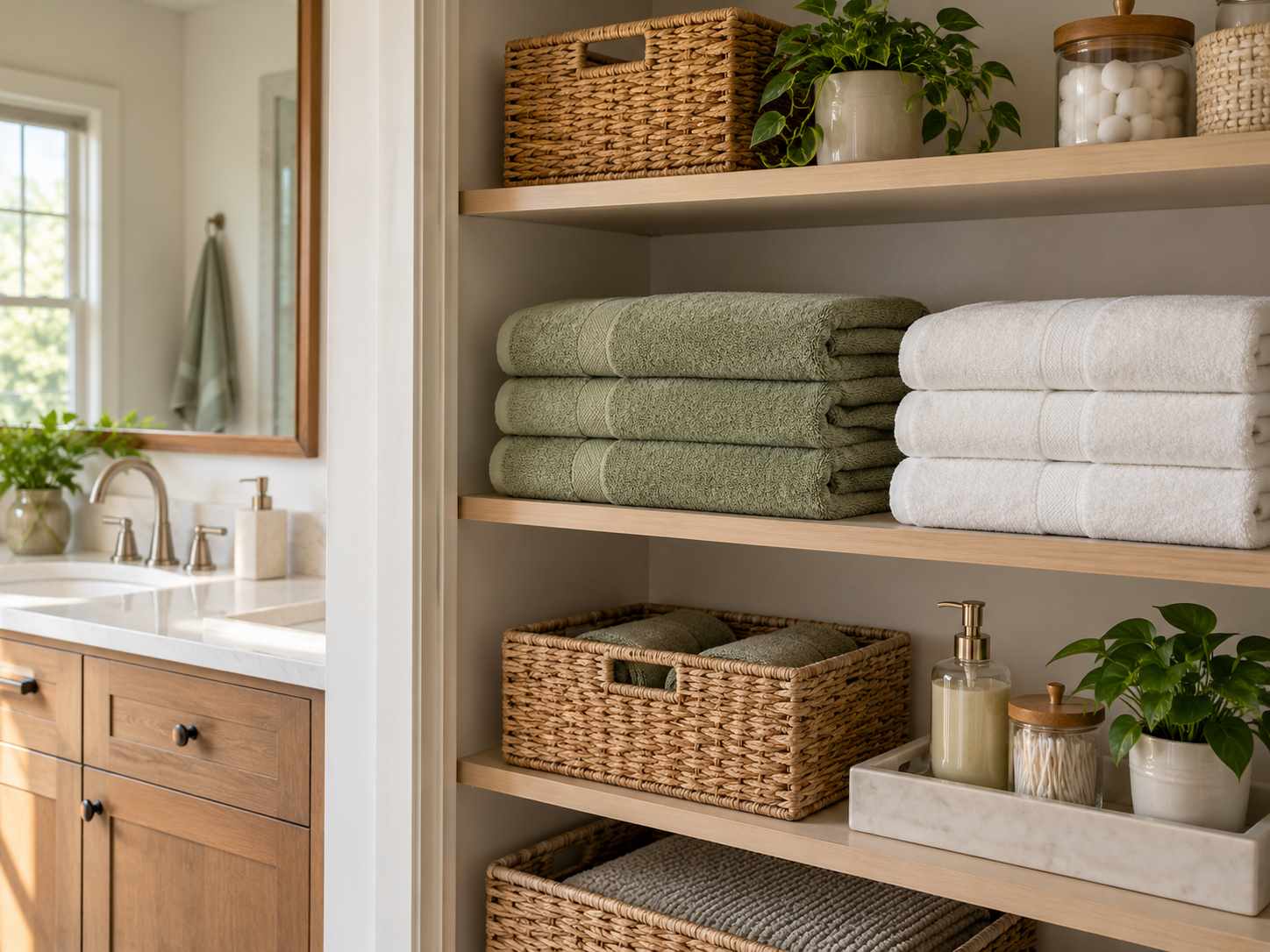
Put the towels you use most where they can be reached without stretching or moving another container. Choose a fold that fits the shelf depth. Keep stacks low enough to remove one towel easily rather than building a tall display that collapses.
2. Separate Hand Towels from Bath Towels
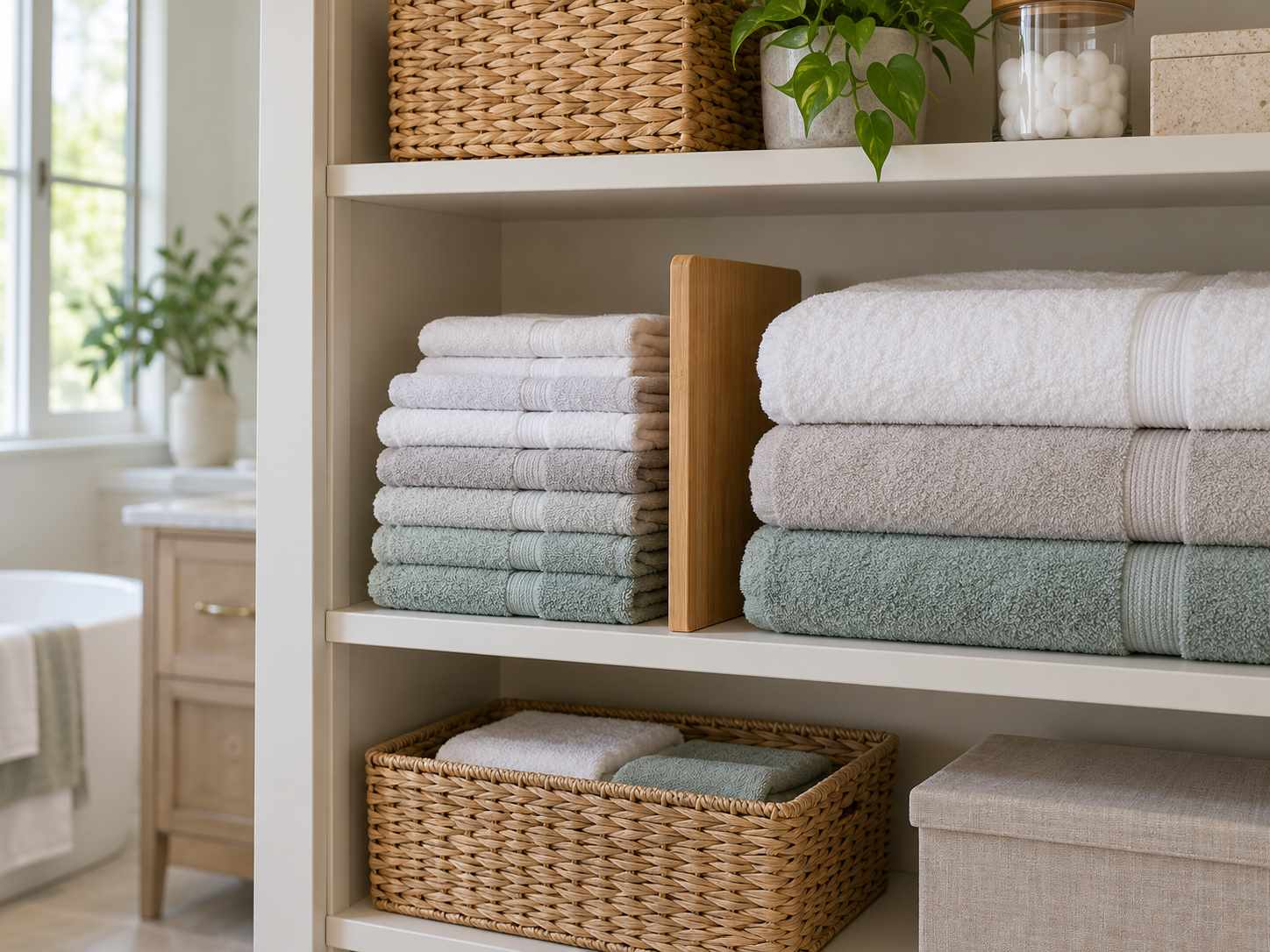
Different towel sizes are easier to manage in separate sections. Use a simple divider if the stacks drift together. Leave room for the quantity you actually wash and use, and store occasional guest towels elsewhere if the main shelf is crowded.
3. Use Shallow Bins for Small Toiletries
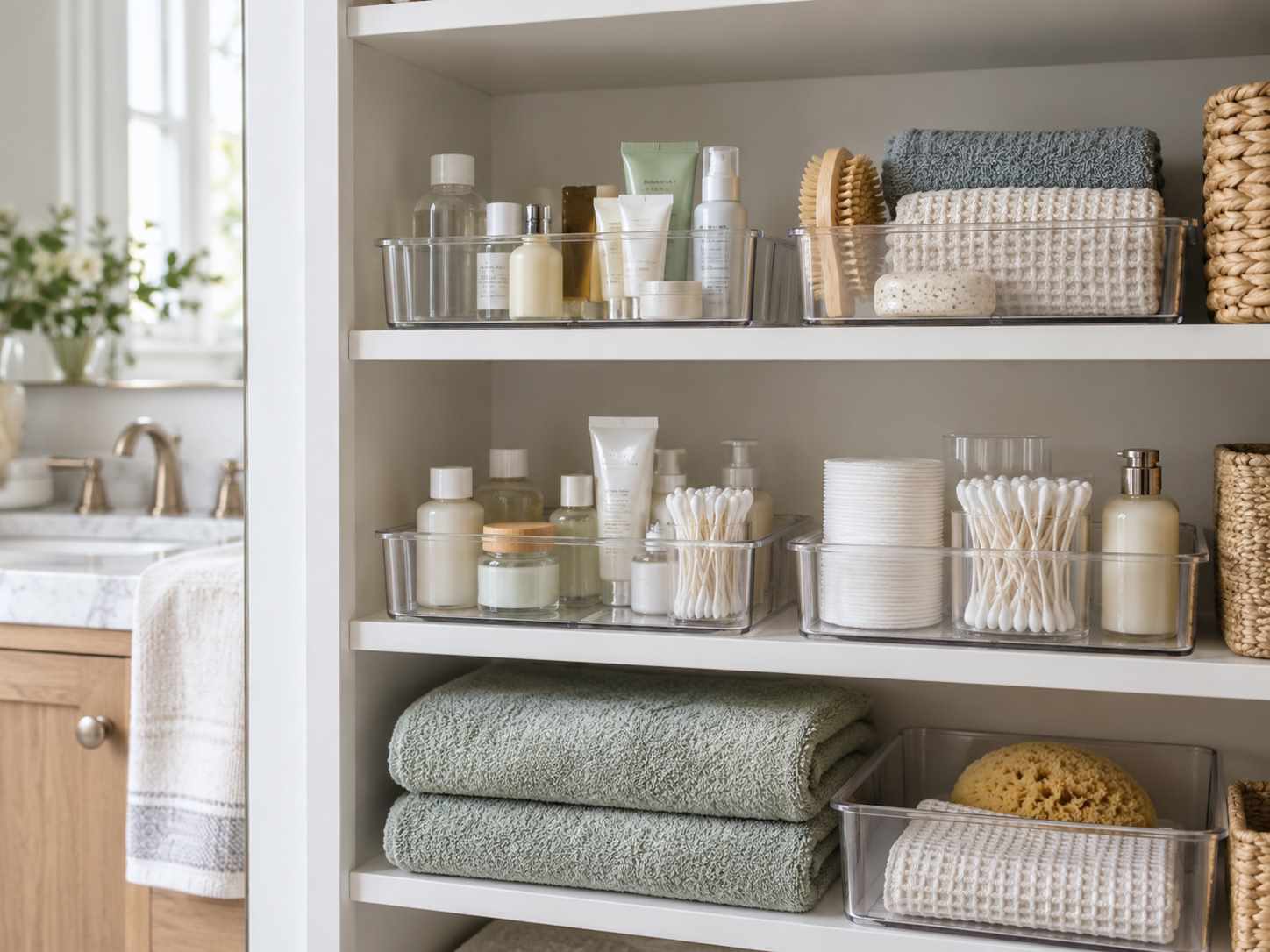
A shallow bin lets small bottles and tubes stay visible. Measure the shelf and choose a container that can be lifted out without hitting the one above. Keep related products together and avoid filling the bin so tightly that you cannot see what remains.
4. Create a Clearly Defined Spare-Supply Area
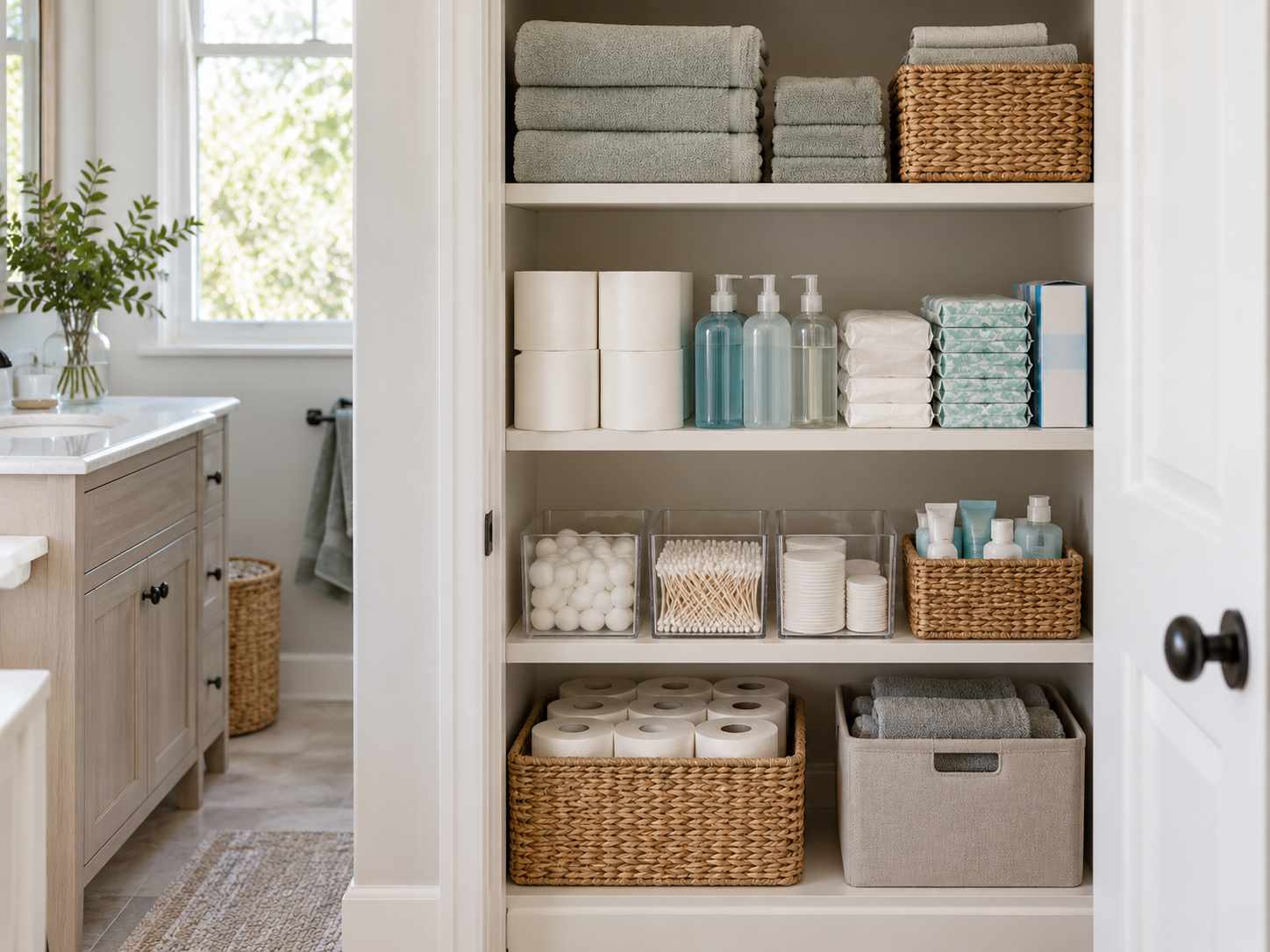
A separate section for unopened supplies makes it easier to see what needs replacing. Keep packaging information intact and follow storage instructions. A modest reserve is often more manageable than using every empty shelf to accumulate duplicates.
5. Use a Turntable Only Where It Fits
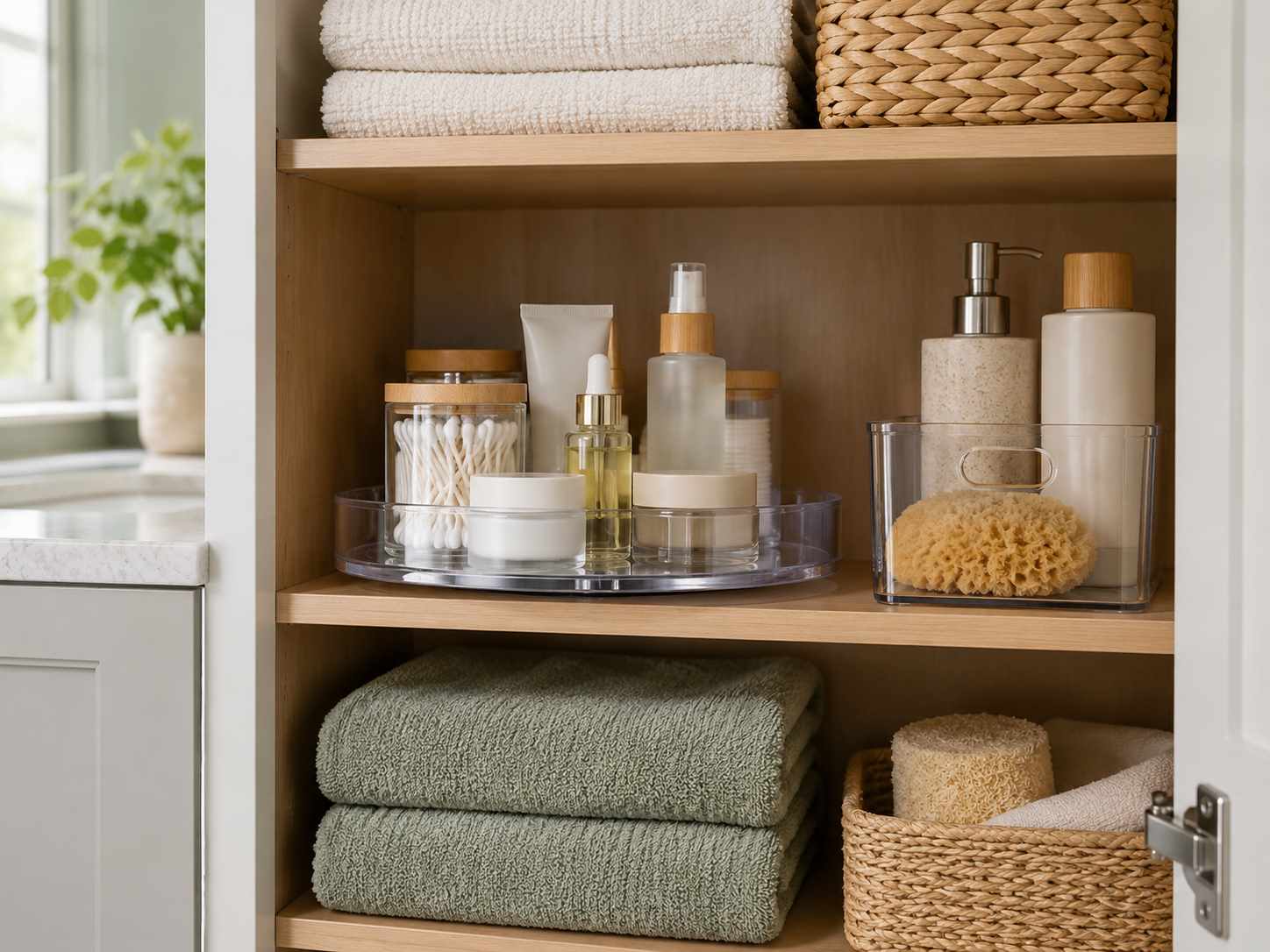
A turntable can improve access to small items on a deep shelf if the diameter and surrounding clearance work. Check that products remain stable during movement. It is less useful when tall bottles catch the shelf above or the mechanism consumes needed storage space.
6. Add Shelf Dividers for Folded Textiles
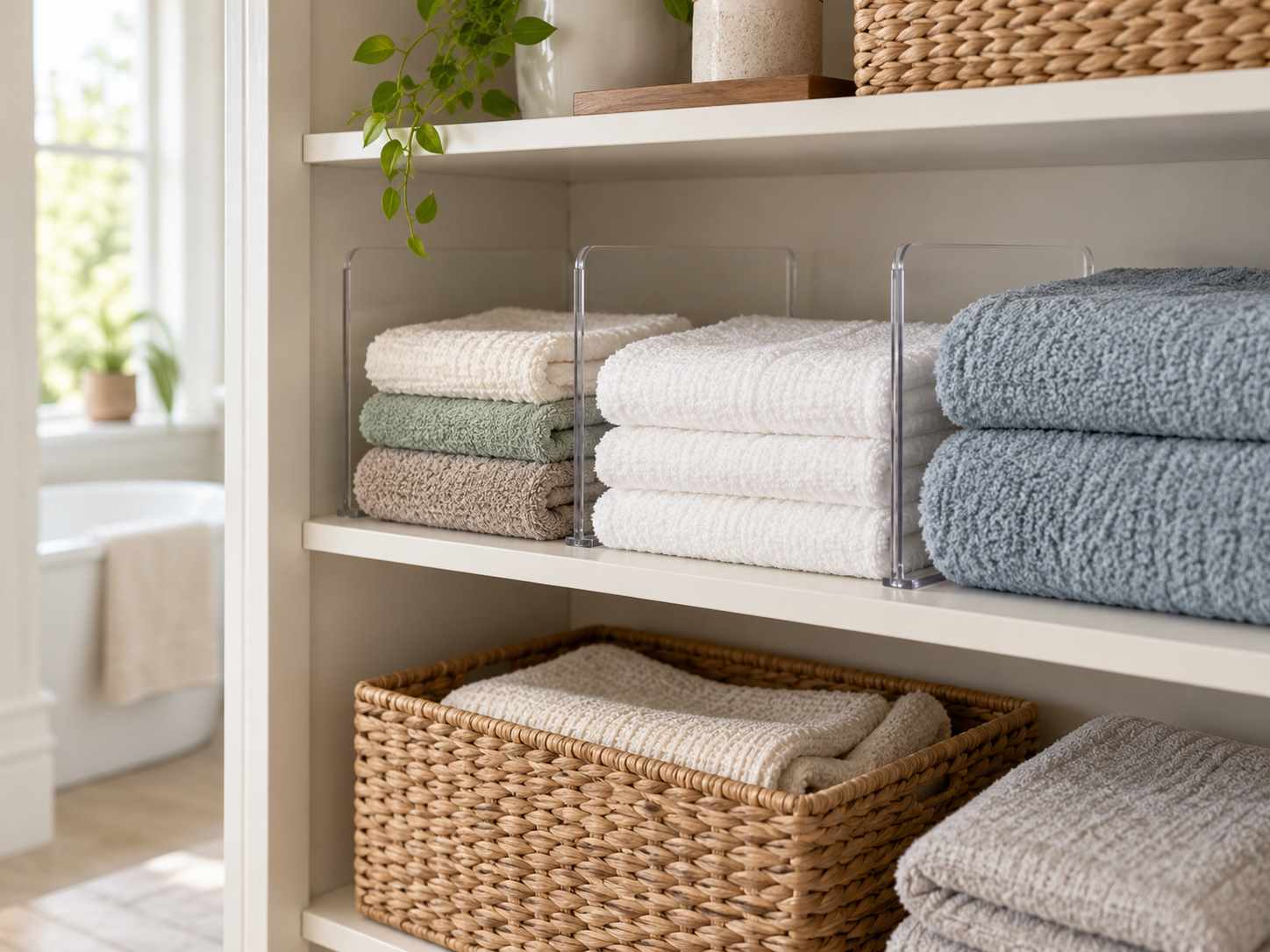
Dividers can keep washcloths or smaller linen groups from merging. Choose a product suitable to the shelf thickness and surface. Keep the arrangement simple enough that putting clean laundry away does not require a precise decorative fold.
For more room-specific storage and styling, browse our bathroom decorating collection.
7. Keep Cleaning Products in Appropriate Separate Storage
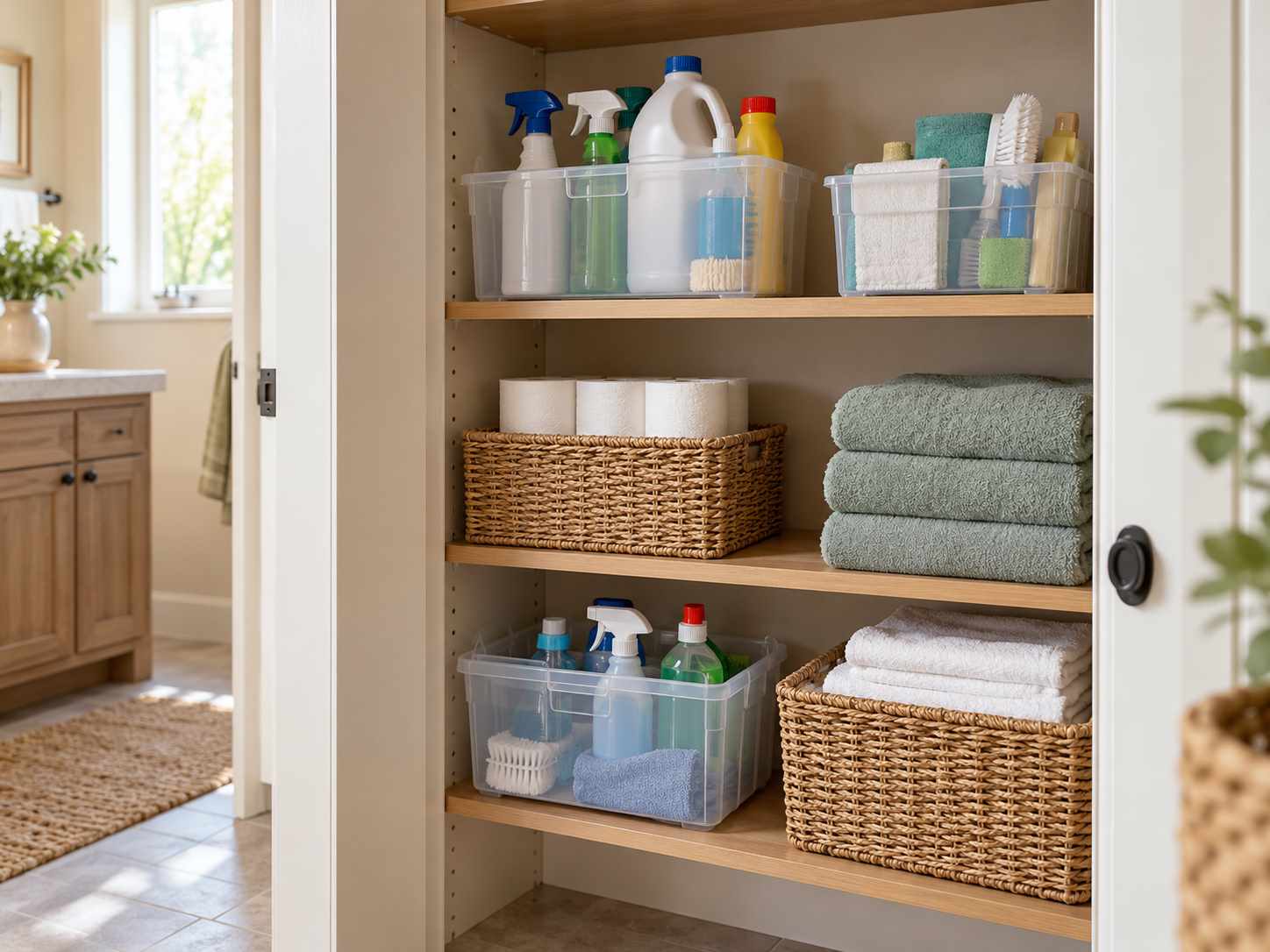
If cleaning products belong in the closet, follow their labels and household safety needs. Use suitable containment and keep them separate from personal-care items or linens. Do not transfer products into decorative unmarked bottles simply to make the shelves look uniform.
8. Use a Small Pull-Out Basket for Hair Accessories
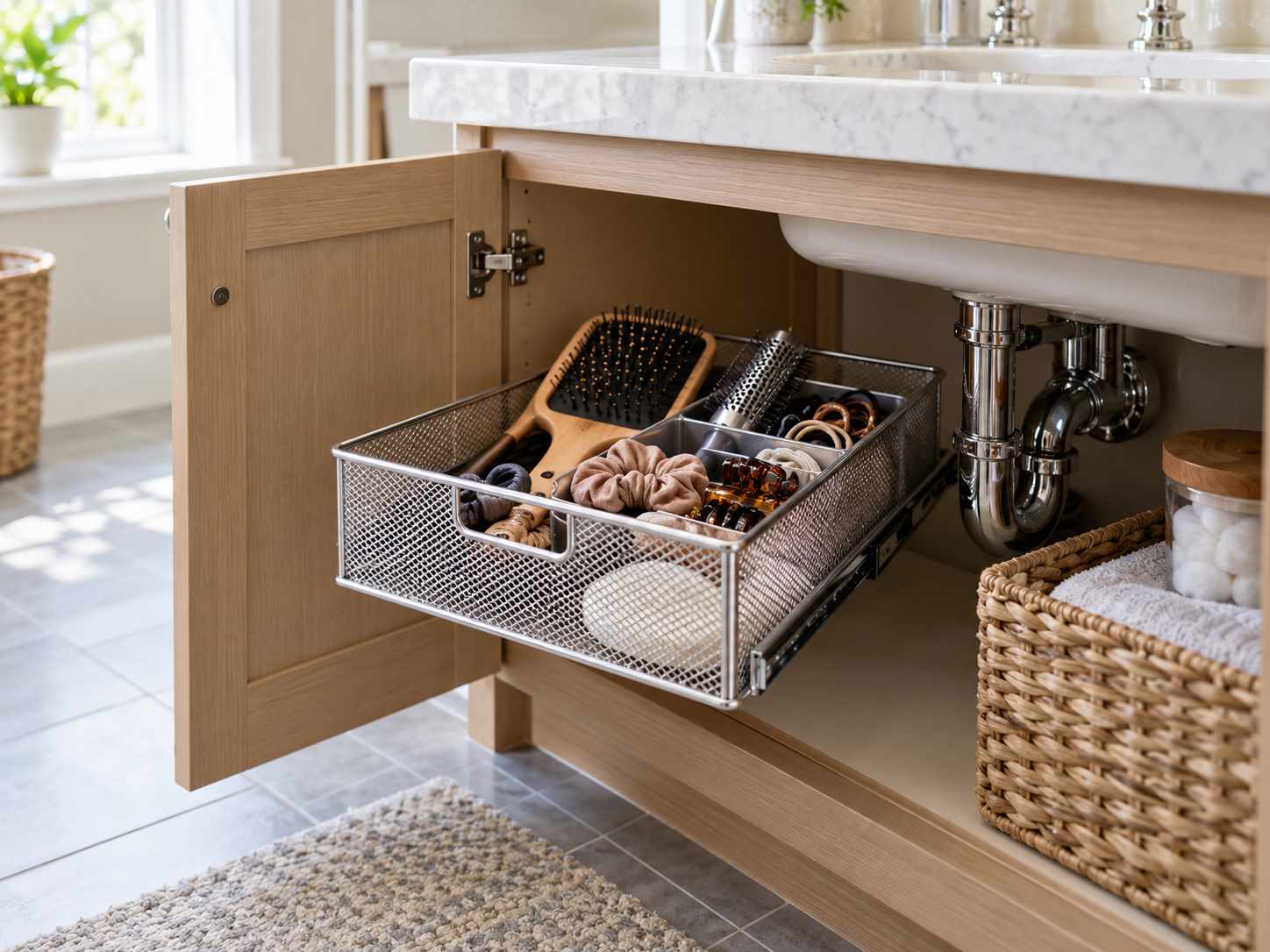
A pull-out basket can contain brushes or accessories that otherwise spread across a shelf. Check that the basket can move without catching plumbing or the door. Clean it regularly and avoid storing damp items in a crowded closed container.
9. Make a Guest Basket with Only the Essentials
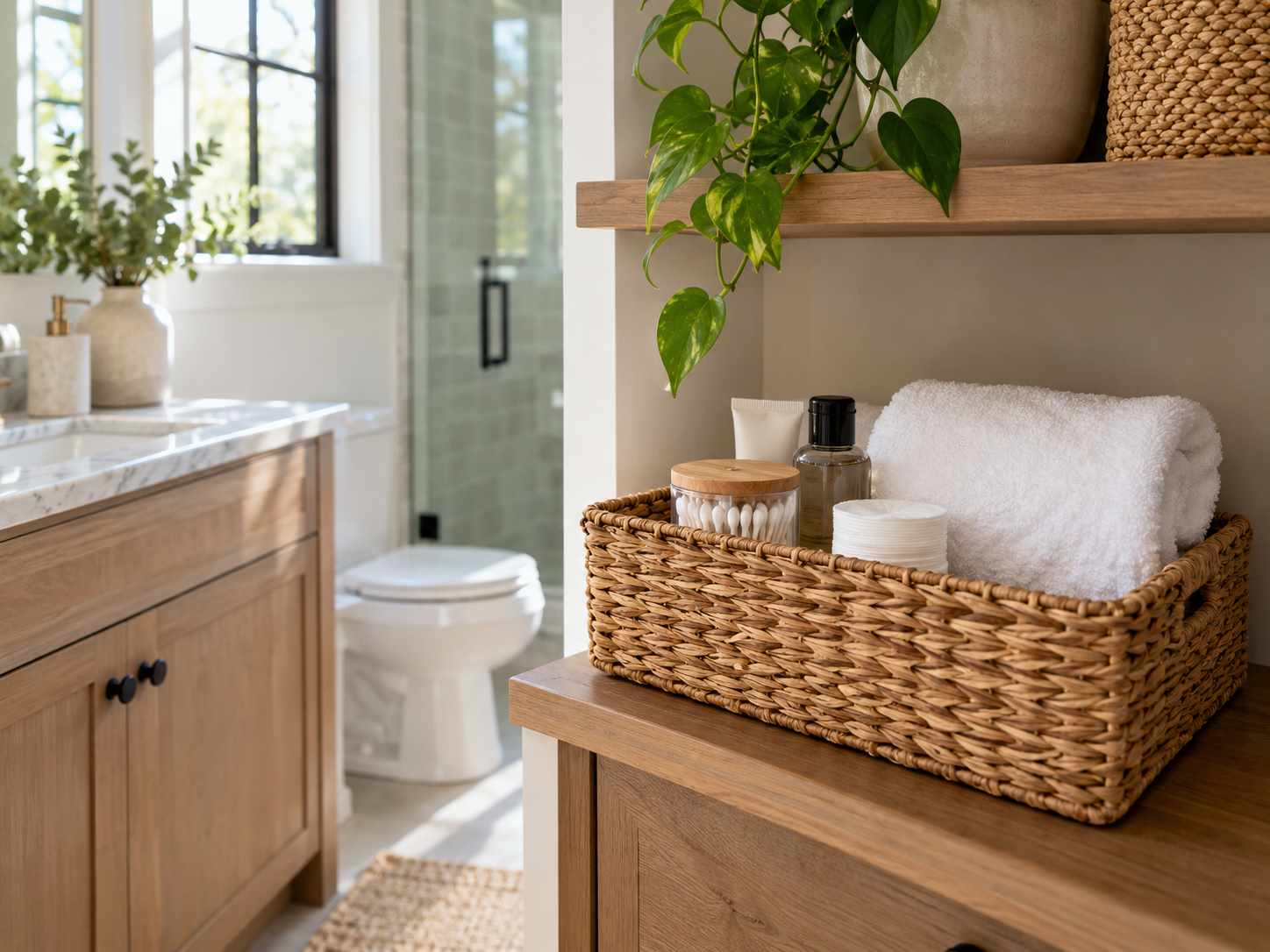
A small guest basket can hold a clean towel and a few useful items. Keep it easy to remove and restock after use. Avoid filling it with products that will sit unused simply because they make the display look complete.
10. Reserve a High Shelf for Light Occasional Items
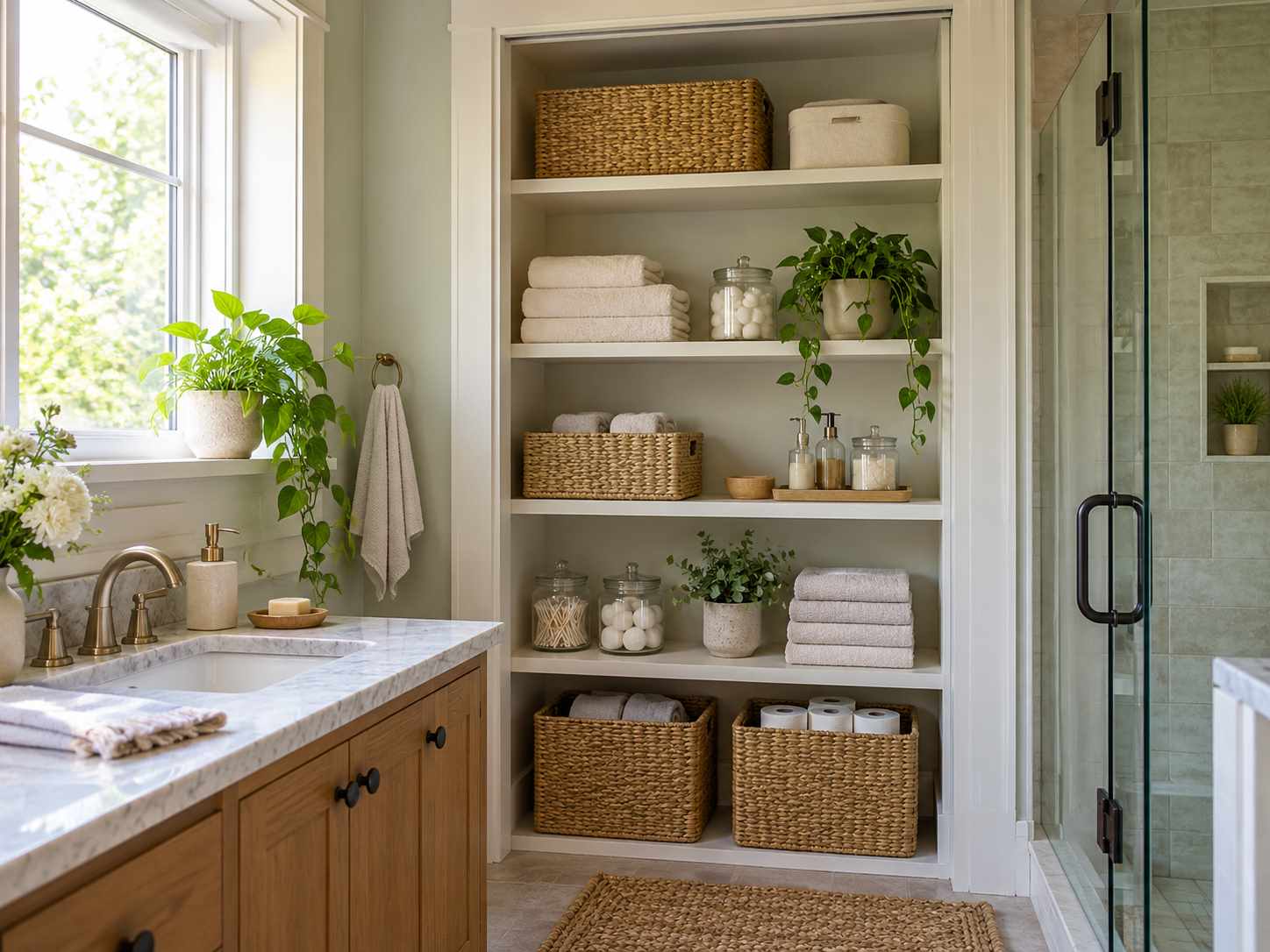
A higher shelf can hold lightweight things used less often, provided they can be accessed safely. Avoid heavy containers that are difficult to lift down. If regular access requires unsafe climbing, move the contents to a more suitable location.
11. Use Clear Containers Where Visibility Helps
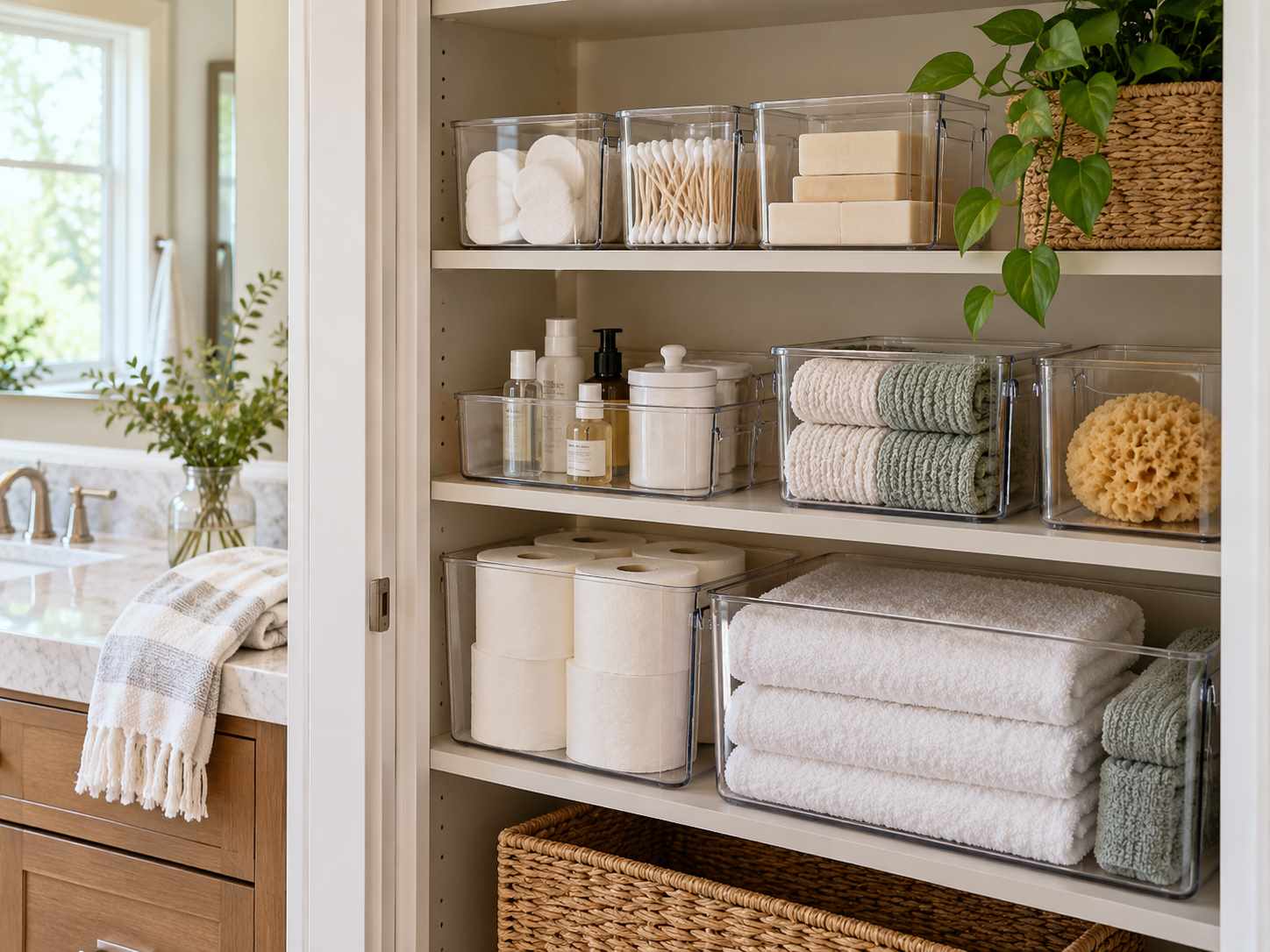
Clear containers can make small supplies easy to identify without opening every box. Keep the groups selective so visibility does not simply reveal clutter. Choose containers that can be cleaned and fit the shelf rather than buying a full matching set without measurements.
12. Keep a Small Empty Space for Returning Laundry
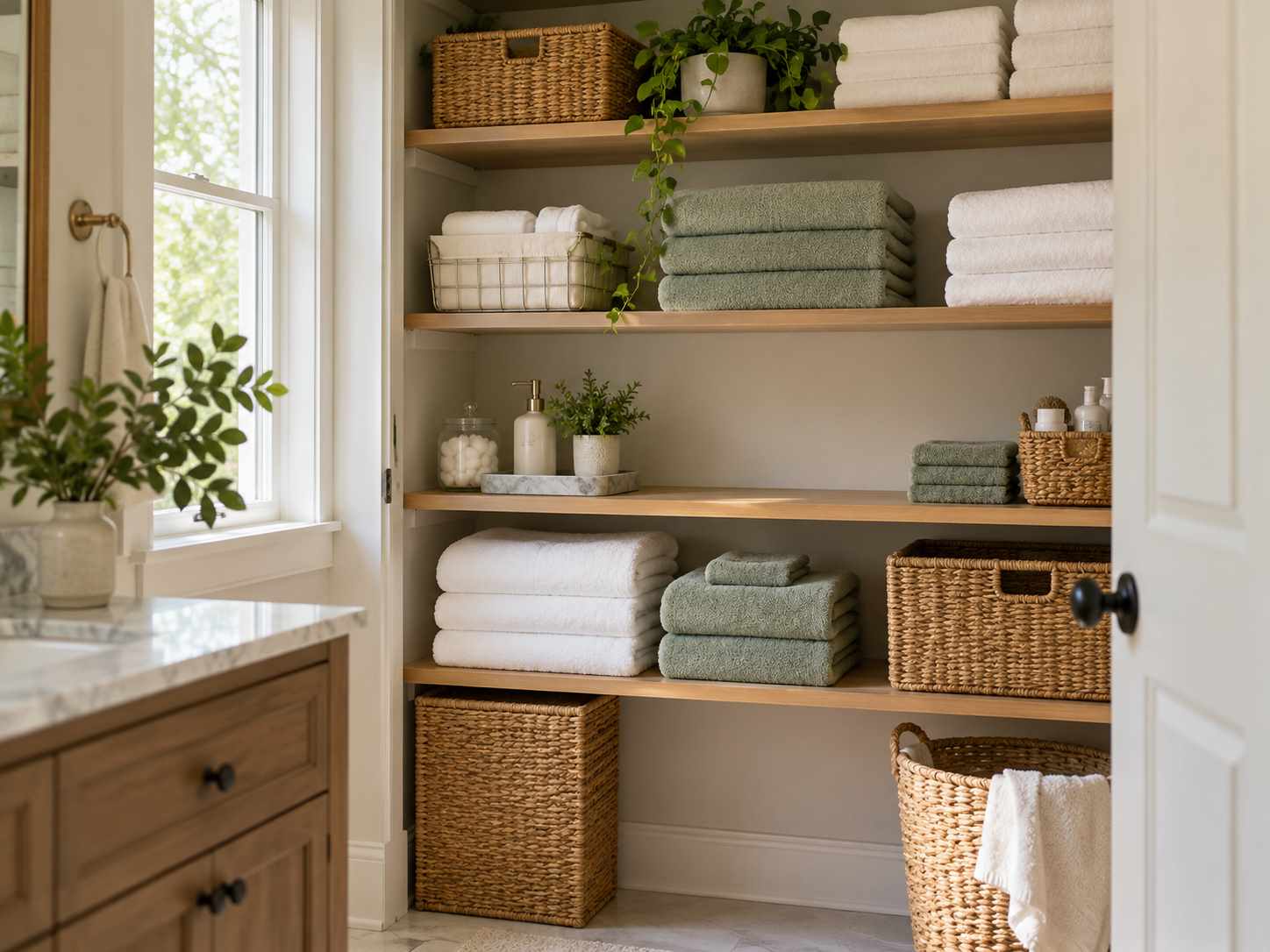
A little spare capacity makes the closet easier to maintain. Leave room to put clean towels away before every item has been used. This also helps the shelf absorb normal changes in supplies without requiring a full reorganization.
For compact layouts elsewhere in the home, explore our small-space guides.
13. Use Door Storage Only if It Clears the Shelves
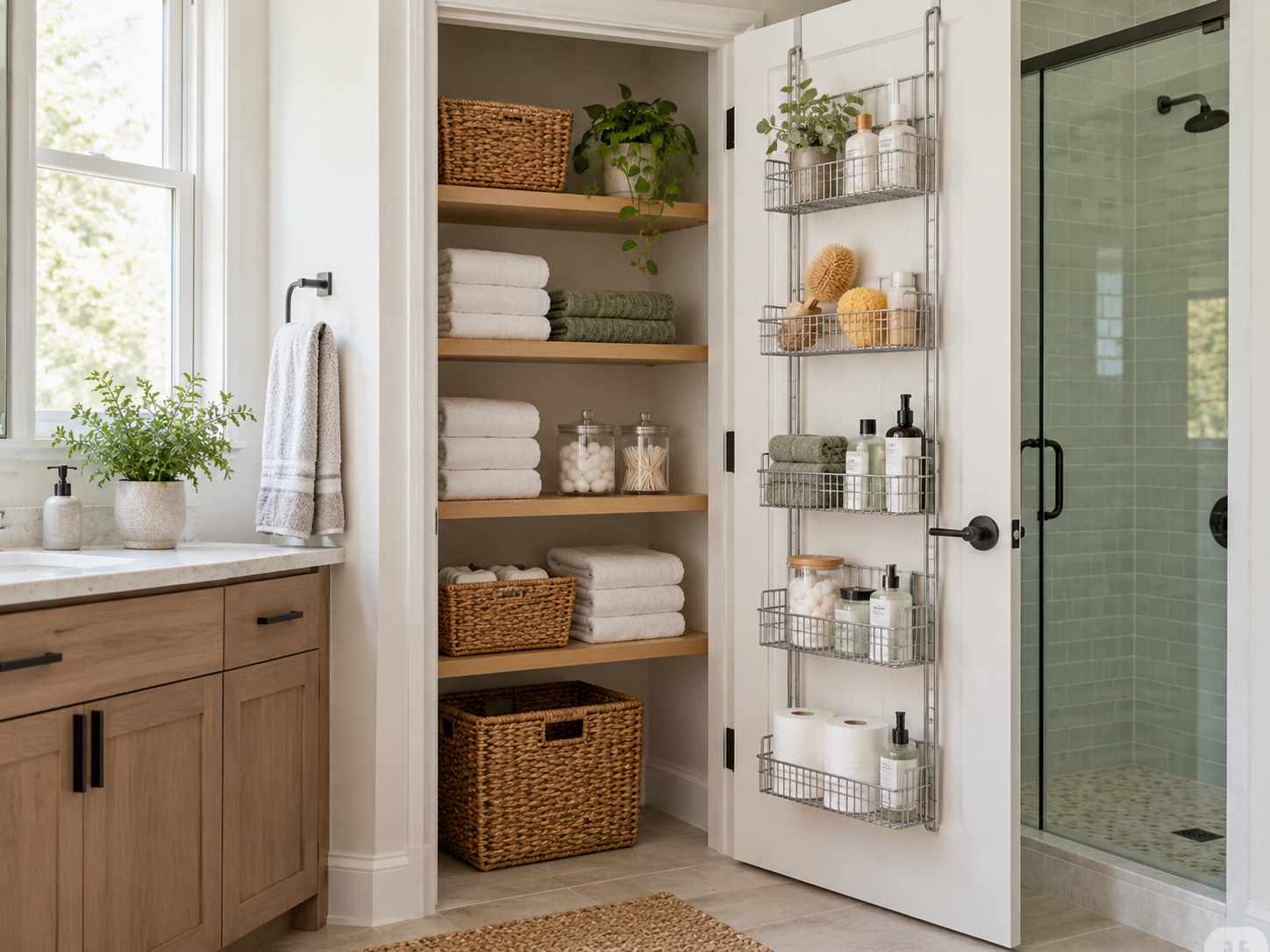
A door organizer can help with lightweight items when the door and shelves allow it. Check the closed-door clearance and the product’s fixing and load guidance. Avoid overloading the door or interfering with hinges, latches, or specialist door requirements.
14. Choose Washable Liners for Suitable Shelves
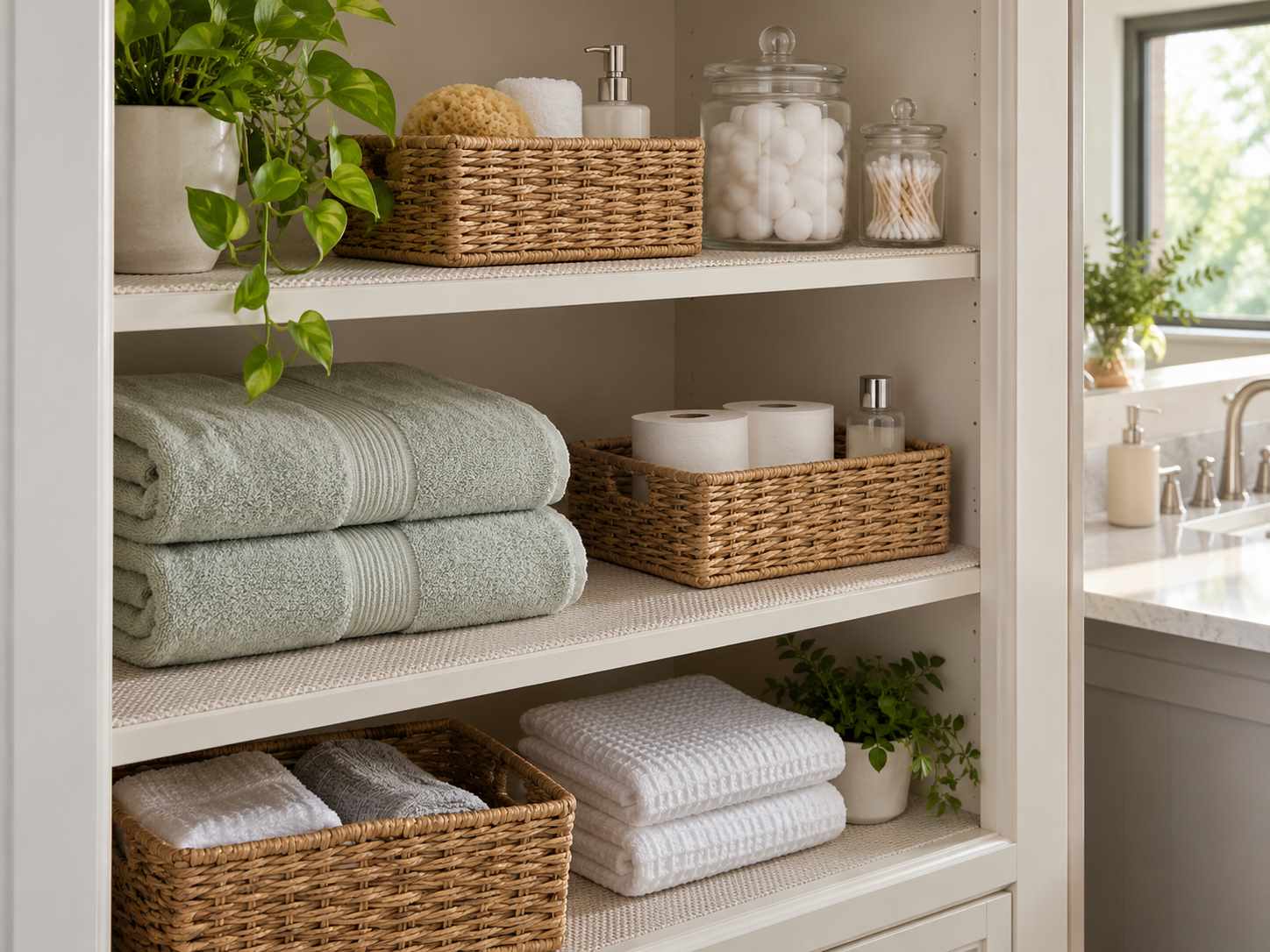
A removable liner may make cleaning easier if it suits the shelf surface and storage conditions. Keep it flat and replace it when damaged. Do not use a liner to conceal a moisture problem or damaged shelving that needs proper repair.
15. Store Spare Toilet Rolls in a Dry Defined Section
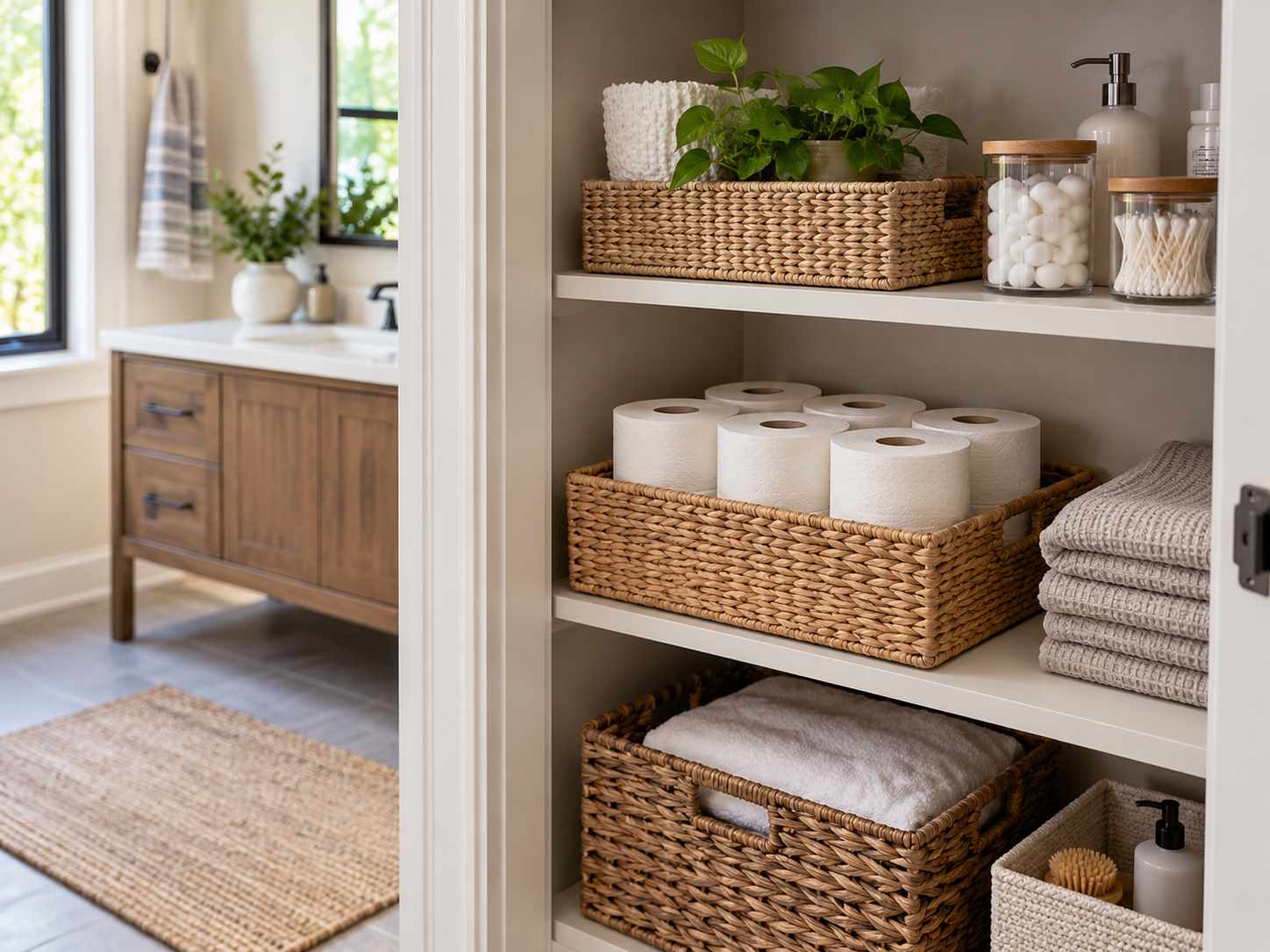
A single basket or shelf section can keep paper supplies together. Keep them away from leaks and splash-prone areas. Limit the quantity to what the space can hold without blocking access to more frequently used items.
16. Group Travel Items in One Removable Pouch
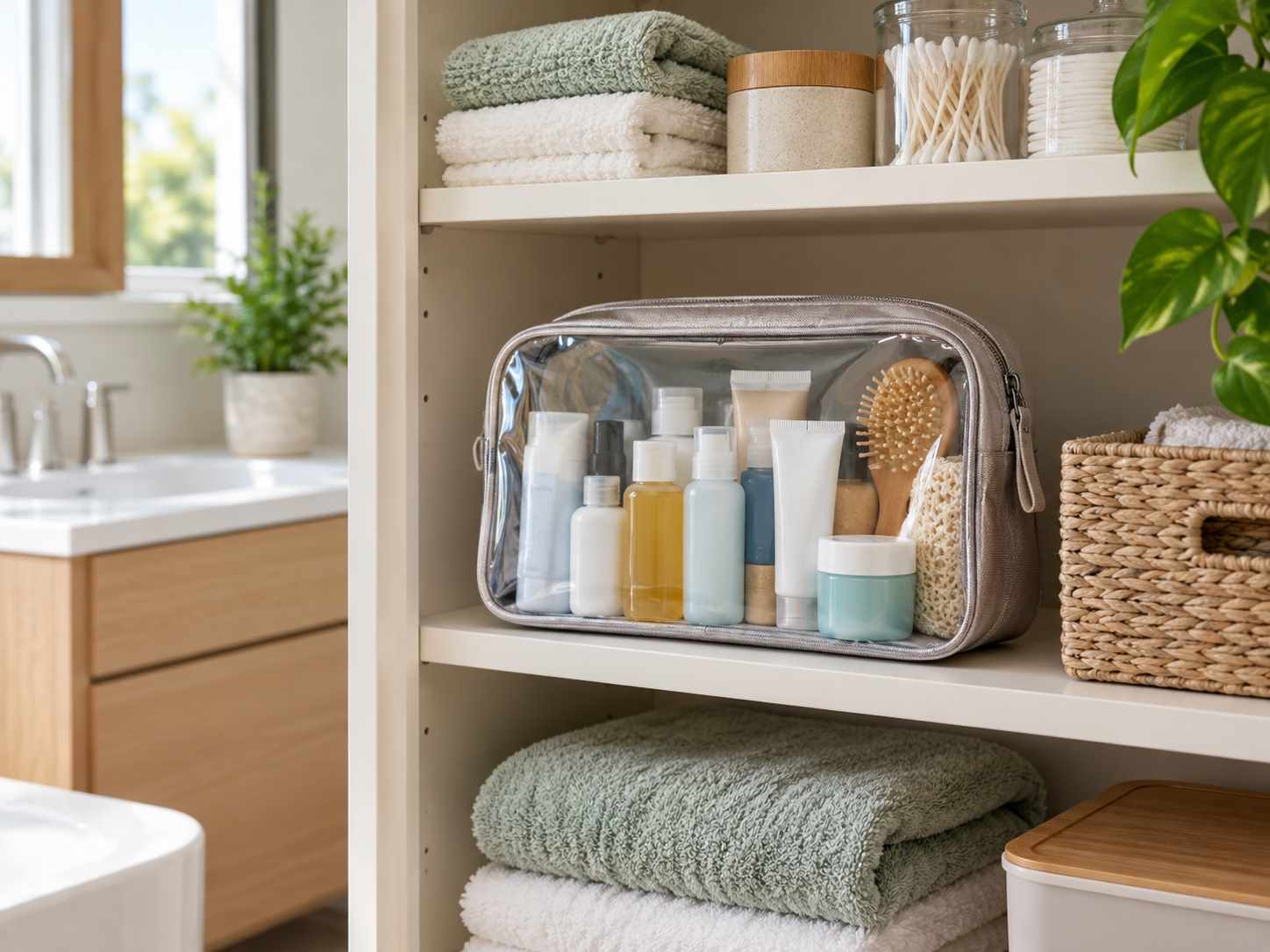
A travel pouch can prevent miniature products from scattering among daily supplies. Review the contents periodically and keep original information where needed. Store the pouch where it can be lifted out easily rather than behind several heavy bins.
17. Reset the Closet Before Buying More Organizers
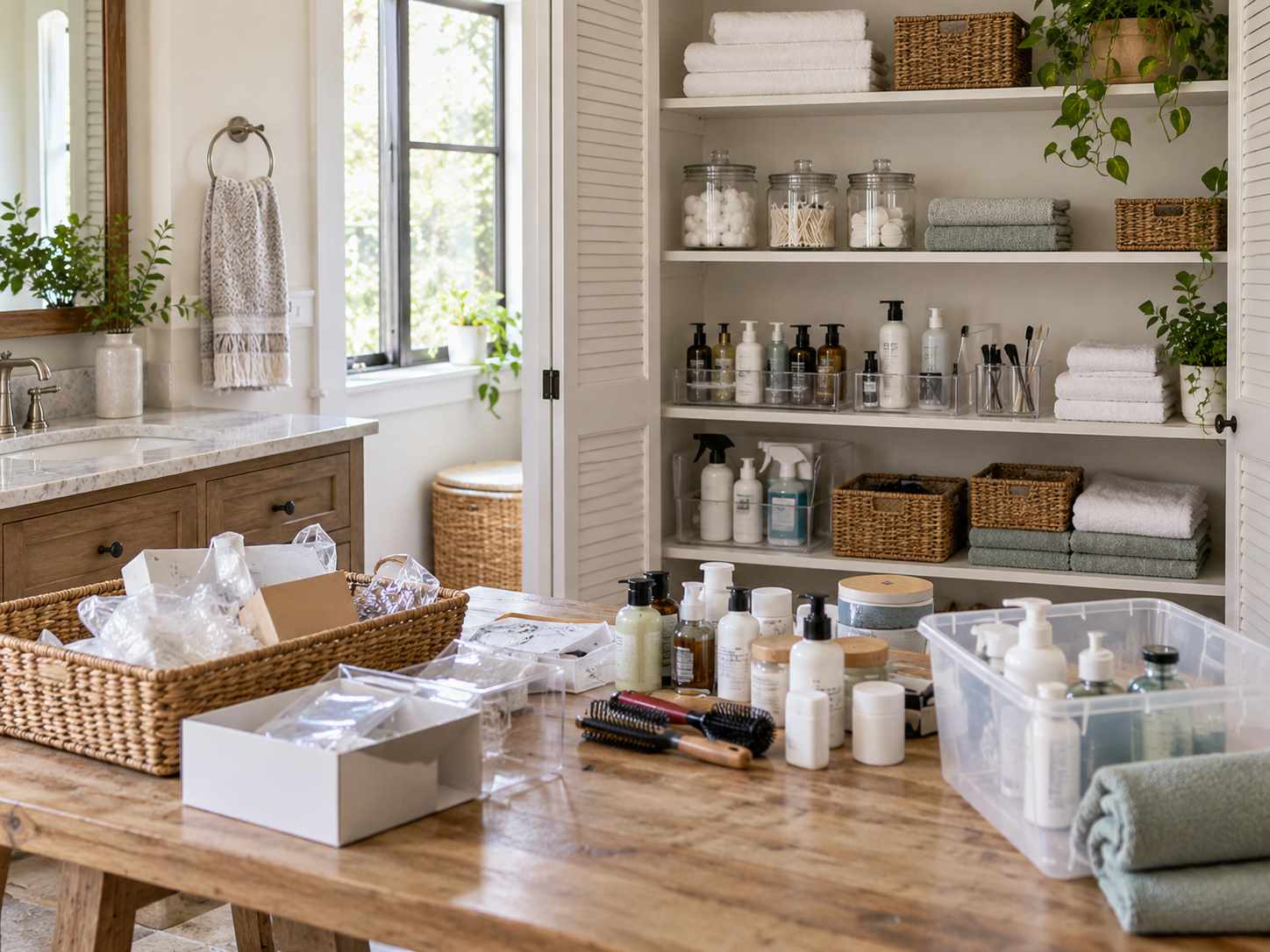
Review empty packaging, unused duplicates, and items that belong elsewhere. Clean the shelves and return contents by category. Buy a container only when you know the specific problem it needs to solve; a new bin cannot create unlimited capacity.
Frequently Asked Questions
Should bathroom closet bins all match?
Matching bins are optional. Fit, visibility, cleaning, and ease of use matter more than identical appearance.
How do I organize deep shelves?
Use containers that pull out easily and keep infrequently used items behind daily supplies only when access remains manageable. Avoid losing small products at the back.
Where should medicines go?
Follow each product’s storage instructions and relevant professional guidance. A warm or humid bathroom closet may not provide appropriate conditions for every medicine.
Is rolling towels better than folding them?
Use whichever method fits the shelf and lets towels be removed and returned easily. There is no single arrangement that suits every closet.
How do I stop duplicate supplies building up?
Keep a defined spare-supply area and review it before shopping. A visible limit helps you see what is already available.
Related Decorating Guides
- 17 Apartment Bathroom Ideas That Respect a Small Footprint
- 17 Bathroom Towel Hook Ideas for Better Everyday Placement
- 17 Bathroom Vanity Decor Ideas That Leave Room to Use It
Conclusion
Give each shelf a clear role and leave enough space to use it comfortably. Measured containers and manageable towel groups can simplify the closet without filling it with organizers. Save the ideas that solve a specific access or storage problem in your own layout.
Compare related room projects in our complete home decor library.